
Listen to this Post
A Kingdom That Refuses to Disappear
Few LEGO themes have the emotional weight of LEGO Castle. Since its arrival in the late 1970s, Castle became one of the three defining pillars of LEGO’s in-house storytelling, standing alongside Town as the present and Space as the future. For generations of builders, Castle was more than a collection of bricks. It was knights, dragons, kings, hidden passages, rival factions, towering fortresses, and endless stories created on the living-room floor.
The Long Hiatus
Yet the classic Castle brand has entered an unusual period of silence. Rather than receiving a steady stream of traditional medieval sets, fans have increasingly been offered individual castles inspired by Disney, Harry Potter, real-world architecture, and other entertainment properties.
That does not mean the medieval spirit has disappeared. In many ways, it has simply moved elsewhere.
The Castle Spirit Lives On
The retirement of major modern classics such as the LEGO Lion Knights’ Castle and Medieval Blacksmith has left a noticeable gap for traditional Castle enthusiasts. The Lion Knights’ Castle, in particular, served as both a celebration of LEGO’s history and a reminder of what made the original theme so memorable.
The result is a strange situation in 2026: there may not be an active classic Castle product line dominating LEGO’s catalog, but there is no shortage of impressive castles to build.
A Different Kind of Castle Collection
The best castle builds available today come from very different worlds. Some are fantasy landmarks, others are famous movie locations, and one is a genuine historical building.
What connects them is the same basic appeal: imposing towers, dramatic architecture, elaborate interiors, storytelling potential, and the unmistakable feeling that something important is happening behind those walls.
Beauty and the Beast Castle
The LEGO Disney Beauty and the Beast Castle is one of the clearest examples of how LEGO can transform a famous fictional location into a detailed architectural experience.
Rather than simply creating a recognizable exterior, the build pays considerable attention to the world inside the castle. The ballroom is one of its major attractions, while the “Be Our Guest” dining room adds an entertaining mechanical touch with its spinning plates.
The Enchanted West Wing
The West Wing gives the set another layer of atmosphere. Hidden within it is the famous rose sealed inside its glass enclosure, providing a small but important connection to the story.
This is exactly the kind of detail that makes a LEGO castle feel alive. The best builds are not merely buildings. They are miniature environments filled with recognizable moments.
Mini Disney
For builders who prefer something smaller, Mini Disney Ariel’s Castle takes a much more compact approach.
Its golden spires, pink accents, and ocean-themed base give it a colorful appearance without requiring the enormous footprint of a giant display model.
Small Build, Big Personality
The inclusion of Ariel suspended above the ocean floor gives the model an especially playful quality. It is not trying to compete with enormous architectural sets. Instead, it focuses on charm, simplicity, and display value.
That makes it particularly appealing to builders who want a castle-inspired model without committing to hundreds or thousands of pieces.
Battle at Drum Castle
The LEGO set inspired by
Battle at Drum Castle recreates the dramatic confrontation involving Luffy and his pirate crew against King Wapol. Instead of presenting a peaceful royal residence, the set uses the castle as the stage for action.
A Castle Built for Conflict
Its multi-tiered structure gives the model verticality, while the inclusion of Tony Tony Chopper adds an important character connection for One Piece fans.
This is also an example of how modern LEGO licensing has effectively replaced some of the storytelling functions once handled by traditional Castle factions. Instead of Lions fighting Serpents, today’s castle walls may become the setting for characters from major entertainment franchises.
Minas Tirith
For pure scale and spectacle, few concepts can compete with Minas Tirith from The Lord of the Rings.
The enormous model is designed around the legendary White City of Gondor, transforming one of fantasy’s most recognizable locations into a monumental LEGO construction.
Seven Levels of Fantasy
The front presentation emphasizes the
The rear provides a different experience, functioning more like a minifigure-scale cross-section and allowing builders to explore important interior spaces.
Why Minas Tirith Matters
A build of this scale demonstrates something important about LEGO’s relationship with fantasy architecture. Castle does not necessarily need to be a traditional blue-and-gray fortress surrounded by knights.
The core idea can become much larger: build a legendary place, fill it with history, give it recognizable architecture, and allow the builder to physically explore it.
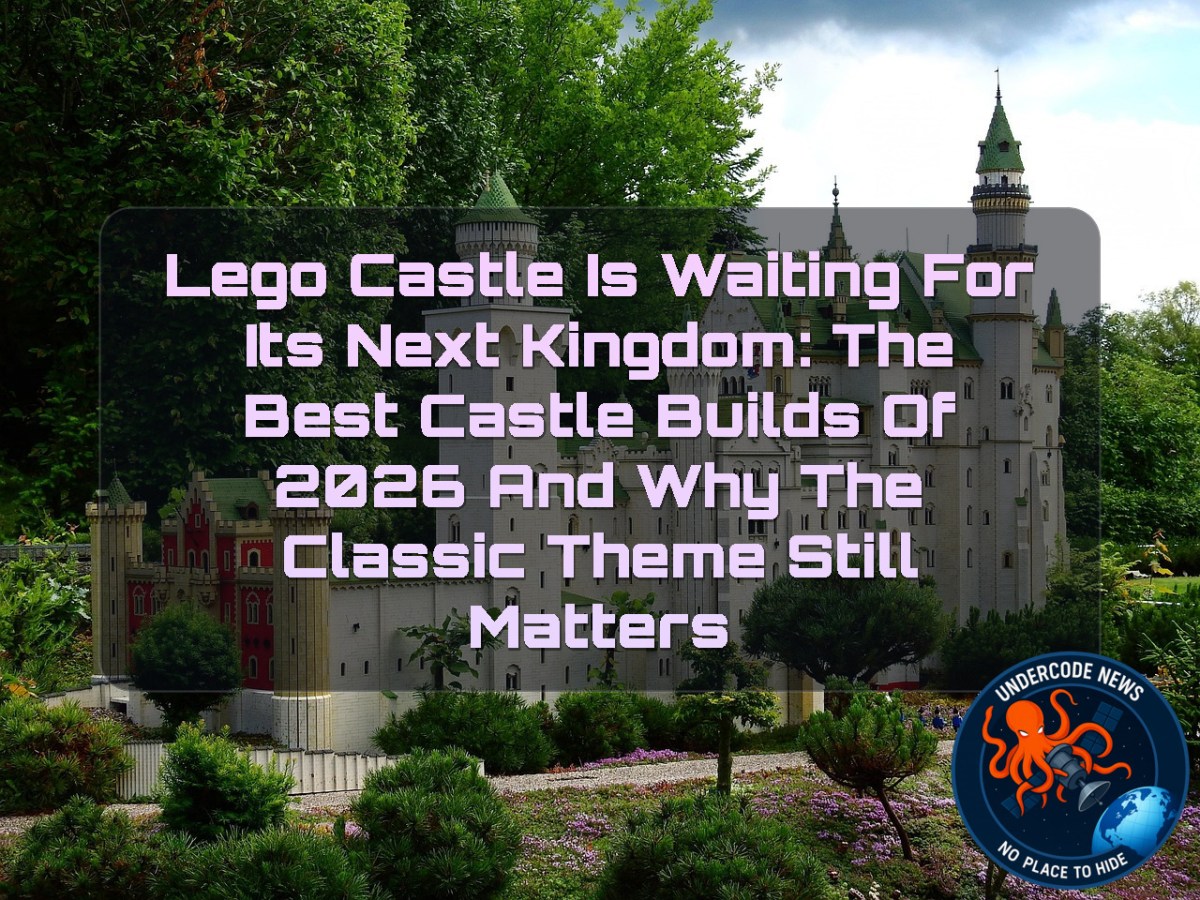
Neuschwanstein Castle
Not every LEGO castle needs dragons, wizards, or armies.
Neuschwanstein Castle is based on the real Bavarian castle built under King Ludwig II in the 19th century. Its real-world origins give it a different kind of appeal from the fictional castles elsewhere on this list.
From History to Fantasy
Neuschwanstein is particularly fascinating because its architecture became deeply associated with the visual language of fairy-tale castles and later influenced the design of Disney’s Cinderella Castle.
That makes this LEGO model a bridge between historical architecture and modern fantasy.
Medieval Horse Knight Castle
Among the selections, Medieval Horse Knight Castle comes closest to the traditional LEGO Castle formula.
It is built around medieval factions, knights, fortifications, and the classic visual language that longtime Castle fans remember.
Three Builds in One
The
That flexibility is particularly important for Castle fans because traditional LEGO Castle has always been about creating a world rather than simply displaying a single building.
Lions, Serpents, and Storytelling
The inclusion of six minifigures and two factions, the Horses and the Serpents, provides the ingredients for miniature conflicts and stories.
This is the closest thing in the current lineup to the old-school experience of opening a Castle box and immediately imagining an entire medieval kingdom.
Hogwarts Castle
LEGO Harry Potter has arguably become one of the strongest modern homes for castle architecture.
The massive Hogwarts Castle originally launched in 2018 and remains one of the most recognizable LEGO interpretations of a fictional castle.
A Castle With a Story Inside
The model incorporates major locations such as the Great Hall, Main Tower, and East Wing. It also includes the four Hogwarts founders: Godric Gryffindor, Helga Hufflepuff, Rowena Ravenclaw, and Salazar Slytherin.
The important distinction is that Hogwarts is not merely a building. It is a character in the Harry Potter universe, and LEGO’s design reflects that by filling its architecture with story details.
Hogwarts Castle: The Main Tower
LEGO later took the Hogwarts concept in a much more ambitious direction with a modular, minifigure-scale approach.
Instead of forcing the entire massive structure into one impossibly expensive box, the company divided the castle into separate sections.
Building Hogwarts Piece by Piece
The Main Tower includes recognizable locations such as the Gryffindor common room and the challenges surrounding the Sorcerer’s Stone.
This modular strategy has an interesting advantage: collectors can expand their Hogwarts gradually instead of having to purchase everything simultaneously.
Hogwarts Castle: Hospital Wing
The Hogwarts Hospital Wing continues the modular approach while adding more recognizable interiors.
Among its locations are the Ravenclaw Common Room and the Defense Against the Dark Arts classroom.
Architecture Beneath the Surface
Like the other modular Hogwarts builds, the set uses a rocky foundation that provides room for additional architectural detail beneath the primary structure.
That approach demonstrates how LEGO has increasingly moved toward castles that reward builders for examining the model from multiple angles.
Hogwarts Castle: The East Wing
The East Wing represents another major component of the modular Hogwarts system.
It includes the bridge connecting sections of the castle and introduces locations such as the Slytherin Common Room and Chamber of Secrets.
The Basilisk Below
The Chamber of Secrets is particularly effective because it gives the build a sense of depth. Instead of treating the castle as a simple facade, LEGO uses its underground spaces to create another layer of storytelling.
The inclusion of the basilisk and the enormous stone representation of Salazar Slytherin makes the model feel like a collection of scenes rather than a single static building.
How Many LEGO Castle Sets Are Available?
According to the original
A Number That Needs Context
However, that number can be misleading if someone interprets it as 19 active sets from the classic LEGO Castle theme.
Most of the models belong to other franchises or LEGO product lines. They feature castles, but they are not necessarily part of the traditional Castle brand.
That distinction is critical for longtime fans.
The Classic Castle Brand Is on Hiatus
The central issue is therefore not a lack of castles.
The issue is a lack of classic LEGO Castle.
The Difference Matters
The Lion Knights’ Castle and Medieval Blacksmith represented the nostalgia-driven side of LEGO’s medieval identity. Once those sets retired around the end of 2025, the traditional theme was left without an obvious flagship replacement in the current lineup described by the article.
For collectors, that creates a very different market from simply having access to castle-shaped LEGO sets.
Why Fans Still Care About Castle
Classic Castle succeeded because it gave builders a framework without forcing them into a single story.
You could build a kingdom, invent your own ruler, create rival factions, design a village, attack a fortress, or simply turn the entire collection into a medieval city.
That freedom is difficult to reproduce through licensed themes.
Licensing Cannot Fully Replace Original Themes
Disney castles, Hogwarts, Minas Tirith, and One Piece locations can be spectacular. But they come with established characters and stories.
Classic Castle started with a much simpler invitation:
Here are the bricks. Build your kingdom.
That difference may explain why nostalgia remains such a powerful force behind the theme.
What Undercode Say:
Castle Has Not Really Disappeared
The most interesting conclusion is that LEGO Castle is not necessarily dead. It has entered a period where its identity is fragmented across multiple product categories.
The Architecture Survived
Look at the current castle-inspired sets and the architectural DNA is still everywhere.
Towers remain popular. Stone walls remain popular. Medieval silhouettes remain popular. Fantasy fortresses remain popular.
The Branding Changed
What disappeared was not the
LEGO can place castle architecture inside Disney, Harry Potter, The Lord of the Rings, Architecture, or other licensed worlds.
Nostalgia Remains Powerful
The success of large historical-style sets has repeatedly demonstrated that adult LEGO collectors are willing to spend significant amounts on detailed medieval models.
Lion
The Lion
It was not simply an old set recreated with modern bricks.
Modern Engineering Meets Old-School Design
The model showed what happens when contemporary LEGO design techniques are applied to a classic medieval concept.
That formula remains extremely attractive.
The Market Is Already Testing Castle Demand
Even without a dedicated Castle wave, castle-style products continue appearing.
That gives LEGO an interesting signal: the architectural category remains commercially useful.
Fans Want More Than a Building
The strongest argument for a Castle revival is not that people like medieval buildings.
It is that people like medieval worlds.
A Castle Theme Can Become an Ecosystem
A successful revival could include castles, villages, farms, forests, siege machines, tournaments, merchants, blacksmiths, dragons, monsters, and multiple factions.
That creates an ecosystem rather than a collection of isolated display models.
Minifigures Could Drive the Revival
One of
A knight is instantly understandable.
A king is instantly recognizable.
A peasant, blacksmith, archer, wizard, or dragon can immediately become part of a larger story.
Factions Create Collecting Motivation
A Castle revival could once again use factions to encourage collecting.
Buying one faction creates an incentive to build another faction as an opponent.
Villages Are Just as Important as Fortresses
One of the biggest opportunities would be expanding beyond giant castles.
A medieval village could give builders streets, shops, houses, farms, stables, workshops, and markets.
Modular Castle Design Could Be the Future
LEGO could also borrow the modular strategy used successfully by other large themes.
Instead of one enormous kingdom in a single box, builders could construct their medieval world gradually.
A Flagship Castle Could Anchor Everything
One enormous flagship castle could serve as the centerpiece.
Smaller sets could then expand the surrounding world.
The Economics Make Sense
Large
A balanced Castle portfolio could therefore serve both adult collectors and younger builders.
Castle Also Fits
Medieval architecture is visually strong.
Tall towers, banners, stone walls, bridges, gates, and dramatic roofs naturally create impressive display pieces.
Castle Could Work Without a Major License
That may actually be one of its greatest advantages.
LEGO owns the concept and does not need to build the entire theme around an external entertainment franchise.
Original Characters Create Freedom
Without a licensing agreement defining the characters, LEGO can redesign factions, stories, creatures, and locations whenever it wants.
Dragons Are an Evergreen Idea
Dragons also give the theme a fantasy dimension without requiring a major intellectual property.
That could make a revived Castle line feel both traditional and modern.
The Real Challenge Is Differentiation
The problem for LEGO is not whether people recognize a castle.
The problem is making a new Castle theme feel different from Hogwarts, Disney castles, Lord of the Rings, and other fantasy architecture.
Strong Factions Could Solve That Problem
Distinctive heraldry, unusual creatures, memorable knights, and creative medieval technology could give a new Castle universe its own personality.
A Revival Could Mix History and Fantasy
LEGO would not necessarily have to choose between realistic medieval history and high fantasy.
A modern theme could combine both.
Historical Sets Could Coexist With Fantasy
One wave could feature a realistic royal castle while another introduces wizards, monsters, or dragons.
That would recreate the imaginative flexibility of classic Castle while giving designers room to experiment.
The Current Hiatus May Be Strategic
A temporary absence can sometimes make a theme more desirable.
If Castle returns after enough time has passed, nostalgia could become an important marketing advantage.
Retired Sets Become More Significant
As older Castle sets leave official stores, collectors may increasingly look toward used and secondary-market models.
That can strengthen the perception that the classic theme has historical importance.
But Accessibility Still Matters
A revival should not depend entirely on expensive collector sets.
If LEGO wants a new generation to become emotionally attached to Castle, children need affordable entry points.
The Perfect Revival Would Start Small
A modest knight set, a village house, a small fortress, and a mid-sized creature could establish the world before LEGO asks buyers to invest in a giant castle.
Castle Is About Imagination
Ultimately, the strongest argument for Castle is the same one that made the theme special decades ago.
It does not need a complicated story to work.
The Builder Becomes the Storyteller
A child can decide who rules the castle.
A collector can create a historically inspired kingdom.
A fan can recreate a fantasy battlefield.
A builder can combine everything.
That Freedom Is Hard to Replace
Licensed themes are powerful because they let fans recreate stories they already love.
Classic Castle is powerful because it lets fans invent stories they have never seen before.
The Future Could Be Surprisingly Strong
If LEGO decides that the time is right for a full revival, the company has more design technology, larger pieces, advanced building techniques, and a massive adult collector community to work with than it did during the original Castle era.
The Question Is Not Whether Castle Works
The real question is how LEGO would modernize it without losing its soul.
And that may be the most exciting part.
Deep Analysis
Why Castle Themes Remain Technically Interesting
From a construction perspective, medieval LEGO sets are unusually flexible because they combine structural architecture with storytelling elements.
Structural Design
A basic castle can be represented through walls, towers, gates, bridges, foundations, and interior chambers.
Each element creates another opportunity for LEGO designers to introduce mechanisms or hidden details.
Modular Construction
A modular system can also make a large medieval environment easier to expand.
Conceptually, a builder could think of the collection like this:
KINGDOM = CASTLE + VILLAGE + FOREST + ROAD + MARKET
Faction Logic
A more advanced collection could organize its characters and buildings around factions:
FACTIONS = {
"Royal Knights",
"Serpents",
"Forest Guild",
"Dragon Clan"
}
World-Building Logic
The same principle can be used to structure a fictional LEGO kingdom:
if castle_exists:
create("royal_court")
create("training_ground")
create("stable")
create("market")
Expansion Strategy
A modular Castle collection could theoretically use an expansion command:
ADD_MODULE("Medieval Village")
ADD_MODULE("Jousting Arena")
ADD_MODULE("Blacksmith")
ADD_MODULE("Forest Fortress")
These are illustrative world-building commands, not official LEGO software commands.
Display Optimization
For collectors, castle construction also has a practical display advantage.
A large medieval model can be viewed from multiple sides, allowing designers to hide interiors, corridors, rooms, and underground chambers behind an imposing exterior.
Interior Architecture
This is one reason sets such as Hogwarts and Minas Tirith can remain interesting long after the initial build.
The exterior attracts attention, but the interior provides the exploration.
Rebuildability
The 3-in-1 philosophy used by Medieval Horse Knight Castle is especially relevant.
Rebuildability increases the lifespan of a model because the builder is not limited to one final configuration.
Storytelling Potential
A good Castle set should ideally answer several questions:
Who controls the fortress?
Who attacks it?
Where do the villagers live?
Where are the horses?
Where are the weapons?
What happens after sunset?
That is where a collection becomes a world.
The Perfect Castle Database
For collectors building a larger medieval display, an inventory system could conceptually look like:
castle_inventory --faction knights
castle_inventory --location fortress
castle_inventory --type minifigure
castle_inventory --type vehicle
These commands are examples for organizing a hypothetical collection, not commands provided by LEGO.
Why Minifigures Matter
A castle without characters can look beautiful, but a castle populated with knights, merchants, guards, villagers, and animals feels dramatically more alive.
The Biggest Opportunity
The biggest opportunity for a future LEGO Castle revival may therefore be combining the architectural ambition of modern collector sets with the accessible storytelling of classic Castle.
The Ideal Formula
A successful modern formula could look something like:
CLASSIC_IDENTITY
+
MODERN_BUILD_TECHNIQUES
+
AFFORDABLE_ENTRY_SETS
+
LARGE_FLAGSHIP_MODEL
+
MULTIPLE_FACTIONS
=
CASTLE REVIVAL
Why the Timing Could Matter
The current gap gives LEGO an opportunity to study which castle-related concepts continue attracting buyers.
That means the next major medieval theme could potentially be designed around what modern builders actually want rather than simply copying the past.
✅ LEGO Castle Has a Long History
The article correctly identifies Castle as one of LEGO’s classic in-house themes, with roots reaching back to the late 1970s.
Its importance goes beyond individual sets because it helped establish medieval fantasy as one of LEGO’s enduring creative categories.
✅ Lion Knights’ Castle Was a Modern Homage
The Lion
Its role as a nostalgic flagship made its retirement particularly meaningful for longtime fans.
⚠️ 19 Castle Sets Requires Context
The article’s figure of 19 available castle-themed sets refers to the official store’s category/search result rather than 19 active sets belonging to the classic Castle brand.
That distinction is important because many of the models are licensed or belong to other LEGO themes.
✅ Current Castle Models Come From Multiple Themes
Disney, Harry Potter, The Lord of the Rings, Architecture, and other categories demonstrate that LEGO continues to produce castle-style models even when classic Castle itself is not the central product line.
This is why saying “there are no castles” would be misleading.
❌ Castle-Themed Does Not Mean Classic Castle
A Hogwarts model is a castle, but it is not a traditional LEGO Castle faction set.
Likewise, Minas Tirith and Beauty and the Beast Castle appeal to similar architectural interests while belonging to entirely different fictional universes.
Prediction
(+1) A Classic Castle Revival Remains Highly Plausible
The combination of nostalgia, adult LEGO collecting, fantasy architecture, and continued interest in medieval-inspired models gives the classic Castle concept a strong foundation for a future comeback.
(+1) A Future Castle Line Could Be More Modular
LEGO could potentially use a modular strategy in which builders purchase a central fortress and gradually expand it with villages, towers, markets, forests, and other structures.
That would make a kingdom feel like a long-term collecting project rather than a single purchase.
(+1) Medieval Villages Could Become Just as Important as Castles
A future revival could benefit enormously from moving beyond giant fortresses.
Markets, farms, blacksmiths, taverns, stables, bridges, and cottages would give builders the ability to create complete medieval communities.
(+1) Faction-Based Collecting Could Return
Distinct knight factions could recreate one of the most compelling parts of classic Castle.
Different colors, shields, banners, weapons, creatures, and architectural styles could make each faction feel like part of a larger conflict.
(-1) Castle Could Remain Dormant for Years
The biggest risk is that LEGO may continue using castles primarily as supporting architecture inside licensed themes.
As long as Hogwarts, Disney castles, and other major properties remain commercially strong, the company may have less incentive to dedicate resources to a completely original medieval universe.
(+1) The Best Future Castle May Combine History and Fantasy
Rather than choosing between realistic medieval architecture and dragons-and-magic fantasy, LEGO could combine both.
That would preserve the historical charm of the original concept while giving modern designers freedom to create more imaginative worlds.
(+1) The Castle Spirit Is Stronger Than the Brand Name
Even while the traditional Castle line remains on hiatus, its core ideas continue appearing across LEGO’s catalog.
Towers, fortresses, knights, magical kingdoms, historic architecture, and fantasy worlds all prove that the fascination with castles has never really gone away.
The Kingdom Is Waiting
The current LEGO Castle landscape is an unusual one. The classic brand may be resting, but the idea behind it remains remarkably healthy.
There are still towering fortresses to construct, royal chambers to explore, medieval battles to imagine, and fantasy kingdoms waiting to be built.
The question is not whether LEGO can make another great castle.
It already can.
The real question is when LEGO will once again give builders an entire kingdom and simply say: choose your faction, raise your banner, and start building.
▶️ Related Video (66% Match):
🕵️📝Let’s dive deep and fact‑check.
🎓 Live Courses & Certifications:
Join Undercode Academy for Verified Certifications
🚀 Request a Custom Project:
Secure, high-velocity infrastructure and disruptive technological engineering. Contact our engineering team for high-tier development and proprietary systems:
[email protected]
💎 Smart Architecture | 🛡️ Secure by Design | ⭐ Trusted by Thousands
References:
Reported By: www.ign.com
Extra Source Hub (Possible Sources for article):
https://www.quora.com
Wikipedia
OpenAi & Undercode AI
Image Source:
Unsplash
Undercode AI DI v2
🔐JOIN OUR CYBER WORLD [ CVE News • HackMonitor • UndercodeNews ]
📢 Follow UndercodeNews & Stay Tuned:
𝕏 formerly Twitter 🐦 | @ Threads | 🔗 Linkedin | 🦋BlueSky | 🐘Mastodon | 📺Youtube


