
Listen to this Post
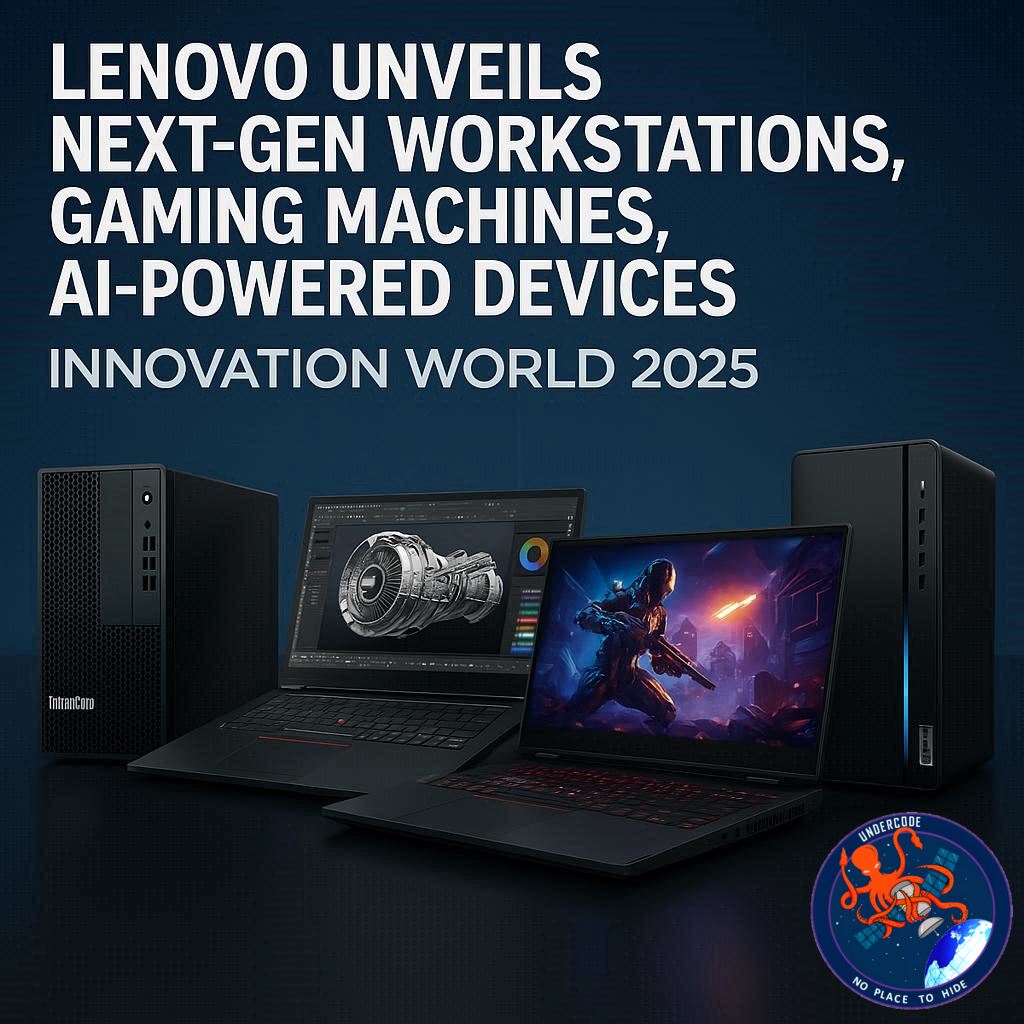
Lenovo has taken center stage at its Innovation World 2025 event in Berlin, unveiling a sweeping lineup of new business workstations, gaming laptops, tablets, and professional displays. The event underscored Lenovo’s focus on AI integration, cutting-edge design, and performance optimization for both professional and gaming users. With a mix of powerhouse mobile workstations, high-refresh-rate gaming rigs, and innovative displays, Lenovo is positioning itself as a leader in next-generation computing solutions across multiple segments.
Lenovo’s Advanced ThinkPad Workstations
Lenovo’s business portfolio has expanded with the latest ThinkPad P-series mobile workstations, now powered by Intel’s Core Ultra processors featuring integrated neural processing units (NPUs) for AI acceleration. The flagship ThinkPad P16 Gen 3 offers up to 24-core Intel Core Ultra 200HX CPUs and NVIDIA RTX PRO 5000 Blackwell GPUs with 24GB VRAM. Designed for engineers, designers, and data scientists, the P16 Gen 3 delivers desktop-level performance in a mobile form factor. Complementing the flagship are the P1 Gen 8, P16v Gen 3, P14s Gen 6, and P16s Gen 4, each offering ISV-certified performance and replaceable batteries for professional workflows. Additionally, Lenovo introduced a stylish glacier white variant of the ThinkPad X9 Aura Edition in 14-inch and 15-inch models.
Gaming Gets a Major Upgrade
Lenovo’s Legion gaming lineup also received significant enhancements. The Legion Pro 7 now runs on AMD Ryzen 9000 HX processors, including the flagship 9955HX3D, paired with NVIDIA GeForce RTX 5080 laptop GPUs. The 16-inch machine delivers up to 275W total graphics power, cooled efficiently by Lenovo’s Legion Coldfront vapor chamber system. The LOQ Tower 26ADR10 desktop complements the laptop line with AMD Ryzen 8000 CPUs, NVIDIA 50-series GPUs, and customizable RGB lighting in a compact 26-liter chassis.
Next-Level Gaming Displays
Competitive gamers gain access to three new Legion Pro OLED monitors. Leading the pack is the 32-inch Pro 32UD-10 and 27-inch Pro 27UD-10, offering 4K resolution at 240Hz with 0.03ms response times. A 27-inch QHD Pro 27Q-10 model pushes refresh rates to 280Hz, making it ideal for esports and competitive gaming.
Professional Displays and Productivity Enhancements
For professional creators, Lenovo introduced the ThinkVision P40WD-40, a 39.7-inch curved ultrawide monitor with 5120×2160 resolution and 21:9 aspect ratio. It delivers 98% DCI-P3 color coverage and variable refresh rates of 24-120Hz, catering to extensive, multitasking workflows. Lenovo also expanded its docking solutions with ThinkPad Smart Docks, including Thunderbolt 5, Thunderbolt 4, and USB4 models. The premium Thunderbolt 5 dock supports three 8K displays at 60Hz or dual 4K displays at 240Hz, along with 180W laptop charging.
Consumer Tablets and AI Integration
Lenovo’s Android-powered Yoga Tab features a Snapdragon 8 Gen 3 processor and an 11.1-inch 3.2K 144Hz display, with AI capabilities like Smart AI Input for text generation and Live Transcript for voice-to-text. The Idea Tab Plus offers a 12.1-inch 2.5K display powered by MediaTek Dimensity 6400, targeting budget-conscious users.
Concept Devices and Software Innovations
Among the showcased concept devices are the NaturaSynth Display, reducing blue light exposure to under 1% for eye comfort, and the Magic Bay HUD, a heads-up display for select ThinkBook models priced at just 60 euros. Lenovo also introduced software initiatives such as the AI Agent Pilot Program with Intel for on-device AI assistants tailored to specific industry workflows, and FlickLift, a cross-application image editing tool.
Launch Timeline and Pricing
The rollout begins in September with select workstations and tablets, extending through November for displays and docking solutions. Prices range from 229 euros for the USB4 Smart Dock to 2,959 euros for the ThinkPad P1 Gen 8.
What Undercode Say:
Lenovo’s 2025 lineup reflects a clear strategy to dominate both professional and consumer markets through AI-enhanced performance and design sophistication. The ThinkPad P16 Gen 3 is particularly noteworthy, bridging the gap between mobile portability and desktop-grade compute power, ideal for engineers, designers, and data scientists who require intensive workloads on the go. Its integration of NPUs suggests Lenovo is not just enhancing CPU/GPU power but also future-proofing its devices for AI-driven tasks such as generative design, large-scale simulations, and real-time data analytics.
In gaming, the combination of AMD Ryzen 9000 HX CPUs with NVIDIA GeForce RTX 5080 laptop GPUs represents a major leap in mobile gaming performance, particularly when paired with advanced cooling and high-refresh-rate OLED monitors. Lenovo’s commitment to esports-grade monitors indicates a focus on a high-end gaming niche, potentially challenging competitors like ASUS ROG and MSI in the premium gaming segment.
Professional creators also benefit from the ThinkVision P40WD-40’s ultrawide display, which prioritizes color fidelity and workspace efficiency. Coupled with Thunderbolt 5 docking, users can build multi-display, high-bandwidth setups without sacrificing portability or performance. This is particularly relevant as hybrid work models demand both flexibility and productivity.
Lenovo’s AI-driven tablets and software initiatives are another indicator of its forward-looking strategy. Smart AI Input and Live Transcript provide immediate productivity gains for mobile users, while the AI Agent Pilot Program signals a push towards industry-specific AI adoption—making Lenovo a serious contender in enterprise AI solutions.
Concept devices like the NaturaSynth Display and Magic Bay HUD highlight Lenovo’s experimental edge, blending ergonomics, eye health, and usability with affordable pricing. This dual approach—high-end performance paired with accessible innovation—positions Lenovo well to cater to diverse market segments.
Overall, Lenovo’s 2025 lineup exemplifies convergence: AI, design, performance, and modularity are no longer isolated features but core pillars of its product ecosystem. Businesses, gamers, and content creators alike can expect a more unified, intelligent, and versatile computing experience.
🔍 Fact Checker Results
✅ Intel Core Ultra processors and NVIDIA RTX PRO 5000 Blackwell GPUs are officially confirmed in Lenovo’s ThinkPad P16 Gen 3.
✅ AMD Ryzen 9000 HX CPUs and NVIDIA RTX 5080 laptop GPUs are validated for Legion Pro 7.
❌ Some concept devices, such as NaturaSynth and Magic Bay HUD, are prototypes and not yet widely available.
📊 Prediction
Lenovo’s emphasis on AI acceleration and hybrid workflow optimization will likely drive strong adoption in enterprise markets. Gaming and esports segments will see incremental market share growth thanks to Legion’s high-performance laptops and OLED monitors. Expect AI-enhanced tablets to influence mobile productivity trends, with Lenovo potentially leading the next wave of industry-specific on-device AI applications.
If you want, I can also create an SEO-optimized, clickbait-style headline version for this article that could significantly boost online traffic. Do you want me to do that?
🕵️📝✔️Let’s dive deep and fact‑check.
References:
Reported By: timesofindia.indiatimes.com
Extra Source Hub:
https://www.twitter.com
Wikipedia
OpenAi & Undercode AI
Image Source:
Unsplash
Undercode AI DI v2
🔐JOIN OUR CYBER WORLD [ CVE News • HackMonitor • UndercodeNews ]
📢 Follow UndercodeNews & Stay Tuned:
𝕏 formerly Twitter 🐦 | @ Threads | 🔗 Linkedin | 🦋BlueSky | 🐘Mastodon


