
Listen to this Post
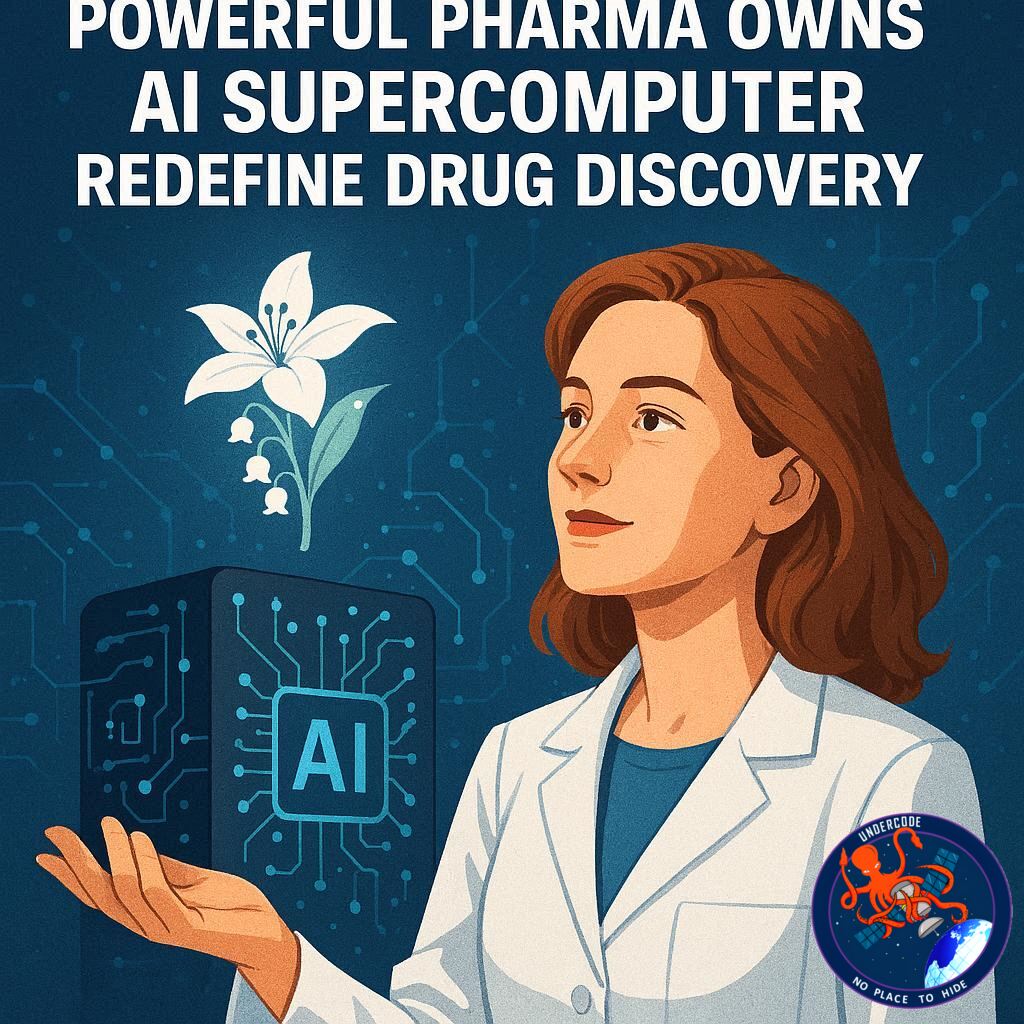
Introduction: A Computational Leap for Human Health
The mission to save and improve lives has always depended on scientific courage, long hours in the lab, and the relentless pursuit of better treatments. Now, that mission has entered a radically new era. This week, Eli Lilly introduced LillyPod, the most powerful artificial intelligence factory ever built and operated entirely by a pharmaceutical company. It is not merely a supercomputer. It is a declaration that the future of medicine will be shaped as much by algorithms and accelerated computing as by microscopes and pipettes.
A Historic Milestone Built on 150 Years of Scientific Ambition
LillyPod arrives at a symbolic moment in the company’s 150-year history. Company executives describe the launch as both a technological breakthrough and the culmination of decades of scientific investment. According to Diogo Rau, Lilly’s executive vice president and chief information and digital officer, the arrival of this AI supercomputer reflects a rare convergence of timing, technology, and biological insight. For Lilly, this is not a one-off innovation. It is a structural shift in how medicine will be discovered and delivered.
The World’s First NVIDIA DGX SuperPOD With DGX B300 Systems
At the heart of LillyPod lies the world’s first NVIDIA DGX SuperPOD configured with DGX B300 systems. The infrastructure is powered by 1,016 NVIDIA Blackwell Ultra GPUs and delivers more than 9,000 petaflops of AI performance. In practical terms, this is computational muscle at an almost unimaginable scale. What once required millions of legacy supercomputers can now be achieved within a tightly integrated, high-density system. Remarkably, the entire AI factory was assembled in just four months, signaling the urgency behind Lilly’s ambitions.
From Millions of Cray Systems to a Thousand Advanced GPUs
The scale of transformation is staggering. Computational power that previously demanded nearly seven million Cray supercomputers can now reside inside a single advanced GPU. Multiply that by over 1,000 units inside LillyPod, and the result is a machine designed to eliminate traditional computational bottlenecks. This infrastructure allows Lilly’s genomics teams to process 700 terabytes of data using more than 290 terabytes of high-bandwidth GPU memory. Biology, once constrained by manual experimentation and limited throughput, now operates at digital velocity.
Computation as the Core of Modern Biology
Thomas Fuchs, Lilly’s senior vice president and chief AI officer, frames computation as fundamental to biology itself. In modern pharmaceutical science, large-scale computing is not a luxury but a necessity. Every stage of the drug development pipeline, from molecular modeling to clinical trial optimization, depends on data-driven analysis. LillyPod’s architecture ensures that the company can train protein diffusion models, small-molecule graph neural networks, and genomics foundation models at unprecedented scale.
Secure, Scalable AI Infrastructure for Healthcare
Healthcare operates within one of the most highly regulated environments in the world. To meet these demands, LillyPod is built on NVIDIA’s full-stack AI factory architecture, including accelerated computing, Spectrum-X Ethernet networking, and optimized AI software. Management and orchestration are handled through NVIDIA Mission Control software, enabling secure workload automation and real-time performance monitoring. The system includes nearly 5,000 connections and over 1,000 pounds of fiber cabling, underscoring the physical intensity behind digital progress.
Sustainability Goals in High-Performance Computing
Despite its immense computational capacity, Lilly has committed to powering LillyPod with 100 percent renewable electricity by 2030. The system uses efficient liquid cooling technology to minimize incremental energy impact. In an era where AI infrastructure often raises environmental concerns, Lilly is positioning its AI expansion alongside sustainability objectives.
Transforming the Wet Lab Into a Massive Digital Dry Lab
Historically, drug discovery has been constrained by the physical limits of laboratory experimentation. Even the most productive research teams can only evaluate around 2,000 molecular ideas per target each year due to the time required for synthesis and testing. LillyPod dismantles that ceiling. In what researchers call the “dry lab,” billions of molecular hypotheses can now be simulated in parallel before any physical experiment begins. The supercomputer does not replace the wet lab. It redefines its starting point.
Accelerating Clinical Development and Manufacturing Decisions
Beyond molecule discovery, LillyPod extends its reach across clinical development and manufacturing. AI-driven analytics can optimize trial design, refine patient selection, and accelerate regulatory documentation. In manufacturing, predictive models can enhance production efficiency and reduce delays. The result is a more precise, scalable, and responsive pharmaceutical value chain.
Opening AI Capabilities Through Lilly TuneLab
Some of Lilly’s proprietary models will be accessible via Lilly TuneLab, an AI and machine learning platform designed for biotech companies. Built on data generated at a cost exceeding $1 billion, TuneLab provides secure access to high-value drug discovery models. It also integrates NVIDIA BioNeMo open foundation models and uses a federated learning infrastructure built on NVIDIA FLARE. This setup allows participating biotech firms to leverage powerful AI systems while keeping their proprietary data private. As more participants join, models improve collectively without compromising confidentiality.
Internal AI Tools and Research Automation
Lilly employees can also leverage LillyPod to build chatbots, agentic workflows, and research lab agents through internal AI platforms. Instead of reinventing digital infrastructure for each project, teams can deploy AI solutions rapidly, embedding automation throughout research and development. The supercomputer thus becomes not just a research engine but an enterprise-wide AI backbone.
A New Scientific Instrument for the AI Era
Executives describe LillyPod not simply as a machine but as a scientific instrument. It integrates proprietary datasets with advanced AI models, enabling researchers to explore billions of chemical possibilities in a fraction of the time once required. By combining data, biology, and computational power, Lilly and NVIDIA are redefining what is possible in life sciences.
What Undercode Say:
The release of LillyPod signals a deeper transformation than headline performance numbers suggest. This is not just about petaflops or GPU counts. It represents a philosophical shift in pharmaceutical R&D. For decades, biology was considered messy, nonlinear, and difficult to model. Today, with foundation models and protein diffusion architectures, biology is increasingly treated as a computational system that can be simulated, predicted, and optimized.
Lilly’s decision to fully own and operate its AI factory is strategic. Many pharmaceutical companies rely heavily on cloud-based infrastructure from hyperscalers. By building an in-house supercomputing environment, Lilly retains tighter control over proprietary data, model training, and regulatory compliance. In an industry where intellectual property defines competitive advantage, that control is critical.
There is also a competitive dimension. AI-driven drug discovery is rapidly becoming the industry norm. Companies that cannot simulate billions of molecules or train large genomics models will struggle to keep pace. LillyPod therefore functions as both a research accelerator and a competitive moat. The scale of 9,000 petaflops is not merely symbolic. It establishes computational superiority that could shorten development timelines and reduce attrition rates.
The federated learning approach embedded in TuneLab is particularly notable. Rather than centralizing external biotech data, Lilly enables collaborative improvement of models while preserving privacy boundaries. This creates a network effect. As more participants contribute, the collective intelligence of the ecosystem increases. Such architecture could become the blueprint for future biotech collaboration, where shared AI infrastructure replaces fragmented research silos.
Environmental considerations add another layer of strategic foresight. AI infrastructure has been criticized for its energy consumption. By committing to renewable electricity and liquid cooling efficiency, Lilly aligns technological expansion with sustainability metrics. This is not merely public relations. Investors and regulators increasingly scrutinize environmental impact, and high-performance computing must adapt accordingly.
Most importantly, LillyPod challenges the physical limitations of the wet lab. When billions of molecular candidates can be evaluated digitally before synthesis, failure rates may decline and success probabilities improve. The dry lab becomes the primary filter, the wet lab the validation stage. That inversion could dramatically reduce cost structures across the pharmaceutical pipeline.
If successful, LillyPod may influence regulatory expectations as well. Agencies could begin to anticipate AI-supported evidence in drug submissions. Computational validation might become standard practice, much like statistical modeling did decades ago. The implications extend beyond Lilly. They point toward a pharmaceutical industry where AI factories become as essential as manufacturing plants.
Fact Checker Results
✅ LillyPod is described as the first NVIDIA DGX SuperPOD with DGX B300 systems owned and operated by a pharmaceutical company.
✅ The system delivers over 9,000 petaflops of AI performance powered by 1,016 Blackwell Ultra GPUs.
✅ Lilly aims to run its AI supercomputing infrastructure on 100 percent renewable electricity by 2030.
Prediction
🔮 AI supercomputing centers like LillyPod will become standard infrastructure for top pharmaceutical companies within the next decade.
📈 Drug discovery timelines could shrink significantly as dry lab simulations replace early-stage physical experimentation.
🌍 Federated AI ecosystems may redefine biotech collaboration, accelerating innovation across the global healthcare sector.
▶️ Related Video (80% Match):
🕵️📝✔️Let’s dive deep and fact‑check.
References:
Reported By: blogs.nvidia.com
Extra Source Hub (Possible Sources for article):
https://www.instagram.com
Wikipedia
OpenAi & Undercode AI
Image Source:
Unsplash
Undercode AI DI v2
Bing
🔐JOIN OUR CYBER WORLD [ CVE News • HackMonitor • UndercodeNews ]
📢 Follow UndercodeNews & Stay Tuned:
𝕏 formerly Twitter 🐦 | @ Threads | 🔗 Linkedin | 🦋BlueSky | 🐘Mastodon


