
Listen to this Post
Introduction: A Long-Awaited Feature Finally Arrives
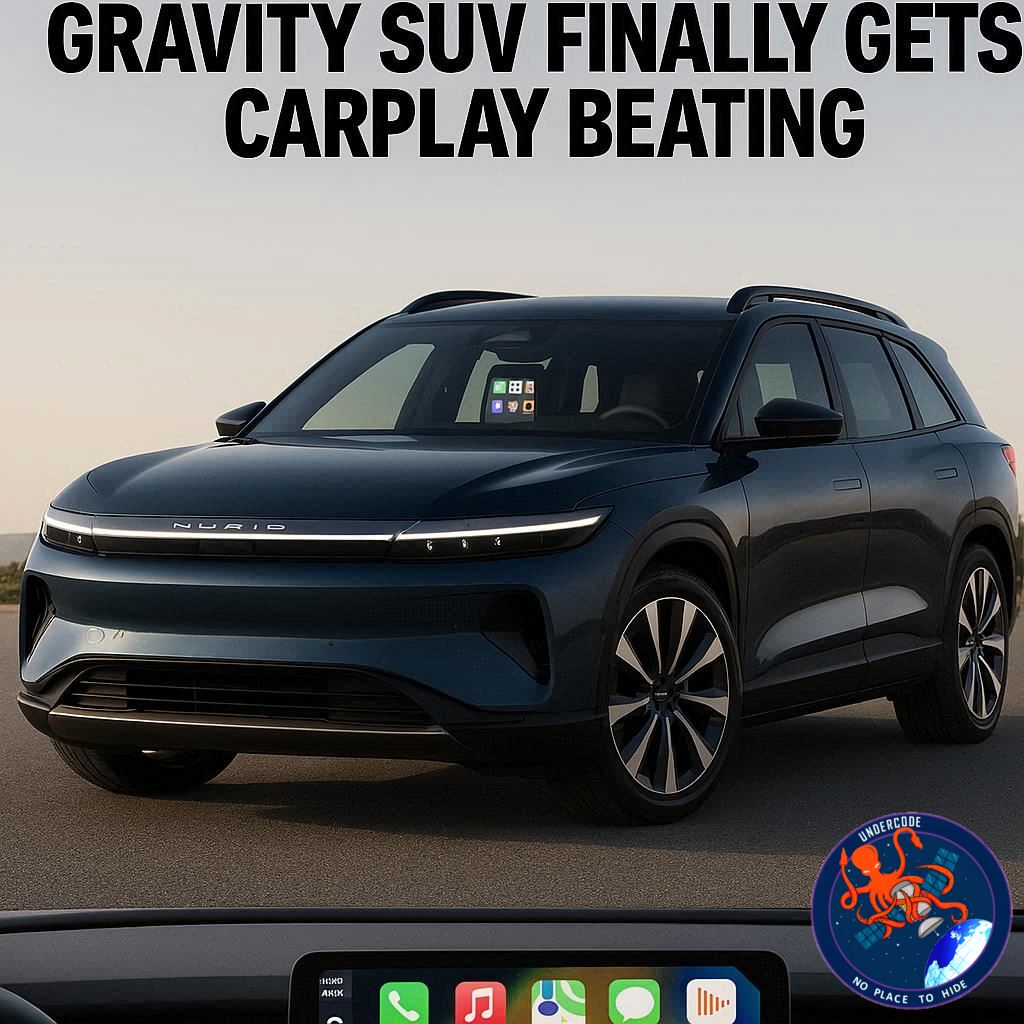
For years, electric vehicle buyers have demanded deeper smartphone integration inside their cars. While many automakers rushed to adopt smartphone mirroring platforms, some high-profile EV brands hesitated—choosing instead to build their own proprietary software ecosystems. Now, a major shift is unfolding. Luxury electric vehicle manufacturer Lucid Motors has officially announced that its upcoming Lucid Gravity will support Apple CarPlay, a move that strengthens its appeal among tech-focused drivers.
The update is particularly notable because competitors such as Tesla have historically resisted adding CarPlay, despite ongoing rumors that the company may eventually adopt it. With this announcement, Lucid once again positions itself as a tech-forward EV brand that listens closely to customer demand.
Lucid Gravity Gains Apple CarPlay Support
Lucid confirmed that Apple CarPlay support will become a standard feature across all new Lucid Gravity SUVs starting immediately. This means drivers purchasing the luxury electric SUV will have direct access to their iPhone apps through the vehicle’s infotainment system without needing third-party modifications or workarounds.
CarPlay enables drivers to integrate their smartphones with the car’s display, allowing access to navigation apps, messaging, music streaming, and voice commands through iOS. By bringing the feature to the Gravity lineup, Lucid aligns itself with growing consumer expectations for seamless mobile integration.
Existing Owners Receive Free Software Update
Lucid isn’t limiting the feature to new buyers. Existing Lucid Gravity owners will receive Apple CarPlay support through a free over-the-air software update beginning March 12 in North America.
Over-the-air updates have become an increasingly important feature in modern EVs. Similar to smartphone updates, these remote software upgrades allow manufacturers to add features, improve performance, and resolve issues without requiring drivers to visit dealerships.
Lucid confirmed that owners in the Middle East and Europe will receive the update slightly later in the month through the Lucid UX 3.5 software release.
Android Auto Also Included
Alongside Apple CarPlay, Lucid is also introducing Android Auto compatibility. This ensures that drivers using Android devices can enjoy the same level of smartphone connectivity as iPhone users.
By supporting both major mobile ecosystems, Lucid ensures its vehicles remain accessible to a broader range of consumers. The dual support reflects an industry trend where automakers avoid favoring one smartphone platform over another.
Wired and Wireless Connectivity Options
Lucid confirmed that Apple CarPlay will work in both wired and wireless modes within the Gravity SUV.
Wireless CarPlay has become increasingly popular because it removes the need for cables when entering the vehicle. Drivers can simply enter the car and immediately see their phone’s interface mirrored on the infotainment display.
However, wired support remains valuable for drivers who want faster charging while using data-heavy applications such as navigation or streaming.
Lucid Already Uses CarPlay in the Air Sedan
This is not Lucid’s first experience with Apple CarPlay integration. The company already introduced the feature in its luxury sedan, the Lucid Air, roughly three years ago.
The success of that integration likely influenced the decision to bring CarPlay to the Gravity SUV. As more drivers adopt smartphone-centric lifestyles, the demand for seamless in-car connectivity continues to rise.
Tesla’s CarPlay Plans Remain Unclear
While Lucid embraces Apple’s ecosystem, Tesla’s position remains uncertain. Media reports have suggested that Tesla may eventually support Apple CarPlay, but the company has not publicly confirmed those plans.
Tesla has historically preferred its own proprietary infotainment software rather than relying on external ecosystems. This approach allows Tesla to maintain tighter control over the user experience but sometimes frustrates drivers who prefer familiar smartphone interfaces.
If Tesla eventually adopts CarPlay, it would represent a significant philosophical shift for the EV giant.
Rivian Focuses on Apple Key Instead
Another EV startup, Rivian, has taken a different path entirely.
Instead of committing to CarPlay, Rivian is focusing on features such as Apple Car Key and Apple Watch integration. These technologies allow drivers to unlock and start vehicles using their smartphones or smartwatches.
While convenient, these features do not provide the same full infotainment integration that CarPlay offers.
The Growing Importance of Smartphone Integration
Smartphone integration has rapidly become a key selling point for modern vehicles. Consumers now expect their cars to function as an extension of their digital lives.
Features such as voice assistants, messaging access, streaming media, and real-time navigation have become standard expectations rather than premium upgrades.
Automakers that ignore these expectations risk alienating tech-savvy buyers—particularly in the luxury EV market where customers demand cutting-edge features.
What Undercode Says:
Lucid’s Strategic Move to Differentiate in the EV Market
Lucid’s decision to expand Apple CarPlay support reflects a broader strategy to differentiate itself from competitors in the increasingly crowded electric vehicle space. While Tesla dominates EV sales globally, Lucid is attempting to compete by emphasizing luxury, technology, and customer-requested features rather than simply range or acceleration.
Adding CarPlay strengthens Lucid’s reputation as a brand that listens to user feedback. Many EV owners specifically request smartphone mirroring because it allows them to keep using familiar apps rather than adapting to proprietary systems.
Consumer Demand Is Driving Software Decisions
One of the most interesting aspects of this announcement is how strongly customer demand influenced the decision. Lucid’s engineering leadership openly acknowledged that CarPlay and Android Auto were among the most requested features by buyers.
This reflects a broader shift across the automotive industry: software ecosystems now matter almost as much as hardware. Range, charging speed, and battery technology remain important—but the digital interface has become equally critical to user satisfaction.
Drivers increasingly judge vehicles by how well they integrate with their phones, cloud services, and digital assistants.
Tesla’s Resistance Could Become a Competitive Weakness
Tesla’s refusal to support Apple CarPlay has long been controversial among drivers. The company’s in-house software platform is powerful and constantly evolving, but some users still prefer the familiarity of Apple or Google ecosystems.
Lucid’s decision may indirectly pressure Tesla. If enough competitors offer CarPlay as a standard feature, Tesla could eventually face customer demand strong enough to reconsider its stance.
This wouldn’t be the first time Tesla adapted to market pressure. Over the years, the company has added features—such as steering wheel controls and physical buttons—that it once resisted.
Over-the-Air Updates Are Transforming the Car Industry
Another important aspect of Lucid’s announcement is the delivery method: over-the-air updates.
Traditional vehicles required physical visits to dealerships for software changes. EV companies like Lucid and Tesla have transformed this process by making cars more like connected computers on wheels.
The ability to add major features remotely not only improves customer satisfaction but also extends the life and value of the vehicle. Owners can receive new capabilities years after purchasing the car.
The Luxury EV Market Is Becoming a Tech Battlefield
Lucid operates primarily in the luxury EV segment, where competition increasingly revolves around technology.
Brands like Mercedes-Benz, BMW, and Audi are also investing heavily in infotainment innovation.
By embracing smartphone ecosystems rather than replacing them, Lucid may gain a competitive edge among tech-focused luxury buyers.
Software Partnerships May Define the Next Era of Vehicles
Looking ahead, partnerships between automakers and technology companies will likely define the future of in-car experiences.
Apple has already expanded its automotive ambitions with projects such as next-generation CarPlay, which aims to control multiple vehicle systems beyond the infotainment screen.
If these systems become widely adopted, the boundaries between car manufacturers and tech companies could blur even further.
Lucid’s decision to fully embrace smartphone integration suggests it understands this shift—and is positioning itself accordingly.
🔍 Fact Checker Results
Verified Feature Announcement
✅ Lucid confirmed Apple CarPlay and Android Auto support for the Lucid Gravity SUV through an official software update rollout.
Tesla CarPlay Rumors Remain Unconfirmed
❌ Reports claiming Tesla will definitely adopt CarPlay are speculative; the company has not officially confirmed any plans.
Over-the-Air Update Timeline
✅ The update rollout beginning March 12 in North America aligns with Lucid’s announced deployment schedule.
📊 Prediction
Smartphone Ecosystems Will Dominate Future Vehicle Interfaces
If Lucid’s CarPlay integration proves popular with drivers, other EV manufacturers may accelerate support for Apple and Google ecosystems. Tesla could eventually face increasing pressure from consumers who expect seamless smartphone integration in high-end vehicles.
Within the next five years, the EV market may shift toward hybrid infotainment systems—combining automaker software with smartphone ecosystems. Brands that successfully balance both worlds will likely gain a competitive advantage in the rapidly evolving electric vehicle industry.
🕵️📝✔️Let’s dive deep and fact‑check.
References:
Reported By: 9to5mac.com
Extra Source Hub (Possible Sources for article):
https://www.medium.com
Wikipedia
OpenAi & Undercode AI
Image Source:
Unsplash
Undercode AI DI v2
Bing
🔐JOIN OUR CYBER WORLD [ CVE News • HackMonitor • UndercodeNews ]
📢 Follow UndercodeNews & Stay Tuned:
𝕏 formerly Twitter 🐦 | @ Threads | 🔗 Linkedin | 🦋BlueSky | 🐘Mastodon


