
Listen to this Post
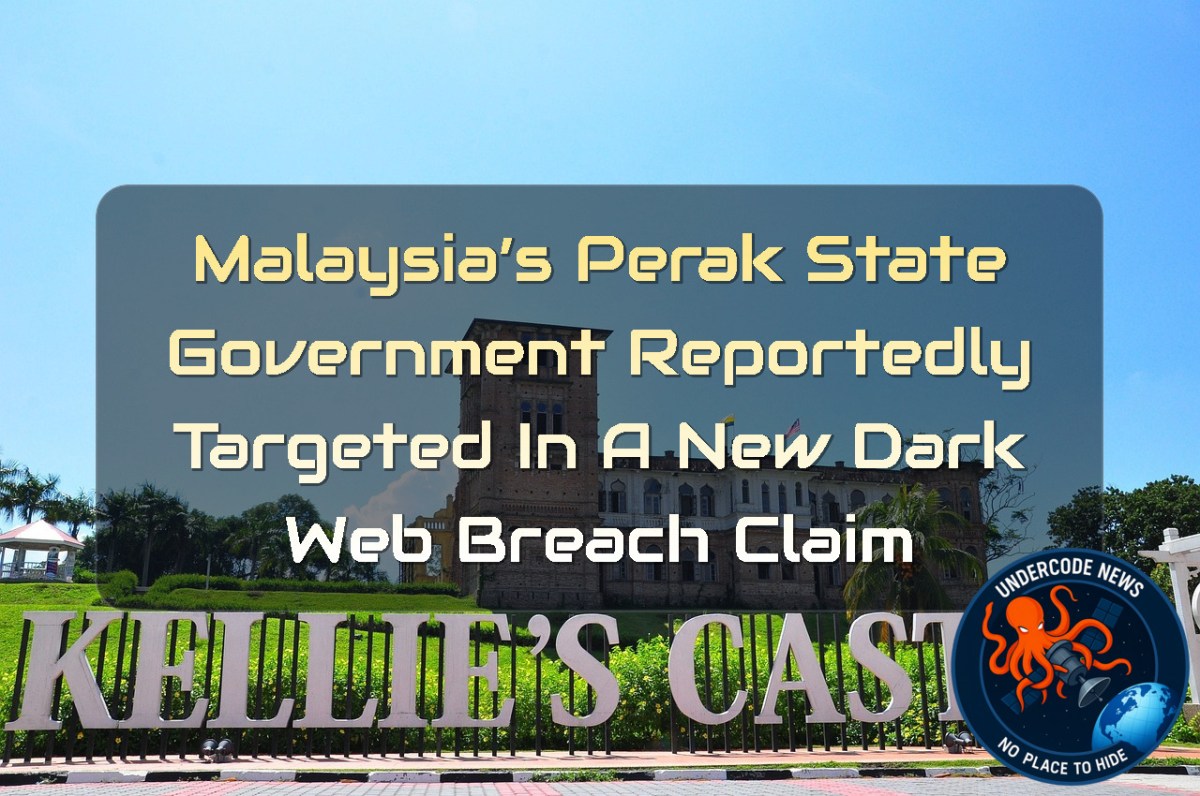
A New Cybersecurity Claim Emerges
A new post from Dark Web Intelligence has drawn attention to Malaysia’s public-sector cybersecurity landscape, appearing to claim that the Perak State Government in Malaysia may have been targeted in a cyber incident. The post, published on August 30, 2026, specifically references Malaysia and the state of Perak, but provides no publicly visible technical details, evidence, compromised-data samples, attacker identity, or explanation of the alleged incident.
For government organizations, even an unverified breach claim deserves attention. Public-sector systems can contain information connected to citizens, employees, government operations, procurement, infrastructure, and administrative services. A successful intrusion could therefore have consequences far beyond a single compromised account or server.
What the Original Post Says
The original source is extremely brief. Dark Web Intelligence, an account that describes itself as working “in the dark to bring clarity to the light,” published a post at approximately 8:44 AM on August 30, 2026, identifying Malaysia – Perak State Government (Perak Gov).
However, the visible post does not explain what allegedly happened. There is no indication of whether the claim concerns ransomware, stolen credentials, unauthorized access, leaked documents, a database compromise, or another type of cyber incident.
Why the Claim Matters
The lack of detail does not make the allegation irrelevant. Government institutions are attractive targets because they operate large collections of information and often depend on numerous interconnected systems, third-party providers, legacy applications, and remote-access infrastructure.
An attacker does not necessarily need to compromise a central government database to create meaningful disruption. A stolen employee account, vulnerable internet-facing application, compromised contractor, or exposed cloud resource could potentially provide an initial foothold.
The Perak Government’s Digital Exposure
The Perak state administration operates within
This digital transformation improves accessibility and efficiency, but it also expands the potential attack surface. Every externally accessible service represents another component that security teams must monitor, patch, authenticate, and defend.
No Evidence of a Confirmed Breach Yet
At this stage, the most important distinction is between a breach claim and a confirmed security incident.
The Dark Web Intelligence post, as provided, should therefore be treated as an allegation rather than established fact. There is no accompanying proof in the supplied material demonstrating that Perak Government systems were successfully compromised.
That distinction is especially important when dealing with dark-web monitoring accounts. Such accounts can identify genuine incidents before organizations publicly disclose them, but they can also report claims that later turn out to be exaggerated, inaccurate, recycled, or impossible to independently verify.
What Could Have Been Targeted?
If the claim eventually proves legitimate, there are several possible categories of systems that could be involved. These could include public-facing websites, administrative applications, employee accounts, email environments, cloud infrastructure, databases, or systems operated by third-party service providers.
At present, however, there is no reliable information identifying the alleged attack vector.
A Possible Credential-Based Scenario
One potential avenue in modern government attacks is credential theft. Phishing, infostealer malware, password reuse, stolen session tokens, and compromised third-party accounts can allow attackers to bypass some traditional perimeter defenses.
If an administrative account were compromised, attackers could potentially move deeper into an environment depending on the account’s privileges and the organization’s segmentation.
This is only a potential scenario, not a statement that credential theft occurred in the Perak case.
A Possible Vulnerability-Exploitation Scenario
Another possibility would be exploitation of an internet-facing vulnerability. Government networks often contain web applications, VPN systems, remote-access infrastructure, content-management platforms, security appliances, and other technologies exposed to the internet.
When critical vulnerabilities are discovered, attackers frequently scan the internet for organizations that have not yet applied the relevant security updates.
Again, there is currently no evidence connecting any particular vulnerability to this allegation.
The Ransomware Question
Ransomware is another possibility that naturally arises whenever a government organization appears in a cyberattack report. Public institutions can be attractive ransomware targets because disruption to essential administrative services creates pressure to restore operations quickly.
But there is currently no evidence in the supplied post that ransomware was involved.
It would therefore be premature to label the alleged Perak incident a ransomware attack.
Data Theft Could Be More Significant Than Encryption
Even if ransomware were not involved, data theft could potentially represent the more serious long-term concern.
Attackers increasingly prioritize stealing information before disrupting systems. Stolen databases, internal documents, credentials, employee information, procurement records, or administrative communications can potentially be monetized, used for extortion, or leveraged in subsequent attacks.
A system can therefore remain operational while sensitive information has already been compromised.
The Dark Web Adds Another Layer of Risk
If stolen information connected to Perak Government were eventually offered on underground marketplaces or leak sites, investigators would need to determine whether the material was genuinely obtained from government infrastructure.
Threat actors sometimes publish samples to demonstrate possession of data. However, samples can also be fabricated, recycled from older incidents, obtained from unrelated third parties, or deliberately manipulated.
Authenticity must therefore be established through technical investigation rather than assumed from an underground listing alone.
Why Government Breaches Have a Wider Impact
A government cyberattack is fundamentally different from a typical consumer breach because government information can connect multiple areas of public administration.
A single compromised environment may potentially expose information about employees, contractors, suppliers, public services, infrastructure, or government operations.
The consequences can therefore include privacy risks, operational disruption, reputational damage, financial costs, and increased exposure to follow-up attacks.
The Supply-Chain Risk
Third-party providers should also not be overlooked.
Government agencies depend on technology vendors, software providers, cloud services, managed-service companies, telecommunications providers, and contractors. A compromise somewhere in that ecosystem can sometimes provide attackers with access to downstream organizations.
Consequently, investigating an alleged government breach should involve more than examining the government’s own servers.
Why Early Verification Is Critical
The earlier an organization can determine whether a breach actually occurred, the better its chances of limiting the damage.
Security teams can investigate authentication logs, endpoint telemetry, firewall events, cloud activity, database access, unusual administrative actions, and data-transfer patterns.
These sources can help determine whether an attacker merely attempted an intrusion or successfully gained access.
The Importance of Evidence
A credible breach investigation should ultimately be supported by evidence such as affected systems, attack timestamps, indicators of compromise, malware samples, authentication anomalies, forensic artifacts, or verified stolen data.
Without such evidence, external observers should avoid presenting the incident as confirmed.
This is particularly important because inaccurate breach reports can create unnecessary fear and can make it harder for legitimate victims to communicate clearly with the public.
Malaysia’s Broader Cybersecurity Challenge
Malaysia, like many digitally connected countries, faces a constantly evolving threat environment. Government organizations are attractive because they combine valuable information with complex technology environments.
The growing adoption of cloud services, online public portals, remote administration, and interconnected digital systems increases both efficiency and exposure.
Security therefore has to evolve alongside digital government.
Deep Analysis: What This Claim Could Mean
The most interesting aspect of this report is not simply whether the Perak Government appears on a dark-web monitoring feed. The bigger question is what such a claim tells us about the modern threat landscape facing public institutions.
Attackers increasingly operate according to an economic model. They search continuously for weaknesses, compromised credentials, exposed services, and organizations that can generate financial or strategic value.
Government networks fit naturally into this model.
A successful compromise could produce multiple forms of value: stolen personal information, credentials, internal documents, operational intelligence, extortion opportunities, or access that can be resold to another threat actor.
The appearance of a government organization in an underground intelligence report can therefore represent an early warning signal even when the original claim has not yet been independently confirmed.
The first command for defenders should be VERIFY.
Security teams should determine whether the organization has observed unusual authentication activity, unexpected privileged accounts, suspicious endpoint behavior, abnormal network traffic, or unauthorized data access.
The second command should be CONTAIN.
If suspicious activity is discovered, potentially compromised accounts, endpoints, sessions, and external access mechanisms should be isolated while preserving forensic evidence.
The third command should be INVESTIGATE.
Investigators should establish the initial access vector, determine attacker persistence, identify lateral movement, and establish whether sensitive information was accessed or removed.
The fourth command should be HUNT.
Threat hunters should search for indicators associated with the suspected intrusion across endpoints, identity systems, cloud infrastructure, network devices, and third-party environments.
The fifth command should be RESET.
Potentially compromised credentials, authentication tokens, privileged sessions, and other access mechanisms should be addressed according to the findings of the investigation.
The sixth command should be PATCH.
If vulnerability exploitation is discovered, affected technologies should be identified and remediated rapidly.
The seventh command should be SEGMENT.
Network segmentation can limit the ability of an attacker to move from an initially compromised system into more sensitive government environments.
The eighth command should be MONITOR.
Even after an attacker has been removed, organizations should maintain heightened monitoring because threat actors may attempt to regain access using additional accounts or persistence mechanisms.
The ninth command should be VALIDATE.
Any alleged stolen dataset should be examined carefully to determine whether it genuinely originated from the affected organization.
The tenth command should be COMMUNICATE.
Government agencies should provide accurate information when appropriate, avoiding both premature confirmation and unnecessary ambiguity.
The central lesson is that a dark-web claim should trigger investigation, not panic.
A government organization does not need to wait for a ransom note or public leak before taking suspicious activity seriously.
Modern attacks can remain invisible for days, weeks, or even longer before becoming publicly known.
That makes external threat intelligence valuable as an additional signal.
However, threat intelligence becomes useful only when combined with internal telemetry and professional verification.
For Perak Government, the key unanswered questions remain straightforward: Was unauthorized access actually achieved? What systems were involved? Was data accessed or stolen? When did the activity occur? How did the attackers enter? And has any compromised information appeared publicly?
Until those questions are answered, the incident should remain classified as an unverified cyberattack claim.
What Undercode Say:
An Early Warning, Not a Verdict
The Perak Government allegation is worth monitoring, but it should not yet be presented as a confirmed breach.
Evidence Comes First
The supplied source contains no technical evidence demonstrating successful compromise.
Government Systems Are High-Value Targets
Public-sector networks contain information and services that can be valuable to criminals and espionage-oriented threat actors.
Dark-Web Claims Require Verification
Underground claims can provide useful early intelligence, but they can also contain misleading or incomplete information.
Ransomware Has Not Been Established
There is nothing in the supplied post confirming ransomware involvement.
Data Theft Remains a Possibility
If the allegation proves legitimate, stolen information could become more important than service disruption.
Credentials Are a Major Risk
Compromised credentials remain one of the most common mechanisms attackers can use to gain access to organizations.
Vulnerabilities Also Matter
Internet-facing government applications and infrastructure must be continuously patched and monitored.
Third Parties Cannot Be Ignored
An incident affecting a government organization could potentially originate through a supplier or service provider.
Authentication Logs Could Be Critical
Unusual login locations, impossible travel patterns, unfamiliar devices, and abnormal privilege use can provide important evidence.
Cloud Environments Need Investigation
If government systems use cloud infrastructure, identity and cloud audit logs should form part of any investigation.
Lateral Movement Matters
Finding the first compromised machine is not enough; investigators need to determine how far an attacker traveled.
Persistence Is a Key Question
Attackers frequently attempt to establish mechanisms that allow them to return after the initial intrusion.
Exfiltration Must Be Examined
Large or unusual outbound transfers could indicate data theft, although traffic anomalies require contextual analysis.
Leak Samples Need Authentication
A dataset allegedly belonging to Perak Government should be validated against known structures, records, timestamps, and other evidence.
Recycled Data Is Possible
Threat actors sometimes republish previously leaked information and present it as a new compromise.
Public Claims Can Be Manipulated
Cybercrime communities have incentives to exaggerate successful operations to increase credibility and pressure victims.
Security Teams Should Avoid Assumptions
Investigators should follow evidence rather than allowing the original allegation to dictate their conclusions.
Incident Response Should Be Ready
Organizations should already have procedures for containment, forensic investigation, recovery, and communications.
Segmentation Can Limit Damage
Strong network separation can prevent a compromise in one environment from becoming a broader organizational intrusion.
Least Privilege Is Important
Accounts should have only the permissions necessary to perform their legitimate functions.
MFA Helps, But Is Not Absolute
Multi-factor authentication significantly improves account security but does not eliminate every identity-based attack.
Session Theft Is Another Concern
Attackers can sometimes abuse stolen authentication sessions even when passwords and MFA protections exist.
Endpoint Visibility Is Essential
Security teams need sufficient telemetry to identify malicious behavior across government-managed devices.
Continuous Monitoring Matters
A breach should not be the first time an organization examines suspicious activity.
Threat Intelligence Has Value
External reports can sometimes reveal attacks before organizations publicly disclose them.
Intelligence Needs Context
A single social-media post should never be treated as equivalent to forensic confirmation.
Government Breaches Can Have Strategic Consequences
Sensitive information may have operational value beyond direct financial gain.
Citizen Data Could Become a Target
Personal information can be monetized, abused for fraud, or combined with information from other breaches.
Internal Documents Can Be Valuable
Administrative communications and government documents can provide attackers with additional intelligence.
Procurement Information Can Matter
Vendor and procurement records can reveal relationships that attackers may exploit in future supply-chain attacks.
The Investigation Should Be Broader Than One Server
Modern government environments are interconnected, making comprehensive investigation essential.
Recovery Is Only One Phase
Restoring systems without understanding the intrusion can leave attackers with an opportunity to return.
Communication Should Be Precise
Officials should distinguish between attempted attacks, suspected compromise, confirmed compromise, and confirmed data exposure.
Transparency Builds Trust
Accurate communication is particularly important when public services or personal information could be affected.
The Claim Deserves Monitoring
Even without confirmation, the allegation should remain on the cybersecurity watch list until more evidence becomes available.
The Bigger Lesson Is Clear
Government cybersecurity cannot depend solely on perimeter defenses.
Attackers Only Need One Opening
Defenders must protect identities, applications, endpoints, networks, cloud systems, and third-party connections simultaneously.
Verification Is the Final Standard
Until credible evidence emerges, the Perak Government incident should be regarded as a claim requiring investigation—not a confirmed breach.
❌ Confirmed breach: The supplied source does not provide sufficient evidence to confirm that Perak State Government systems were successfully breached.
❌ Ransomware attack: There is no evidence in the provided post establishing that ransomware was involved.
✅ Dark-web claim: Dark Web Intelligence did publish a post on August 30, 2026 referencing “Malaysia – Perak State Government (Perak Gov),” making the existence of the claim itself supported by the supplied material.
Prediction
(+1) Increased Scrutiny
The claim is likely to attract additional attention from cybersecurity researchers and threat-intelligence teams looking for evidence that could confirm or disprove the allegation.
(+1) Possible Investigation
If the claim contains genuine information that has not yet been publicly disclosed, the affected organization or relevant Malaysian authorities may investigate suspicious activity internally.
(+1) More Information Could Surface
Additional details could emerge if attackers publish samples, researchers identify matching infrastructure, or the organization makes a public statement.
(-1) The Claim May Remain Unverified
It is also possible that no reliable evidence will emerge and the allegation will remain an unconfirmed dark-web intelligence report.
(-1) The Allegation Could Be Misleading
Without technical evidence, there remains a meaningful possibility that the claim is exaggerated, inaccurate, recycled, or based on information obtained from another source.
(+1) The Cybersecurity Lesson Remains Relevant
Regardless of whether this particular allegation proves true, the incident highlights why government organizations need continuous monitoring, strong identity protection, rapid vulnerability management, network segmentation, and well-tested incident-response capabilities.
▶️ Related Video (82% Match):
🕵️📝Let’s dive deep and fact‑check.
🎓 Live Courses & Certifications:
Join Undercode Academy for Verified Certifications
🚀 Request a Custom Project:
Secure, high-velocity infrastructure and disruptive technological engineering. Contact our engineering team for high-tier development and proprietary systems:
[email protected]
💎 Smart Architecture | 🛡️ Secure by Design | ⭐ Trusted by Thousands
References:
Reported By: x.com
Extra Source Hub (Possible Sources for article):
https://www.stackexchange.com
Wikipedia
OpenAi & Undercode AI
Image Source:
Unsplash
Undercode AI DI v2
🔐JOIN OUR CYBER WORLD [ CVE News • HackMonitor • UndercodeNews ]
📢 Follow UndercodeNews & Stay Tuned:
𝕏 formerly Twitter 🐦 | @ Threads | 🔗 Linkedin | 🦋BlueSky | 🐘Mastodon | 📺Youtube


