Listen to this Post
Introduction: A Market That Refuses to Behave Normally
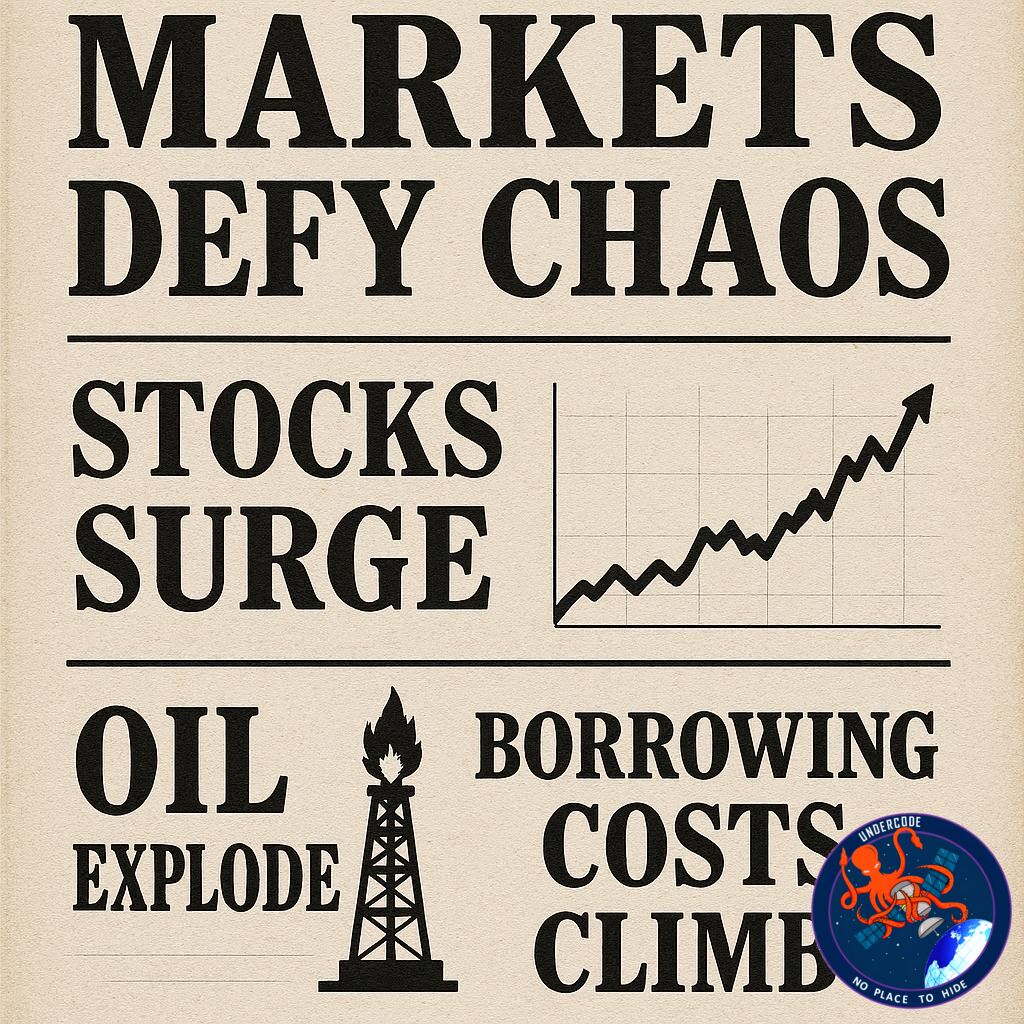
April delivered one of the most puzzling financial narratives in recent memory. On the surface, global conditions pointed toward instability—rising oil prices, geopolitical tension, and increasing borrowing costs. Yet, instead of retreating, the stock market surged ahead with remarkable strength. This unusual divergence between economic pressure and market optimism reveals a deeper story about investor psychology, corporate resilience, and the evolving structure of modern financial systems.
A Month of Contradictions in Global Markets
The past month showcased a striking disconnect across major financial indicators. While oil prices climbed sharply and bond yields rose—both typically negative signals for equities—the stock market moved in the opposite direction. The S&P 500 recorded its strongest monthly performance in nearly six years, surging more than 10% and hitting multiple record highs. This rally followed a sharp decline in March, making the rebound even more dramatic.
Stocks Rebound with Unstoppable Momentum
After a turbulent March, equities roared back to life in April. The S&P 500 not only recovered losses but pushed into record territory, restoring confidence in retirement portfolios and index-linked investments. This rapid turnaround highlights how quickly sentiment can shift when investors regain optimism, especially after periods of uncertainty.
Corporate Earnings Provide a Strong Foundation
A key driver behind the rally was robust corporate earnings. Companies demonstrated resilience despite geopolitical tensions and rising costs, reinforcing confidence in the broader economy. Strong earnings reports reassured investors that businesses could withstand external shocks, helping to sustain upward momentum in stock prices.
AI Hype Fuels Tech Sector Explosion
Another major catalyst was continued enthusiasm surrounding artificial intelligence. The Nasdaq surged an impressive 15% during the month, marking its best performance in years. Investors poured capital into tech companies, betting heavily on long-term growth driven by AI innovation and digital transformation.
Market Psychology: Buying the Dip and Algorithmic Boosts
Modern market dynamics also played a crucial role. Algorithmic trading systems amplified the rebound by triggering automatic buy orders at key levels. At the same time, human investors aggressively “bought the dip,” fearing they might miss out on the next major rally. This combination of machine-driven momentum and emotional decision-making created a powerful upward force.
Geopolitical Tensions Take a Back Seat
Despite ongoing conflict involving Iran and disruptions in critical oil supply routes, the stock market largely ignored these risks. Investors appeared to focus on future stability rather than present uncertainty, pricing in expectations of a resolution rather than escalation.
Bond Market Signals Rising Concern
While stocks celebrated, the bond market told a more cautious story. Treasury yields climbed significantly, with the 10-year yield reaching 4.4%, its highest level in weeks. Rising yields reflect falling bond prices and signal increasing concern about inflation and long-term interest rates.
Higher Yields Translate to Higher Borrowing Costs
The rise in yields has real-world consequences. Mortgage rates and loan costs have followed suit, making borrowing more expensive across the economy. The 30-year fixed mortgage rate climbed to around 6.3%, putting pressure on housing affordability and consumer spending.
Inflation Fears Resurface with Energy Surge
A major driver of rising yields is inflation anxiety. As oil prices surged, concerns grew that higher energy costs would ripple through the economy. Inflation erodes the value of fixed-income investments, pushing investors to demand higher returns, which in turn drives yields upward.
Federal Reserve Signals Prolonged Tight Policy
Adding to the pressure, expectations around monetary policy shifted. The Federal Reserve held interest rates steady but signaled a prolonged period of elevated rates. Markets now anticipate that rates could remain unchanged for years, reinforcing the “higher-for-longer” narrative.
Oil Prices Skyrocket Amid Supply Disruptions
Oil markets experienced dramatic volatility as geopolitical tensions intensified. Prices surged more than 50% since the conflict began, driven largely by disruptions in the Strait of Hormuz—a critical global oil transit route.
Strait of Hormuz Becomes a Global Pressure Point
The effective closure of this key waterway significantly restricted oil flows from the Gulf. Military actions aimed at limiting exports further tightened supply, pushing prices higher and creating uncertainty in global energy markets.
Gas Prices Hit Multi-Year Highs
The surge in crude oil prices quickly translated to higher fuel costs for consumers. Gas prices climbed to levels not seen since 2022, adding financial strain on households and increasing operational costs for businesses.
Volatility Returns to Oil Markets
Oil prices experienced sharp swings throughout the month. Initial optimism following a ceasefire announcement led to a temporary drop, but prices rebounded quickly as hopes for a lasting agreement faded. By the end of April, oil reached new highs before stabilizing at elevated levels.
What Undercode Say:
A Market Detached from Reality or Just Forward-Thinking?
The current market behavior raises an important question: are investors ignoring risks, or are they simply looking ahead? Historically, markets tend to price in future expectations rather than present conditions. In this case, investors appear to be betting that geopolitical tensions will ease and that economic growth will remain intact despite short-term disruptions.
The Power of Narrative Over Fundamentals
One of the most striking elements of this rally is the dominance of narrative—particularly around AI. While corporate earnings are strong, the magnitude of the tech rally suggests that storytelling is playing an equally powerful role. Markets are increasingly driven by expectations of future innovation rather than current financial realities.
Liquidity and Market Structure Are Driving Forces
Modern financial markets are heavily influenced by liquidity and automated systems. Algorithmic trading and passive investing have fundamentally changed how markets react to news. Instead of gradual adjustments, we now see rapid, amplified movements that can push prices far beyond traditional valuation metrics.
Inflation Risk Is Being Underestimated
Despite rising oil prices and increasing borrowing costs, equity markets seem relatively unconcerned about inflation. This disconnect could become problematic if inflation proves more persistent than expected. Higher energy costs tend to filter through the entire economy, potentially squeezing corporate margins and consumer spending.
The Bond Market as the Real Warning Signal
While equities celebrate, the bond market is flashing caution. Rising yields indicate that investors are demanding higher compensation for risk, particularly inflation risk. Historically, bond markets often act as an early warning system for economic stress, suggesting that current optimism in stocks may not be fully justified.
Geopolitics Still Holds the Wildcard
The situation in the Middle East remains a significant uncertainty. Any escalation could further disrupt oil supply and trigger broader economic consequences. Conversely, a stable resolution could justify the market’s optimism and sustain the rally.
Consumer Impact Could Shift the Narrative
Rising gas prices and higher borrowing costs directly affect consumers. If household budgets become strained, spending could decline, impacting corporate revenues. This would challenge the current narrative of resilience and potentially lead to a market correction.
The Risk of Overconfidence
Markets often perform best when uncertainty is gradually resolved. However, when investors become overly confident, risks tend to be underestimated. The current rally, fueled by optimism and momentum, could be vulnerable to sudden shifts in sentiment.
A Fragile Balance Between Growth and Cost Pressures
The global economy is walking a tightrope. On one side, strong corporate performance and technological innovation support growth. On the other, rising costs and geopolitical risks threaten stability. The balance between these forces will determine the market’s direction in the coming months.
Timing the Market Becomes Increasingly Difficult
In such an environment, predicting short-term movements becomes extremely challenging. Rapid shifts driven by algorithms, news cycles, and sentiment make traditional analysis less reliable. Investors must navigate a landscape where volatility is the new normal.
Fact Checker Results
Accuracy of Market Performance Claims
✅ The S&P 500 did experience a significant rebound, consistent with reported gains and record highs.
Oil Price Surge and Supply Disruption
✅ Oil prices rising due to Strait of Hormuz disruptions aligns with historical supply-demand dynamics.
Interest Rate and Yield Trends
❌ The expectation that rates will remain unchanged until 2027 is speculative and not guaranteed policy.
Prediction
Short-Term Volatility with Long-Term Opportunity
Markets are likely to remain volatile as conflicting forces continue to play out. Oil prices and geopolitical risks will keep pressure on inflation, while strong corporate earnings and AI-driven optimism may sustain equity markets.
Potential Correction if Inflation Persists
If inflation accelerates due to sustained high energy costs, equities could face a correction as interest rate expectations adjust upward.
AI Momentum Could Continue to Drive Markets
Despite macroeconomic risks, the AI sector may continue attracting capital, acting as a stabilizing force for the broader market.
A निर्णing Moment for Global Economic Direction
The coming months will be critical. Whether markets continue their upward trajectory or reverse course will depend on how inflation, interest rates, and geopolitical tensions evolve together.
🕵️📝Let’s dive deep and fact‑check.
References:
Reported By: edition.cnn.com
Extra Source Hub (Possible Sources for article):
https://www.discord.com
Wikipedia
OpenAi & Undercode AI
Image Source:
Unsplash
Undercode AI DI v2
Bing
🔐JOIN OUR CYBER WORLD [ CVE News • HackMonitor • UndercodeNews ]
📢 Follow UndercodeNews & Stay Tuned:
𝕏 formerly Twitter 🐦 | @ Threads | 🔗 Linkedin | 🦋BlueSky | 🐘Mastodon