
Listen to this Post
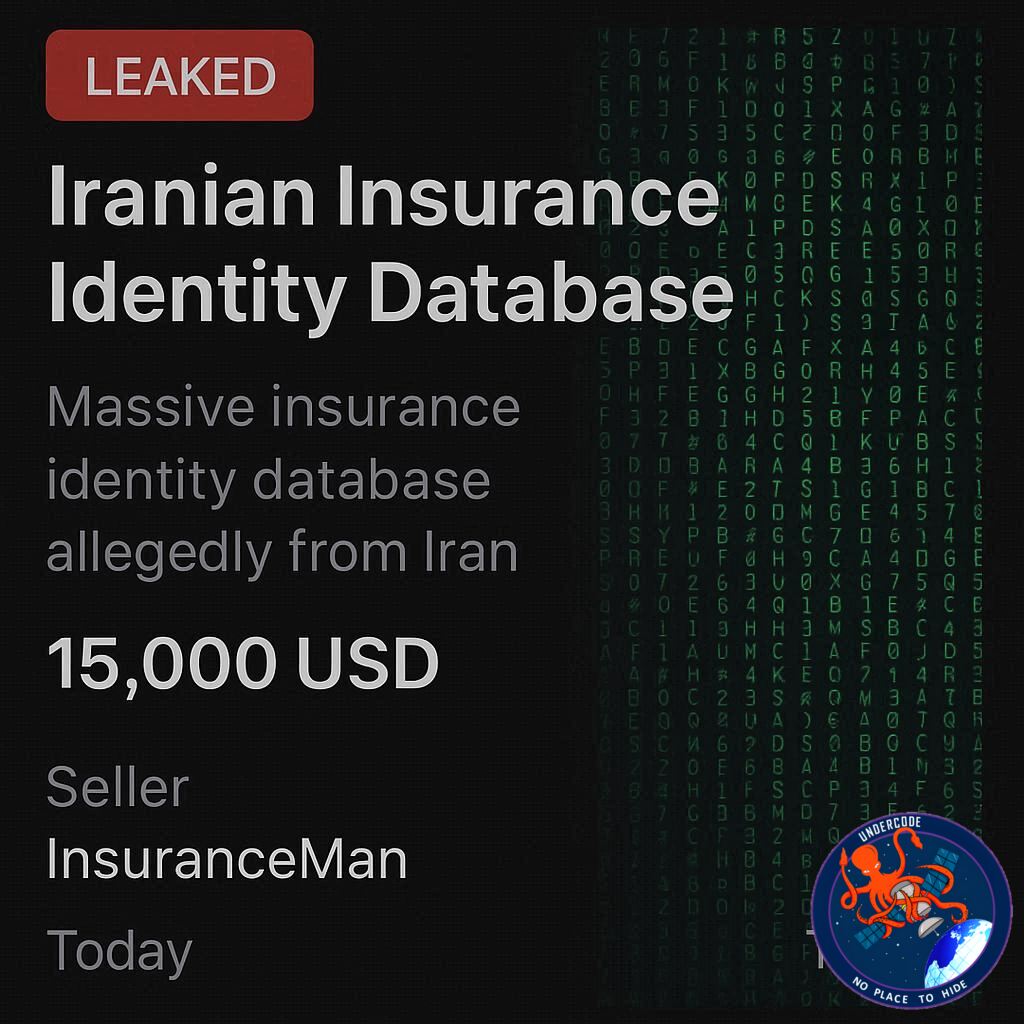
Introduction: Large-Scale Identity Data Allegedly Circulating in Underground Markets
A new dark web listing has surfaced claiming the sale of a highly structured Iranian database containing sensitive personal, insurance, and vehicle-related records. The dataset, reportedly around 500MB in size, is being offered for $15,000 and includes detailed identity profiles such as national IDs, contact information, vehicle registrations, and insurance policy data. If authentic, this type of combined dataset represents a serious cybersecurity risk due to its potential use in identity theft, financial fraud, and targeted scams. However, questions remain about the credibility of the seller and whether the data is original or recycled from older breaches.
the Alleged Dark Web Listing
A dark web seller claims to be offering a large Iranian dataset for sale.
The dataset size is reportedly around 500MB.
Data formats include structured files such as CSV and SQL.
The information allegedly contains full personal identities.
Full names of individuals are included in the dataset.
National identification codes are reportedly part of the records.
Dates of birth are listed for many individuals.
Mobile phone numbers are included in the exposed data.
Vehicle ownership details are part of the dataset.
Vehicle brands and models are allegedly recorded.
VIN numbers (chassis numbers) are included.
Engine numbers appear in the structured records.
License plate information is reportedly present.
Insurance policy numbers are part of the leak.
Insurance expiry dates are included.
Insurance provider names are allegedly listed.
Pricing for the dataset is set at $15,000.
Sample screenshots or previews are reportedly provided.
The seller claims the data is highly structured and complete.
The dataset combines identity, vehicle, and insurance records.
Such combined datasets are rare in public leaks.
The seller has a negative reputation score on the platform.
This raises concerns about trustworthiness.
The data may be recycled from older breaches.
It could also be partially fabricated or inflated.
Structured formatting increases perceived legitimacy.
No independent verification of authenticity has been confirmed.
Threat actors often exaggerate dataset completeness for profit.
The listing targets buyers interested in fraud-related intelligence.
The dataset is currently classified as unverified.
What Undercode Say:
The appearance of this alleged Iranian dataset highlights a recurring pattern in underground markets where structured data is often more valuable than raw leaks. Even when authenticity is uncertain, the way information is packaged plays a major role in its perceived worth. A 500MB database containing identity, vehicle, and insurance records would indeed represent a high-impact security breach if real, especially because it merges multiple sensitive data categories into a single profile per individual.
However, the credibility of such listings must always be carefully evaluated. Dark web sellers frequently reuse older datasets, merge multiple leaks, or artificially enhance file structures to increase selling prices. The inclusion of detailed fields like VIN numbers, insurance expiry dates, and national IDs makes the dataset appear highly organized, but structure alone does not guarantee originality or freshness of the data.
The seller’s negative reputation score is another critical warning indicator. In underground marketplaces, reputation is often one of the few signals buyers can use to assess trustworthiness. A poor rating typically suggests prior disputes, failed transactions, or exaggerated claims. This reduces confidence in whether the dataset is genuinely new or simply repackaged.
From a threat intelligence perspective, even partially accurate data of this type can be extremely damaging. Identity theft becomes easier when personal identifiers are linked with vehicles and insurance information. Attackers can construct highly convincing fraud schemes, including fake insurance claims, vehicle cloning, and impersonation-based scams.
The combination of national ID numbers and vehicle ownership records is particularly dangerous because it enables cross-domain verification attacks. Criminals can use one dataset to validate information from another, increasing the success rate of fraudulent activities.
Insurance data adds another layer of risk. Policy numbers, expiry dates, and provider information can be exploited to manipulate claims systems or impersonate legitimate policyholders. This creates opportunities for financial fraud that are harder to detect due to the authenticity of supporting details.
Another concern is targeted social engineering. With access to names, phone numbers, and vehicle details, attackers can craft highly personalized phishing messages that appear legitimate. This significantly increases victim trust and engagement rates.
Even if the dataset is partially recycled, its structured format makes it easier for malicious actors to process and automate attacks at scale. Structured leaks are often more dangerous than unorganized dumps because they reduce the effort needed for exploitation.
Overall, while confirmation is lacking, the potential impact of such a dataset remains high. The main uncertainty lies in whether this is a genuine fresh breach or a repackaged compilation designed for profit.
Fact Checker Results
❌ No independent verification confirms the dataset authenticity
⚠️ Seller reputation suggests possible exaggeration or recycled data
📊 Structured format is realistic but not proof of legitimacy
Prediction
If this dataset is confirmed as real, it is likely to fuel a rise in identity-based fraud campaigns targeting Iranian individuals and vehicle owners. Even if partially false, the listing itself may still circulate among threat actors, leading to attempts to cross-match it with existing breached databases. Over time, this could contribute to more sophisticated multi-source identity reconstruction attacks and increased pressure on insurance and identity verification systems.
🕵️📝✔️Let’s dive deep and fact‑check.
References:
Reported By: x.com
Extra Source Hub (Possible Sources for article):
https://www.digitaltrends.com
Wikipedia
OpenAi & Undercode AI
Image Source:
Unsplash
Undercode AI DI v2
Bing
🔐JOIN OUR CYBER WORLD [ CVE News • HackMonitor • UndercodeNews ]
📢 Follow UndercodeNews & Stay Tuned:
𝕏 formerly Twitter 🐦 | @ Threads | 🔗 Linkedin | 🦋BlueSky | 🐘Mastodon


