
Listen to this Post
Introduction: A New Chapter in Corporate Cybercrime
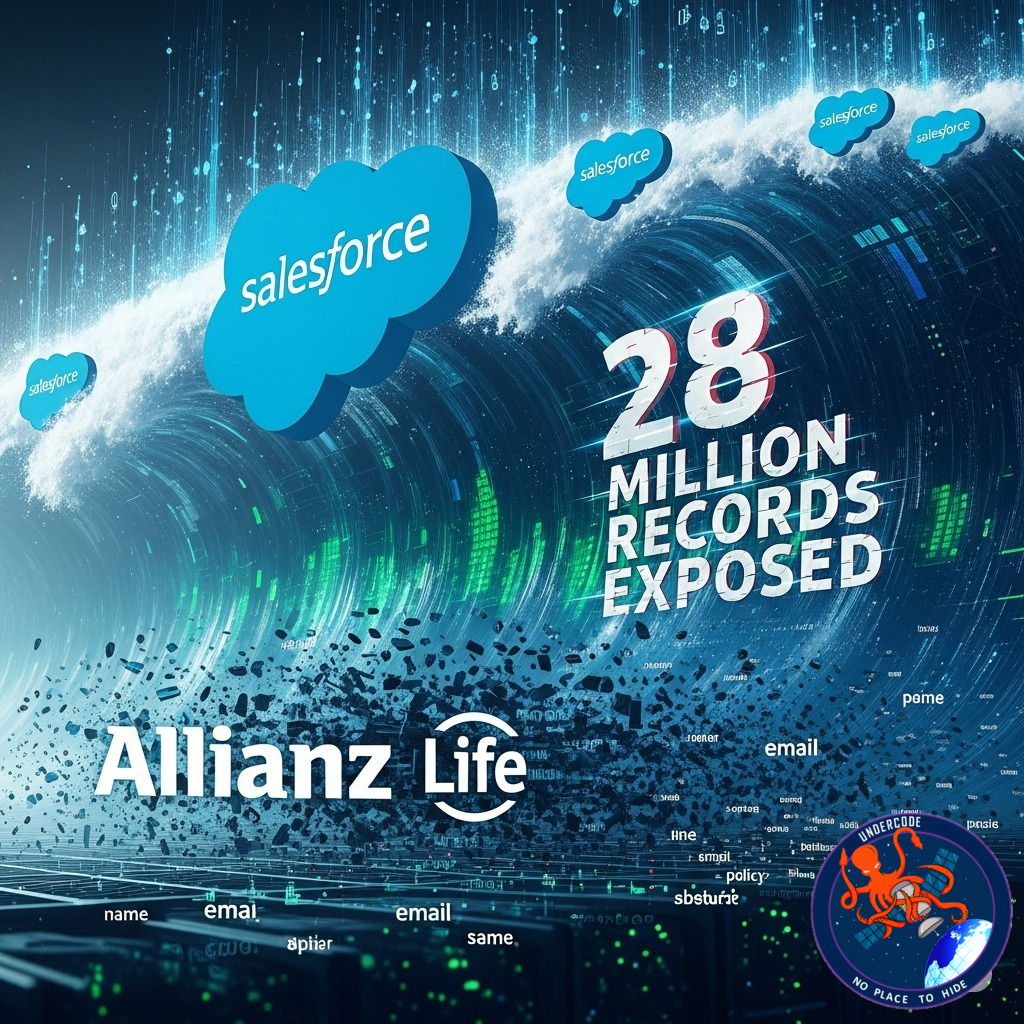
In one of the most damaging cyberattacks to hit the insurance sector, hackers have leaked sensitive data from Allianz Life, a leading US insurance provider, as part of an escalating campaign targeting Salesforce systems. The breach, which has now exposed 2.8 million individual and corporate records, marks a disturbing evolution in how cybercriminal groups like ShinyHunters, Scattered Spider, and Lapsus\$ operate. This attack not only compromises personal information but also strikes at the heart of trust in cloud-based business tools, underscoring the urgent need for stronger defenses against social engineering and OAuth exploitation.
Overview of the Incident
Hackers have released stolen data belonging to Allianz Life, impacting 2.8 million records containing sensitive details of customers and business partners. Last month, Allianz Life revealed that the personal information of most of its 1.4 million customers was stolen on July 16 from a third-party, cloud-based CRM platform. Although the company did not name the service, cybersecurity outlet BleepingComputer identified Salesforce as the targeted system in a larger hacking spree by the ShinyHunters extortion group.
Over the weekend, the attackers, claiming affiliations with Scattered Spider and Lapsus\$, launched a Telegram channel called “ScatteredLapsuSp1d3rHunters” to openly taunt researchers, law enforcement, and journalists while taking credit for high-profile breaches, including Internet Archive, Pearson, and Coinbase. Allianz Life was among the victims, with hackers leaking full Salesforce databases containing “Accounts” and “Contacts” tables. These files include sensitive data such as names, addresses, phone numbers, birth dates, and tax IDs, alongside professional credentials like licenses, affiliations, and product authorizations.
BleepingComputer verified that several victims’ personal data in the leak matched real-world records. Allianz Life declined to comment on the breach, citing an ongoing investigation.
The Salesforce attack pattern reportedly began earlier this year through sophisticated social engineering. Threat actors tricked employees into connecting a malicious OAuth app to their Salesforce accounts, enabling them to exfiltrate data. Extortion emails, signed by ShinyHunters, soon followed. While ShinyHunters’ known history involves SaaS and database breaches, their collaboration with Scattered Spider marks a shift into targeted social engineering—methods also associated with Lapsus\$, a group known for bold SIM-swap and phishing campaigns.
The blurred lines between these groups suggest overlapping membership and techniques. With arrests in recent years disrupting all three, it remains uncertain whether current attackers are original members or opportunists exploiting their brand names as cover. Regardless, the Allianz breach demonstrates that the Salesforce-focused attacks are both highly coordinated and devastatingly effective.
What Undercode Say:
The Allianz Life breach stands out not just for its scale, but for its method—combining sophisticated social engineering with the exploitation of OAuth permissions to penetrate cloud-based CRM systems. This attack confirms a troubling trend: the shift from direct system hacking toward manipulating the human element within companies. OAuth, designed to streamline secure access, becomes a dangerous double-edged sword when users are tricked into granting malicious apps deep system privileges.
The choice of Salesforce as a target is strategic. As one of the most widely used enterprise CRM systems, it contains both personal and business intelligence data, making it a goldmine for cybercriminals. The stolen Allianz databases are more than just contact lists—they represent a detailed network map of financial advisors, brokers, and corporate relationships. Such data can be weaponized for spear phishing, fraud, and identity theft at a scale that extends far beyond the initial breach.
ShinyHunters’ collaboration with Scattered Spider and the alleged link to Lapsus\$ reflects a new phase in cybercriminal ecosystem dynamics. These groups appear to operate less like isolated gangs and more like a coalition with shared resources and complementary skill sets. ShinyHunters bring infrastructure for extortion and data monetization, while Scattered Spider and Lapsus\$ contribute expertise in infiltration through human manipulation.
The public taunting of security professionals via Telegram is a calculated move. It fuels notoriety, challenges authorities, and creates a psychological edge by demonstrating impunity. This showmanship element mirrors the approach of Lapsus\$, who often leveraged publicity as part of their operational tactics.
From a defensive perspective, the Allianz breach underscores the critical need for layered security in cloud applications. OAuth integrations must be tightly controlled, with administrative approvals, audit logs, and anomaly detection in place. Employee security training must be ongoing and tailored to social engineering trends, rather than treated as a one-time compliance task.
The economic and reputational fallout for Allianz could be severe. Beyond immediate costs for forensics, legal response, and customer remediation, trust erosion in their brand may impact long-term client relationships. Competitors may quietly leverage the breach to attract concerned clients seeking perceived safer providers.
Regulatory consequences may also follow. Given the scope of sensitive data leaked, Allianz could face investigations under US state privacy laws and possibly international regulations if any non-US data subjects are affected. Financial penalties, while significant, may pale compared to the lasting damage to brand equity.
Perhaps the most alarming aspect is the replication potential of this attack. Other Salesforce-dependent organizations—especially in finance, healthcare, and government sectors—are now high-value targets. The technical barrier to replicate this method is relatively low once social engineering templates and OAuth exploits are shared within cybercrime networks.
In summary, the Allianz incident is a textbook case of why cloud security cannot rely solely on provider protections. The breach reveals how easily trust in authentication flows can be subverted, how criminal collaborations can amplify threat capabilities, and how a single misstep in employee vigilance can cascade into a corporate catastrophe.
🔍 Fact Checker Results:
✅ Verified: 2.8 million records leaked from Allianz
✅ Verified: ShinyHunters involved in breach with Scattered Spider/Lapsus\$ overlap
❌ Unverified: Exact identities of current attackers remain uncertain
📊 Prediction:
Given the scale and publicity of the Allianz breach, similar Salesforce-targeted attacks are likely to surge in the coming months, especially against financial and insurance companies. Threat groups will refine OAuth manipulation tactics, while more enterprises may be pressured into paying ransoms to prevent public leaks. The lines between major hacking collectives will continue to blur, creating hybrid threat actors with unprecedented reach and adaptability.
🕵️📝✔️Let’s dive deep and fact‑check.
References:
Reported By: www.bleepingcomputer.com
Extra Source Hub:
https://www.digitaltrends.com
Wikipedia
OpenAi & Undercode AI
Image Source:
Unsplash
Undercode AI DI v2
🔐JOIN OUR CYBER WORLD [ CVE News • HackMonitor • UndercodeNews ]
📢 Follow UndercodeNews & Stay Tuned:
𝕏 formerly Twitter 🐦 | @ Threads | 🔗 Linkedin | 🦋BlueSky | 🐘Mastodon


