
Listen to this Post
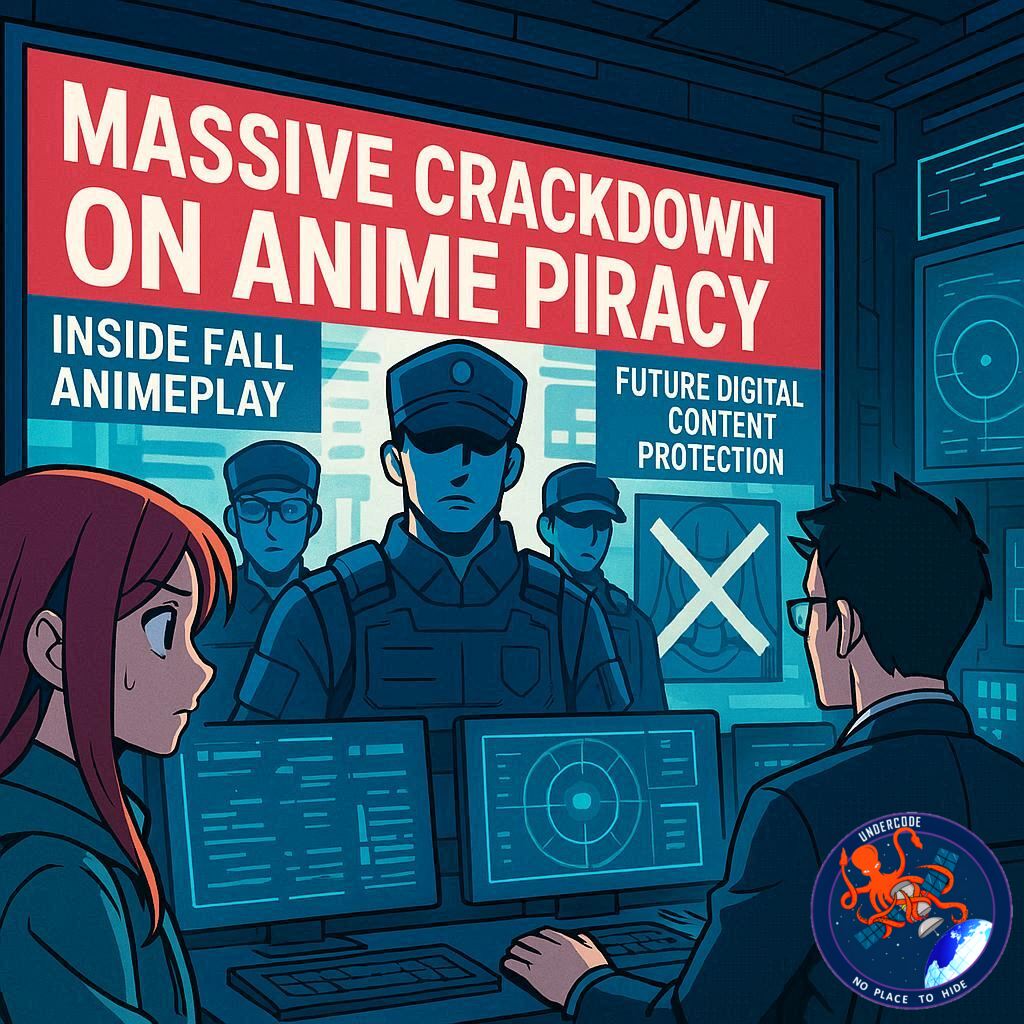
Introduction: A New Era of Anti-Piracy Enforcement
The global fight against online piracy has entered a far more aggressive phase. In a decisive and highly coordinated operation, the Alliance for Creativity and Entertainment (ACE) has taken down one of the largest illegal anime streaming platforms, AnimePlay. With millions of users affected and massive amounts of pirated content seized, this move signals a turning point in how seriously authorities and industry leaders are treating digital copyright violations.
This event is not just about one website disappearing—it reflects a broader shift toward stricter enforcement, deeper surveillance of piracy networks, and stronger collaboration between tech companies and copyright holders. At the same time, parallel cybersecurity developments, such as Apple warning users about active exploit kits targeting outdated devices, show how digital threats are evolving on multiple fronts.
The intersection of piracy, cybersecurity, and digital rights enforcement is becoming impossible to ignore.
the Original Report
The Alliance for Creativity and Entertainment successfully dismantled AnimePlay, a major piracy platform that hosted illegal anime content. The operation impacted approximately 5 million users and resulted in the seizure of an enormous 60 terabytes of copyrighted material. Authorities didn’t stop at the content alone—they also confiscated 15 domains associated with the service, along with its servers, internal source code, and 29 GitHub repositories connected to its infrastructure.
This coordinated takedown highlights the scale at which piracy platforms now operate. AnimePlay was not a small underground site; it was a massive ecosystem with technical sophistication, developer support, and a global user base. The seizure of GitHub repositories is particularly notable, as it suggests that piracy operations are increasingly intertwined with open-source platforms and collaborative development environments.
At the same time, cybersecurity concerns continue to rise. Apple has issued Lock Screen alerts to users running older versions of iOS and iPadOS, warning them about active web-based exploits. These exploits, linked to toolkits known as Coruna and DarkSword, are capable of targeting devices running iOS versions from 13 up to 18.7. Apple strongly recommends users update their devices or enable Lockdown Mode to mitigate risks.
Together, these developments paint a picture of a digital environment where both piracy and cyber threats are becoming more advanced, more organized, and more difficult to ignore. Enforcement agencies are stepping up their efforts, while technology companies are increasingly forced to take proactive measures to protect users and intellectual property alike.
The Scale of AnimePlay’s Operation
AnimePlay’s reach was staggering. With 5 million users and tens of terabytes of pirated content, it functioned more like a legitimate streaming platform than a shadowy piracy site. Its infrastructure likely included distributed hosting, content delivery optimization, and possibly even user account systems and recommendation algorithms.
The seizure of 60TB of data reveals just how extensive its library was. This amount of content suggests not only popular anime titles but also rare, archived, or region-locked material that attracted a global audience. For many users, platforms like AnimePlay serve as the only accessible source for certain shows—especially in regions with limited legal streaming options.
However, scale also makes such platforms highly visible targets. Once a piracy network reaches a certain size, it becomes nearly impossible to operate under the radar.
Why Authorities Targeted AnimePlay
ACE’s involvement indicates that major entertainment companies were directly affected. This organization represents some of the world’s largest studios and streaming platforms, and its mission is to combat piracy on a global scale.
AnimePlay likely crossed multiple red lines:
Hosting massive volumes of copyrighted content
Generating revenue (possibly through ads or subscriptions)
Maintaining persistent infrastructure across multiple domains
Leveraging developer ecosystems like GitHub
By dismantling not just the website but also its backend systems and code repositories, ACE ensured that rebuilding the platform would be significantly harder.
The Role of GitHub in Modern Piracy Networks
One of the most interesting aspects of this case is the seizure of 29 GitHub repositories. This highlights how piracy operations are no longer just about hosting files—they involve full-scale software development.
These repositories may have contained:
Streaming platform code
Scraping tools for gathering content
Automation scripts for uploads
Security mechanisms to evade detection
This blurs the line between traditional cybercrime and software engineering. It also raises questions about how open-source platforms should handle misuse without stifling legitimate development.
Parallel Cybersecurity Threats: Apple’s Warning
While piracy enforcement is escalating, cybersecurity threats are evolving just as quickly. Apple’s Lock Screen alerts about active exploit kits demonstrate a growing trend: real-time user warnings for ongoing attacks.
The exploit kits, Coruna and DarkSword, are particularly concerning because they target a wide range of iOS versions. This means millions of devices could potentially be vulnerable if they are not updated.
Apple’s recommendation to enable Lockdown Mode underscores the seriousness of the threat. This feature significantly reduces the device’s attack surface, though at the cost of some functionality.
The Connection Between Piracy and Cyber Risk
There is an often-overlooked link between piracy and cybersecurity. Users who access illegal streaming platforms are frequently exposed to:
Malicious ads
Phishing attempts
Hidden malware downloads
Platforms like AnimePlay may not always directly distribute malware, but their ecosystems can become breeding grounds for cyber threats. This makes the crackdown not just a copyright issue but also a user safety concern.
What Undercode Say:
The Industrialization of Piracy
Piracy is no longer a side activity run by hobbyists—it has become industrialized. AnimePlay’s scale shows that these platforms operate with business-like efficiency, complete with infrastructure, development teams, and monetization strategies.
Enforcement Is Becoming Surgical
The takedown wasn’t random or superficial. Authorities targeted domains, servers, codebases, and even development pipelines. This level of precision suggests that enforcement agencies now conduct deep technical investigations before acting.
Open Source Is a Double-Edged Sword
GitHub’s involvement highlights a broader dilemma. Open-source tools empower innovation, but they can also be exploited. The challenge lies in balancing openness with accountability, without discouraging legitimate developers.
User Behavior Remains a Key Driver
As long as there is demand for free content, piracy will persist. Many users turn to platforms like AnimePlay due to limited access, high subscription costs, or regional restrictions. Enforcement alone cannot solve this—it must be paired with better legal alternatives.
Cybersecurity and Piracy Are Converging
The simultaneous news about Apple’s exploit warnings is not coincidental. The same users who access pirated content are often those at higher risk of cyberattacks. This creates a feedback loop where piracy exposure increases vulnerability.
The Future of Digital Policing
We are moving toward a future where digital enforcement is proactive rather than reactive. Real-time alerts, coordinated takedowns, and cross-platform investigations will become the norm.
Legal Streaming Must Evolve
To truly combat piracy, legal platforms must address the gaps that piracy exploits. This includes improving global accessibility, reducing fragmentation, and offering competitive pricing.
Fact Checker Results
Accuracy of the Takedown Claims
✅ The reported seizure of domains, servers, and repositories aligns with standard ACE enforcement actions and is consistent with past operations.
Scale of AnimePlay
⚠️ While the 5 million user figure is plausible, such numbers are often estimates and may include inactive or duplicate users.
Apple Exploit Warning
✅ Apple has a history of issuing real-time security alerts, and the mention of exploit kits targeting older iOS versions is consistent with known cybersecurity practices.
Prediction
The Rise of More Resilient Piracy Networks
📊 Future piracy platforms will likely adopt decentralized hosting and blockchain-based systems to avoid single points of failure.
Increased Collaboration Between Tech Giants and Enforcement Agencies
📊 Companies like Apple, Google, and GitHub will deepen cooperation with organizations like ACE to detect and dismantle illegal ecosystems faster.
Stronger User-Facing Security Measures
📊 Expect more real-time alerts, automated protections, and default security features as cyber threats become more sophisticated and widespread.
🕵️📝✔️Let’s dive deep and fact‑check.
References:
Reported By: x.com
Extra Source Hub (Possible Sources for article):
https://www.linkedin.com
Wikipedia
OpenAi & Undercode AI
Image Source:
Unsplash
Undercode AI DI v2
Bing
🔐JOIN OUR CYBER WORLD [ CVE News • HackMonitor • UndercodeNews ]
📢 Follow UndercodeNews & Stay Tuned:
𝕏 formerly Twitter 🐦 | @ Threads | 🔗 Linkedin | 🦋BlueSky | 🐘Mastodon


