
Listen to this Post
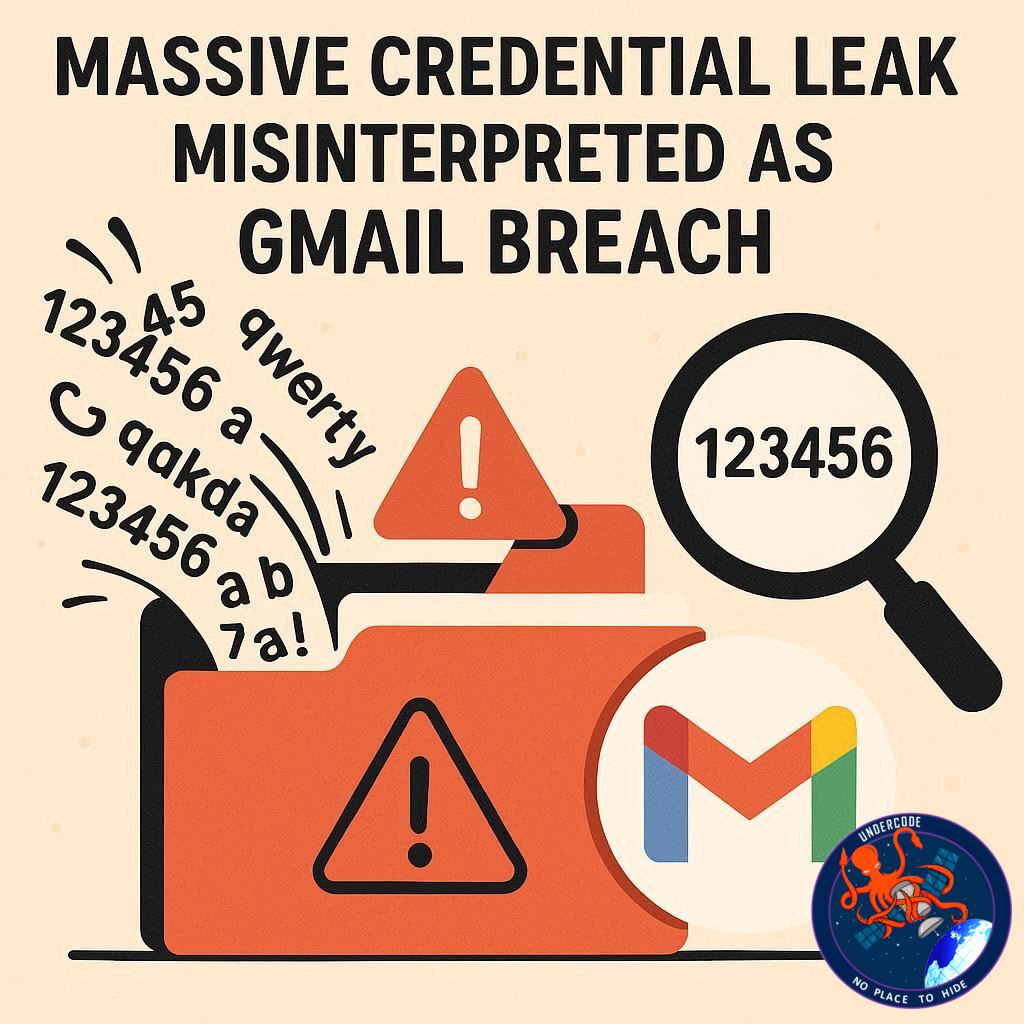
In the past few hours, a digital storm has erupted online, with countless headlines claiming that Gmail users have been directly compromised. The reality, however, is far more nuanced—and far less catastrophic for Google’s security infrastructure. Security researcher Troy Hunt has clarified that this is not a Gmail-specific breach. Instead, the leaked dataset contains credentials stolen from malware-infected devices, with Gmail appearing frequently simply because it is the most widely used email service. Understanding the origin of this leak, and how to protect yourself, is crucial in today’s hyperconnected digital world.
What Happened
Troy Hunt, a renowned cybersecurity expert, has been addressing growing confusion surrounding the leak. While some media outlets sensationalized it as a Gmail breach, Hunt explained clearly that this corpus of data contains a wide variety of email addresses: Outlook, Yahoo, corporate, government, military, and yes, Gmail. The common denominator is not Google, but rather the prevalence of Gmail as a primary email service for many users.
The leak is tied to infostealers, a type of malware commonly downloaded via pirated software, cheats for online games, or other unverified applications. These malicious programs siphon credentials from victims’ devices and compile them into vast datasets.
This particular dataset was compiled by the security company Synthient over several months and then shared with Troy Hunt’s site, Have I Been Pwned (HIBP), to help affected users identify if their credentials were exposed. The data includes both “stealer logs” (email, password, and sometimes the website) and credential stuffing datasets (email and password combinations), which are still being processed and contain over ten times the number of unique email addresses.
Hunt emphasized the risks: the danger is not the mere existence of the leaked credentials but the continued use of the same passwords across multiple websites. Mitigation strategies include using a password manager, enabling two-factor authentication (2FA), and checking existing passwords against tools like 1Password’s Watchtower or HIBP’s Pwned Passwords.
Google also issued a statement confirming that no breach occurred on Gmail’s side, reiterating that their defenses remain strong and user accounts are secure.
How Users Can Protect Themselves
Check your accounts: Visit Have I Been Pwned
to see if your email is part of the exposed dataset.
Change compromised passwords: If your password is in the dataset, update it immediately.
Use a password manager: Tools like 1Password or LastPass can create unique, strong passwords for each account.
Enable 2FA: Two-factor authentication adds a critical extra layer of security.
Avoid risky downloads: Infostealers often spread via pirated software, game cheats, or unverified apps. Running antivirus software, like Microsoft Defender, is a simple yet effective defense.
What Undercode Say:
This situation highlights a recurring issue in cybersecurity: the gap between public perception and technical reality. Media outlets often amplify the most sensational angle—Gmail breach—without fully understanding the mechanics of the threat. In reality, the leak is a classic case of credential exposure, not a failure of Google’s infrastructure.
From an analytical perspective, there are several layers to consider. First, the scale of this leak is a sobering reminder of how infostealers silently proliferate. Malware often infiltrates systems through what appear to be harmless downloads, yet they harvest sensitive data continuously. Unlike direct platform breaches, infostealers exploit the weakest link—the human user. The “Gmail” narrative, while incorrect, serves as a powerful example of how attackers leverage perception to create panic and increase the likelihood of phishing and other follow-up attacks.
The use of password reuse across multiple platforms magnifies risk. Even a single compromised credential can become a gateway to far more significant breaches through credential stuffing attacks. Services like Have I Been Pwned or 1Password Watchtower provide critical intelligence here, allowing users to proactively respond rather than react after the damage is done.
From a broader cybersecurity lens, this incident underscores the need for continuous public education. Malware infections remain a major vector for credential theft, and prevention is far cheaper and more effective than remediation. Encouraging users to maintain disciplined password hygiene, invest in 2FA, and avoid high-risk downloads is as important as any software-based defense mechanism.
Finally, this case reflects the growing responsibility of tech companies to communicate effectively during incidents. Misinterpretation can lead to unnecessary panic, as seen in Google’s need to publicly clarify their position. Transparency combined with rapid, accurate information dissemination is key to maintaining public trust.
Fact Checker Results:
✅ Gmail was not breached; the leak involves stolen credentials from malware-infected devices.
✅ The dataset contains all types of email addresses, not just Gmail.
✅ Users are primarily at risk if they reuse passwords across multiple websites.
Prediction:
🔮 Expect an increase in public awareness campaigns about password hygiene and 2FA adoption.
🔮 Attackers may exploit media confusion by targeting users with phishing scams claiming “Gmail breaches.”
🔮 Tools like Have I Been Pwned and password managers will see higher engagement as users scramble to check and update credentials.
If you want, I can also create a catchy, SEO-friendly headline and meta description for this article that will help it perform well online. Do you want me to do that?
🕵️📝✔️Let’s dive deep and fact‑check.
References:
Reported By: x.com
Extra Source Hub (Possible Sources for article):
https://www.facebook.com
Wikipedia
OpenAi & Undercode AI
Image Source:
Unsplash
Undercode AI DI v2
Bing
🔐JOIN OUR CYBER WORLD [ CVE News • HackMonitor • UndercodeNews ]
📢 Follow UndercodeNews & Stay Tuned:
𝕏 formerly Twitter 🐦 | @ Threads | 🔗 Linkedin | 🦋BlueSky | 🐘Mastodon


