
Listen to this Post
 Introduction: A Wake-Up Call for Streaming Platforms and Digital Security
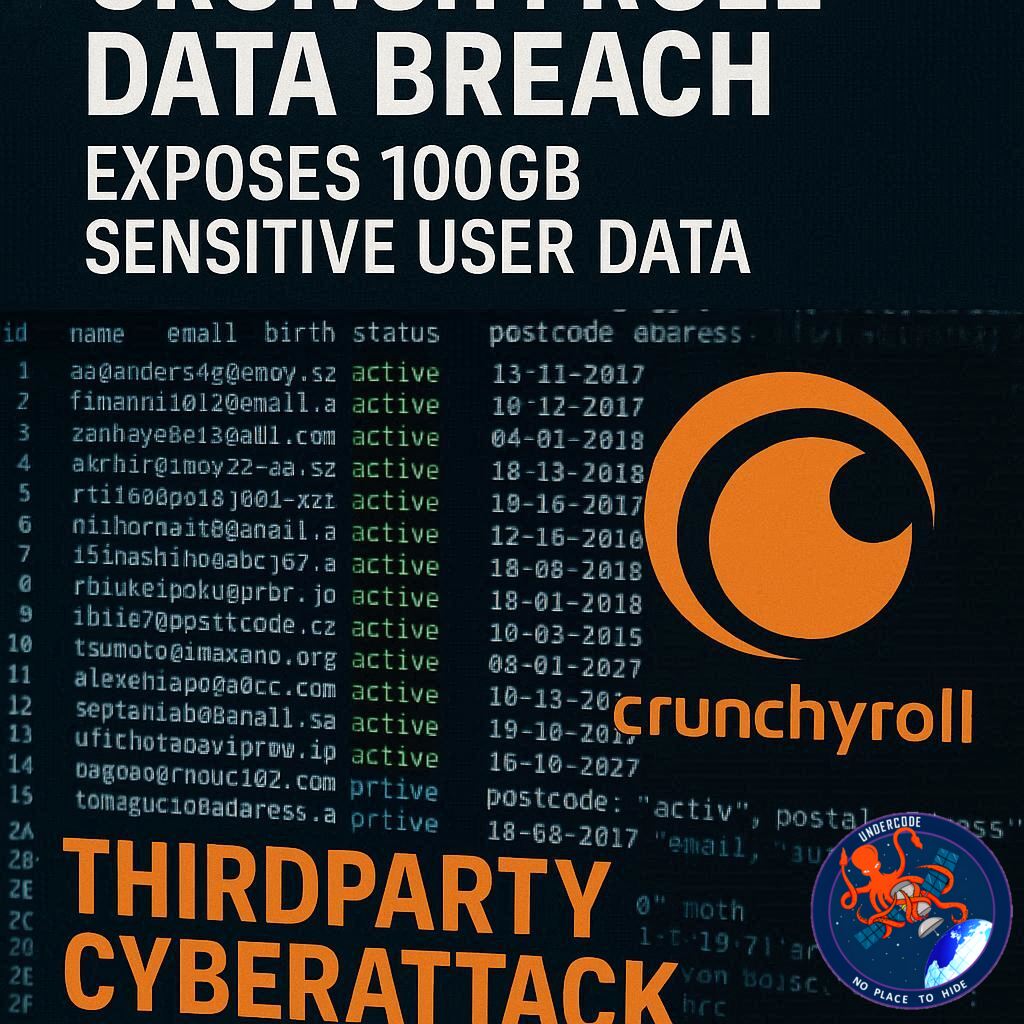
The cybersecurity landscape continues to evolve at a relentless pace, and the latest reported breach involving Crunchyroll has sent shockwaves across the tech and entertainment industries. On March 12, 2026, a significant cyberattack allegedly compromised nearly 100GB of user data through a vulnerable third-party vendor. This incident highlights a growing and often underestimated risk in modern digital ecosystems—third-party dependencies. As millions of users rely on streaming platforms for daily entertainment, the exposure of sensitive information such as emails, IP addresses, passwords, and even partial credit card data raises urgent concerns about data protection, vendor accountability, and systemic security flaws.
the Reported Crunchyroll Cyberattack
According to cybersecurity reports circulating online, the breach did not originate directly from Crunchyroll’s internal systems but rather from a third-party service provider integrated into its infrastructure. This distinction is critical, as it underscores a broader industry issue where external vendors can become weak links in otherwise secure environments. The attackers reportedly managed to extract close to 100GB of data, a massive volume that suggests prolonged access or inadequate monitoring mechanisms.
The compromised data includes user email addresses, IP logs, encrypted or potentially plaintext passwords, and fragments of credit card information. While it is not yet confirmed how many users are directly affected, the scale of the data leak implies that a substantial portion of Crunchyroll’s global user base could be at risk. This type of information is highly valuable on underground markets, where it can be used for identity theft, credential stuffing attacks, and financial fraud.
Adding to the concern is the timing of the disclosure. The information surfaced through cybersecurity monitoring channels rather than an official immediate announcement, raising questions about detection speed and transparency. If attackers had access long enough to extract such a large dataset, it suggests possible gaps in intrusion detection systems or delayed response protocols.
The breach also highlights the persistent danger of third-party integrations. Companies often rely on external vendors for cloud services, analytics, payment processing, or customer management systems. While these partnerships enhance functionality and scalability, they also expand the attack surface. A vulnerability in any one of these external systems can potentially compromise the entire ecosystem.
At the same time, the cybersecurity community has been tracking an increase in sophisticated attacks targeting supply chains and vendor networks. Hackers are shifting their focus from direct assaults on well-defended corporations to exploiting smaller or less secure partners. This strategy allows them to bypass robust defenses and gain indirect access to valuable data repositories.
In parallel, another major cybersecurity alert emerged involving a critical vulnerability in Oracle Identity Manager. The flaw, identified as CVE-2026-21992, allows unauthenticated remote code execution via HTTP, making it extremely dangerous. Oracle has already released an urgent patch, signaling the severity of the threat. Although unrelated to the Crunchyroll breach, the coincidence of these events underscores a broader trend: the increasing frequency and intensity of high-impact cybersecurity incidents.
What Undercode Say:
The Real Weakness Lies in Third-Party Dependencies
This incident reinforces a harsh reality—companies are only as secure as their weakest vendor. Third-party integrations, while operationally efficient, often introduce blind spots in security audits. Many organizations perform rigorous internal testing but fail to apply the same scrutiny to external partners, creating exploitable gaps.
Data Volume Suggests More Than a Quick Breach
The extraction of nearly 100GB of data is not a quick smash-and-grab operation. It likely required sustained access, careful navigation of systems, and possibly even privilege escalation. This raises concerns about how long the attackers remained undetected and whether monitoring systems were functioning effectively.
User Trust Faces Long-Term Damage
For a platform like Crunchyroll, which thrives on a loyal global fanbase, trust is a critical asset. Even if the breach originated externally, users will still associate the failure with the brand itself. Rebuilding confidence after such incidents often takes years and requires transparent communication and tangible security improvements.
Financial Data Exposure Escalates the Stakes
The mention of credit card information—even partial—elevates this breach from a typical data leak to a potentially severe financial threat. Attackers can combine partial data with other leaked datasets to reconstruct full payment profiles, increasing the risk of fraud.
Industry-Wide Implications Are Unavoidable
This is not just a Crunchyroll problem. The entire streaming and SaaS industry relies heavily on third-party ecosystems. This breach will likely trigger broader audits, stricter compliance requirements, and possibly regulatory scrutiny, especially in regions with strong data protection laws.
Attackers Are Becoming More Strategic
Modern cybercriminals are no longer just opportunistic hackers. They are organized, patient, and strategic. Targeting third-party vendors allows them to infiltrate multiple companies through a single point of entry, maximizing impact while minimizing effort.
Detection and Response Speed Must Improve
One of the most concerning aspects of this incident is the apparent delay in public awareness. Rapid detection and immediate response are critical in minimizing damage. Any lag can exponentially increase the amount of data exposed and the number of affected users.
Security Investment Must Shift Focus
Companies often invest heavily in perimeter defenses but neglect internal and partner-related vulnerabilities. This breach highlights the need for a more holistic approach—one that includes continuous monitoring, zero-trust architecture, and rigorous vendor risk assessments.
Regulatory Pressure Is Likely to Increase
Incidents of this magnitude often attract the attention of regulators. Governments may impose stricter data protection requirements, enforce heavier penalties for breaches, and demand greater transparency from companies handling user data.
The Human Factor Cannot Be Ignored
Even the most advanced systems can be compromised through human error—misconfigurations, weak credentials, or poor vendor oversight. Cybersecurity is as much about people and processes as it is about technology.
Fact Checker Results
Verified Scope of Data Exposure 🔍
✅ Reports confirm approximately 100GB of data was allegedly exposed through a third-party vendor.
Nature of Compromised Information 🔍
✅ Emails, IP addresses, passwords, and partial financial data were reportedly included in the breach.
Confirmation Status and Official Response 🔍
❌ No fully detailed official public statement has yet confirmed the complete extent or user impact.
Prediction
Rising Wave of Third-Party Breach Investigations 📊
The Crunchyroll incident is likely to trigger a surge in third-party security audits across the tech and entertainment industries. Companies will increasingly adopt zero-trust frameworks and demand stricter compliance from vendors. In the short term, users can expect more breach disclosures as hidden vulnerabilities come to light. In the long run, this event may accelerate regulatory reforms and push organizations toward more resilient, transparent cybersecurity strategies.
🕵️📝✔️Let’s dive deep and fact‑check.
References:
Reported By: x.com
Extra Source Hub (Possible Sources for article):
https://www.reddit.com
Wikipedia
OpenAi & Undercode AI
Image Source:
Unsplash
Undercode AI DI v2
Bing
🔐JOIN OUR CYBER WORLD [ CVE News • HackMonitor • UndercodeNews ]
📢 Follow UndercodeNews & Stay Tuned:
𝕏 formerly Twitter 🐦 | @ Threads | 🔗 Linkedin | 🦋BlueSky | 🐘Mastodon


