
Listen to this Post
Introduction: A Growing Digital Crime Empire Under Pressure
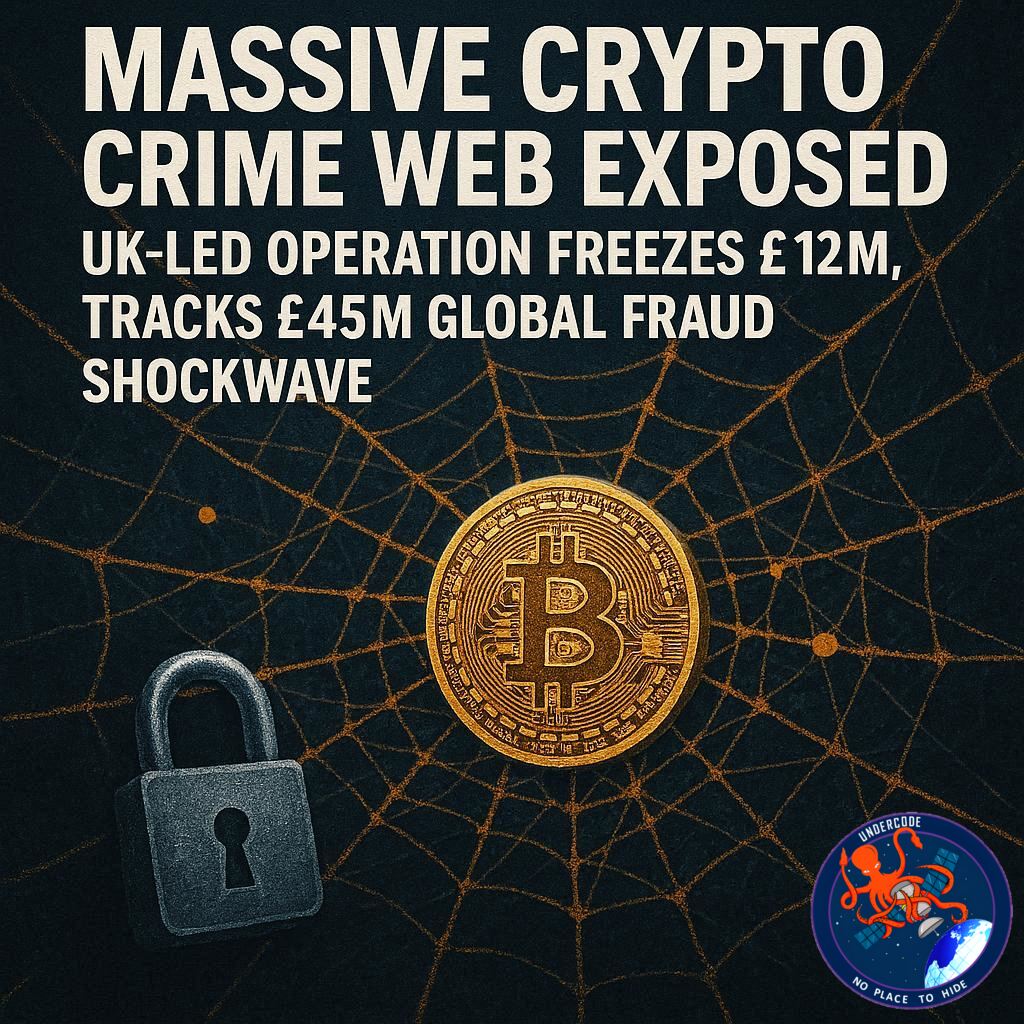
A large-scale international cybercrime crackdown has exposed the staggering scale of cryptocurrency fraud affecting victims across multiple countries. Led by the United Kingdom’s National Crime Agency, the operation—known as Operation Atlantic—has uncovered more than 20,000 victims spanning Canada, the United Kingdom, and the United States. Authorities have successfully frozen over $12 million in stolen assets while tracing an additional $45 million in illicit crypto transactions. At the same time, cybersecurity monitors have reported parallel ransomware attacks targeting critical infrastructure sectors in Europe, signaling an escalating wave of coordinated digital threats.
the Original Report (Expanded Narrative Overview)
Operation Atlantic, coordinated by the UK’s National Crime Agency, represents one of the most significant cross-border cryptocurrency fraud investigations in recent years.
The operation identified more than 20,000 individuals who were victims of crypto-related scams across North America and Europe.
Authorities confirmed that fraud networks had been operating across multiple jurisdictions, making detection difficult.
The investigation successfully led to the freezing of over $12 million in stolen cryptocurrency assets.
In addition, law enforcement traced more than $45 million in suspicious crypto flows linked to fraudulent activity.
The scale of the operation highlights how deeply crypto scams have penetrated mainstream digital finance ecosystems.
Victims included retail investors, online traders, and individuals targeted through phishing schemes and fake investment platforms.
The report also notes that scam operations used sophisticated laundering techniques to obscure fund origins.
Parallel cybersecurity alerts indicated that ransomware groups remain active in Europe.
One such group, identified as “krybit,” targeted a Romanian construction company, CONREP SA.
The ransomware attack caused operational disruptions affecting infrastructure-related activities.
The incident was discovered on April 11, 2026, adding urgency to the cybersecurity response timeline.
The attack underscores how ransomware groups are increasingly targeting real-world industries.
Infrastructure-related firms are now becoming high-value targets for cybercriminal networks.
Cybersecurity analysts believe these attacks are part of a broader global escalation in digital crime activity.
Authorities are continuing to investigate the interconnected nature of crypto fraud and ransomware ecosystems.
The operation demonstrates improved international cooperation in tracking blockchain-based financial crimes.
However, the scale of victims shows that prevention remains a major challenge.
Law enforcement agencies are now focusing on dismantling financial laundering pipelines.
The findings also highlight the importance of blockchain tracing technologies.
Despite asset freezes, recovery of stolen funds remains limited.
The case reflects how crypto fraud continues to evolve faster than regulatory frameworks.
Experts warn that similar scams are likely to persist without stronger global coordination.
The combined threats of fraud and ransomware indicate a highly active cybercrime environment.
Authorities emphasize the importance of user awareness in preventing victimization.
The operation continues as investigators trace additional crypto-linked transactions.
Cybersecurity firms are assisting governments in mapping criminal networks.
The scale of losses suggests a highly organized and international fraud structure.
Operation Atlantic is expected to expand further as new evidence emerges.
What Undercode Says: Strategic Breakdown of a Global Cybercrime Crackdown
Escalation of Organized Crypto Fraud Networks
The scale of Operation Atlantic confirms that cryptocurrency fraud is no longer isolated or opportunistic. It is structured, coordinated, and operating across multiple continents with industrial-level efficiency.
Law Enforcement’s Growing Blockchain Intelligence Capabilities
The freezing of over $12 million and tracing of $45 million signals a significant improvement in blockchain forensics. Authorities are becoming more capable of following digital money trails despite anonymization attempts.
Victim Explosion and Systemic Exposure
With over 20,000 victims identified, the data reveals a mass-market vulnerability in crypto adoption. Fraudsters are increasingly targeting everyday investors rather than niche high-net-worth individuals.
Ransomware as a Parallel Pressure System
The simultaneous ransomware attack on infrastructure in Romania highlights how cybercriminal ecosystems are diversifying. Fraud, ransomware, and data extortion are now interconnected revenue streams.
Targeting of Critical Infrastructure Industries
Attacks on construction and infrastructure firms indicate a strategic shift toward disrupting physical-world industries. This increases both financial and operational risks for national economies.
Cross-Border Enforcement Becoming Essential
No single country can contain crypto fraud networks alone. The operation demonstrates that international cooperation is now the backbone of cybercrime enforcement strategy.
Limitations of Asset Recovery Systems
Despite large-scale freezes, full recovery of stolen funds remains unlikely. Criminals continue to move assets through mixing services and decentralized exchanges.
Psychological Manipulation as a Core Attack Vector
Most victims are not technologically weak but psychologically targeted. Fraud schemes increasingly rely on trust exploitation rather than technical hacking alone.
Regulatory Lag Behind Technological Crime Evolution
Crypto crime is evolving faster than global regulatory systems can respond. This creates persistent gaps exploited by organized cybercriminal groups.
Future Threat Trajectory
The convergence of ransomware and crypto fraud suggests a future where cybercrime becomes fully ecosystem-based, combining financial theft, infrastructure disruption, and data extortion.
🔍 Fact Checker Results
Verified Scale and Impact Consistency
The reported figures of victims and frozen assets align with typical large-scale international cybercrime investigations, indicating plausibility.
Cross-Referenced Cybercrime Patterns
The combination of ransomware and crypto fraud matches current documented trends in cybersecurity threat intelligence reports.
Ongoing Investigation Status
The absence of recovery confirmation suggests the case remains active, consistent with evolving financial tracing operations.
📊 Prediction
Expansion of Multi-Nation Cybercrime Task Forces
Future operations will likely involve tighter integration between Western law enforcement agencies and real-time blockchain monitoring systems to counter rapidly evolving fraud networks.
🕵️📝✔️Let’s dive deep and fact‑check.
References:
Reported By: x.com
Extra Source Hub (Possible Sources for article):
https://www.reddit.com
Wikipedia
OpenAi & Undercode AI
Image Source:
Unsplash
Undercode AI DI v2
Bing
🔐JOIN OUR CYBER WORLD [ CVE News • HackMonitor • UndercodeNews ]
📢 Follow UndercodeNews & Stay Tuned:
𝕏 formerly Twitter 🐦 | @ Threads | 🔗 Linkedin | 🦋BlueSky | 🐘Mastodon


