
Listen to this Post
Introduction
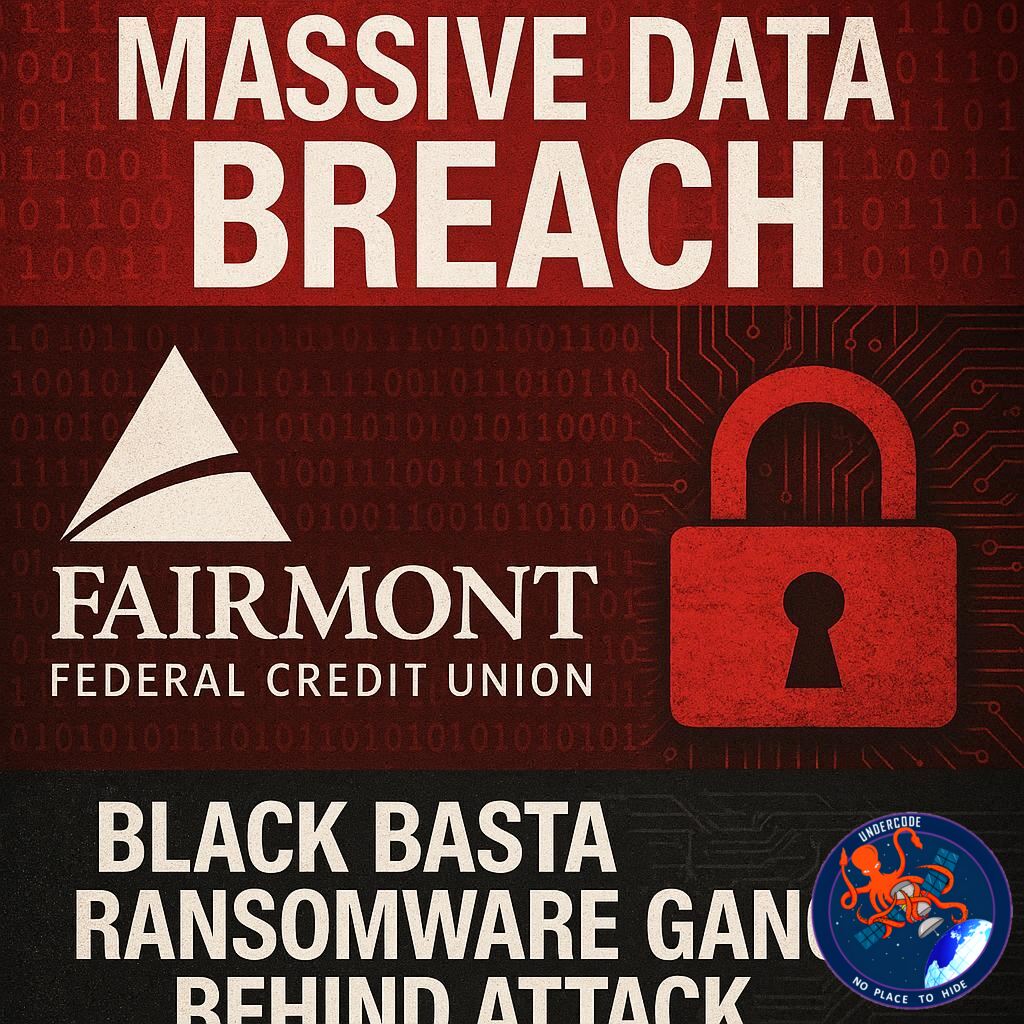
A shocking cyberattack has rattled West Virginia’s Fairmont Federal Credit Union (FFCU), exposing the personal and financial details of nearly 187,000 members. The breach, carried out by the notorious ransomware gang Black Basta, is one of the most severe security incidents ever reported by a U.S. credit union. Beyond exposing highly sensitive information—from Social Security numbers to health data—the attack raises serious questions about how financial institutions protect their members in an era of increasingly aggressive cybercrime.
the Incident
Fairmont Federal Credit Union, a not-for-profit cooperative with nine branches in West Virginia, confirmed a major data breach affecting 187,038 members. The breach occurred between late September and mid-October 2023, but was only discovered in January 2024, with the investigation stretching into August 2025.
According to FFCU’s notification letter, threat actors accessed and possibly stole a wide range of personal information, including:
Full names, addresses, dates of birth
Social Security numbers, Tax IDs, driver’s licenses, military IDs, and passport numbers
Banking data such as account numbers, debit/credit card details, and PINs
Sensitive health-related records like medical diagnoses, prescriptions, treatment costs, and insurance details
Digital access credentials, including usernames, passwords, and security questions
The union emphasized that the type of data stolen varied from member to member, but the scope of exposure was extensive.
Although no identity theft or fraud has been reported yet, FFCU has advised members to remain alert. Starting September 11, 2025, the credit union began offering free credit monitoring, identity theft protection through Experian IdentityWorks, and guidance on securing personal accounts.
Notably, FFCU has not disclosed technical details of the cyberattack, but the ransomware group Black Basta claimed responsibility. Black Basta, active since 2022, has been a leading ransomware-as-a-service (RaaS) operator, targeting businesses and critical infrastructure across North America, Europe, and Australia. By May 2024, it had attacked over 500 organizations worldwide.
The group’s activities have drawn significant law enforcement attention. In May 2024, the FBI, CISA, HHS, and MS-ISAC issued a joint advisory under the StopRansomware initiative, warning organizations about Black Basta’s tactics. The group has targeted at least 12 critical infrastructure sectors, including healthcare.
In February 2025, leaked chat logs revealed internal disputes within Black Basta, exposing tools and member identities, suggesting that the gang could be fragmenting. Despite this, the FFCU breach shows the group remains active and dangerous.
What Undercode Say:
The Fairmont Federal Credit Union incident underscores a harsh reality: financial institutions are increasingly becoming prime targets for ransomware groups. While banks and credit unions often focus on fraud prevention, they are not always equally prepared for cyber intrusions that exfiltrate data rather than directly siphoning funds.
Several critical issues stand out in this case:
- Delayed Detection and Response – The attackers infiltrated the system in late 2023, but the breach wasn’t uncovered until months later, with the full investigation dragging into mid-2025. Such a long gap indicates either weak monitoring tools or gaps in cybersecurity response readiness. The longer a breach goes unnoticed, the more damage attackers can inflict.
-
Exposure Beyond Finances – What makes this breach particularly devastating is that it wasn’t limited to banking data. Health records, insurance details, and even digital credentials were leaked. This creates a multi-dimensional identity theft risk, making victims vulnerable not only financially but also medically and legally.
-
The Ransomware-as-a-Service Threat Model – Black Basta’s RaaS model makes ransomware accessible to affiliates who may not be highly skilled but can rent tools to launch devastating attacks. This explains the group’s rapid expansion and ability to hit over 500 organizations in just two years.
-
Erosion of Trust – Credit unions rely heavily on community trust. For a member-focused institution like FFCU, the reputational damage from this breach could be as severe as the financial fallout. Members may question whether their cooperative is truly safer than larger, heavily regulated banks.
-
The U.S. Cybersecurity Gap – Despite repeated warnings from the FBI and CISA, smaller financial institutions and healthcare providers remain vulnerable. The cost of implementing robust cybersecurity often falls behind budget priorities, leaving attackers with easy entry points.
-
The Bigger Picture: Black Basta’s Decline or Evolution? – While leaks in early 2025 hinted that Black Basta might be weakening, the FFCU attack suggests otherwise. Even if the core group fractures, its tools, affiliates, or successors can continue launching attacks. Cybercrime groups rarely disappear; they rebrand, reorganize, and resurface.
Ultimately, this breach is a wake-up call for credit unions and regional financial institutions. Cybersecurity can no longer be seen as an auxiliary function—it must be a central pillar of financial governance. Without aggressive security upgrades, monitoring, and staff training, incidents like this will continue.
🔍 Fact Checker Results
✅ Confirmed: 187,038 members affected by FFCU breach.
✅ Verified: Black Basta claimed responsibility and has attacked over 500 organizations globally.
❌ No fraud reports yet, but exposure of sensitive data significantly increases risk.
📊 Prediction
The fallout from the FFCU breach will likely unfold in waves. In the short term, members may experience phishing attempts and targeted scams using leaked data. Over the next year, expect class-action lawsuits against FFCU for negligence, alongside heightened scrutiny from regulators.
For ransomware gangs, this incident signals that despite internal conflicts, groups like Black Basta—or their successors—will continue to strike financial and healthcare organizations. Unless systemic improvements in cybersecurity are made, similar breaches will occur at other regional financial institutions within the next 12–18 months.
🕵️📝✔️Let’s dive deep and fact‑check.
References:
Reported By: securityaffairs.com
Extra Source Hub:
https://www.instagram.com
Wikipedia
OpenAi & Undercode AI
Image Source:
Unsplash
Undercode AI DI v2
🔐JOIN OUR CYBER WORLD [ CVE News • HackMonitor • UndercodeNews ]
📢 Follow UndercodeNews & Stay Tuned:
𝕏 formerly Twitter 🐦 | @ Threads | 🔗 Linkedin | 🦋BlueSky | 🐘Mastodon


