
Listen to this Post
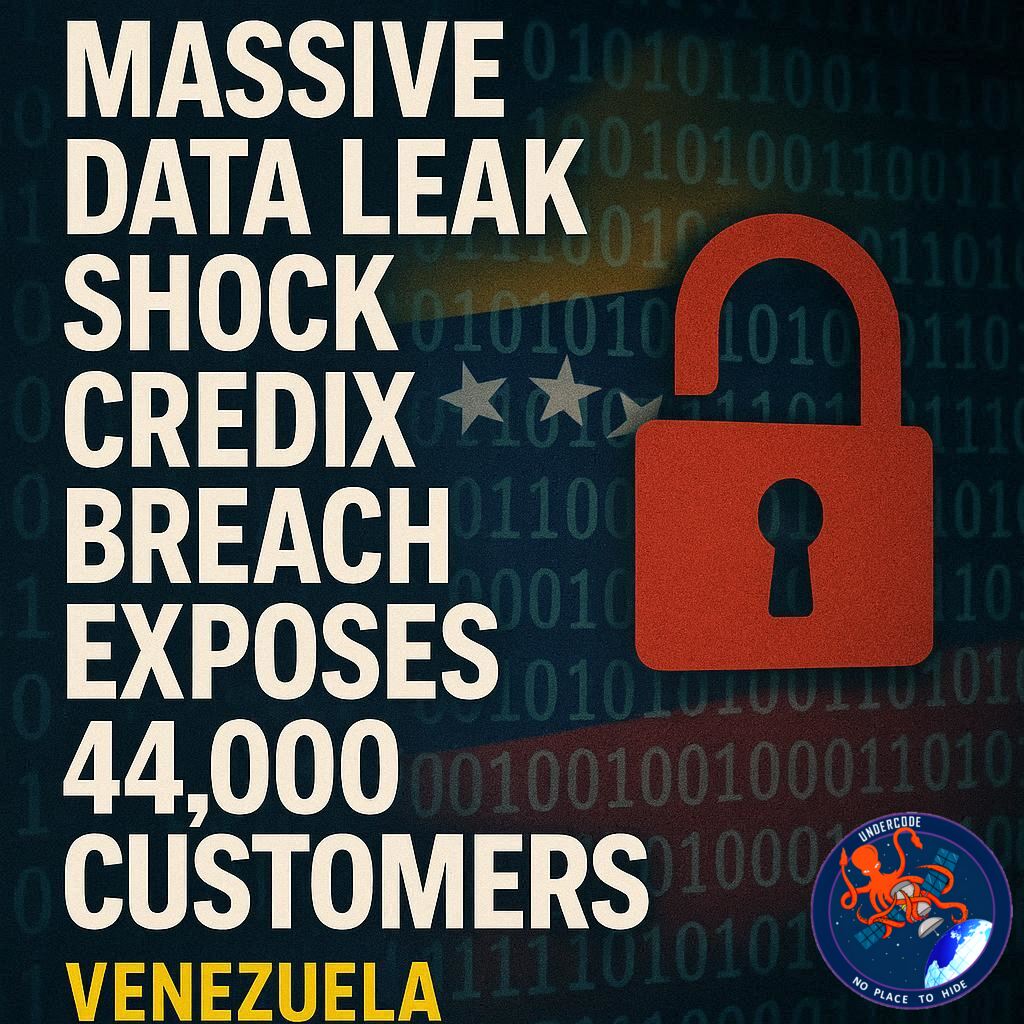
A Growing Cybersecurity Crisis in Latin America
A fresh cybersecurity incident has placed Venezuela in the spotlight after reports surfaced that Credix, a financial services platform, suffered a major data breach. According to claims circulating in dark web intelligence circles, more than 44,000 customer records may have been exposed due to a critical security vulnerability.
This incident is not just another leak. It highlights a deeper and more troubling pattern in digital finance, where weak infrastructure and poor security practices continue to put sensitive personal and financial data at risk. The breach allegedly includes highly sensitive information such as identification numbers, physical addresses, and financial records, raising serious concerns about identity theft and fraud.
What Happened: A Breakdown of the Alleged Credix Breach
Reports suggest that the breach occurred because of an open or misconfigured security vulnerability, which allowed unauthorized access to internal systems. Unlike sophisticated hacks that require complex exploits, this type of failure often points to basic security oversights.
The exposed dataset reportedly includes:
Personal identification numbers
Residential addresses
Financial and transactional data
Such information is extremely valuable on the dark web, where it can be sold, traded, or used for fraud schemes ranging from identity theft to financial account takeovers.
The scale of the leak, over 44,000 users, is significant but not unprecedented. However, what makes this case alarming is the type of data exposed, not just the volume. Financial data combined with identity details creates a complete profile of victims, making exploitation much easier for cybercriminals.
Why This Breach Matters More Than It Seems
At first glance, this might look like just another corporate data leak. In reality, it reflects systemic issues in cybersecurity practices, particularly in emerging markets.
Financial platforms like Credix operate in environments where digital adoption is growing rapidly, but security frameworks often lag behind. This creates a dangerous imbalance. Users trust these platforms with sensitive data, but the infrastructure protecting that data may not meet global standards.
The consequences can be severe:
Increased fraud cases
Identity theft across multiple platforms
Long-term financial damage for victims
In many cases, affected individuals may not even realize their data has been compromised until months or years later.
A Pattern of Security Failures Around “Credix”
Interestingly, this is not the first time the name “Credix” has been linked to security concerns. In a separate incident involving a decentralized finance protocol called CrediX, attackers exploited vulnerabilities to steal millions of dollars. The breach occurred after hackers gained access to privileged accounts and drained funds from liquidity pools.
OKX
While these incidents may involve different entities, they reveal a recurring theme: insufficient security controls and weak access management. In the DeFi case, attackers were able to mint unbacked tokens and siphon assets, exposing deep flaws in governance and system design.
OKX
This broader pattern reinforces the idea that financial platforms, whether centralized or decentralized, remain prime targets for cybercriminals.
The Dark Web Factor: Where the Data Goes Next
Once data like this is exposed, it often ends up on dark web marketplaces. These platforms specialize in trading stolen information, including:
Full identity profiles
Credit and debit card details
Login credentials
Buyers range from small-scale scammers to organized cybercrime groups. The more complete the dataset, the higher its value.
In this case, the combination of identity and financial data makes the leak particularly dangerous. It allows attackers to execute more convincing phishing attacks, impersonate victims, or even bypass security checks on financial platforms.
The Human Impact Behind the Numbers
It is easy to focus on the numbers, 44,000 records, but each record represents a real person. For many, the consequences could include:
Unauthorized transactions
Loan fraud under their name
Loss of trust in digital financial services
In regions where financial stability is already fragile, such incidents can have an even greater impact. Victims may lack access to strong legal protections or efficient recovery systems.
What Undercode Say:
The Credix breach is not just a technical failure. It is a reflection of how modern financial systems are evolving faster than their security foundations. Companies are racing to digitize services, expand user bases, and compete in increasingly crowded markets. Security often becomes a secondary priority until something breaks.
What stands out here is the nature of the vulnerability. An “open security flaw” suggests negligence rather than sophistication. This is not a zero-day exploit or a highly advanced attack. It is the kind of issue that should be caught during routine audits. That raises serious questions about internal security culture.
Another critical angle is user awareness. Many people assume that financial platforms automatically provide bank-level security. That is not always true, especially with newer or rapidly growing services. Trust is often given before it is earned.
There is also a geopolitical layer. Countries like Venezuela are experiencing rapid digital transformation under economic pressure. This creates fertile ground for fintech innovation, but also for exploitation. Regulatory frameworks may not keep up, and enforcement can be inconsistent.
From a cybercriminal perspective, this is a perfect scenario. Large amounts of valuable data, weak defenses, and limited accountability. It is not surprising that such platforms become frequent targets.
Looking forward, incidents like this will likely increase rather than decrease. The attack surface is expanding as more services move online. Every new user, every new feature, and every integration adds potential نقاط of failure.
The real issue is not whether breaches will happen. It is how organizations prepare for them. Detection, response time, transparency, and user protection measures are what separate responsible companies from negligent ones.
If Credix fails to respond transparently and support affected users, the long-term damage to its reputation could be far worse than the breach itself. Trust, once lost in financial services, is extremely difficult to rebuild.
Fact Checker Results
✅ Data breach claim aligns with typical dark web intelligence reporting patterns
⚠️ Specific technical details remain unverified publicly
❌ No official confirmation from Credix at the time of reporting
Prediction
The fallout from this breach will likely push for stronger cybersecurity scrutiny in Latin American fintech sectors. Expect increased regulatory pressure, more frequent audits, and a surge in user awareness about data protection. At the same time, cybercriminal activity targeting similar platforms is expected to rise as attackers exploit systemic weaknesses exposed by incidents like this.
🕵️📝✔️Let’s dive deep and fact‑check.
References:
Reported By: x.com
Extra Source Hub (Possible Sources for article):
https://www.quora.com
Wikipedia
OpenAi & Undercode AI
Image Source:
Unsplash
Undercode AI DI v2
Bing
🔐JOIN OUR CYBER WORLD [ CVE News • HackMonitor • UndercodeNews ]
📢 Follow UndercodeNews & Stay Tuned:
𝕏 formerly Twitter 🐦 | @ Threads | 🔗 Linkedin | 🦋BlueSky | 🐘Mastodon


