
Listen to this Post
Introduction: A Breach That Keeps Growing
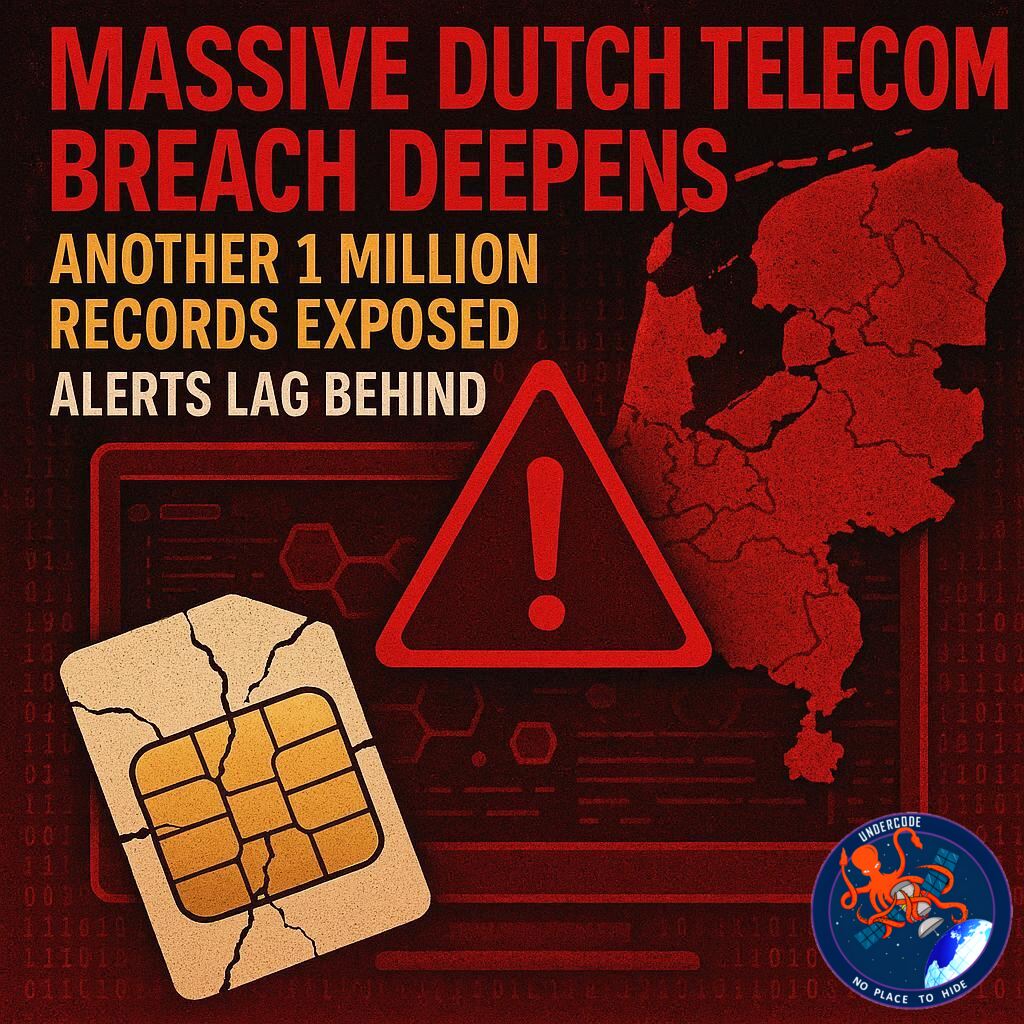
A major data breach affecting a Dutch telecommunications provider has taken a troubling new turn. What initially appeared to be a contained incident has now expanded with the release of an additional dataset, pushing the total number of exposed records far higher than first reported. As security researchers scramble to keep users informed, limitations in notification systems mean some affected people may not even realize their data is already in criminal hands. The situation highlights not just the scale of modern data leaks, but also the practical challenges of warning millions of users in real time.
the Original
The cybersecurity community was alerted after Troy Hunt, the creator of Have I Been Pwned, confirmed that attackers had released a second batch of stolen data linked to Dutch telecom provider Odido. This new release added roughly 1 million records, including about 371,000 unique email addresses that had not appeared in the first dump. According to Hunt, the newly released data matches the structure and authenticity of the earlier leak, strongly suggesting it originates from the same compromised systems. He also warned that further data releases have been threatened by the attackers.
Complicating matters is how breach notifications are handled. Domain subscribers to Have I Been Pwned receive only one alert per breach, even if multiple data dumps are released later. As a result, organizations or individuals may have been notified about the first dataset but remain unaware that additional information tied to their domain has since been exposed. Hunt advised affected parties to manually re-run searches to ensure no users were missed across the different dumps. The update was shared publicly on X (formerly Twitter), drawing attention to the evolving nature of the breach and the growing risk to users whose data may now be circulating on underground forums.
What Undercode Say:
This incident is a textbook example of how data breaches in 2026 are no longer single, isolated events but unfolding campaigns. Attackers increasingly release stolen data in stages, either to maximize pressure on companies or to extract more value from the breach over time. From an analytical standpoint, the Odido case shows how even transparent disclosure mechanisms can struggle to keep pace with adversaries who control the timing and scale of leaks.
There is also a psychological element at play. When users receive a breach notification, many assume the worst is already over. In reality, secondary dumps often contain more complete profiles, additional contact details, or metadata that was held back initially. This creates a false sense of closure and reduces the urgency for password changes or security reviews.
Another key issue is scale. Services like Have I Been Pwned are designed to balance accuracy, privacy, and noise reduction. Limiting notifications to one per breach prevents inbox flooding, but it also introduces blind spots when breaches evolve. For enterprises managing thousands of email addresses, missing a second or third dump can mean delayed incident response and prolonged exposure.
From a broader industry perspective, telecom providers are high-value targets because their databases often combine personal identifiers with long-term customer histories. Even if passwords are hashed or absent, email addresses alone are powerful tools for phishing, SIM-swap attacks, and social engineering. The fact that further releases are being threatened suggests attackers believe they still hold leverage, either reputational or financial.
Ultimately, this breach reinforces a hard truth: breach detection is no longer enough. Continuous monitoring, repeated audits, and user education are now baseline requirements. Organizations and individuals alike must assume that if a breach resurfaces, the impact may be wider and deeper than the first headline suggested.
Fact Checker Results
✅ A second dataset from the Odido breach was publicly reported and confirmed as consistent with the first release.
✅ Approximately 371,000 newly unique email addresses were added in the latest dump.
❌ There is no confirmation yet that all affected users have been directly notified of the updated breach.
Prediction
If attackers follow through on their threats, additional Odido data dumps are likely to appear in the coming weeks, increasing phishing and fraud attempts across Europe. This incident may also push breach notification services and regulators to reconsider how “updated breaches” are communicated, potentially leading to more granular or repeated alert systems in the near future.
🕵️📝✔️Let’s dive deep and fact‑check.
References:
Reported By: x.com
Extra Source Hub (Possible Sources for article):
https://www.linkedin.com
Wikipedia
OpenAi & Undercode AI
Image Source:
Unsplash
Undercode AI DI v2
Bing
🔐JOIN OUR CYBER WORLD [ CVE News • HackMonitor • UndercodeNews ]
📢 Follow UndercodeNews & Stay Tuned:
𝕏 formerly Twitter 🐦 | @ Threads | 🔗 Linkedin | 🦋BlueSky | 🐘Mastodon


