
Listen to this Post
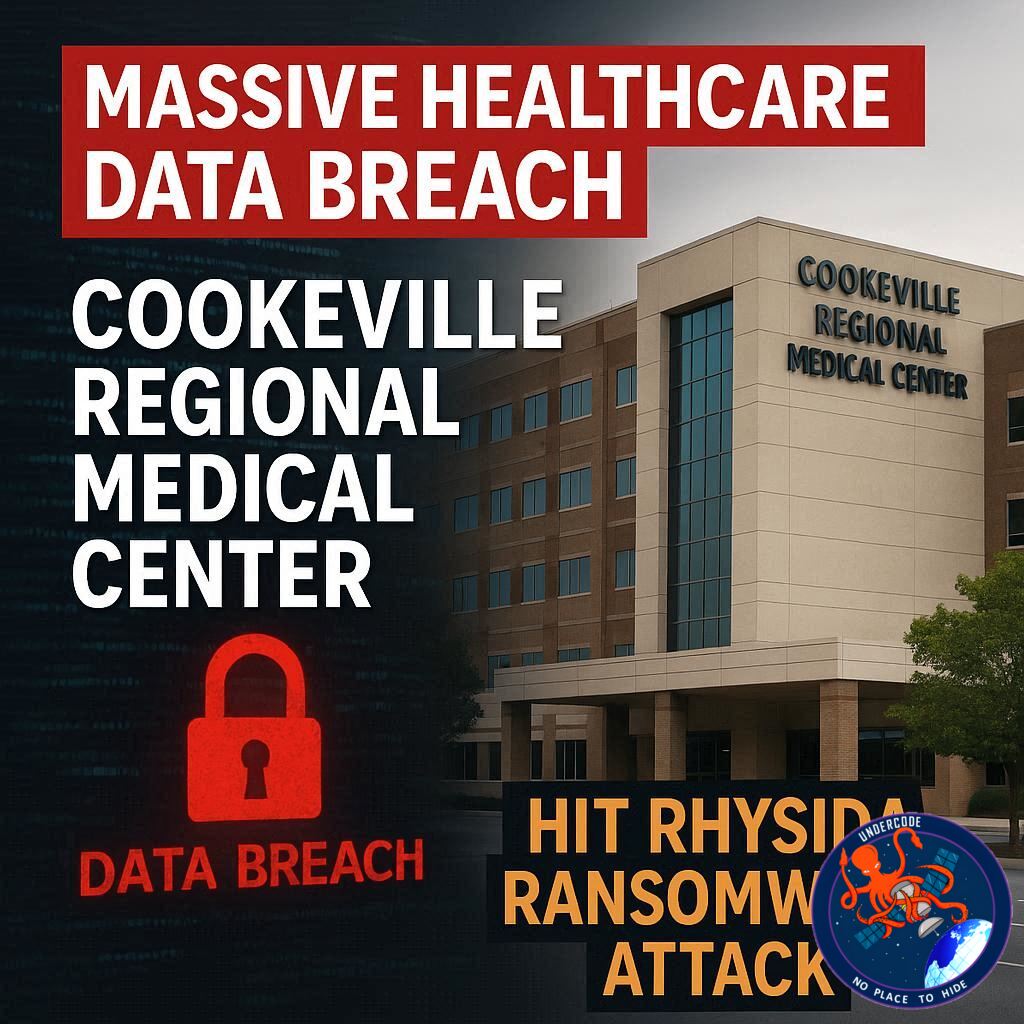
A Critical Cyberattack Exposes Hundreds of Thousands of Patients
Healthcare institutions continue to face escalating cyber threats, and the recent ransomware attack on Cookeville Regional Medical Center (CRMC) in Tennessee highlights just how severe the consequences can be. In July 2025, the hospital became the target of a sophisticated cyber intrusion orchestrated by the Rhysida ransomware group, resulting in a significant data breach affecting approximately 337,000 individuals. The incident not only compromised sensitive patient and personal data but also underscored the fragile state of cybersecurity within the healthcare sector, where vast amounts of critical information remain vulnerable to exploitation.
the Incident and Its Impact on Patient Data
The breach began when Cookeville Regional Medical Center detected suspicious activity within its systems on July 14, 2025. Acting swiftly, the organization initiated an internal investigation supported by law enforcement agencies and external cybersecurity experts. The forensic analysis revealed that unauthorized access to the hospital’s network had occurred between July 11 and July 14, during which attackers potentially viewed and exfiltrated sensitive files.
Following the investigation, CRMC conducted a detailed review of the compromised data. The findings confirmed that a wide range of personal and medical information had been exposed. Depending on the individual, this included full names, residential addresses, dates of birth, Social Security numbers, driver’s license details, financial account information, and highly sensitive medical and insurance records. The scope of the breach made it particularly alarming, as it combined both identity-related and healthcare-specific data, significantly increasing the risk of fraud and exploitation.
The hospital began notifying affected individuals through mailed letters, provided valid addresses were available. These notifications included guidance on how victims could protect themselves from potential identity theft or fraud. Although no confirmed misuse of the stolen data has been reported so far, CRMC has taken precautionary measures by offering free identity theft protection services to those impacted.
Further details emerged when the incident was officially reported to the Maine Attorney General’s Office, confirming that roughly 337,000 individuals were affected. In a troubling development, the Rhysida ransomware group later listed the stolen data on its dark web leak site in August 2025, claiming to possess over 500GB of sensitive information. When the data failed to attract buyers, the group released it publicly for free, dramatically increasing the potential for widespread misuse.
The situation reflects a growing trend in ransomware tactics, where attackers not only encrypt systems but also steal and publicly leak data to maximize pressure and damage. For healthcare providers like CRMC, the consequences extend beyond financial loss, directly impacting patient trust and safety.
The Growing Threat of Ransomware in Healthcare Systems
Healthcare organizations have become prime targets for ransomware groups due to the high value of medical data and the critical nature of their operations. Hospitals often operate under immense pressure, making them more likely to pay ransoms to restore systems quickly. However, even when ransoms are paid, there is no guarantee that stolen data will remain private, as demonstrated in this case.
The Rhysida group’s decision to release the data for free highlights a disturbing shift in cybercriminal behavior. Rather than purely seeking financial gain, attackers are increasingly focused on causing reputational damage and chaos. This approach amplifies the long-term consequences of such breaches, as leaked data can circulate indefinitely across the internet.
What Undercode Say:
Deep Analysis of the Cybersecurity Failure and Its Broader Implications
The Cookeville Regional Medical Center breach is not just another ransomware incident; it is a clear signal of systemic weaknesses within healthcare cybersecurity infrastructure. Hospitals often rely on outdated systems, fragmented IT environments, and limited cybersecurity budgets, creating an ideal environment for attackers to exploit.
What stands out in this case is the timeline. The attackers maintained access for several days before detection, suggesting gaps in real-time monitoring and threat detection capabilities. In modern cybersecurity frameworks, such dwell time is critical. The longer an attacker remains undetected, the more data they can exfiltrate and the deeper they can embed themselves within the system.
Another key issue is data centralization. Healthcare providers store vast amounts of sensitive information in interconnected systems. While this improves operational efficiency, it also creates a single point of failure. Once attackers gain access, they can move laterally across the network with relative ease, collecting massive datasets without immediate resistance.
The release of stolen data for free introduces a new dimension to ransomware economics. Traditionally, cybercriminals relied on ransom payments as their primary revenue source. However, by leaking data publicly, groups like Rhysida increase their visibility and reputation within cybercriminal communities. This notoriety can attract future victims and reinforce their influence in the ransomware ecosystem.
There is also a psychological component at play. By demonstrating a willingness to leak data even without financial gain, attackers send a strong message to future targets: refusal to pay does not guarantee safety. This tactic effectively increases pressure on organizations to comply with ransom demands in subsequent attacks.
From a regulatory perspective, incidents like this expose the limitations of current compliance frameworks. While healthcare institutions are required to follow strict data protection regulations, compliance does not necessarily equate to security. Many organizations meet minimum standards but fail to implement advanced threat detection and response mechanisms.
The human factor cannot be ignored either. Many ransomware attacks begin with phishing emails or compromised credentials. Without continuous employee training and awareness, even the most advanced security systems can be bypassed through simple social engineering techniques.
Another overlooked aspect is incident response preparedness. The speed at which CRMC responded is commendable, but the scale of the breach suggests that preventative measures were insufficient. Modern cybersecurity strategies must prioritize proactive defense, including zero-trust architectures, endpoint detection systems, and continuous network monitoring.
This breach also raises questions about third-party risk. Hospitals often rely on external vendors for software, billing, and data management. Each additional connection introduces potential vulnerabilities. If any third-party system is compromised, it can serve as an entry point into the main network.
Finally, the long-term impact on patients should not be underestimated. Unlike financial data, medical records cannot simply be changed. Once exposed, they remain permanently vulnerable. This creates ongoing risks for identity theft, insurance fraud, and even targeted scams based on medical history.
Fact Checker Results
✅ The breach affected approximately 337,000 individuals, as confirmed by official reporting.
✅ Sensitive data, including medical and financial information, was exposed during the attack.
❌ No confirmed misuse of the stolen data has been reported yet, though risks remain high.
Prediction
⚠️ Ransomware groups will increasingly adopt “leak-first” strategies to maximize impact beyond financial gain.
📉 Healthcare institutions that fail to modernize cybersecurity defenses will face rising breach frequency and severity.
🔐 Regulatory bodies may introduce stricter enforcement and penalties to push hospitals toward stronger security frameworks.
🕵️📝✔️Let’s dive deep and fact‑check.
References:
Reported By: securityaffairs.com
Extra Source Hub (Possible Sources for article):
https://www.quora.com/topic/Technology
Wikipedia
OpenAi & Undercode AI
Image Source:
Unsplash
Undercode AI DI v2
Bing
🔐JOIN OUR CYBER WORLD [ CVE News • HackMonitor • UndercodeNews ]
📢 Follow UndercodeNews & Stay Tuned:
𝕏 formerly Twitter 🐦 | @ Threads | 🔗 Linkedin | 🦋BlueSky | 🐘Mastodon


