
Listen to this Post
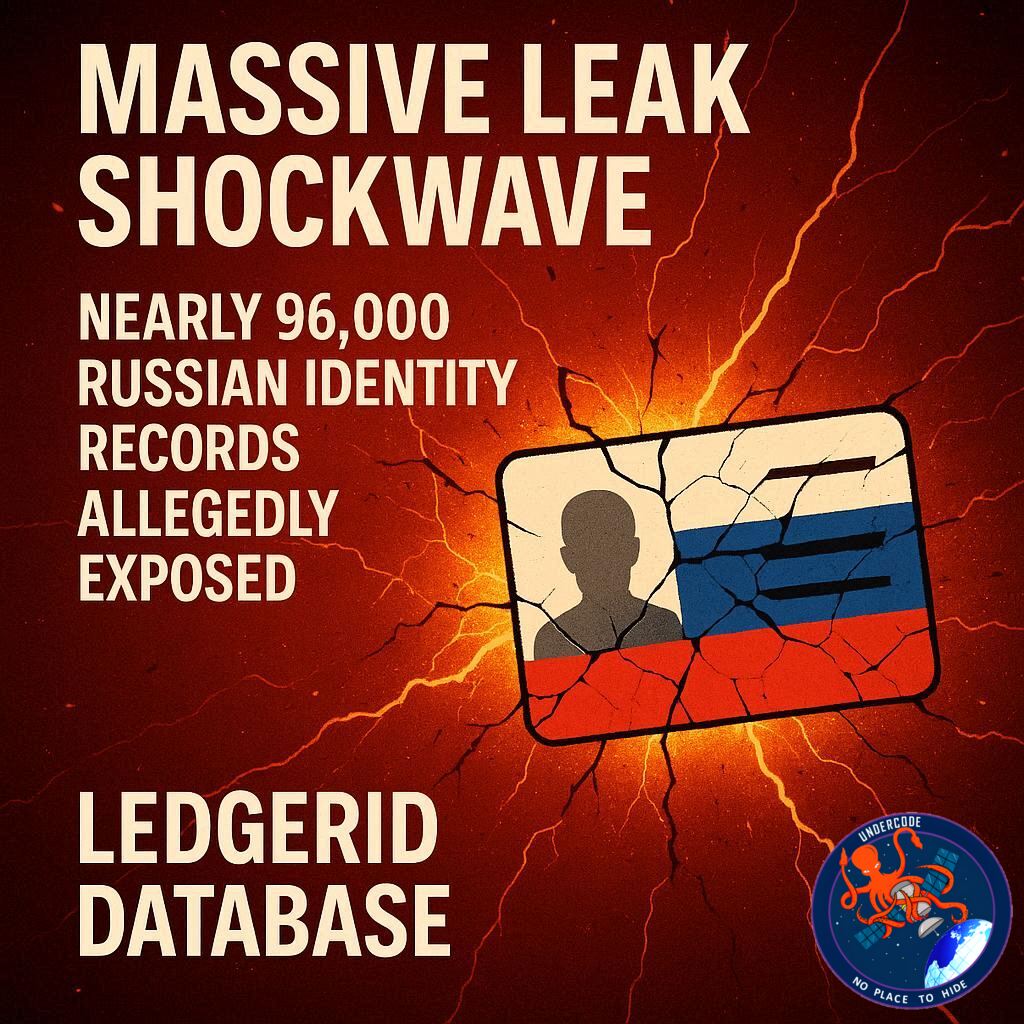 🌐 Introduction: A Digital Breach That Raises Serious Alarm Across Russia
A new cybersecurity claim has emerged from underground cybercrime forums alleging a large-scale data breach involving tens of thousands of Russian citizens. The leaked dataset is reportedly tied to a platform referred to as “LedgerID,” and the actor behind the post claims it contains highly sensitive personal identity information. While the authenticity of the leak has not been independently verified, the nature of the exposed data—if true—could represent a significant privacy and security risk for individuals across multiple Russian cities. Cybersecurity analysts are closely watching the situation, as such leaks often become fuel for identity theft, phishing campaigns, and broader cybercriminal exploitation.
📄 the Alleged “LedgerID” Data Leak (Unverified Cybercrime Forum Claim)
A cybercrime forum user claims responsibility for leaking a large dataset
The dataset allegedly contains nearly 96,000 Russian identity records
The platform involved is referred to as “LedgerID”
No official confirmation has been made regarding the breach
The actor claims data spans multiple Russian regions
Cities mentioned include Moscow and Saint Petersburg
Other affected areas reportedly include Yekaterinburg and Omsk
Novosibirsk is also listed among the impacted locations
The dataset is said to include verified personal details
Full names of individuals are allegedly part of the leak
Email addresses are reportedly included in the records
Mobile phone numbers are said to be exposed
Birthdates of individuals allegedly appear in the dataset
Job titles and employment roles are reportedly included
Location and city-level data is said to be present
Internal user identifiers are allegedly part of the structure
The data is claimed to be structured and organized per user profile
Samples shared online suggest high-detail identity profiling
The authenticity of sample records remains unverified
No technical proof of database origin has been publicly confirmed
It is unclear how the data was allegedly obtained
There is no evidence confirming a breach of “LedgerID” systems
Cybersecurity experts have not validated the dataset
The leak is currently treated as an unverified claim
If real, it could enable large-scale identity exploitation
Phishing campaigns could be enhanced using the exposed data
Smishing attacks could target affected individuals
Social engineering risks may increase significantly
Credential stuffing attacks could be facilitated
Doxxing risks may rise for exposed individuals
Authorities have not issued official statements yet
🧠 What Undercode Say:
The alleged “LedgerID” leak highlights how rapidly cybercrime ecosystems continue to scale in both size and sophistication. Even when datasets are unverified, the circulation of such claims alone can create real-world consequences, as threat actors often use leaked samples to build credibility and attract buyers on underground forums. In this case, the reported inclusion of full identity profiles—names, phone numbers, emails, and job details—suggests a structured database rather than random data aggregation, which, if authentic, could indicate a serious breach in identity management infrastructure.
What makes this situation particularly concerning is the geographic concentration across major Russian cities, implying either centralized data collection or a widely used service platform. If “LedgerID” is indeed a verification or identity-related system, the exposure could point toward weaknesses in how personal identity data is stored or accessed. Even without confirmation, the psychological and operational impact of such claims is significant, as cybercriminals often exploit uncertainty faster than verification processes can respond.
From a threat intelligence perspective, these leaks often serve dual purposes: immediate monetization and long-term targeting. Once personal datasets circulate, they rarely disappear, instead being re-sold, merged, and reused in future attacks. The inclusion of job titles and internal identifiers further increases the risk of spear-phishing, where attackers tailor messages with high precision to manipulate victims.
Another layer of concern lies in the timing and frequency of similar claims emerging across cybercrime forums. The repetition of large-scale identity leaks suggests either increasing system vulnerabilities or heightened psychological operations designed to create fear and perceived abundance of data. In both scenarios, individuals become more exposed to manipulation.
If verified, such a dataset could also feed into automated attack systems that combine identity data with breached passwords from other sources, creating chains of exploitation across multiple platforms. This is where the real danger lies—not just in the leak itself, but in how quickly it can be weaponized.
Ultimately, whether or not “LedgerID” is truly compromised remains uncertain, but the pattern reflects a broader cybersecurity reality: data once exposed, even in claims, becomes part of a permanent threat landscape that continuously evolves and expands.
🔍 Fact Checker Results
❌ No independent confirmation exists for the alleged “LedgerID” breach
❌ No verified proof of database origin or authenticity has been released
⚠️ Claims are currently limited to cybercrime forum activity only
📊 Prediction
If claims of this dataset gain traction or partial validation emerges, secondary leaks and recycled reposts across other forums are highly likely within days. Even without confirmation, phishing and impersonation attempts leveraging the alleged data structure may already begin targeting Russian users, especially in major cities mentioned in the leak narrative.
🕵️📝Let’s dive deep and fact‑check.
References:
Reported By: x.com
Extra Source Hub (Possible Sources for article):
https://www.quora.com
Wikipedia
OpenAi & Undercode AI
Image Source:
Unsplash
Undercode AI DI v2
Bing
🔐JOIN OUR CYBER WORLD [ CVE News • HackMonitor • UndercodeNews ]
📢 Follow UndercodeNews & Stay Tuned:
𝕏 formerly Twitter 🐦 | @ Threads | 🔗 Linkedin | 🦋BlueSky | 🐘Mastodon


