
Listen to this Post
🔥 Introduction: A Digital Alarm Bell for National Infrastructure
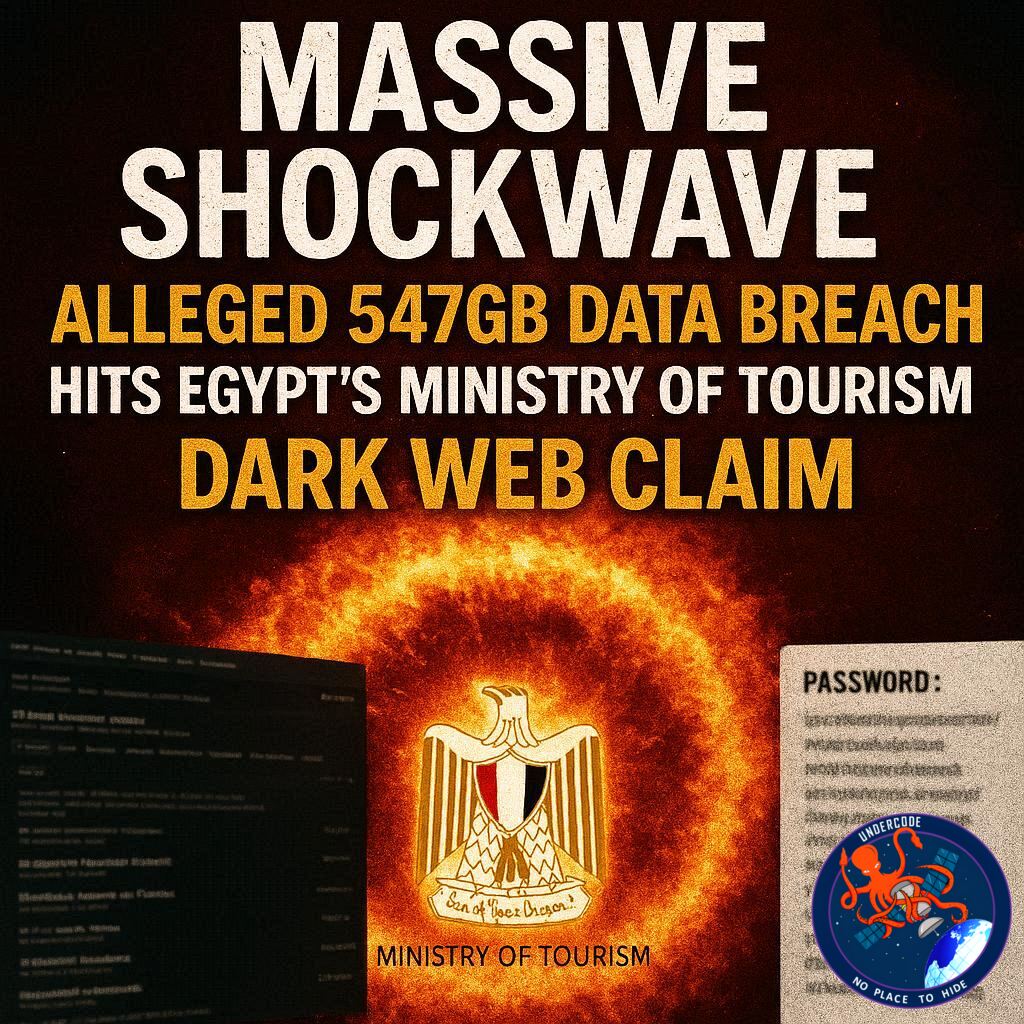
A new claim circulating on Dark Web intelligence channels has triggered serious concern across cybersecurity circles, alleging that Egypt’s Ministry of Tourism has suffered a massive data breach. The reported leak—said to involve approximately 547GB of sensitive data—has not been independently verified, but its scale alone has raised immediate questions about government cybersecurity resilience, data protection standards, and potential exposure of citizen or operational records. If confirmed, this incident would represent one of the most significant tourism-sector data exposures in the region in recent years.
📊 the Alleged Incident and Online Reaction
🧨 Emergence of the Leak Claim
The claim originated from a post by a Dark Web intelligence monitoring account known as “Dark Web Intelligence,” which regularly shares alleged cyber incidents. The post referenced a large-scale data breach affecting Egypt’s Ministry of Tourism, estimating the dataset at around 547GB.
🌐 Nature of the Alleged Compromised Data
Although no verified dataset has been publicly analyzed, breaches of this scale typically involve internal government documents, employee credentials, operational databases, or possibly tourism infrastructure data. However, these specifics remain unconfirmed in this case.
⚠️ Lack of Official Confirmation
As of now, no official statement from Egyptian authorities has validated or denied the breach. This leaves the claim in an uncertain state, relying solely on third-party cyber intelligence reporting.
🕵️ Dark Web Distribution Concerns
The mention of a “dark web” context implies potential unauthorized circulation of the data, which often includes sales, leaks, or free distribution among cybercriminal communities.
📉 Potential Risk Scope
If the dataset is authentic, risks could include identity exposure, administrative disruption, reputational damage, and potential exploitation of tourism infrastructure systems.
🌍 Regional Cybersecurity Implications
This incident adds to growing concerns about cyber threats targeting government institutions in the Middle East, where digital transformation often outpaces cybersecurity modernization.
🧩 Unverified but Alarming Scale
The sheer size of the alleged leak—547GB—suggests either a prolonged breach, multiple system compromise, or aggregation of several datasets into one dump.
🧠 What Undercode Say:
🧭 Signal vs Noise in Cyber Intelligence Reporting
Claims originating from dark web monitoring accounts often sit in a gray zone between verified intelligence and speculative amplification. While such accounts can surface real breaches early, they also risk circulating unconfirmed leaks that may never be validated. The Egypt Ministry of Tourism claim falls precisely into this ambiguous category, requiring cautious interpretation rather than immediate conclusion.
🏛️ Government Cybersecurity Exposure Patterns
Government institutions remain high-value targets due to centralized databases and legacy infrastructure. Ministries handling tourism are especially sensitive because they store both citizen data and international operational records. If a breach occurred, it would align with a broader global pattern of public-sector targeting.
📊 The Significance of “547GB” Scale Claims
Data volume claims in breach reports often serve as a credibility signal, but they are not always reliable indicators of impact. A 547GB dataset could represent raw logs, duplicated backups, or unfiltered system dumps rather than uniquely sensitive records. Without forensic validation, size alone should not be equated with severity.
🧱 Structural Weak Points in Administrative Systems
Many national tourism systems integrate legacy databases with modern cloud platforms, creating hybrid vulnerabilities. Misconfigurations, weak API security, or outdated authentication layers often become entry points for attackers, especially in large bureaucratic systems.
🌐 Dark Web Economy Incentives
Leaked government data carries high value in illicit markets, particularly for identity theft, fraud, or geopolitical intelligence gathering. Even unverified claims can be used strategically to attract buyers or manipulate perceived scarcity and urgency.
⚙️ Verification Gap in Cyber Incident Reporting
One of the biggest challenges in modern cybersecurity journalism is the gap between leak discovery and forensic confirmation. During this gap, narratives form quickly, often shaping public perception before technical validation occurs.
🧠 Psychological Impact of Large-Scale Breach Claims
Even unconfirmed breaches can create institutional pressure, forcing organizations into defensive postures. The reputational impact sometimes begins at the announcement stage rather than at confirmation.
🛰️ Geopolitical Sensitivity of Tourism Data
Tourism ministries often intersect with immigration, national identity systems, and international travel flows. This makes any alleged breach not just a cybersecurity issue but a potential geopolitical concern depending on data sensitivity.
🔍 Attribution Challenges
Without technical indicators such as ransomware signatures, IP logs, or malware traces, attribution remains speculative. Most dark web posts intentionally omit these details to protect threat actors or obscure origins.
⚖️ Need for Responsible Interpretation
Until verified by independent cybersecurity audits or official confirmation, this incident remains a claim rather than a confirmed breach. Responsible analysis requires maintaining this distinction to avoid misinformation amplification.
🔍 Fact Checker Results
✅ Unverified Breach Status
No official confirmation currently supports the claim of a breach at Egypt’s Ministry of Tourism.
⚠️ Source Reliability Limitation
The information originates from a dark web monitoring account, which may include unverified or speculative reports.
📊 Data Volume Claim Unconfirmed
The alleged “547GB” figure has not been independently validated through forensic cybersecurity analysis.
📈 Prediction
🔮 Escalation Toward Official Clarification
Authorities are likely to issue a statement or conduct internal audits if the claim gains broader media traction or if corroborating evidence emerges from cybersecurity researchers.
🔐 Increased Security Scrutiny
Even if unconfirmed, the report will likely trigger enhanced cybersecurity reviews across Egyptian government digital infrastructure.
🌐 Potential for Secondary Leak Claims
If the initial report spreads further, additional unverified datasets may surface in underground forums, either as continuations of the same claim or unrelated but associated leaks.
🕵️📝Let’s dive deep and fact‑check.
References:
Reported By: x.com
Extra Source Hub (Possible Sources for article):
https://www.pinterest.com
Wikipedia
OpenAi & Undercode AI
Image Source:
Unsplash
Undercode AI DI v2
Bing
🔐JOIN OUR CYBER WORLD [ CVE News • HackMonitor • UndercodeNews ]
📢 Follow UndercodeNews & Stay Tuned:
𝕏 formerly Twitter 🐦 | @ Threads | 🔗 Linkedin | 🦋BlueSky | 🐘Mastodon


