
Listen to this Post
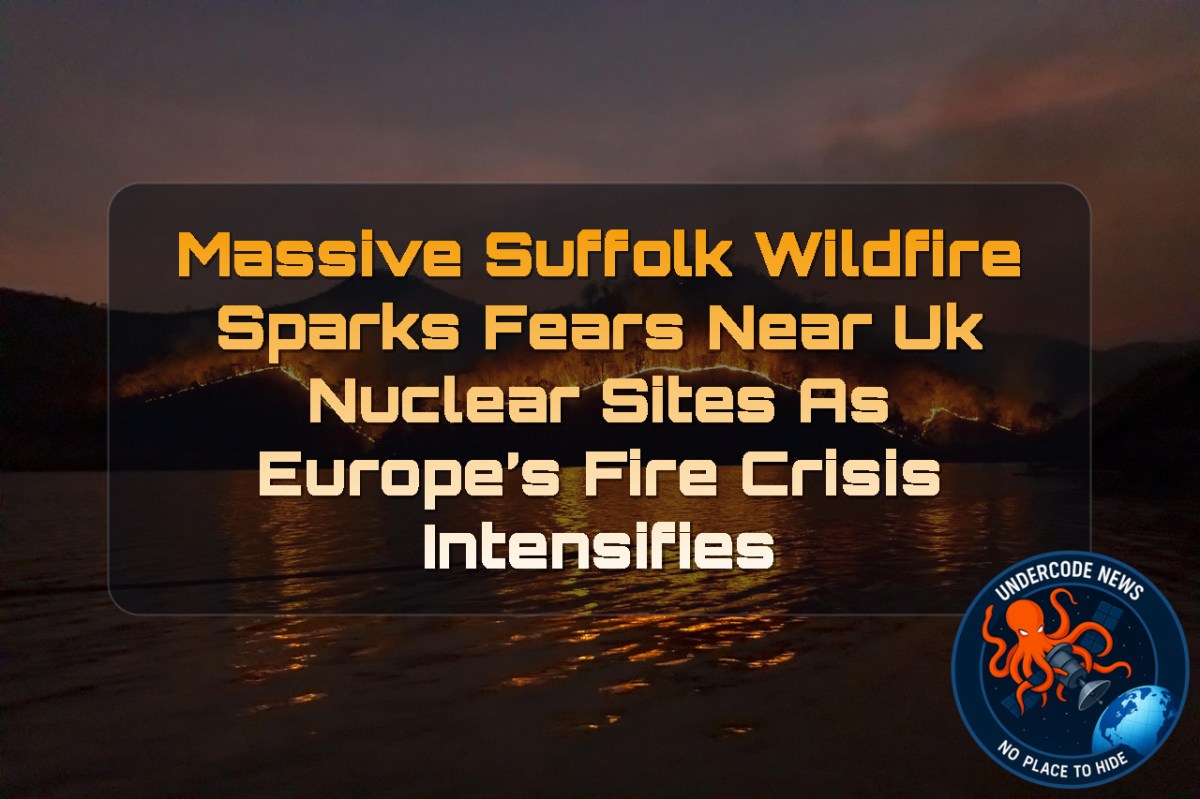 Introduction: A Growing Wildfire Threat Reaches Sensitive Infrastructure
Wildfires are no longer limited to remote forests or isolated countryside. Across Europe, increasingly extreme weather conditions are pushing massive fires closer to critical infrastructure, forcing governments and emergency responders to prepare for scenarios that once seemed highly unlikely. The latest example comes from Suffolk, England, where a fast-moving wildfire has erupted near several major nuclear facilities, raising public concern despite officials insisting that operations remain safe.
Although authorities stress that there is currently no direct danger to the UK’s nuclear power stations, the incident highlights how climate-driven disasters are beginning to intersect with essential energy infrastructure. The Suffolk wildfire is not just another seasonal fire—it represents a reminder that environmental emergencies can quickly evolve into national security concerns if conditions worsen.
Wildfire Breaks Out Across Suffolk Heathland
A large wildfire erupted on Wednesday across Dunwich Heath on England’s eastern coastline before rapidly spreading southwest under difficult weather conditions.
Emergency officials estimate the fire has already consumed roughly 100 hectares of land, making it one of the most significant wildfire incidents currently affecting the United Kingdom.
Strong winds, dry vegetation, and challenging terrain have complicated firefighting efforts, forcing emergency crews to deploy extensive resources in an attempt to contain the blaze before it spreads even further.
Firefighters Launch Major Emergency Response
Suffolk Fire and Rescue Service quickly launched a large-scale emergency operation involving 18 fire engines, specialist wildfire equipment, drones for aerial monitoring, and off-road quad bikes capable of reaching difficult terrain.
The operation continues under difficult environmental conditions, with firefighters working around the clock to slow the fire’s advance.
Suffolk Police officers have also joined the emergency response, helping secure affected areas, assist evacuations, and maintain safe access routes for emergency vehicles.
Authorities have urged both residents and tourists to stay away from the affected region while emergency operations continue.
Residents Evacuated as Smoke Spreads
As smoke and flames expanded across parts of Suffolk, several nearby residents were evacuated from their homes as a precaution.
Local authorities established temporary rest centres for displaced families while emergency teams assessed potential risks to surrounding communities.
Officials continue monitoring air quality, visibility, and changing weather conditions that could influence the wildfire’s direction.
Fortunately, no widespread casualties have been reported at the time of writing.
Nuclear Power Stations Remain Operational
The
However, EDF Energy confirmed that Sizewell B Nuclear Power Station continues operating normally and that the wildfire has not affected plant operations.
Company representatives stated they are carefully monitoring developments but emphasized there is currently no high alert in place.
Officials also noted that Sizewell B maintains comprehensive emergency procedures designed to respond to various incidents, including fires occurring either on-site or in nearby areas.
Sizewell C Project Also Monitoring Conditions
The planned Sizewell C nuclear development also released a statement reassuring the public.
Project officials explained that the wildfire currently presents only a low level of risk because of the considerable distance separating the construction site from the active fire, along with natural watercourses that act as barriers.
Operations at offices and project facilities continue without interruption.
Management added that teams are continuously assessing smoke conditions, road accessibility, and emergency service requirements to ensure both worker safety and uninterrupted emergency response operations.
Government Offers Full Support
UK Deputy Prime Minister and Secretary of State for Housing, Communities and Local Government Angela Rayner publicly thanked emergency responders battling the wildfire.
She expressed sympathy for residents affected by the disaster and confirmed that the UK government stands ready to provide additional assistance if local authorities require further support.
Such statements reflect growing awareness within government that wildfires are becoming increasingly serious domestic emergencies rather than isolated environmental events.
Europe Faces One of Its Toughest Wildfire Seasons
The Suffolk wildfire forms part of a much broader crisis unfolding across Europe.
Multiple countries have experienced devastating fires throughout recent weeks as prolonged heatwaves and dry conditions create ideal environments for rapidly spreading wildfires.
France has suffered one of the
Spain’s Madrid region has also faced significant fire outbreaks, while Italy, Greece, Portugal, and Turkey continue fighting multiple large-scale fires across their territories.
Climate experts increasingly warn that these events are becoming more frequent and more intense due to changing weather patterns.
Deep Analysis
Environmental Risk Meets Critical Infrastructure
The Suffolk incident demonstrates how environmental disasters are beginning to intersect with nationally important infrastructure. Nuclear facilities are designed with extensive physical protections, but surrounding environmental conditions are becoming increasingly unpredictable.
Emergency Planning Proves Essential
One reassuring aspect of this incident is the apparent effectiveness of emergency preparedness. Nuclear operators already possess detailed emergency response plans, allowing authorities to monitor external threats without creating unnecessary public panic.
Climate Change Expands Operational Challenges
Historically, flood protection dominated planning around power stations. Today’s climate reality adds prolonged droughts, heatwaves, and large wildfires to operational risk assessments, requiring infrastructure operators to adapt accordingly.
Public Communication Prevents Panic
EDF and the Sizewell C project responded quickly with transparent public updates. Immediate communication reduces misinformation and helps reassure nearby communities while emergency crews focus on operational priorities.
Wildfires Are Becoming Infrastructure Threats
Road closures, smoke, damaged communications, and power interruptions can indirectly affect major facilities even when flames never reach them. Infrastructure resilience now depends on protecting surrounding ecosystems as much as the facilities themselves.
Technology Supports Modern Firefighting
The deployment of drones and specialized off-road vehicles illustrates how emergency services increasingly rely on advanced technologies to monitor wildfire behavior in real time.
Preparedness Matters More Than Probability
Even when the likelihood of a wildfire directly damaging a nuclear station remains low, emergency planning must assume worst-case scenarios. Preparing for unlikely events minimizes overall national risk.
Lessons for Energy Security
As Europe expands renewable energy and modernizes electricity infrastructure, governments may also need to invest more heavily in wildfire-resistant transmission systems, emergency logistics, and environmental monitoring.
Cross-Agency Coordination Is Critical
The Suffolk response demonstrates effective coordination between firefighters, police, local government, and energy operators. Such cooperation significantly improves response times during rapidly evolving emergencies.
Europe’s Fire Season Is Evolving
The increasing frequency of simultaneous fires across multiple European nations suggests wildfire management is becoming a long-term strategic challenge rather than a seasonal emergency.
What Undercode Say:
Critical Infrastructure Faces New Climate Realities
This wildfire serves as another reminder that modern infrastructure cannot be evaluated only against traditional engineering threats. Climate-related disasters are expanding the list of operational risks that governments and private operators must prepare for.
Current Nuclear Risk Appears Low
Based on official statements, there is currently no evidence suggesting the wildfire has compromised nuclear safety. Existing emergency protocols appear to be functioning as intended, and operators continue normal activities while maintaining enhanced monitoring.
Preparedness Should Continue Even Without Immediate Danger
One of the strongest lessons from this incident is that emergency planning should never begin after a disaster escalates. Continuous monitoring and regular emergency exercises significantly reduce potential risks.
Wildfire Seasons Are Becoming Longer
Across Europe, hotter summers and prolonged droughts are extending wildfire seasons beyond historical norms. This increases pressure on emergency services and critical infrastructure operators alike.
Emergency Communication Was Effective
Authorities provided timely updates that balanced transparency with reassurance. This approach helps prevent unnecessary panic while keeping the public informed about evolving conditions.
Infrastructure Resilience Must Expand
Future infrastructure planning should include larger wildfire buffer zones, improved vegetation management, and enhanced environmental monitoring systems surrounding sensitive facilities.
Technology Improves Situational Awareness
Drones, satellite monitoring, AI-assisted fire prediction, and remote sensors will become increasingly important in detecting and managing wildfires before they threaten populated or strategic areas.
Community Awareness Saves Lives
Public cooperation remains one of the most valuable tools during emergencies. Following evacuation orders and avoiding restricted areas allows emergency responders to work more effectively.
Europe Needs Regional Cooperation
Wildfires frequently cross administrative and even national boundaries. Stronger European cooperation in firefighting resources and intelligence sharing could improve response capabilities during extreme fire seasons.
Climate Adaptation Is Becoming Essential
Regardless of political debates surrounding climate policy, governments increasingly need practical adaptation strategies to protect people, ecosystems, and critical infrastructure from increasingly severe weather events.
✅ Verified: UK authorities and EDF confirmed that the Suffolk wildfire has not affected operations at Sizewell B Nuclear Power Station, and both Sizewell B and the planned Sizewell C project continue operating normally while monitoring the situation.
✅ Verified: Emergency responders deployed extensive firefighting resources, including 18 fire engines, drones, specialist equipment, and police support, reflecting a significant response to the approximately 100-hectare wildfire.
✅ Verified: Europe is experiencing a severe wildfire season, with major fires reported in France, Spain, Italy, Greece, Portugal, and Turkey, illustrating that the Suffolk incident is part of a broader continental trend rather than an isolated event.
Prediction
(+1) Positive Prediction: Emergency crews are likely to contain the Suffolk wildfire before it poses any direct threat to nearby nuclear facilities, thanks to extensive firefighting resources, continuous monitoring by energy operators, and well-established emergency response plans.
(-1) Negative Prediction: If Europe continues experiencing hotter, drier summers, wildfires may increasingly threaten transportation networks, electrical infrastructure, industrial facilities, and other critical assets, requiring governments to significantly expand long-term wildfire resilience and climate adaptation strategies.
▶️ Related Video (80% Match):
🕵️📝Let’s dive deep and fact‑check.
🎓 Live Courses & Certifications:
Join Undercode Academy for Verified Certifications
🚀 Request a Custom Project:
Secure, high-velocity infrastructure and disruptive technological engineering. Contact our engineering team for high-tier development and proprietary systems:
[email protected]
💎 Smart Architecture | 🛡️ Secure by Design | ⭐ Trusted by Thousands
References:
Reported By: www.euronews.com
Extra Source Hub (Possible Sources for article):
https://www.reddit.com/r/AskReddit
Wikipedia
OpenAi & Undercode AI
Image Source:
Unsplash
Undercode AI DI v2
🔐JOIN OUR CYBER WORLD [ CVE News • HackMonitor • UndercodeNews ]
📢 Follow UndercodeNews & Stay Tuned:
𝕏 formerly Twitter 🐦 | @ Threads | 🔗 Linkedin | 🦋BlueSky | 🐘Mastodon | 📺Youtube


