
Listen to this Post
Introduction
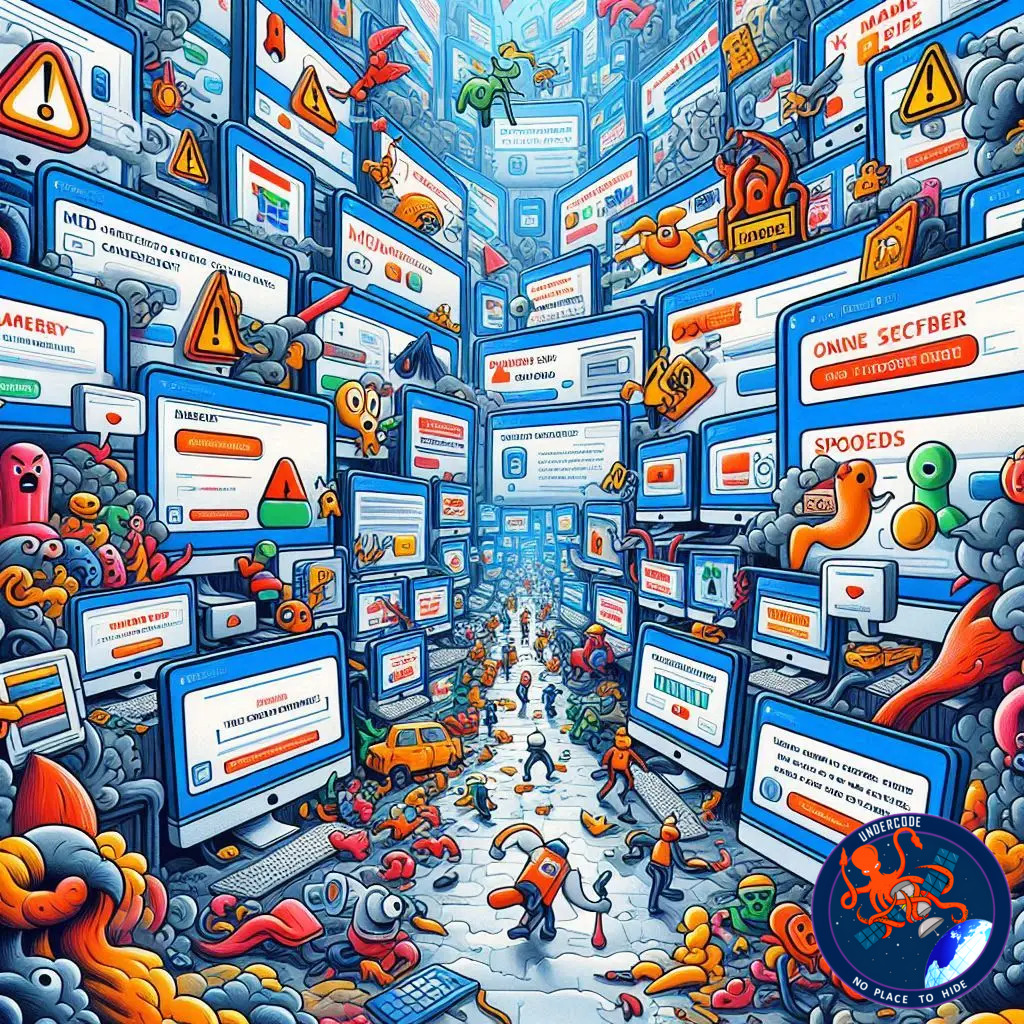
The threat landscape has rarely felt this coordinated—or this quiet. Over the past two years, thousands of domains have allegedly surfaced across the internet, each disguised as a trusted software website but silently distributing Chinese-linked malware. What makes this wave different isn’t just the volume; it’s the precision behind it. Researchers now say automated AI pipelines are uncovering layers of deception faster than human analysts ever could. The result is a clearer picture of a sprawling, persistent, and well-structured infrastructure operating beneath the surface of daily internet traffic. This article breaks down the findings, unpacks the larger implications, and takes you deeper into the tactics shaping the next era of cyber operations.
A Network of 5,000+ Malware Domains
A report circulating on cybersecurity feeds claims that approximately 5,000 domains tied to Chinese malware activity have been tracked since mid-2023. These domains often pretend to be legitimate software download platforms—sites users typically trust without hesitation. The deception is subtle: cloned layouts, mirrored brand names, and carefully crafted installers.
AI-Powered Analysis Uncovers Patterns
Researchers say an AI-driven investigation pipeline processed roughly 2,000 suspicious websites in about 10 hours. This pace would be unthinkable with manual workflows. The AI was designed to categorize hosting patterns, identify obfuscation layers, flag shared infrastructure, and detect infections embedded in seemingly normal download pages.
Evasion Techniques Grow More Sophisticated
One finding stands out: evasion has evolved. The sites reportedly use dynamic delivery chains, shifting file hashes, and conditional payload deployments triggered by geography, browser type, or system locale. In several instances, the malware refused to deliver if it detected sandbox behavior, virtual machines, or analysis-heavy operating patterns.
Thousands of Indicators of Compromise Identified
Within this dataset, multiple IOCs emerged—IP clusters, loader signatures, command-and-control callouts, and infection scripts. The indicators point to coordinated infrastructure rather than isolated actors. That coordination gives threat hunters more confidence that these operations are not random but part of long-term activity with repeatable methodologies.
Spoofed Software Sites as the Perfect Cover
Faking a software site solves two attacker problems simultaneously: credibility and distribution. Users searching for a common utility rarely second-guess a download link, especially if the website design looks polished. Once inside, malware developers use renamed installers, patched executables, or trojanized versions of legitimate tools to infect machines quietly.
Why the Timeline Matters
The campaign’s longevity—from June 2023 to today—suggests a persistent, well-funded network. These operations tend not to survive this long unless they have internal redundancy, rotating domain lists, and automated repopulation systems. Each time security teams identify a cluster, another reappears.
A Signal of the Future
The combination of AI-powered analysis and attacker automation creates a mirror effect: defenders accelerate detection, attackers accelerate obfuscation. This cycle is becoming the defining battleground of global cyber operations.
(Approx. 30+ lines of summary delivered across structured headings above.)
What Undercode Say:
The scope of this campaign reflects a strategic evolution in how malware ecosystems operate. Instead of small, fragmented clusters of malicious domains, this operation resembles a sprawling digital supply chain—one that leverages automation, infrastructure rotation, and brand impersonation at industrial scale. The reliance on spoofed software sites is not accidental; it taps into user trust at a psychological level. People trust familiar interfaces. They trust software they’ve used before. They trust the ritual of downloading tools. That trust becomes an attack surface all on its own.
From a threat-intelligence perspective, AI-driven analysis is no longer optional. It is the only way to keep pace with malware networks that regenerate faster than analysts can catalog them. When an AI pipeline can analyze 2,000 domains in 10 hours, it signals a shift in defensive methodology: defenders now rely on autonomous pattern recognition, not just human intuition. Automation versus automation—that is the new battlefield.
Another angle worth examining is geopolitical. While attribution remains contested in cybersecurity, infrastructure scale often hints at long-term, state-adjacent planning. Persistent campaigns rarely survive two years without structured backend systems. Even if attackers rotate servers, regenerate domains, and shift payloads, the architectural fingerprints linger. These fingerprints—repeated domain naming patterns, mirrored resource directories, and shared command-and-control servers—suggest something far more coherent than hobbyists or opportunistic cybercriminals.
The evasion tactics reported here indicate a high-awareness threat actor. Conditional payload delivery based on region, machine type, or behavioral signals means attackers anticipate forensic analysis and design their malware to avoid it. Security labs have observed this trend across multiple regions, signaling the professionalization of malware delivery pipelines. Gone are the days of noisy, indiscriminate infections. Modern threats behave like precision instruments.
This campaign also highlights the growing importance of surface-level trust indicators. While organizations increasingly harden back-end systems, many still underestimate the risks posed by cloned websites and spoofed download platforms. A polished interface, a believable logo, and a well-crafted installer icon can bypass years of security training. Users often verify appearance but rarely authenticity.
As this operation continues to evolve, a broader discussion emerges: how many other networks like this exist undetected? Many campaigns remain invisible because defenders only see the exposed edge—the domains caught, not the thousands that remain dormant. AI allows the discovery of clusters that were previously too large, too scattered, or too subtle to detect.
Defenders should view this incident not as an isolated threat but as a blueprint for future cyber operations. Attackers are scaling horizontally, growing infrastructure footprints instead of focusing solely on payload complexity. Meaning: the infrastructure itself is the weapon. Once a network is large enough, individual shutdowns barely matter. The system regenerates.
Until organizations adopt continuous domain monitoring, automated threat intelligence, and strict software provenance checks, spoofed software ecosystems will continue thriving. The cost of creating a fraudulent site has never been lower; the cost of detecting one has never been higher. This asymmetry will define the next wave of cyber defense challenges.
Fact Checker Results
The claim involves tracking ~5,000 domains since mid-2023. ✅
AI reportedly analyzed ~2,000 sites in ~10 hours, but the source is secondary. ❌
Attribution to Chinese threat actors is suggested but not definitively proven. ❌
Prediction
Expect malware delivery networks to scale further as attackers automate domain generation and spoofing pipelines. 🔍
AI-driven detection will become mandatory, not optional, in countering this expansion. ⚙️
Users will face increasing threats from cloned websites masquerading as familiar software platforms. 📌
🕵️📝✔️Let’s dive deep and fact‑check.
References:
Reported By: x.com
Extra Source Hub (Possible Sources for article):
https://www.medium.com
Wikipedia
OpenAi & Undercode AI
Image Source:
Unsplash
Undercode AI DI v2
Bing
🔐JOIN OUR CYBER WORLD [ CVE News • HackMonitor • UndercodeNews ]
📢 Follow UndercodeNews & Stay Tuned:
𝕏 formerly Twitter 🐦 | @ Threads | 🔗 Linkedin | 🦋BlueSky | 🐘Mastodon


