
Listen to this Post
A New Era for Pharmacist Efficiency
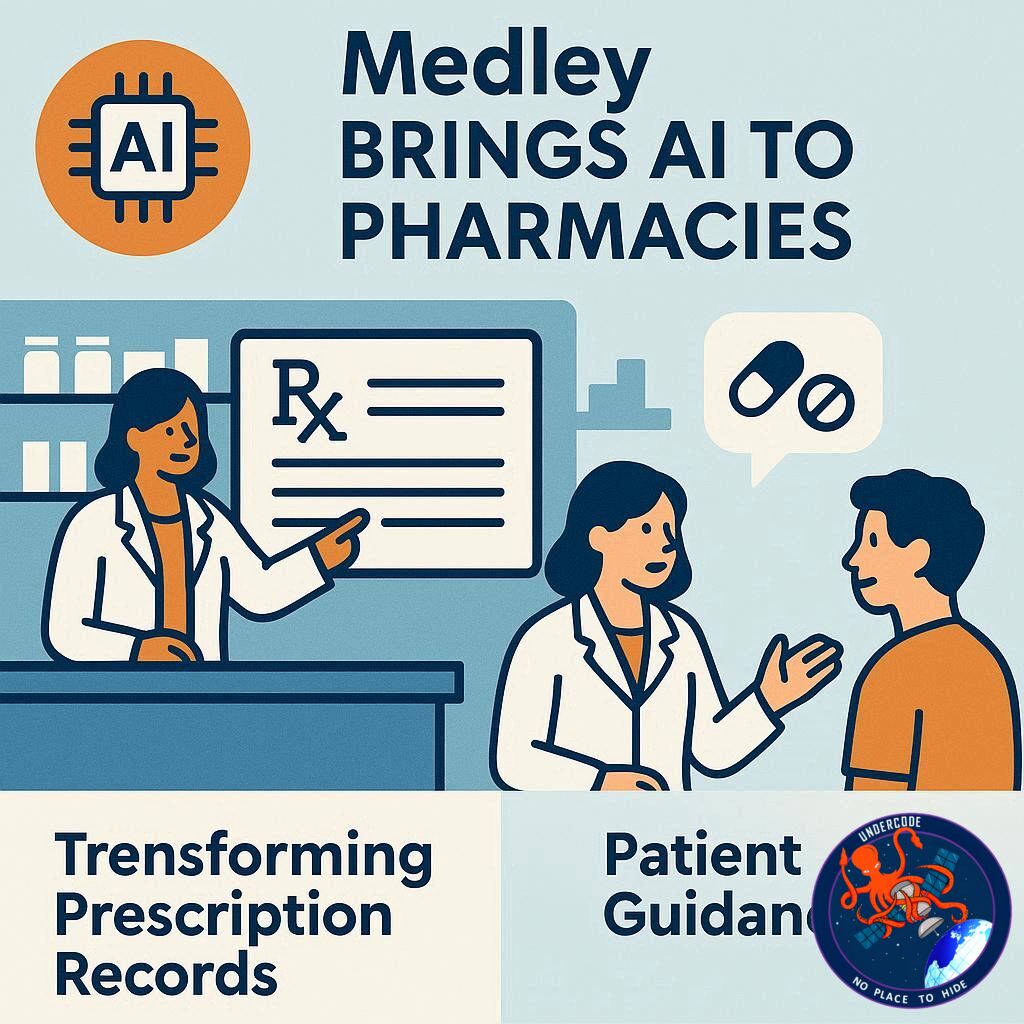
The integration of artificial intelligence (AI) into healthcare is no longer a distant vision—it’s happening now, and Japan’s Medley is leading the charge. The online medical service provider announced that it will incorporate AI into its digital transformation (DX) system for pharmacies, aiming to streamline the daily workload of pharmacists. This breakthrough promises to reshape how prescription records are created and how patients receive guidance on medication use.
By leveraging AI for administrative and clinical tasks, pharmacists can shift focus from paperwork to patient care. Instead of being bogged down by hours of repetitive documentation, they will soon be able to rely on AI-generated summaries and real-time assistance, cutting down inefficiencies while still maintaining safety and accuracy.
the Original
Medley, an online medical platform, is set to integrate artificial intelligence into its pharmacy support systems to enhance efficiency. The new AI-powered function will focus on creating patient prescription records and assisting with medication guidance, two of the most time-consuming tasks for pharmacists.
The service is scheduled for release in 2025, providing an AI assistant that listens to conversations between pharmacists and patients using speech recognition technology. The AI then applies generative AI models to summarize the key points of the consultation. These summaries can then be reviewed, corrected, and finalized by the pharmacist before being stored as official records.
The goal is to ensure accuracy while dramatically reducing the clerical burden. Pharmacists will still hold the final responsibility for validating and approving the content, ensuring compliance with medical standards.
Medley’s approach represents a blend of human expertise and AI efficiency, striking a balance between automation and accountability. The system is part of a broader move toward digital transformation in Japanese healthcare, where labor shortages and rising demand for medical services require smarter technological solutions.
The project highlights not just efficiency but also safety in drug administration, since AI-powered transcription minimizes errors from manual entry. Moreover, AI-guided assistance in patient communication could ensure that critical instructions about dosage and side effects are not overlooked.
Ultimately, Medley envisions a system where pharmacists are freed from excessive documentation duties and can devote more attention to personalized patient care, while AI handles repetitive yet essential tasks.
What Undercode Say:
Medley’s initiative marks a critical turning point for the healthcare industry—not only in Japan but globally. The pharmacy sector has long struggled with inefficiencies caused by heavy administrative loads. In many cases, pharmacists spend up to 40% of their working hours on documentation, leaving limited time for meaningful patient interaction. By adopting AI, Medley is addressing this imbalance head-on.
One of the most promising aspects is the speech-to-text integration combined with generative AI summarization. This bridges a long-standing gap: pharmacists often explain complex medication instructions in person, but ensuring those conversations are properly documented has always been a tedious chore. AI ensures both accuracy and traceability, creating a digital footprint of the consultation while saving precious time.
However, this raises an important question: will AI reduce pharmacists to supervisors of machines rather than primary caregivers? The answer depends on implementation. If the technology becomes a crutch, there’s a risk of overreliance. But if used as intended—as a support tool, not a replacement—AI could unlock new levels of patient-centered care.
There are also ethical and legal dimensions. Pharmacists remain legally responsible for medical records, meaning errors in AI transcription must be caught before final approval. The technology must be robust enough to handle medical jargon, patient dialects, and context-specific language, areas where AI still struggles.
Another layer is patient trust. Will patients feel comfortable knowing that AI is listening to their private health conversations? Transparency will be vital. Patients should be informed about the AI’s role and reassured that data security protocols are ironclad.
Economically, the move could significantly reduce healthcare costs. In Japan, where the population is aging rapidly and healthcare demand is skyrocketing, efficiency tools are not a luxury—they’re a necessity. If successful, Medley’s model could be exported to other countries facing similar demographic and workforce challenges.
From a broader perspective, this innovation is part of a global race to automate healthcare administration. Giants like Amazon and Microsoft are already investing in medical AI, but Medley’s focus on pharmacies makes it unique. Pharmacies are often overlooked in digital transformation strategies, yet they play a critical frontline role in patient safety.
The system also offers a scalable framework: what starts with prescription record automation could expand to AI-driven drug interaction checks, personalized medication schedules, and even predictive analytics for identifying patients at risk of non-adherence.
In conclusion, Medley’s AI initiative is not just a tech upgrade—it’s a redefinition of pharmacist workflows. It highlights a future where pharmacists spend more time counseling patients, AI handles the tedious documentation, and healthcare becomes more efficient without sacrificing human oversight.
🔍 Fact Checker Results
✅ Medley has officially announced plans to introduce AI into pharmacy systems in 2025.
✅ The AI will focus on speech recognition, transcription, and medication record summaries.
✅ Pharmacists remain the final authority for accuracy and compliance.
📊 Prediction
By 2027, systems like Medley’s will become standard across advanced healthcare systems. Pharmacies will increasingly rely on AI-powered transcription and guidance tools, potentially cutting documentation time by more than half. Over the next decade, AI is likely to expand beyond record-keeping into real-time patient monitoring, medication adherence alerts, and predictive safety checks—turning pharmacies into digitally enhanced health hubs rather than simple drug dispensaries.
🕵️📝✔️Let’s dive deep and fact‑check.
References:
Reported By: xtechnikkeicom_4bf95f19b0a4870e2dacb3a7
Extra Source Hub:
https://www.quora.com/topic/Technology
Wikipedia
OpenAi & Undercode AI
Image Source:
Unsplash
Undercode AI DI v2
🔐JOIN OUR CYBER WORLD [ CVE News • HackMonitor • UndercodeNews ]
📢 Follow UndercodeNews & Stay Tuned:
𝕏 formerly Twitter 🐦 | @ Threads | 🔗 Linkedin | 🦋BlueSky | 🐘Mastodon


