
Listen to this Post
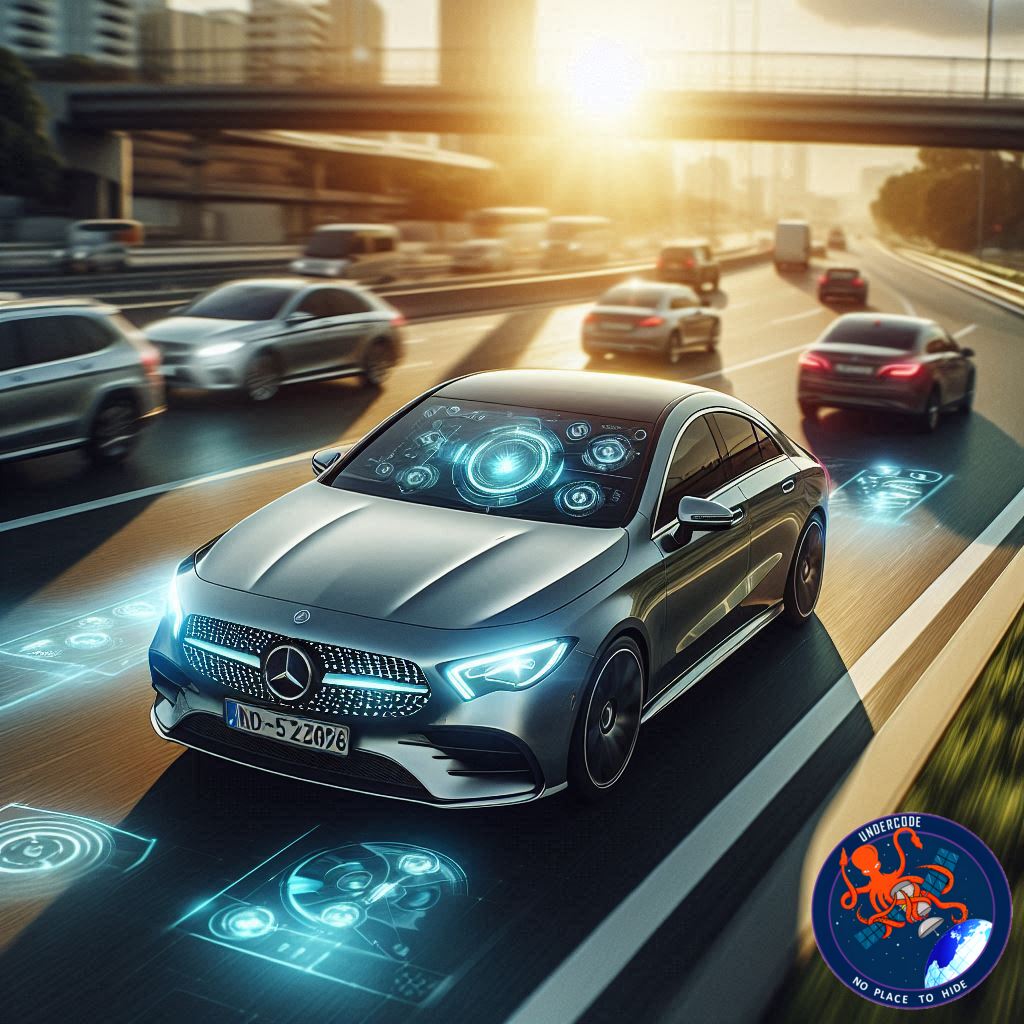
As artificial intelligence reshapes the automotive industry, driver assistance technologies are no longer optional—they are becoming the standard for ensuring safety on the road. The Mercedes-Benz CLA’s recognition as Euro NCAP’s Best Performer of 2025 marks a turning point in how vehicle safety is evaluated, highlighting the critical role of AI-powered systems alongside traditional passive protections. This milestone underscores the growing emphasis on vehicles that do not just survive accidents but actively prevent them.
Euro NCAP Recognition Signals a Safety Revolution
The European New Car Assessment Programme (Euro NCAP) has long served as Europe’s authoritative benchmark for vehicle safety, combining evaluations from governments, consumer organizations, and motoring bodies. In 2025, a record 49 models were tested, with the Mercedes-Benz CLA emerging as the top performer. Achieving this recognition requires excellence across all safety categories, including passive crash protection and AI-enhanced active systems such as automatic emergency braking, lane-keeping assist, and speed regulation. Ola Källenius, CEO of Mercedes-Benz Group, highlighted the collaboration with NVIDIA as pivotal: five years of joint development helped fuse traditional safety with next-generation AI to deliver tangible, real-world protection for drivers and passengers alike.
DRIVE AV Architecture: Intelligence Meets Reliability
The CLA leverages NVIDIA DRIVE AV, a dual-stack AI system that integrates an AI-driven driving layer with a classical safety stack to ensure redundancy in sensing, planning, and execution. Combined with NVIDIA DRIVE Hyperion, which incorporates hardware redundancy and sensor diversity, the architecture guarantees that the vehicle’s decision-making remains resilient under complex scenarios. Central to this is NVIDIA Halos, a holistic safety system encompassing hardware, software, development processes, and certification, designed to create verifiable and fault-tolerant AI performance in real-world driving conditions.
Third-Party Verification Builds Trust
Safety extends beyond engineering. TÜV SÜD certified NVIDIA’s cybersecurity processes under ISO 21434, while NVIDIA DriveOS 6.0 meets ISO 26262 ASIL D standards. TÜV Rheinland independently assessed NVIDIA DRIVE AV’s compliance with UNECE safety regulations, confirming that the system meets rigorous safety criteria for complex electronic vehicle systems.
AI Training Through Simulation
NVIDIA’s cloud-to-car methodology revolutionizes how AI learns to navigate risk. Billions of simulated miles, generated through platforms like NVIDIA Omniverse and Cosmos, train the AI to respond to rare or dangerous scenarios too impractical to replicate in real life. The Alpamayo family of AI models enables vehicles to reason through multiple potential outcomes, selecting the safest action in unprecedented situations. This simulation-first approach ensures that AI-driven driver assistance can handle the unpredictable realities of the road with precision.
Redefining Vehicle Safety for the Modern Era
The CLA’s five-star performance demonstrates a broader transformation in automotive safety. Modern benchmarks increasingly prioritize proactive accident prevention alongside traditional crash resilience. Vehicles like the CLA exemplify the convergence of AI intelligence, rigorous certification, and redundancy-driven design, establishing a new standard for safety that goes beyond structural engineering to encompass predictive, real-world protective capabilities.
What Undercode Say:
The Mercedes-Benz CLA’s achievement signals a paradigm shift in how automotive safety is conceptualized and validated. Traditional assessments focused on passive safety—how a car protects occupants during collisions—are now being complemented by predictive, AI-driven systems that actively work to prevent crashes. This dual approach represents a strategic evolution in safety design: it is no longer sufficient for a vehicle to withstand impact; it must anticipate and mitigate risk before an accident occurs.
NVIDIA’s dual-stack DRIVE AV architecture is especially notable because it pairs cutting-edge AI decision-making with classical, deterministic safety measures. This redundancy addresses one of the most critical challenges in autonomous and semi-autonomous driving: system predictability and fault tolerance. AI systems excel at handling vast, complex datasets and identifying risk in dynamic conditions, but without a classical safety backbone, even small software anomalies could have catastrophic consequences. By layering classical controls alongside AI, Mercedes-Benz and NVIDIA have created a platform that can reliably navigate rare, high-risk “edge cases” that human drivers—or less sophisticated AI—might mishandle.
Furthermore, the CLA’s development highlights how simulation and synthetic data are redefining automotive validation. Edge cases, which occur infrequently yet carry high consequences, cannot be sufficiently tested in physical environments alone. NVIDIA’s approach—converting real-world data into billions of virtual driving miles—ensures that AI systems are trained comprehensively, enhancing both reliability and public trust.
The recognition from Euro NCAP also emphasizes the growing importance of standardized third-party certifications. TÜV SÜD and TÜV Rheinland validation provides independent assurance that AI-driven systems comply with cybersecurity and functional safety standards, reinforcing consumer confidence. As regulatory frameworks tighten globally, vehicles that combine verified AI with classical safety features are likely to dominate the premium market segment.
Strategically, this development foreshadows a future where AI integration is no longer a luxury but a competitive necessity. Automakers investing in AI-enhanced safety stand to benefit not only in terms of regulatory compliance and consumer trust but also in brand differentiation. Mercedes-Benz’s partnership with NVIDIA demonstrates how deep collaboration between vehicle manufacturers and technology firms can accelerate innovation, optimize system reliability, and ultimately set new industry benchmarks.
As AI-driven safety becomes more sophisticated, metrics for evaluating vehicle performance will shift from crash survivability to crash avoidance. Real-world performance, simulation fidelity, and system redundancy will emerge as defining criteria for the “safest” car. The CLA’s achievements provide an early glimpse into this future, where AI not only augments human driving but also establishes a new standard for road safety.
In summary, Mercedes-Benz CLA illustrates the full potential of AI-powered safety systems: combining predictive intelligence, verified resilience, and rigorous testing to redefine what it means to be “safe.” As autonomous technologies advance, vehicles will increasingly be judged not by their structural integrity alone but by their ability to prevent accidents before they occur, setting a new benchmark for the industry.
Fact Checker Results:
✅ Mercedes-Benz CLA was recognized as Euro NCAP Best Performer 2025.
✅ NVIDIA DRIVE AV dual-stack architecture integrates AI with classical safety systems.
✅ TÜV SÜD and TÜV Rheinland independently certified NVIDIA’s automotive safety and cybersecurity standards.
Prediction:
🚗 AI-driven driver assistance will become a standard feature across premium and mainstream vehicles by 2030.
📊 Future safety ratings will emphasize predictive crash avoidance, not just structural protection.
🌐 Partnerships between automakers and AI technology firms will accelerate, setting global benchmarks for intelligent vehicle safety.
▶️ Related Video (88% Match):
🕵️📝✔️Let’s dive deep and fact‑check.
References:
Reported By: blogs.nvidia.com
Extra Source Hub (Possible Sources for article):
https://www.instagram.com
Wikipedia
OpenAi & Undercode AI
Image Source:
Unsplash
Undercode AI DI v2
Bing
🔐JOIN OUR CYBER WORLD [ CVE News • HackMonitor • UndercodeNews ]
📢 Follow UndercodeNews & Stay Tuned:
𝕏 formerly Twitter 🐦 | @ Threads | 🔗 Linkedin | 🦋BlueSky | 🐘Mastodon


