
Listen to this Post
 Introduction: A Strategic Reset Inside Silicon Valley’s Most Watched Tech Giant
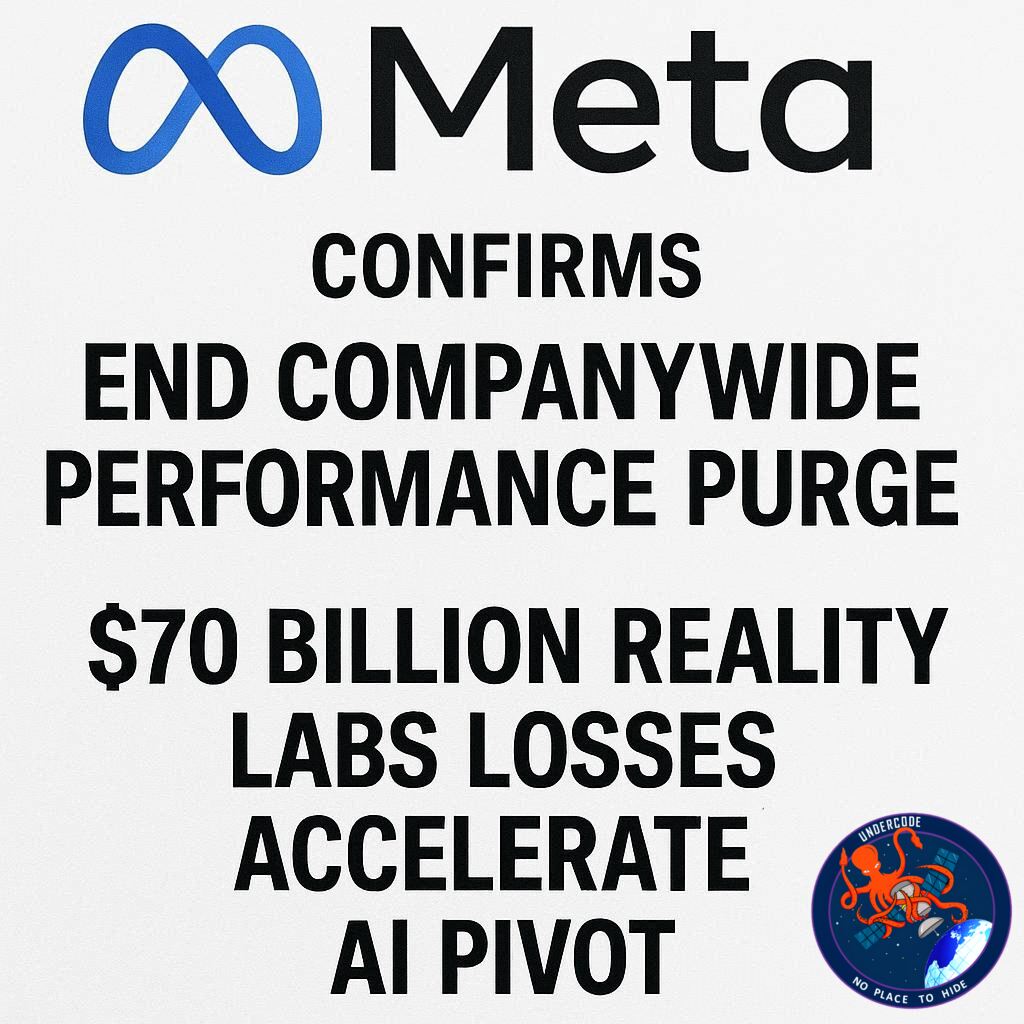
After months of internal anxiety and public speculation, Meta has officially clarified that it will not repeat the controversial company-wide performance purge that eliminated the bottom 5% of employees last year. The announcement arrives at a delicate moment for the company, which is aggressively restructuring its priorities after massive losses in virtual reality and an increasingly urgent race toward artificial intelligence dominance. While layoffs have continued in specific divisions, Meta insists those actions are not part of a broader annual culling strategy. The message is clear: performance reviews remain strict, but the systematic purge model is on pause.
Meta Draws a Line Under the 5% Workforce Elimination Policy
Meta informed employees that it will not conduct another sweeping 5% performance-based layoff like the one executed in early 2025. A company spokesperson confirmed that recent workforce reductions are isolated cases rather than part of a company-wide initiative. This statement directly addresses fears that the controversial purge would become an annual tradition embedded in Meta’s management culture. For now, at least, that policy is shelved.
Reality Labs Faces Deep Cuts After Years of Heavy Spending
The reassurance about performance cuts comes shortly after Meta reduced approximately 10% of its Reality Labs workforce, eliminating more than 1,000 positions. Some estimates suggest the number could be closer to 1,500. The layoffs were concentrated in teams responsible for developing virtual reality headsets and Horizon Worlds, Meta’s immersive social platform designed to anchor its metaverse vision.
The Metaverse Bet That Cost Over $70 Billion
Since 2020, Reality Labs has accumulated losses exceeding $70 billion. Despite billions invested in research, development, and marketing, consumer adoption of VR headsets has remained slower than anticipated. The ambitious rebranding of Facebook to Meta in 2021 symbolized a bold commitment to virtual worlds, but the commercial payoff has yet to match the scale of investment.
AI Becomes the New Strategic Priority
As Reality Labs struggled to deliver expected returns, Meta’s leadership began redirecting capital toward artificial intelligence. Reports indicate that Mark Zuckerberg asked executives to trim their 2026 budgets to free resources for AI research initiatives, including projects within Meta’s internal superintelligence-focused unit. This shift reflects a broader industry trend, where AI infrastructure and model development are seen as the next foundational platform opportunity.
Internal Signals Before the Layoffs
Before the Reality Labs cuts, CTO Andrew Bosworth convened what he described as the most important meeting of the year, urging employees to attend in person. Such signals often precede restructuring announcements in large technology companies. The subsequent workforce reduction confirmed that major adjustments were underway within Meta’s hardware and metaverse divisions.
Ray-Ban Smart Glasses Emerge as Hardware Bright Spot
Amid the turbulence, one hardware product has delivered measurable success: the Ray-Ban smart glasses. With over two million units sold, the product has become a centerpiece of Meta’s evolving hardware strategy. Unlike bulky VR headsets, the glasses offer a more accessible and socially acceptable form factor, blending fashion with augmented functionality.
The Origins of the Performance-Based Layoff Strategy
The performance purge that sparked widespread debate began in January 2025. Zuckerberg circulated a memo stating his intention to raise performance standards and accelerate the exit of low performers. An internal FAQ suggested the approach could become recurring. By February 2025, approximately 5% of the workforce had been cut based on performance ratings, setting a precedent that alarmed employees across divisions.
A Temporary Pause or Permanent Policy Shift
For 2026, Meta has stated that it will not repeat the 5% performance-based layoffs. While performance management remains strict, leadership is signaling that mass purges are not the current strategy. Whether this represents a long-term cultural shift or a tactical pause remains to be seen.
What Undercode Say:
The Performance Narrative Was About Culture, Not Cost Cutting
Meta’s 5% purge was framed as a performance management initiative rather than a cost-reduction strategy. That distinction matters. When layoffs are tied directly to financial distress, morale suffers in a predictable way. But when cuts are tied to performance metrics, the psychological effect is deeper. It changes workplace culture, incentivizes internal competition, and can quietly erode collaboration. The decision not to repeat it suggests leadership may have recognized the cultural friction it created.
Reality Labs Was a Visionary Bet Without Consumer Urgency
Spending over $70 billion on Reality Labs since 2020 was not merely ambitious. It was an attempt to reshape digital interaction itself. The problem was timing. Consumers did not demonstrate urgency for fully immersive virtual environments. VR remains compelling for gaming and niche enterprise use, but it has not become a daily utility for the mass market. Without habitual use, hardware ecosystems struggle to scale profitably.
The AI Pivot Reflects Industry-Wide Capital Realignment
Meta’s reallocation of budget toward artificial intelligence is not happening in isolation. Across Silicon Valley, capital is flowing toward model training infrastructure, inference optimization, and AI-powered consumer applications. The economics are compelling. AI software can scale globally without the manufacturing bottlenecks that hardware products face. For Meta, whose revenue engine is still advertising, AI offers immediate monetization pathways through smarter targeting and content generation tools.
The Ray-Ban Smart Glasses Strategy Shows Pragmatic Evolution
The relative success of Ray-Ban smart glasses highlights a strategic lesson. Consumers prefer technology that integrates seamlessly into daily life. Lightweight wearables are more approachable than immersive headsets that require isolation from physical surroundings. By leaning into smart glasses rather than doubling down exclusively on VR, Meta appears to be recalibrating its hardware thesis toward incremental adoption rather than radical transformation.
Performance Management in Big Tech Is Entering a New Phase
The broader tech industry has shifted from aggressive hiring during the pandemic boom to disciplined optimization. Performance reviews are becoming stricter across major firms. However, turning bottom-tier elimination into an annual ritual risks creating perpetual instability. Meta’s pause may signal recognition that sustainable productivity requires psychological safety alongside accountability.
Financial Discipline Is Now as Important as Vision
Mark Zuckerberg’s early metaverse ambition projected confidence in long-term disruption. Yet public markets reward capital efficiency as much as visionary bets. With tens of billions in losses and increasing competitive pressure in AI, Meta must balance long-term experimentation with shareholder expectations. Trimming budgets and avoiding recurring purges could be part of a more measured financial narrative.
Superintelligence Research Signals Long-Term Ambition Remains Intact
Reports about Meta’s internal AI lab pursuing advanced intelligence capabilities indicate that the company is not retreating from transformative bets. It is simply shifting domains. Instead of immersive virtual worlds, the next frontier is computational cognition. If successful, AI breakthroughs could integrate into advertising, productivity, communication, and hardware, offering a more direct monetization path than VR ever did.
The Real Risk Is Strategic Whiplash
The biggest challenge for Meta is not layoffs or budget cuts. It is strategic coherence. Abrupt pivots can confuse employees and investors alike. If the metaverse narrative fades too quickly, questions will arise about capital allocation discipline. If AI spending balloons without clear returns, history could repeat itself. Stability, not spectacle, will determine whether this reset strengthens Meta’s long-term position.
Fact Checker Results
✅ Reality Labs has accumulated over $70 billion in losses since 2020, as publicly reported in financial disclosures.
✅ Meta conducted a 5% performance-based workforce reduction in early 2025.
❌ There is no official confirmation that performance purges will never return beyond 2026.
Prediction
🔮 Meta’s workforce strategy will likely shift toward targeted, skill-based restructuring rather than percentage-based purges.
📈 AI investment will expand aggressively through 2026 as competition intensifies across the tech sector.
🕶 Smart glasses and lightweight wearables may overtake VR headsets as Meta’s primary consumer hardware focus.
▶️ Related Video (76% Match):
🕵️📝✔️Let’s dive deep and fact‑check.
References:
Reported By: timesofindia.indiatimes.com
Extra Source Hub (Possible Sources for article):
https://www.discord.com
Wikipedia
OpenAi & Undercode AI
Image Source:
Unsplash
Undercode AI DI v2
Bing
🔐JOIN OUR CYBER WORLD [ CVE News • HackMonitor • UndercodeNews ]
📢 Follow UndercodeNews & Stay Tuned:
𝕏 formerly Twitter 🐦 | @ Threads | 🔗 Linkedin | 🦋BlueSky | 🐘Mastodon


