
Listen to this Post
 A Promising Upgrade That Arrived Just a Bit Too Late
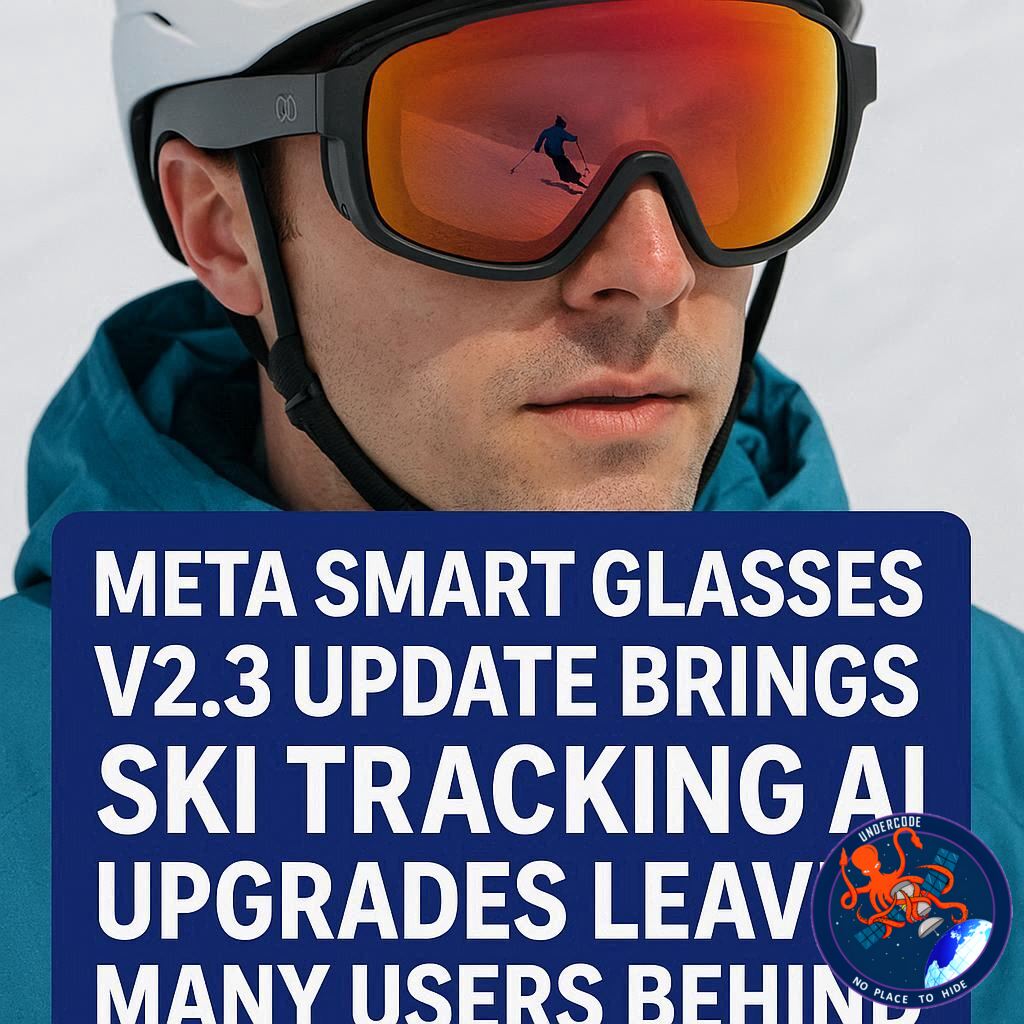
Meta has rolled out version 23 of its smart glasses software, introducing a set of features that feel tailor-made for winter sports enthusiasts. The update brings new capabilities that blend augmented reality with real-world activity tracking, something that could have perfectly complemented the global spotlight of the Winter Olympics. Yet, despite its potential, the update arrives with limitations that prevent it from reaching a wider audience, leaving a sense of missed opportunity.
A New Era of Snow Sports Tracking Through Smart Glasses
The highlight of this update is the integration of snow sports data directly into Meta’s smart glasses ecosystem. By pairing the glasses with a compatible Garmin watch, users can access detailed performance metrics while skiing or snowboarding. These include distance traveled, maximum speed during runs, slope steepness, and even personal records. This transforms the glasses from a simple wearable camera into a real-time performance companion, offering athletes and hobbyists a deeper connection to their activity.
Smart Auto-Capture Features Enhance Action Moments
Beyond raw data tracking, Meta has enhanced its auto-capture functionality. The glasses can now overlay key performance stats onto video clips recorded during activity. This means users can relive their best runs with visual proof of their speed or distance, creating content that feels both personal and professional. It adds a storytelling layer to action footage, making it more engaging for sharing on social platforms.
Dependency on Garmin Devices Limits Accessibility
Despite its innovation, the feature comes with a significant barrier. Users must own a compatible Garmin watch to unlock these capabilities. This requirement excludes a large portion of potential users who rely on other fitness ecosystems or do not own a smartwatch at all. Additionally, the setup demands a connected smartphone running the Meta AI app, creating a multi-device dependency that complicates the experience.
Cold Weather Performance Raises Practical Concerns
Another practical limitation emerges in cold environments. The glasses, like many battery-powered devices, are more susceptible to rapid battery drain in low temperatures. For winter sports users who spend extended hours outdoors, this could significantly reduce usability and reliability, undermining the very scenarios the feature is designed for.
Expanded Translation Features Still Lag Behind Competitors
Meta is also expanding its translation capabilities by adding support for languages such as Hindi, Arabic, Russian, Swedish, and Finnish. While this marks progress, the feature remains limited in availability, restricted to early access users. Compared to competitors, Meta’s language support still feels narrow, reducing its appeal in a globally connected market where seamless communication is increasingly expected.
Improved Conversational AI Enhances User Interaction
A more refined conversational AI experience is also part of the update. Users can now interact with the system more naturally without repeatedly using the wake phrase “Hey Meta.” This improvement makes interactions smoother and more intuitive. However, this feature is currently limited to users in the United States and Canada, once again highlighting the uneven distribution of Meta’s advancements.
A Minor Update with Glimpses of a Bigger Vision
Overall, version 23 feels like an incremental step rather than a groundbreaking leap. While the additions are meaningful, especially for niche users, they fall short of delivering a universally impactful upgrade. The reliance on specific hardware and region-based availability suggests that Meta is still refining its broader vision for augmented reality and AI integration.
What Undercode Say:
Meta’s Strategy Reveals a Fragmented Ecosystem Problem
Meta’s latest update reflects a recurring issue in the wearable tech space: ecosystem fragmentation. By tying core functionality to Garmin devices, Meta effectively limits adoption to a subset of users already invested in that ecosystem. This creates friction at a time when seamless interoperability should be the priority. Instead of expanding its user base, Meta risks reinforcing exclusivity.
The Timing Misses a Cultural Moment
Releasing a snow sports feature shortly after the Winter Olympics feels like a missed strategic opportunity. Major sporting events are powerful catalysts for tech adoption, especially when products align naturally with the event’s activities. Had this feature launched earlier, it could have benefited from global visibility and organic marketing through real-world use.
Content Creation Is Becoming the Core Use Case
The auto-capture and data overlay features signal a deeper shift. Meta is not just building smart glasses for utility, but for content creation. The ability to generate dynamic, data-rich videos aligns with the growing demand for immersive and shareable experiences. This positions the glasses as tools for digital storytelling rather than just passive recording devices.
AI Improvements Show Promise but Lack Consistency
The conversational AI upgrade is a step in the right direction, reducing friction in user interaction. However, limiting it to specific regions undermines its impact. AI features thrive on scale and user feedback, and restricting access slows down both adoption and improvement cycles.
Translation Features Highlight Competitive Gaps
While new languages are being added, Meta still trails competitors in translation breadth and accessibility. In a globalized world, language support is not a luxury feature but a necessity. Without broader coverage, Meta’s smart glasses risk being seen as less versatile compared to rival products.
Hardware Dependency Signals a Strategic Trade-Off
Requiring a Garmin watch suggests Meta is prioritizing accuracy and reliability in data tracking. Garmin devices are known for their precision, especially in sports metrics. However, this decision comes at the cost of inclusivity. A more flexible integration approach could have balanced performance with accessibility.
Battery Limitations Remain a Critical Challenge
Cold weather battery drain is not a new issue, but its impact on a winter-focused feature is particularly ironic. This highlights the broader challenge of wearable technology: balancing performance with durability in extreme conditions. Until battery technology evolves further, this will remain a limiting factor.
Incremental Innovation Reflects a Long-Term Vision
This update may feel minor, but it fits into a larger pattern of gradual innovation. Meta appears to be building its AR ecosystem step by step, testing features in controlled environments before scaling them. While this cautious approach reduces risk, it also slows momentum in a highly competitive market.
The Bigger Picture Points Toward AR Dominance
Despite its flaws, the update reinforces Meta’s commitment to augmented reality as a central pillar of its future. Each new feature, no matter how limited, contributes to a broader ecosystem that blends digital intelligence with physical experiences. The challenge lies in making that ecosystem accessible, scalable, and compelling enough to drive mass adoption.
🔍 Fact Checker Results
✅ The v23 update does introduce snow sports tracking with Garmin integration
✅ New translation languages and conversational AI improvements are included but limited
❌ The update is not universally accessible, as several features are restricted by region or device requirements
📊 Prediction
📈 Meta will expand device compatibility to reduce reliance on Garmin and grow its user base
📉 Competitors may outpace Meta in translation and AI accessibility if limitations persist
🚀 Smart glasses will increasingly evolve into content creation tools rather than simple wearables
▶️ Related Video (76% Match):
🕵️📝✔️Let’s dive deep and fact‑check.
References:
Reported By: www.techradar.com
Extra Source Hub (Possible Sources for article):
https://www.twitter.com
Wikipedia
OpenAi & Undercode AI
Image Source:
Unsplash
Undercode AI DI v2
Bing
🔐JOIN OUR CYBER WORLD [ CVE News • HackMonitor • UndercodeNews ]
📢 Follow UndercodeNews & Stay Tuned:
𝕏 formerly Twitter 🐦 | @ Threads | 🔗 Linkedin | 🦋BlueSky | 🐘Mastodon


