
Listen to this Post
🎯 Introduction
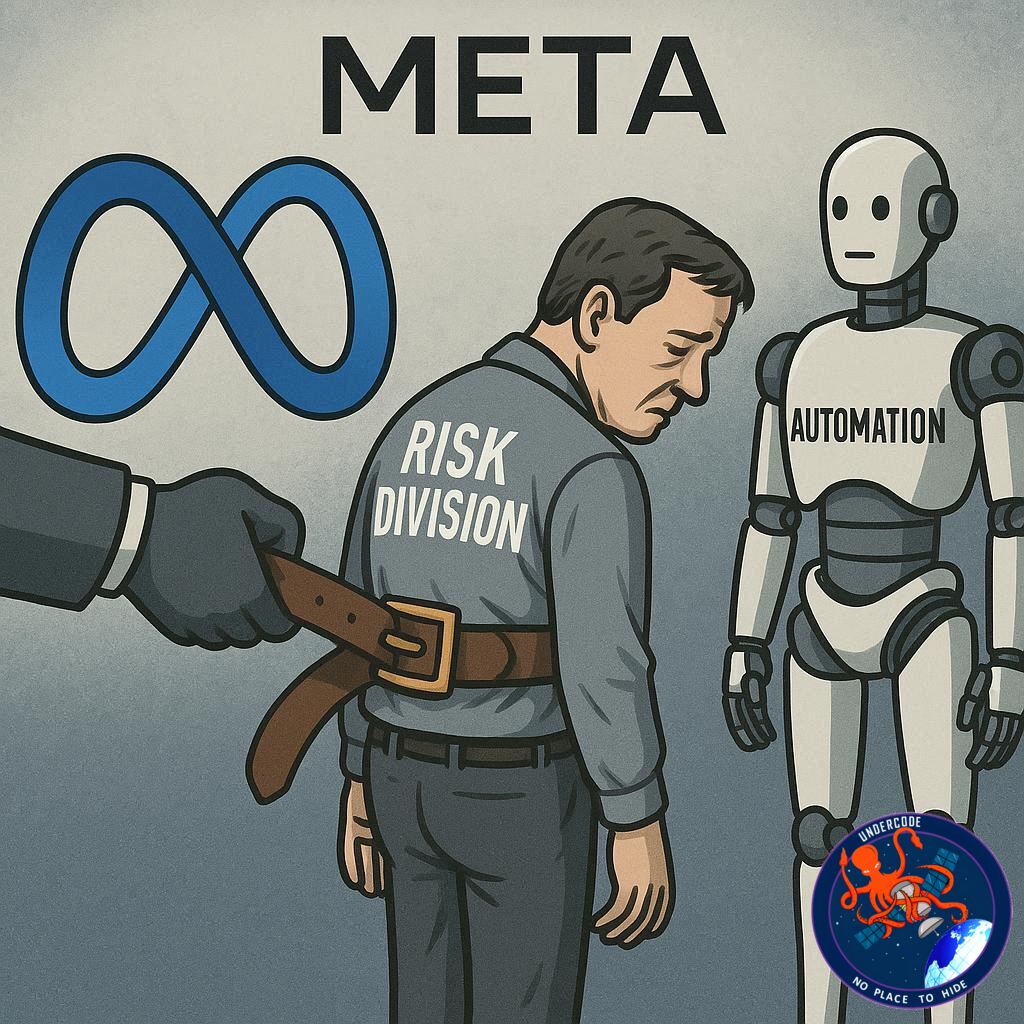
Meta, the parent company of Facebook, has once again stepped into the spotlight—this time not for a product launch or metaverse milestone, but for another wave of layoffs. In a surprising internal memo, the tech giant confirmed job cuts across its Risk division, signaling a deeper shift toward automation and streamlined compliance management. While Meta insists that its commitment to safety, privacy, and regulatory standards remains intact, the move raises pressing questions about the future of human oversight in an increasingly automated corporate landscape. Are we witnessing efficiency—or the quiet erosion of human judgment in critical governance roles?
Restructuring for the Future: Meta’s Risk Division Faces the Axe
Meta announced another round of job cuts targeting teams within its Risk division, a core part of the company responsible for ensuring compliance, data protection, and internal risk management. The memo revealed that departments like Product Risk Program Management, Shared Services, and Global Security & Privacy (GSP) will be heavily impacted. The reorganization involves merging the GSP unit with the Regulatory Readiness and Data Protection Office under a new entity called Regulatory Compliance Programs, centralizing oversight functions primarily in London.
According to the memo, these cuts are a direct outcome of “maturing” processes. Meta claims it has made “significant progress” in standardizing risk management and compliance mechanisms through automation. What used to require manual reviews by teams of analysts can now be handled through intelligent systems capable of processing large volumes of compliance data quickly and consistently.
Meta’s leadership emphasized that the company has moved away from “bespoke, manual reviews” to a more “consistent and automated process.” This evolution, they argue, leads to more reliable outcomes and frees human employees to focus on “the most complex and high-impact challenges.” In other words, machines take care of the repetitive, humans handle the nuance. But in reality, this efficiency comes at a human cost—fewer roles, fewer jobs, and more reliance on algorithms.
The company’s internal tone, while empathetic, carries a sense of finality. “These decisions are difficult,” the memo reads, “and we recognize the impact they will have on valued colleagues and teams.” Meta promised to support affected employees through the transition, offering resources and guidance for finding new roles, either within the company or beyond.
Behind the corporate phrasing lies a broader narrative: Meta’s ongoing transformation into a leaner, automation-first enterprise. Following Mark Zuckerberg’s “Year of Efficiency” initiative in 2023—which led to over 20,000 layoffs—this new restructuring underscores that the shift is far from over. The company’s goal is clear: to rely more heavily on technology to handle operational and compliance tasks once managed by humans.
In the long term, Meta argues that this shift allows it to “operate more efficiently and effectively” while maintaining “the highest standards for compliance.” Yet, such optimism hides the tension between automation’s promise and the loss of human expertise. Can a machine truly grasp the subtlety of risk, especially in areas like global privacy, data ethics, or regulatory interpretation?
While the Risk division may not grab the same headlines as Instagram or WhatsApp, it forms the backbone of Meta’s global credibility. It’s the safeguard against scandals, data breaches, and compliance missteps—the very issues that have haunted Meta in the past decade. By reducing human oversight in such a critical area, the company risks walking a fine line between progress and vulnerability.
Still, Meta’s executives insist that human judgment remains indispensable. Automation, they say, will handle the routine, but humans will continue to make the calls that demand context, creativity, and ethics. For now, that balance sounds reassuring. Whether it holds in practice, only time will tell.
What Undercode Say:
The decision to cut jobs within Meta’s Risk division reveals more than a corporate reshuffle—it’s a statement about where modern tech giants are heading. Meta is not just cutting costs; it’s redefining the boundary between human and machine governance.
Automation in compliance isn’t new, but Meta’s acceleration toward it shows how deeply AI is being integrated into corporate infrastructure. The company is effectively betting that technology can provide not only efficiency but also integrity—a bold wager in a world where ethical failures often come from algorithmic blind spots.
From an analytical standpoint, this restructuring reflects three strategic objectives:
Cost Optimization: With global regulatory scrutiny mounting, maintaining large compliance teams is expensive. Automation reduces overhead while retaining output speed.
Centralization of Control: By consolidating operations in London, Meta tightens command, ensuring uniformity in risk protocols across regions.
Regulatory Positioning: The new “Regulatory Compliance Programs” structure projects confidence to global watchdogs. It signals that Meta is serious about compliance modernization, even if it means leaning on machines.
But this strategy is not without risk. Automating risk management can inadvertently create blind zones. Machine systems, no matter how advanced, interpret rules, not nuances. For instance, understanding the spirit of GDPR compliance—or anticipating geopolitical shifts in data regulation—requires human intuition. Removing too many of these roles could dilute that intuitive safeguard.
Another layer of complexity lies in trust. Meta has a history of privacy controversies. Its credibility is already fragile. So while automation might improve efficiency, it could also amplify skepticism among regulators and users alike. When compliance becomes more mechanical, public faith often dwindles.
There’s also the psychological impact on remaining employees. Internal morale tends to drop when departments built on vigilance and oversight are trimmed. Those who remain may face higher workloads, increased pressure, and uncertainty about their long-term roles. In the end, automation may save costs but could erode institutional stability.
Meta’s shift toward “mature” risk processes aligns with its larger AI ambitions. The same logic that drives its content moderation algorithms and advertising optimization now governs its compliance mechanisms. It’s an ecosystem where efficiency trumps empathy—and where every decision edges closer to algorithmic logic.
The irony is that risk management is, by nature, human. It thrives on skepticism, judgment, and foresight—all traits machines simulate but never truly possess. If Meta’s leadership miscalculates this balance, it could face not only regulatory backlash but also internal burnout and external distrust.
Still, this restructuring marks a clear direction: the future of corporate compliance will be increasingly automated, data-driven, and centralized. Meta is setting the template for other tech giants to follow. Whether that’s progress or peril depends on how responsibly it blends human intelligence with artificial precision.
🔍 Fact Checker Results
✅ Meta confirmed layoffs within its Risk division through an internal memo.
✅ Teams affected include Product Risk Program Management, Shared Services, and Global Security & Privacy.
❌ No evidence suggests that Meta is reducing its overall compliance commitment; the company maintains regulatory standards.
📊 Prediction
⚙️ Expect more automation-led restructures across tech firms in 2026.
💼 Meta will likely expand its London-based compliance hub to become a central risk command center.
🤖 Within three years, AI systems will handle over 70% of Meta’s routine compliance assessments, while human roles shift toward strategic oversight.
🕵️📝✔️Let’s dive deep and fact‑check.
References:
Reported By: timesofindia.indiatimes.com
Extra Source Hub (Possible Sources for article):
https://www.quora.com
Wikipedia
OpenAi & Undercode AI
Image Source:
Unsplash
Undercode AI DI v2
Bing
🔐JOIN OUR CYBER WORLD [ CVE News • HackMonitor • UndercodeNews ]
📢 Follow UndercodeNews & Stay Tuned:
𝕏 formerly Twitter 🐦 | @ Threads | 🔗 Linkedin | 🦋BlueSky | 🐘Mastodon


