
Listen to this Post
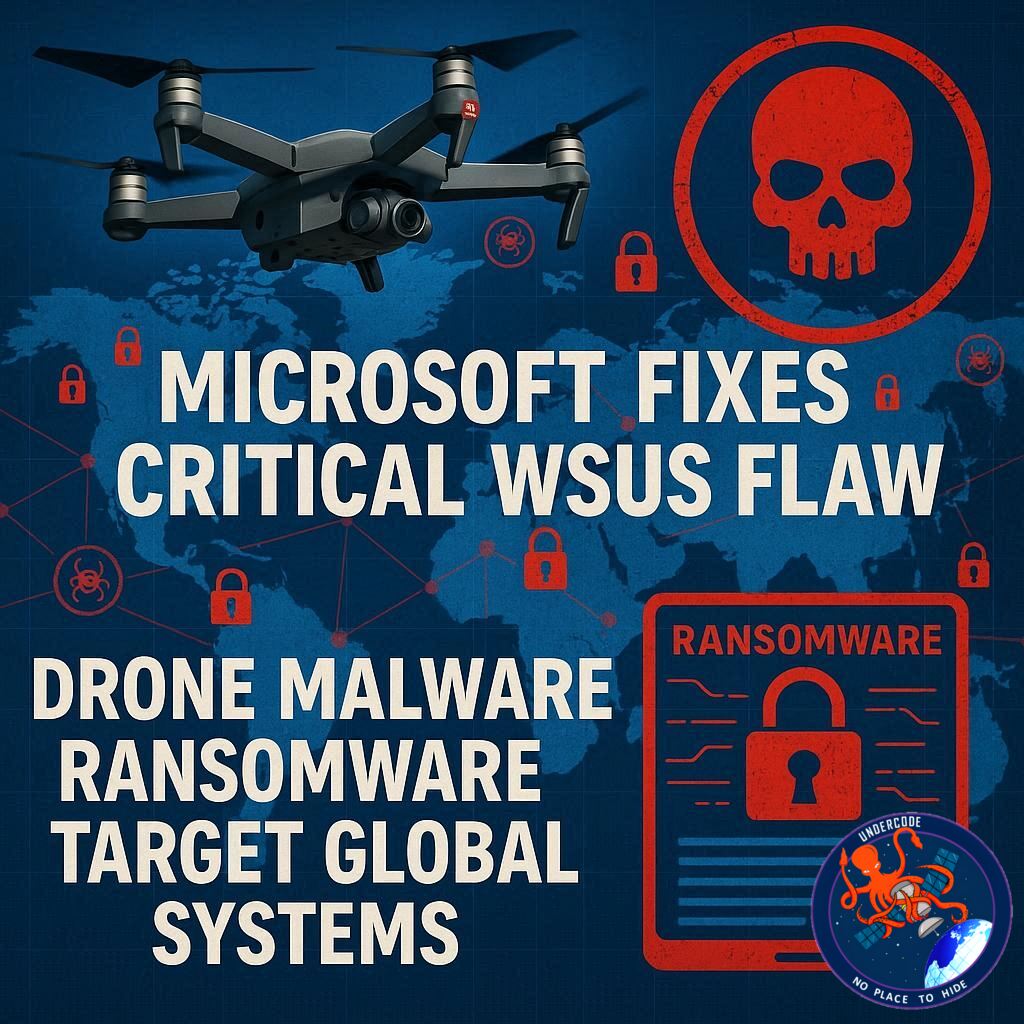
In a week dominated by escalating digital threats, Microsoft released a critical security patch addressing a major vulnerability in Windows Server Update Services (WSUS), registered as CVE-2025-59287. The flaw, which allowed remote code execution (RCE), could have enabled attackers to gain full control of systems through manipulated update requests. Alongside this, Microsoft rolled out new protections in its latest Preview Update, aimed at blocking NTLM hash theft — a notorious method used by cybercriminals to steal authentication data and infiltrate enterprise networks.
The patch comes at a crucial time as reports surface of drone-based malware attacks, DeskRAT variants, and a spike in ransomware incidents targeting healthcare and government institutions worldwide. Analysts warn that these simultaneous developments reveal a troubling pattern of coordinated cyber operations exploiting both physical and digital infrastructures.
For context, WSUS is Microsoft’s enterprise-grade update management system, and vulnerabilities here can have cascading effects across thousands of devices. CVE-2025-59287 represents not just a security glitch but a potential gateway for supply chain infiltration—the kind of breach that can spread silently through trusted network updates.
Meanwhile, cybersecurity firms have detected emerging DeskRAT variants, lightweight remote administration tools now repurposed for stealthy espionage and lateral network movement. Healthcare systems in North America and Europe have reported an increase in ransomware payloads disguised as legitimate medical data updates, paralyzing hospital operations and forcing emergency services into manual fallback procedures.
Equally concerning are the drone malware incidents, where threat actors use aerial devices equipped with Wi-Fi sniffers and injection tools to penetrate restricted networks. This hybrid physical-cyber warfare tactic has been observed near government facilities in the U.S., Europe, and parts of Asia, signaling a chilling escalation in offensive capabilities.
Microsoft’s swift release of the WSUS patch reflects growing urgency across the cybersecurity community. The company has advised administrators to apply the update immediately and verify that NTLM authentication protocols are disabled where feasible. Experts argue that while patching remains the first line of defense, systemic resilience requires more than just reaction—it demands architectural reform, strict privilege control, and rapid threat intelligence sharing among sectors.
What Undercode Say:
The recent wave of cyber incidents underscores a harsh reality: our dependence on centralized update systems and legacy authentication models has become a double-edged sword. WSUS, designed to simplify enterprise patching, inadvertently represents a single point of failure. When attackers find a way in, they can exploit the same efficiency mechanisms we built for convenience.
Microsoft’s CVE-2025-59287 patch is a timely fix—but it’s not a permanent solution. The deeper issue lies in the structural fragility of trust-based ecosystems. Enterprises still rely heavily on NTLM, an outdated protocol with well-known vulnerabilities, even though safer alternatives like Kerberos and modern token-based authentication exist. Blocking NTLM hash theft in the Preview Update is a defensive move, but it’s a sign that critical authentication evolution is long overdue.
The rise of DeskRAT variants shows how cybercriminals are embracing adaptability. DeskRAT was once a simple remote access utility, but in its new form, it operates like a silent parasite—using memory injection, persistence scripts, and cloud-based exfiltration. It doesn’t just steal; it observes, learns, and waits. This shift from blunt-force malware to adaptive espionage software mirrors the evolution of the attackers themselves—patient, data-driven, and increasingly automated.
The emergence of drone malware is perhaps the most concerning. It bridges physical and digital warfare, enabling intrusion without direct network connectivity. These drones can capture packets, plant rogue access points, or deliver payloads into air-gapped systems through wireless exploits. Governments and corporations must now rethink perimeter defense entirely, extending surveillance beyond walls and firewalls into open airspace.
Healthcare’s vulnerability remains a stark reminder of cyber disparity. Hospitals run life-critical systems often built on outdated infrastructure—an ideal hunting ground for ransomware actors. Each minute of downtime translates into potential human loss, not just financial damage. The moral dimension of cybercrime is shifting; attackers are no longer just after money—they’re testing the limits of chaos.
This interconnected chain of events paints a broader picture:
Something went wrong while generating the response. If this issue persists please contact us through our help center at help.openai.com.
Retry
🕵️📝✔️Let’s dive deep and fact‑check.
References:
Reported By: x.com
Extra Source Hub (Possible Sources for article):
https://www.medium.com
Wikipedia
OpenAi & Undercode AI
Image Source:
Unsplash
Undercode AI DI v2
Bing
🔐JOIN OUR CYBER WORLD [ CVE News • HackMonitor • UndercodeNews ]
📢 Follow UndercodeNews & Stay Tuned:
𝕏 formerly Twitter 🐦 | @ Threads | 🔗 Linkedin | 🦋BlueSky | 🐘Mastodon


