
Listen to this Post
Introduction: A Promising Update That Quickly Turned Problematic
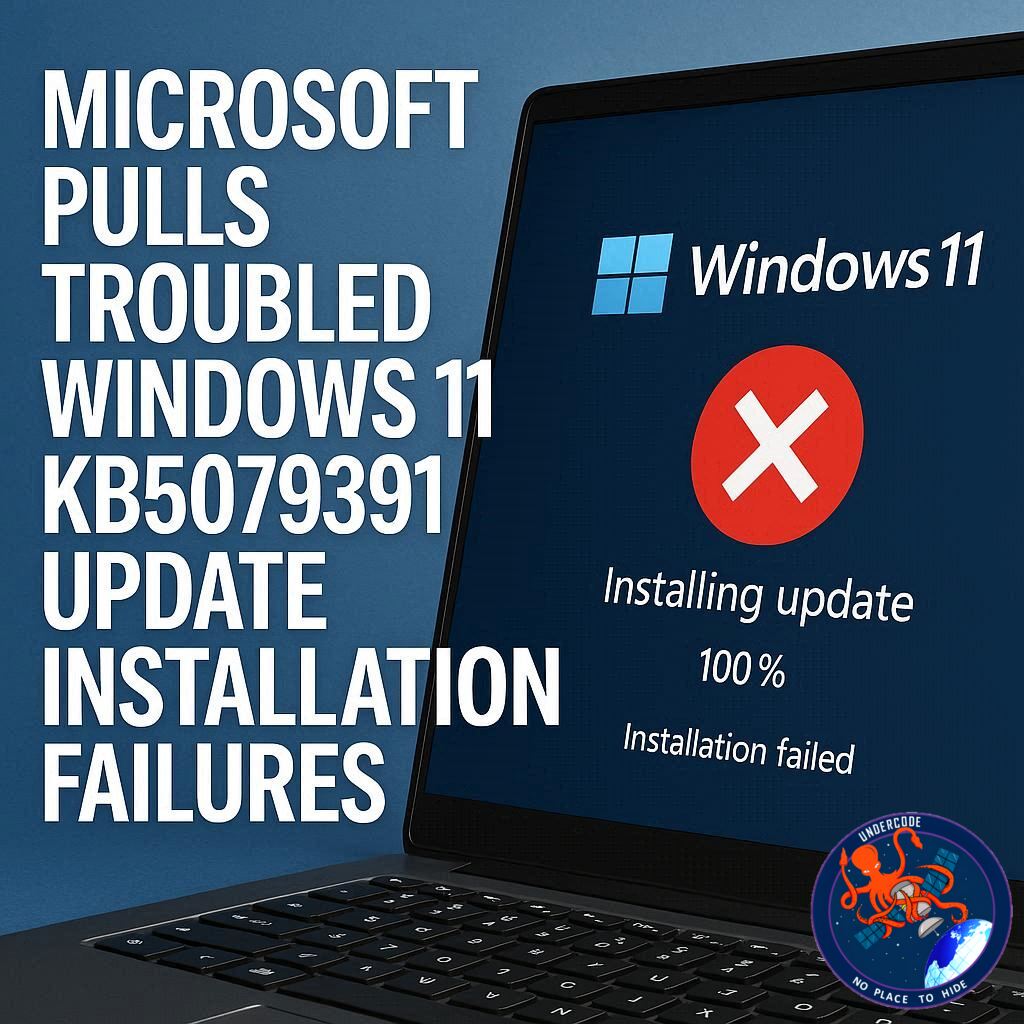
Microsoft had high hopes for improving the Windows 11 experience in 2026, especially with a renewed focus on stability and smoother updates. However, things took an unexpected turn when a recent optional update, KB5079391, was abruptly pulled after causing installation failures across several devices. The incident highlights the ongoing struggle to balance innovation with reliability, especially in a system used by millions worldwide.
Summary: What Went Wrong With KB5079391
The optional Windows 11 update KB5079391 was briefly rolled out on March 26, 2026, but quickly ran into serious issues. While some users managed to install the update without any problems, others encountered persistent installation failures. Reports revealed that the update would either fail to install or become stuck in an endless error loop, making it unusable for a portion of users.
One of the most commonly reported issues was error code 0x80073712. This error typically indicates that essential assembly files required for the update are missing from the WinSxS folder, a critical component of the Windows operating system. Without these files, the update process cannot complete successfully, leaving affected systems in a broken or partially updated state.
Recognizing the severity of the problem, Microsoft decided to pull the update entirely. This move is relatively rare, especially for optional updates, suggesting that the issue may have been widespread. The update was only available for a very short period, reportedly just one to two hours, before being withdrawn.
Microsoft confirmed that it is actively investigating the root cause of the issue. Until the problem is fully understood and resolved, the company has limited the update’s availability. As a result, users currently cannot download or install KB5079391 through Windows Update.
This setback comes at a particularly awkward time. Just days before the incident, Microsoft had publicly committed to improving the Windows experience, including making updates more reliable and less disruptive. Ironically, recent updates have done the opposite, with earlier patches already causing issues such as breaking Microsoft account sign-ins for built-in apps.
Despite these challenges, Microsoft emphasized that it is being cautious to avoid further user frustration. The decision to pull the update reflects a more conservative approach, prioritizing stability over rapid deployment.
Looking ahead, Microsoft is working on significant improvements to Windows 11. These include a redesigned Start menu built with WinUI instead of React for better performance, a faster File Explorer with reduced loading times, and a more flexible taskbar that users can move and resize. The company is also aiming to improve overall system speed and responsiveness.
One of the most notable planned changes involves Windows Update itself. Future updates are expected to give users greater control, including the ability to pause updates for extended periods, skip updates during initial setup, and avoid forced restarts during shutdown or reboot.
While these ideas sound promising, the failure of KB5079391 highlights the gap between vision and execution. The update was intended to introduce improvements such as better Smart App Control management and numerous bug fixes, but instead became another example of update instability.
What Undercode Say: A Pattern of Ambition vs Execution
The situation surrounding KB5079391 reflects a deeper and recurring challenge within Microsoft’s update strategy. On one hand, the company is clearly investing heavily in modernizing Windows 11, aiming to deliver a faster, more flexible, and user-friendly operating system. On the other hand, the reliability of updates remains inconsistent, undermining user trust.
Pulling an update so quickly suggests that Microsoft’s internal testing processes may still have blind spots. Even though optional updates are typically less critical, they serve as a testing ground for upcoming mandatory patches. When such updates fail, it raises concerns about the robustness of quality assurance pipelines.
Another important angle is timing. Microsoft had just announced a renewed commitment to improving Windows updates, promising fewer disruptions and better predictability. The failure of KB5079391 so soon after that announcement creates a perception gap. Users may begin to question whether these promises are realistic or simply aspirational.
Technically, the 0x80073712 error points to deeper system integrity issues. Missing assembly files in the WinSxS folder are not trivial problems. They suggest that the update may not have been packaged correctly or that compatibility checks were insufficient. This is not just a minor bug but a structural issue that can affect system stability.
There is also a strategic shift visible in Microsoft’s response. Instead of pushing forward with a flawed update, the company chose to pull it quickly. This indicates a more cautious approach, possibly influenced by past criticism over forced or broken updates. While this is a positive change, it also highlights how sensitive the update ecosystem has become.
The planned improvements to Windows Update are particularly noteworthy. Giving users more control over updates is a long-requested feature, especially in professional and enterprise environments. The ability to pause updates indefinitely, skip them during setup, or avoid forced installations could significantly improve user satisfaction.
However, these features also come with trade-offs. More control means more responsibility for users, and it could lead to delayed security patches if not managed properly. Microsoft will need to balance flexibility with security, ensuring that critical updates are still delivered in a timely manner.
From a broader perspective, this incident underscores the complexity of maintaining a modern operating system. Windows 11 must support a vast range of hardware configurations, software environments, and user scenarios. Even small changes can have unpredictable ripple effects.
Ultimately, KB5079391 serves as a reminder that innovation in operating systems is not just about adding new features but ensuring that existing systems remain stable and reliable. Microsoft’s ambitions are clear, but execution will determine whether those ambitions translate into real-world improvements.
Fact Checker Results
✅ Microsoft officially confirmed pulling KB5079391 due to installation issues.
✅ Error 0x80073712 is correctly associated with missing update files in WinSxS.
❌ No confirmed timeline yet for re-release or permanent cancellation of the update.
Prediction
Microsoft will likely re-release KB5079391 after fixing the core issue, but with stricter testing protocols. ⚙️
User control over updates will expand significantly, reshaping how updates are managed in Windows 11. 🔄
Short-term instability may continue as Microsoft transitions toward a more flexible update system. ⚠️
🕵️📝✔️Let’s dive deep and fact‑check.
References:
Reported By: www.windowslatest.com
Extra Source Hub (Possible Sources for article):
https://www.reddit.com/r/AskReddit
Wikipedia
OpenAi & Undercode AI
Image Source:
Unsplash
Undercode AI DI v2
Bing
🔐JOIN OUR CYBER WORLD [ CVE News • HackMonitor • UndercodeNews ]
📢 Follow UndercodeNews & Stay Tuned:
𝕏 formerly Twitter 🐦 | @ Threads | 🔗 Linkedin | 🦋BlueSky | 🐘Mastodon


