
Listen to this Post
Introduction
For nearly two years, Microsoft pushed artificial intelligence into almost every corner of its ecosystem. From Windows 11 and Edge to Office and Xbox, the company aggressively branded its future around Copilot. What started as an exciting AI revolution quickly turned into frustration for many users who felt overwhelmed by constant integrations, intrusive features, and a declining Windows experience.
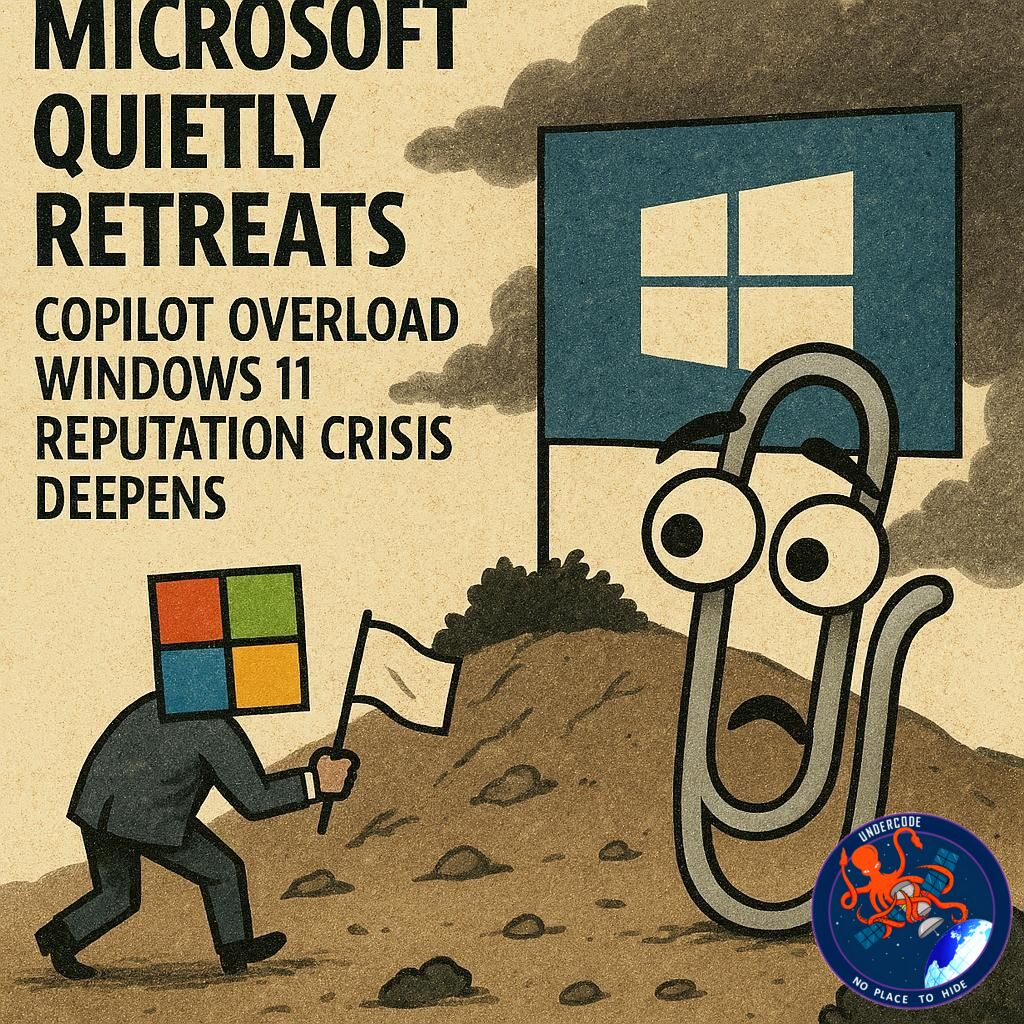
Now, the mood inside Microsoft appears to be changing. Quiet removals, deleted social media posts, renamed AI features, and leadership comments all suggest the company is slowly backing away from forcing Copilot into consumer products. Instead of making AI the center of Windows, Microsoft now seems determined to hide it in the background while repairing the damage done to its operating system’s reputation.
The shift comes after one of the roughest periods in Windows history, combined with growing competition from Apple and increasing criticism from longtime PC users. While Microsoft continues investing billions into enterprise AI, the company is beginning to accept a painful reality: consumers do not necessarily want an AI assistant attached to every button, app, and workflow.
Xbox Leadership Accidentally Revealed Microsoft’s Real AI Strategy
One of the biggest signals of Microsoft’s changing direction came unexpectedly through Xbox leadership. Xbox CEO Asha Sharma publicly announced a major restructuring effort designed to get the gaming division “back on track.” Buried inside that statement was a stunning revelation: Microsoft would begin winding down Copilot on mobile and halt development of Copilot for Xbox consoles entirely.
That statement alone was enough to shock many observers, but the real controversy arrived afterward. Jacob Andreou, Microsoft’s Executive Vice President of Copilot, publicly responded by admitting that Copilot needed to be removed from places “where it doesn’t live up to its promise.”
The post was quickly deleted.
The deletion itself became symbolic. It suggested Microsoft internally recognizes many of its AI integrations failed to resonate with users, but the company is still uncomfortable publicly admitting the scale of the retreat. Once the message was published, however, the damage was done. Users finally saw confirmation from senior leadership that Microsoft knew Copilot had been pushed too far.
Microsoft Is Quietly Erasing Copilot Branding
Earlier this year, Microsoft published a major statement about improving Windows quality and reducing disruption across the operating system. That announcement now appears to have been the beginning of a much larger cleanup operation.
Several Windows applications have already started losing visible Copilot branding. The “Ask Copilot” buttons disappeared from both the Snipping Tool and the Photos app. In Notepad, the brightly colored Copilot logo was removed entirely and replaced with a far less aggressive label: “Writing Tools.”
This rebranding effort is extremely important because it changes how Microsoft wants users to perceive AI. Instead of presenting Copilot as a giant, always-visible assistant demanding attention, Microsoft is repositioning AI as a small utility feature that quietly helps in the background.
The company appears to have learned that most users do not want their operating system to feel like a chatbot platform. They simply want reliable software that performs tasks efficiently without unnecessary distractions.
The Windows 11 Crisis Destroyed Consumer Trust
Microsoft’s biggest mistake may not have been AI itself, but the timing of its aggressive rollout.
Throughout 2025, Windows 11 suffered repeated technical disasters. Security updates caused boot failures for business systems. File Explorer performance became sluggish. Dark mode elements broke across the interface. Stability issues spread throughout the operating system at the exact moment Microsoft was celebrating its AI future.
Then came the public relations nightmare.
During a public discussion with Mark Zuckerberg, Microsoft CEO Satya Nadella revealed that approximately 20 to 30 percent of Microsoft’s code repositories were now being written by software.
For frustrated Windows users, that statement connected every possible dot. Many consumers immediately assumed AI-generated code was responsible for Windows 11’s instability. Whether accurate or not, Copilot became the public face of every bug, crash, slowdown, and broken update.
The backlash became so severe that online communities popularized the insulting nickname “Microslop,” criticizing Microsoft for prioritizing AI branding over software quality. The criticism spread widely enough that Microsoft reportedly began blocking the term in official community spaces.
At that point, Copilot had become toxic branding among large parts of the enthusiast community.
Microsoft 365 Copilot Became a Massive Enterprise Success
Ironically, while consumers rejected Copilot integrations, businesses embraced them.
Microsoft recently revealed that more than 20 million enterprise users now subscribe to Copilot services inside Microsoft 365. That number continues growing rapidly, making AI one of the company’s most profitable business segments.
Inside corporations, Copilot serves a very different purpose than it did on consumer PCs. Businesses use it to summarize spreadsheets, generate meeting notes, draft emails, organize documents, and automate repetitive office workflows.
In those environments, AI saves time and directly improves productivity.
For gamers and everyday Windows users, however, Copilot often felt unnecessary or intrusive. Consumers did not want AI integrated into screenshots, taskbars, browsers, and gaming interfaces. Enterprises saw value because AI solved specific workflow problems. Consumers mostly saw clutter.
Microsoft is finally recognizing the difference between those audiences.
Apple’s MacBook Neo Forced Microsoft to React
Another major factor behind Microsoft’s strategic retreat appears to be Apple’s growing momentum in the consumer laptop market.
The launch of the MacBook Neo reportedly disrupted the entry-level PC market with aggressive pricing, excellent battery life, silent fanless performance, and a cleaner software experience.
At the same time Windows 11 was receiving criticism for ads, bugs, telemetry complaints, and AI overload, Apple positioned macOS as simple and polished. Many users who refused to upgrade aging Windows 10 machines reportedly migrated toward Apple hardware instead.
This created a serious threat for Microsoft.
The company realized that Windows itself was becoming the reason customers abandoned the ecosystem. AI features were no longer viewed as innovation; they were viewed as part of the problem.
That pressure likely accelerated Microsoft’s March 2026 promise to focus again on Windows quality and performance.
AI Is Not Dying Inside Microsoft
Despite the visible retreat from consumer Copilot branding, Microsoft is not abandoning artificial intelligence. In fact, the company is investing even more aggressively into AI infrastructure and enterprise systems.
Microsoft recently introduced new transcription technologies, advanced voice models, and second-generation image generation systems such as MAI-Image-2. The company is also expanding Microsoft 365 Copilot to support third-party AI models, including powerful systems from Anthropic.
The future Microsoft envisions is not necessarily an AI assistant visible on every desktop. Instead, the company wants “agentic AI” operating silently in the background of enterprise environments, automating workflows across documents, emails, spreadsheets, and cloud systems.
In simple terms, AI is moving away from flashy consumer branding and toward invisible corporate automation.
Windows 11 Is Being Repaired While AI Moves Behind the Scenes
Interestingly, Microsoft’s Windows engineering teams have recently become far more active in public communication. Developers and product leads are openly discussing File Explorer fixes, performance improvements, and interface cleanups.
The company appears determined to stabilize Windows 11 after the disastrous perception damage caused during 2025.
At the same time, top leadership remains strangely silent about Windows itself. Satya Nadella’s public focus now revolves almost entirely around enterprise AI, Azure cloud services, and business productivity.
That silence may actually reveal Microsoft’s long-term priorities. Windows remains important, but AI-powered enterprise services are now the true center of Microsoft’s future business strategy.
Consumer Windows may simply become the delivery platform while enterprise AI becomes the company’s real profit engine.
What Undercode Say:
Microsoft’s retreat from aggressive Copilot branding is not an isolated adjustment. It represents one of the clearest examples of a major technology company overestimating consumer appetite for AI integration.
The original Copilot vision was ambitious. Microsoft wanted AI embedded into every layer of computing, turning Windows into a constantly assisted environment. On paper, that sounded futuristic. In practice, many users experienced it as invasive and unnecessary.
The biggest lesson here is that users care far more about stability than innovation when it comes to operating systems. Consumers can tolerate old-looking interfaces or missing features, but they will not forgive instability, slowdowns, or unreliable updates. Microsoft learned this during the Windows Vista era, and history repeated itself with Windows 11.
Another major issue was branding overload. Microsoft placed the Copilot name everywhere possible. Instead of AI feeling helpful, it began feeling like marketing saturation. The brand transformed from exciting technology into a symbol of corporate obsession.
The deleted social media response from Jacob Andreou may eventually become one of the defining moments of Microsoft’s AI era. It unintentionally confirmed that executives internally understood the integrations were failing to meet expectations.
What makes the situation fascinating is that Copilot itself is not actually failing financially. Enterprise adoption proves businesses absolutely want AI tools when those tools solve measurable productivity problems. The failure happened specifically in the consumer experience.
This creates a massive split inside Microsoft’s ecosystem.
Enterprise customers value automation because time savings translate directly into money. Consumers value simplicity, speed, privacy, and reliability. Microsoft tried applying the same AI philosophy to both groups, and the consumer backlash forced a correction.
Apple also deserves enormous credit for changing the competitive landscape. The MacBook Neo reportedly arrived at the perfect moment, offering a clean alternative while Windows users were exhausted by bugs and interface experimentation. Competition forced Microsoft to remember why users trusted Windows in the first place.
There is also an important psychological factor. Many users viewed AI integrations as replacing user control rather than enhancing it. People do not want their computers constantly suggesting, rewriting, monitoring, or summarizing everything they do. They want optional assistance, not mandatory companionship.
Microsoft now seems to understand that invisible AI is far more acceptable than visible AI.
That explains the quiet renaming strategy. “Writing Tools” sounds practical. “Copilot” sounded like a corporate mascot demanding attention. Removing branding removes emotional resistance.
The company’s future strategy will likely focus on subtle AI utilities that work silently in the background without dominating the interface. This is probably the smartest move Microsoft could make.
The broader technology industry will likely study this situation carefully. AI enthusiasm remains enormous among executives and investors, but Microsoft’s experience demonstrates that consumer adoption has limits. Users still expect technology companies to prioritize performance, reliability, and usability above futuristic branding campaigns.
Windows users ultimately do not want an operating system that behaves like a social media platform filled with engagement features. They want software that disappears into the background and simply works.
Ironically, that may be exactly where AI belongs as well.
Fact Checker Results
✅ Microsoft has publicly emphasized improving Windows quality and reducing disruptive experiences during 2026.
✅ Enterprise adoption of Microsoft 365 Copilot has grown significantly, with millions of paid users reported by the company.
❌ There is no official public statement confirming Microsoft is completely abandoning Copilot on consumer Windows systems.
Prediction
🔮 Microsoft will continue removing visible Copilot branding from consumer-facing apps while expanding AI automation inside Microsoft 365 enterprise products.
🔮 Windows 12 or future Windows updates will likely present AI as optional background assistance rather than a permanently visible assistant.
🔮 Apple’s pressure in the entry-level laptop market could force Microsoft to prioritize performance, battery efficiency, and cleaner software experiences over aggressive AI marketing campaigns.
🕵️📝Let’s dive deep and fact‑check.
References:
Reported By: www.windowslatest.com
Extra Source Hub (Possible Sources for article):
https://www.github.com
Wikipedia
OpenAi & Undercode AI
Image Source:
Unsplash
Undercode AI DI v2
Bing
🔐JOIN OUR CYBER WORLD [ CVE News • HackMonitor • UndercodeNews ]
📢 Follow UndercodeNews & Stay Tuned:
𝕏 formerly Twitter 🐦 | @ Threads | 🔗 Linkedin | 🦋BlueSky | 🐘Mastodon


