
Listen to this Post
A Viral Claim That Needed Context
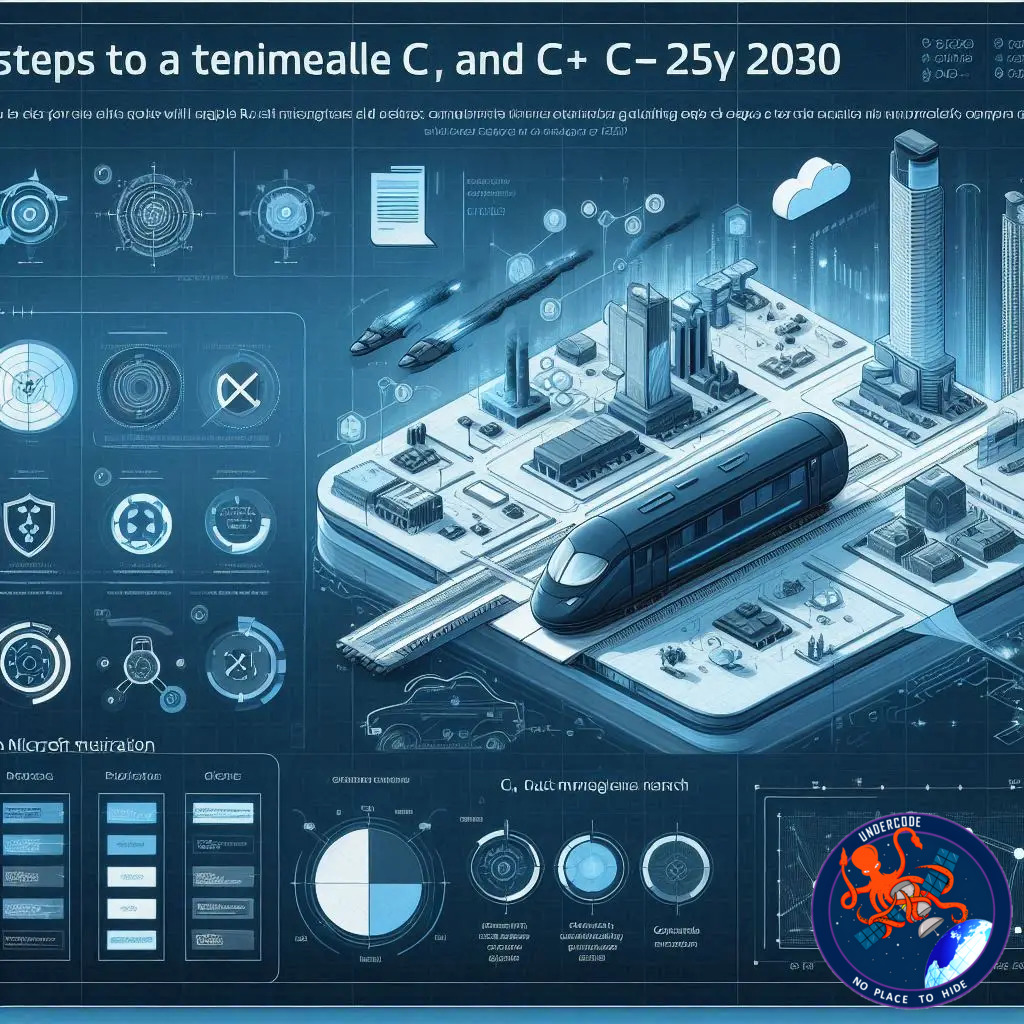
A single post from a senior Microsoft engineer was enough to ignite a storm across the tech world. Headlines quickly suggested that Microsoft was preparing to erase decades of C and C++ code and fully rewrite Windows in Rust by 2030. The idea felt bold, disruptive, and alarming to many developers. Now, that narrative has been corrected. The original claim was never meant to signal a roadmap for Windows, but rather to describe a long-term research effort exploring how AI could transform large-scale software engineering.
How the Confusion Started
The speculation began after Galen Hunt, a Microsoft Distinguished Engineer, shared a LinkedIn post describing an ambitious internal project. His words were interpreted as confirmation that Microsoft intended to rewrite its massive codebases using AI and Rust. The post spread rapidly, amplified by tech media outlets that framed it as a decisive shift away from C and C++. What followed was widespread debate about the future of Windows, legacy software, and system-level programming.
Microsoft Engineer Walks Back the Interpretation
Hunt later issued a clarification, acknowledging that his message “generated far more attention than I intended.” He stressed that Windows is not being rewritten in Rust, nor is Microsoft planning to eliminate C and C++ across its platforms by the end of the decade. According to Hunt, the project is strictly research-oriented and should not be interpreted as an official Windows strategy.
Inside the Research Project
The work is being conducted by Microsoft’s Future of Scalable Software Engineering group. Its focus is on developing technologies that enable large-scale code migration between programming languages. The stated goal is striking, enabling one engineer to migrate one million lines of code in one month. To achieve this, the team is experimenting with a combination of AI agents and algorithmic infrastructure capable of understanding, transforming, and validating vast codebases.
Not a Windows Roadmap
Hunt was explicit that this research does not represent a plan for Windows 11 or future versions of the operating system. It is an experimental exploration of what might be possible if AI-assisted translation tools mature. The clarification was necessary after multiple reports treated the original post as confirmation of a full Rust rewrite across Microsoft’s products.
Hiring Signals Ongoing Experimentation
Despite being research-focused, the project is active. Microsoft is currently hiring a Principal Software Engineer with experience in Rust to help advance these translation capabilities. This suggests the company is serious about the technical challenge, even if it has no fixed timeline or guaranteed production outcome.
Microsoft’s Broader Rust Strategy
Outside of Hunt’s project, Microsoft has already been adopting Rust in a more measured way. In 2023, parts of the Windows kernel began incorporating Rust components. Azure CTO Mark Russinovich has also publicly stated that Microsoft favors memory-safe languages like Rust for new projects. This context matters. Rust is not replacing everything, but it is increasingly seen as a safer option where security and reliability are critical.
Why Rust Keeps Coming Up
Rust is designed to prevent entire classes of memory-related bugs that commonly affect C and C++ code. These vulnerabilities have historically been a major source of security issues in large systems. By enforcing strict memory safety rules at compile time, Rust reduces the risk of buffer overflows, use-after-free errors, and similar flaws. Hunt’s research explores whether AI can make transitions to safer languages faster and less costly.
AI as an Engineering Multiplier
At its core, the project reflects Microsoft’s broader investment in AI-powered development tools. Rather than replacing engineers, the goal is to amplify their productivity. Large-scale code migration has traditionally been slow, risky, and expensive. If AI can reliably assist in translating and validating code, it could fundamentally change how legacy systems evolve.
A Future Still Full of Uncertainty
Despite the excitement, the scope and timeline of this research remain unclear. Hunt himself noted that Rust is not necessarily the final destination for all Microsoft code. The tools being developed could apply to many languages and use cases. For now, the project remains an experiment, not a commitment.
What Undercode Say:
This episode highlights how fragile the line is between research ambition and perceived corporate strategy. Microsoft did not announce the end of C and C++. What it revealed, unintentionally, is how deeply the industry wants that story to be true. Legacy code is expensive, risky, and difficult to maintain. The promise of AI-driven migration feels like an escape hatch from decades of technical debt.
However, rewriting millions of lines of system-level code is not just a technical challenge. It is an operational and economic one. Windows exists in countless configurations, environments, and hardware combinations. Even a perfectly translated codebase would require years of validation, testing, and compatibility assurance. AI can accelerate translation, but it cannot instantly recreate the institutional knowledge embedded in legacy systems.
Microsoft’s careful wording in the clarification reflects this reality. Research projects are meant to explore possibilities without committing to outcomes. Hunt’s team is effectively asking a question: what if language migration were no longer a multi-year effort involving hundreds of engineers? That question alone is valuable, even if the answer is “not yet.”
The hiring of Rust engineers suggests Microsoft is building internal expertise, not executing a mass rewrite. This aligns with its current strategy of selectively introducing Rust where security benefits are clearest. Kernel components, drivers, and cloud infrastructure are logical starting points, not wholesale replacements.
The reaction to Hunt’s post also exposes a media tendency to frame experimentation as inevitability. In practice, enterprise software evolves incrementally. C and C++ will remain critical for years, especially where performance, hardware access, and existing ecosystems dominate.
In the long run, the most important outcome of this research may not be Rust at all. It may be the development of AI systems capable of understanding and safely transforming complex software. That capability would reshape maintenance, modernization, and even regulatory compliance across the industry.
Microsoft is not announcing an ending. It is quietly testing a future where change is less painful. That distinction matters.
Fact Checker Results
✅ Microsoft is not rewriting Windows entirely in Rust.
✅ The project is a research initiative, not an official roadmap.
❌ Claims of eliminating all C and C++ by 2030 are inaccurate.
Prediction
🧠 AI-assisted code migration will become a standard enterprise tool within five years.
🦀 Rust adoption at Microsoft will grow gradually, not explosively.
📈 Legacy languages like C and C++ will persist, but with shrinking scope.
▶️ Related Video (80% Match):
🕵️📝✔️Let’s dive deep and fact‑check.
References:
Reported By: timesofindia.indiatimes.com
Extra Source Hub (Possible Sources for article):
https://stackoverflow.com
Wikipedia
OpenAi & Undercode AI
Image Source:
Unsplash
Undercode AI DI v2
Bing
🔐JOIN OUR CYBER WORLD [ CVE News • HackMonitor • UndercodeNews ]
📢 Follow UndercodeNews & Stay Tuned:
𝕏 formerly Twitter 🐦 | @ Threads | 🔗 Linkedin | 🦋BlueSky | 🐘Mastodon


