
Listen to this Post
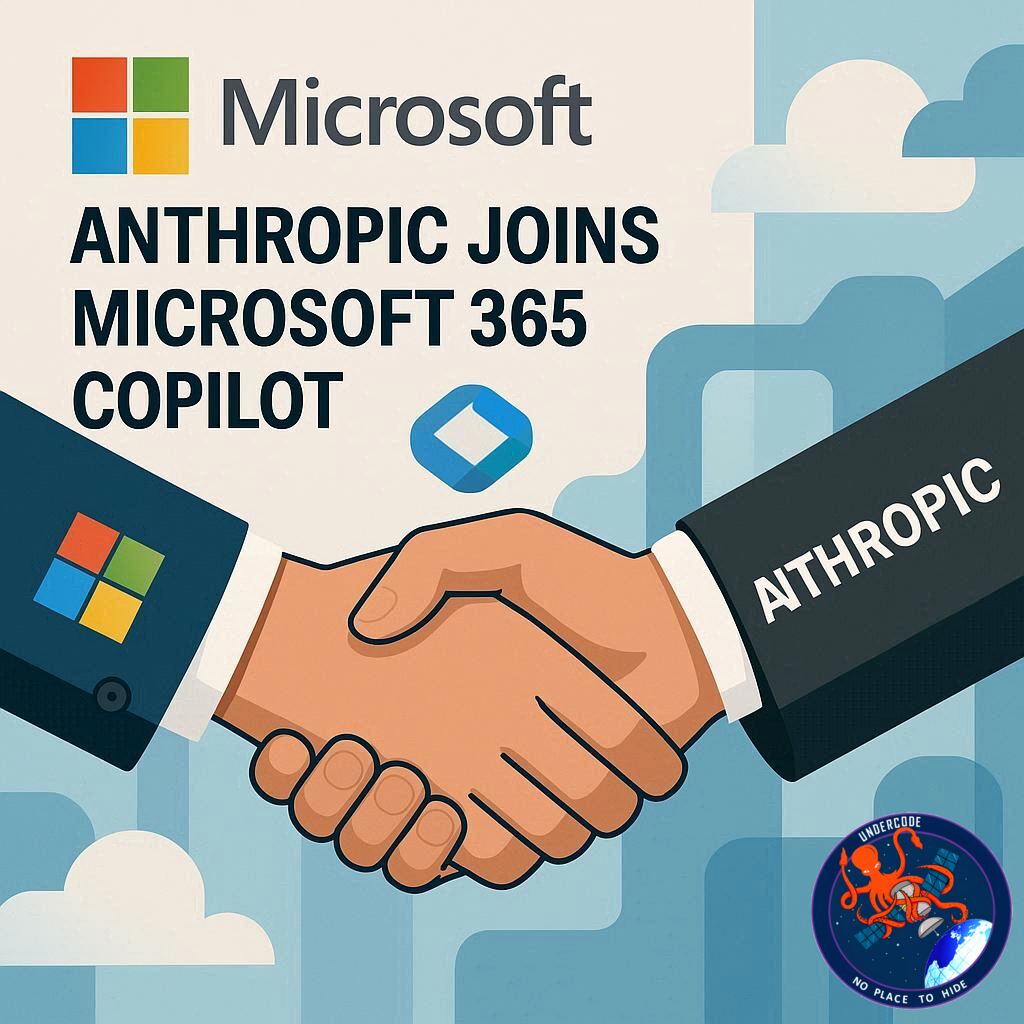
A New Chapter in Microsoft’s AI Journey
Microsoft has stunned the tech world by expanding its artificial intelligence ecosystem beyond OpenAI, its long-standing and heavily funded partner. In a move that signals both flexibility and competitiveness, the software giant has begun integrating Anthropic’s models into its Microsoft 365 Copilot assistant. Anthropic, a Google- and Amazon-backed startup, is seen as one of the most formidable challengers to OpenAI, and this partnership highlights how Microsoft is preparing for a more diverse AI future.
By embedding Anthropic’s Claude family of models into its productivity suite, Microsoft is showing that it no longer wants to rely solely on OpenAI. With OpenAI facing growing alliances with Oracle, Broadcom, and Nvidia, the dynamics between the two companies are shifting. At the same time, Microsoft is testing its own in-house model, MAI-1-preview, signaling that it’s ready to strengthen independence while still benefiting from its multi-billion-dollar OpenAI investment.
Anthropic’s Role Inside Microsoft 365 Copilot
Microsoft’s rollout of Anthropic’s technology begins with Researcher, a Copilot agent designed to help employees gather information, analyze data, and generate structured reports. Early-access customers under Microsoft’s Frontier program can now opt for Anthropic’s Claude Opus 4.1, a reasoning-focused model known for handling complex queries.
Beyond Researcher, corporate clients using Copilot Studio can select Anthropic’s Claude Sonnet 4 and Claude Opus 4.1 to build custom AI agents. However, access isn’t automatic: administrators must first enable Anthropic’s models, which operate on Amazon and Google cloud systems under Anthropic’s governance terms.
Charles Lamanna, Microsoft’s president of business and industry Copilot, teased even more integrations in the future, hinting that Anthropic’s models could soon reshape Microsoft’s AI productivity ecosystem with broader use cases and enhanced capabilities.
Microsoft’s Balancing Act with OpenAI
This partnership doesn’t signal a breakup with OpenAI, but it does reveal cracks in the exclusivity. Microsoft has already invested over $13 billion into OpenAI and remains its primary cloud provider. Still, OpenAI is diversifying quickly—committing $300 billion with Oracle, signing a $10 billion deal with Broadcom, and attracting Nvidia’s pledge of $100 billion for new AI infrastructure.
These massive deals show that OpenAI is seeking independence from Microsoft, and in turn, Microsoft is ensuring it isn’t trapped in a one-sided dependency. In fact, last year, Microsoft confirmed that GitHub Copilot Chat would also tap into models from Anthropic and Google, a hint at its long-term strategy.
Anthropic itself, founded in 2021 by former OpenAI executives, has skyrocketed in value to $183 billion, cementing its role as a heavyweight in the AI industry.
What Undercode Say:
Microsoft’s diversification into Anthropic’s ecosystem is not just a technical decision—it’s a power play. For years, Microsoft leaned on OpenAI almost exclusively, embedding GPT models into Bing, Windows, and its Copilot products. But now, the dynamics have shifted. By bringing in Anthropic’s Claude Opus 4.1, Microsoft signals to the market: it wants options, leverage, and resilience.
This is about strategy, not redundancy. OpenAI is becoming increasingly entangled with other tech titans, from Oracle to Nvidia. Microsoft, as OpenAI’s biggest investor, cannot risk being left dependent on a partner that is actively decentralizing its alliances. Integrating Anthropic ensures Microsoft maintains bargaining power, keeps product development fresh, and reduces the chance of vendor lock-in.
The choice of Claude Opus 4.1 is significant. Anthropic has built a reputation for safety-driven design and reasoning capabilities, which appeals to enterprises wary of hallucinations and unpredictable outputs. Microsoft placing this inside Researcher is smart—it targets the knowledge workers who depend on structured, factual output. If Claude’s performance in this environment outpaces GPT-based alternatives, enterprises may prefer Anthropic by default, reshaping Copilot’s future.
But this move isn’t just about corporate customers. By offering Claude Sonnet and Claude Opus inside Copilot Studio, Microsoft empowers businesses to craft their own AI workflows with flexibility. This shifts control from Microsoft and OpenAI into the hands of administrators, enabling a more modular AI landscape. In essence, Microsoft is building an ecosystem where no single AI partner dictates the direction.
The competitive undertones are clear. OpenAI is raising eye-popping capital, with Nvidia’s $100 billion bet pointing toward colossal infrastructure buildouts. If OpenAI leans too heavily into its new partnerships, Microsoft risks being sidelined. Diversifying now is Microsoft’s insurance policy. It creates a scenario where, even if OpenAI drifts, Microsoft has Anthropic and its own MAI-1-preview in reserve.
The in-house model, MAI-1-preview, may seem experimental today, but Microsoft’s history with cloud and productivity software shows it has the patience and resources to refine large-scale technologies. Long term, Microsoft may aim to blend external partnerships with proprietary strength, ensuring it never fully depends on OpenAI or Anthropic.
This trend is consistent with broader industry dynamics. Cloud providers and AI developers are weaving cross-alliances, creating a tangled web where no single player holds all the cards. For Microsoft, this reduces risk, increases resilience, and broadens the innovation pipeline for customers.
In fact, Microsoft’s decision to position Anthropic within productivity-first use cases may also carry a branding play. While OpenAI is viewed as the “creative” powerhouse, Anthropic can become the “business intelligence” counterpart—structured, cautious, and enterprise-ready. By fostering this contrast, Microsoft could attract different buyer segments without direct conflict.
Ultimately, this shift redefines Copilot. Instead of being “powered by OpenAI,” Copilot becomes an AI platform with multiple engines, much like how Windows supports different apps. This modularity makes Copilot harder to replicate and more valuable for enterprises choosing between Google Workspace, Amazon-backed tools, and Microsoft 365.
Microsoft’s gamble is simple but powerful: diversification equals dominance. By playing rivalries to its advantage, Microsoft strengthens its hold on enterprise AI before Google and Amazon can turn Anthropic into their exclusive advantage.
Fact Checker Results
✅ Microsoft has confirmed Anthropic integration in 365 Copilot.
✅ OpenAI is diversifying with massive partnerships beyond Microsoft.
❌ Microsoft is not replacing OpenAI; it is supplementing with Anthropic.
Prediction
Microsoft will increasingly market 365 Copilot as an “AI marketplace” rather than a single-source product. Expect deeper Anthropic integration, expansion of Microsoft’s in-house MAI-1 models, and sharper competition with Google Workspace as enterprises demand flexible, multi-model AI ecosystems. 🚀
🕵️📝✔️Let’s dive deep and fact‑check.
References:
Reported By: timesofindia.indiatimes.com
Extra Source Hub:
https://stackoverflow.com
Wikipedia
OpenAi & Undercode AI
Image Source:
Unsplash
Undercode AI DI v2
🔐JOIN OUR CYBER WORLD [ CVE News • HackMonitor • UndercodeNews ]
📢 Follow UndercodeNews & Stay Tuned:
𝕏 formerly Twitter 🐦 | @ Threads | 🔗 Linkedin | 🦋BlueSky | 🐘Mastodon


