
Listen to this Post
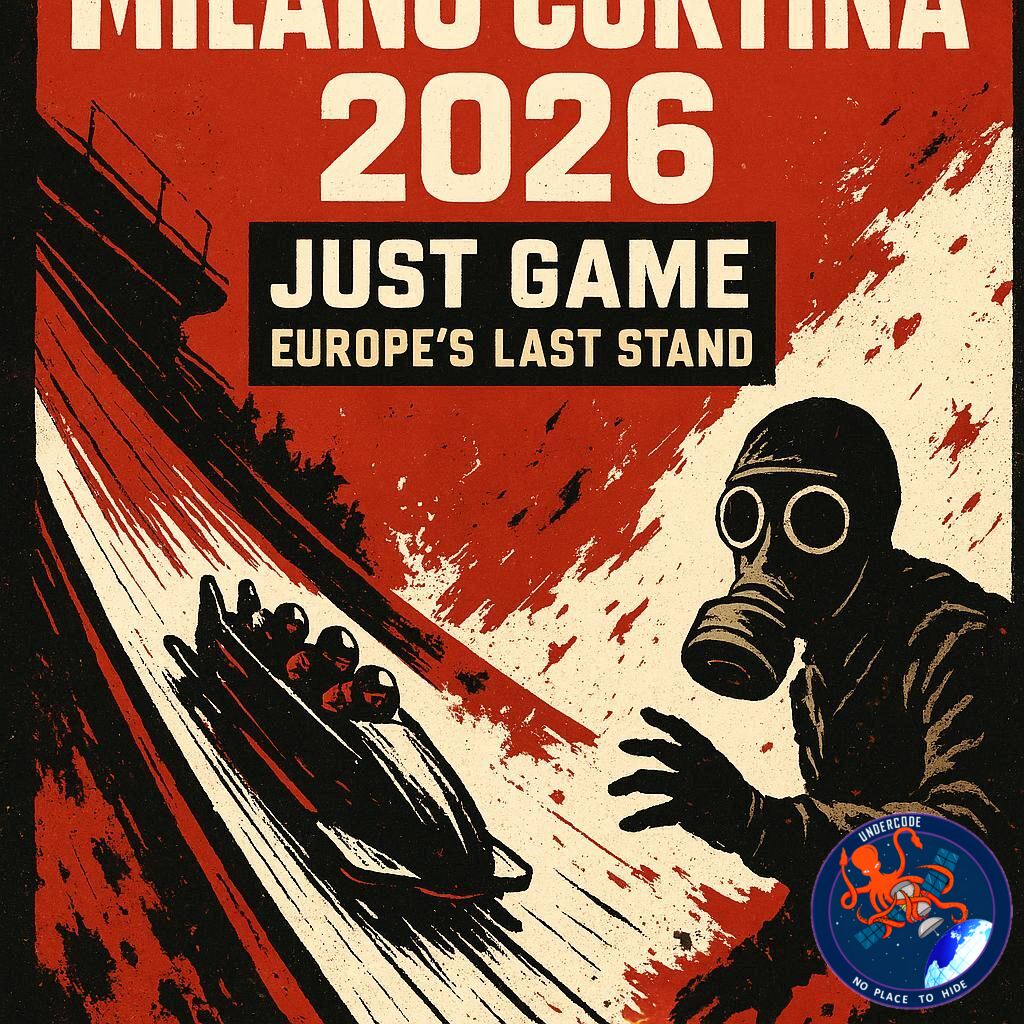
Introduction: When the Olympics Become a Moral Test
As the world prepares to gather beneath the snowy peaks of the Italian Alps for the Milano–Cortina 2026 Winter Olympics, the event arrives at a moment of profound global instability. Wars rage on Europe’s borders, humanitarian catastrophes deepen, and international law is increasingly ignored in favor of brute force. Against this backdrop, the Games are no longer just a celebration of athletic excellence. They are a mirror held up to civilisation itself. George Papandreou argues that the Olympics, at their core, are not entertainment spectacles but a living institution of peace—one that forces humanity to confront a fundamental question: do we still believe in shared rules, dignity, and restraint, or have we surrendered to a world where power alone decides?
the Original
The Milano–Cortina 2026 Winter Olympics, set in the Italian Alps, promise stunning athletic performances and a celebration of global unity. Italy’s rich cultural heritage and hospitality will once again frame the Games as a moment of shared humanity rather than mere competition. Yet, George Papandreou stresses that the true importance of the Olympics goes far beyond sport, especially at a time when the world faces its most dangerous period in generations.
While many see the Games as entertainment, national pride, or commercial opportunity, Papandreou argues that this view misses their real legacy. The Olympic Games were founded as an institution of peace. In ancient Greece, many athletic festivals existed, but the Games at Olympia stood apart because they were tied to a sacred agreement known as ekecheiria, or the Olympic Truce. Inspired by the Oracle of Delphi, rival city-states agreed to suspend hostilities, allowing athletes and spectators to travel safely and compete without weapons.
For more than a thousand years, this truce represented the longest continuous peace arrangement in recorded history. It was not symbolic; it was enforced. When Sparta violated the truce in 420 BCE, it was fined and banned from the Games, proving that even the strongest powers were subject to shared rules. In this system, raw power bowed to collective values.
Papandreou contrasts the Olympic ideal with the Roman arena. Both were public spectacles, but they embodied opposing visions of civilisation. The Olympics honored human excellence, equality, dignity, and fair competition. Victors were celebrated symbolically, not materially. The Roman arena, by contrast, glorified domination and violence, where life and death were decided by imperial whim. This distinction, Papandreou argues, still resonates today, especially in modern outrage-driven cultures that reward humiliation and force over humanity.
Europe now faces a similar crossroads. War has returned to the continent through Russia’s aggression against Ukraine. Gaza faces a humanitarian disaster. Violence persists across the Middle East, Sudan, and the Sahel, while peaceful protest is crushed in places like Iran. At the same time, great-power rivalry is undermining international law and weakening global institutions. The dangerous belief that “might makes right” is re-emerging.
This is exactly the world the Olympic Truce was designed to challenge. It reminds humanity that even during conflict, restraint is possible and necessary. When the modern Olympics were revived in Athens in 1896, their founders deliberately restored this ancient spirit. Influenced by classical philosophy and Enlightenment ideals, they saw the Games as a school of citizenship and a tool for peace in an interconnected world. This vision, Papandreou insists, was not naïve idealism but hard-earned realism.
History supports this claim. During the Lillehammer Winter Games, humanitarian corridors allowed vaccines to reach children in besieged Sarajevo. During Nagano, military confrontation between the United States and Iraq was avoided. At PyeongChang, Olympic diplomacy helped ease tensions between North and South Korea. These examples show that the Games can create real openings for peace.
Today, institutions like the International Olympic Truce Centre in Athens continue this mission through peace education, youth engagement, and cultural initiatives. Papandreou acknowledges that sport alone cannot end wars. However, without deliberate efforts to build a culture of peace, violence risks becoming the default language of international relations.
Europe, he argues, understands this better than most. The European Union itself was born from the ruins of two world wars, designed as a peace architecture based on law, dialogue, and shared prosperity. Abandoning this legacy would mean forgetting why Europe exists in the first place.
This is why Milano–Cortina matters far beyond medals and ceremonies. It offers Europe a chance to reaffirm cooperation in a world drifting toward confrontation. The ancient Greeks proved that peace could be organized. The modern Olympics revived that experiment for a global age. Today, with 165 nations backing the UN Olympic Truce resolution, that experiment is more urgent than ever. The choice remains stark: a civilisation ruled by fear and force, or one guided by dignity, cooperation, and shared responsibility.
What Undercode Say:
The argument laid out by Papandreou is powerful precisely because it is uncomfortable. In an era where global sporting events are routinely criticized for corruption, political hypocrisy, and commercial excess, invoking the Olympics as a moral institution can sound almost radical. Yet this discomfort is the point. The Olympic Truce exposes how far modern politics has drifted from the idea that power should be restrained by shared values.
What stands out most is the contrast between symbolism and enforcement. In ancient Greece, the truce was not a vague aspiration; it carried consequences. Today, international law often lacks that same credibility. Violations are condemned rhetorically but rarely punished in ways that alter behavior. This gap between values and accountability is one of the defining weaknesses of the current global order.
Milano–Cortina 2026 arrives at a moment when Europe’s credibility as a peace project is under stress. The war in Ukraine has forced a return to military logic, while divisions over Gaza, migration, and defense spending reveal deep fractures within the EU itself. In this context, the Olympics risk becoming either a hollow pageant or a rare moment of moral clarity. There is no neutral option.
The real significance of the Games will not be measured by viewership numbers or tourism revenue, but by whether political leaders dare to use the Olympic platform as more than a branding exercise. History shows that temporary pauses in conflict, humanitarian corridors, and diplomatic gestures are possible when the Games are treated seriously as a peace mechanism. The problem is not feasibility—it is political will.
There is also a warning embedded in the Roman arena comparison. Modern societies increasingly reward outrage, humiliation, and dominance, especially in digital spaces. This cultural shift mirrors the values of the arena more than those of Olympia. If the Olympics become just another spectacle stripped of ethical meaning, they risk reinforcing the very dynamics they were created to resist.
From a strategic perspective, Europe has more to lose than most if the Olympic ideal collapses into irrelevance. The EU’s foundational narrative depends on the belief that cooperation can tame power. If that belief erodes, Europe risks becoming just another arena of competing nationalisms, rather than a model of post-war reconciliation.
Milano–Cortina should therefore be read as a stress test. Can Europe still articulate a vision of strength that is compatible with restraint? Can it defend international rules without abandoning them when inconvenient? And can global sport still function as a rare space where enemies are forced to recognize each other’s humanity?
The Olympics will not stop wars. But they can expose the moral poverty of a world that refuses even temporary restraint. In that sense, the true failure would not be a violation of the Truce—it would be global indifference to its meaning.
Fact Checker Results
The historical existence of the Olympic Truce (ekecheiria) and its enforcement in ancient Greece is well documented.
Modern examples cited, including Lillehammer, Nagano, and PyeongChang, align with verified diplomatic and humanitarian initiatives linked to Olympic periods.
The UN-backed Olympic Truce resolution for Milano–Cortina is a confirmed multilateral agreement supported by a large majority of member states.
Prediction
📊 The Milano–Cortina 2026 Winter Olympics will become a symbolic battleground between sport as moral institution and sport as empty spectacle.
📊 If major powers publicly ignore the Olympic Truce, it will signal a further collapse of global norms restraining violence.
📊 If even limited humanitarian or diplomatic breakthroughs occur, Milano–Cortina may be remembered as a rare moment where Europe briefly slowed the world’s descent into permanent conflict.
🕵️📝✔️Let’s dive deep and fact‑check.
References:
Reported By: www.euronews.com
Extra Source Hub (Possible Sources for article):
https://www.instagram.com
Wikipedia
OpenAi & Undercode AI
Image Source:
Unsplash
Undercode AI DI v2
Bing
🔐JOIN OUR CYBER WORLD [ CVE News • HackMonitor • UndercodeNews ]
📢 Follow UndercodeNews & Stay Tuned:
𝕏 formerly Twitter 🐦 | @ Threads | 🔗 Linkedin | 🦋BlueSky | 🐘Mastodon


