
Listen to this Post
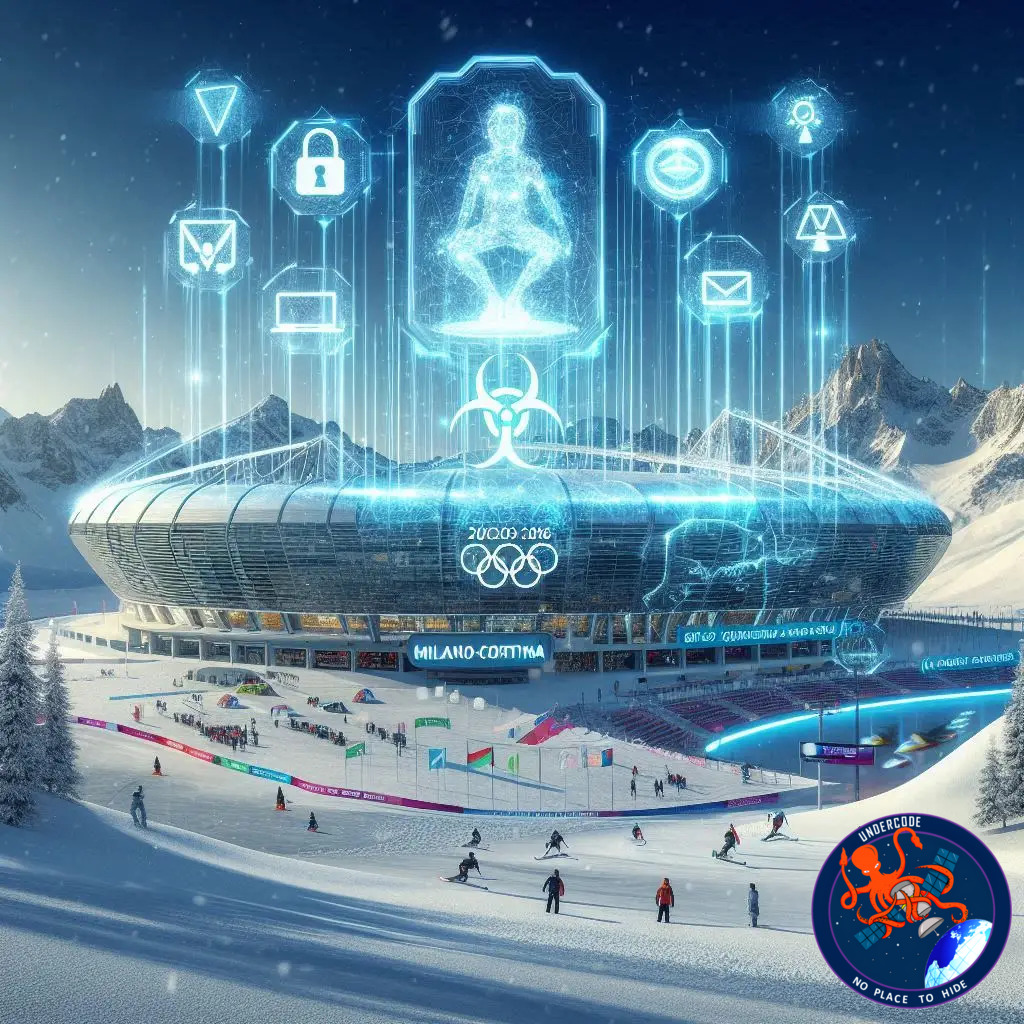
A Global Sporting Event Meets a Global Cyber Risk
The Milano-Cortina 2026 Winter Olympics will not only showcase elite athletic performance but also stand as one of the most digitally complex sporting events ever staged. With billions of viewers, thousands of athletes, and an ecosystem of partners, vendors, broadcasters, and government entities, the Games represent a massive and attractive target for cybercriminals. A new cyber risk assessment makes it clear that the greatest danger does not come from exotic zero-day exploits, but from familiar, highly effective tactics such as phishing and spoofed websites.
Why the Olympics Attract Cyber Adversaries
Large-scale sporting events offer something few other targets can: global attention combined with operational urgency. Systems must remain online, payments must process instantly, and communications must flow without interruption. Attackers understand that defenders have little room for error during live events. This pressure creates ideal conditions for deception-based attacks that rely on human trust rather than technical flaws.
Inside the Palo Alto Networks Risk Assessment
According to Palo Alto Networks’ Cyber Threats to Milan-Cortina 2026 report, phishing and spoofed domains are expected to be the most common entry points for cyberattacks targeting the Games. The research evaluates how cybercriminal gangs, state-sponsored actors, and hacktivist groups are likely to exploit the Olympics’ extensive digital footprint, from ticketing platforms and mobile apps to logistics systems and partner networks.
Lessons Learned From Previous Olympic Games
The report draws heavily on lessons from past Olympics, where cyber activity repeatedly surged around major milestones. During Pyeongchang 2018, attackers disrupted WiFi and digital infrastructure, directly impacting event operations. Ahead of Tokyo 2021, Russian-linked groups attempted to interfere with pre-Games systems. Paris 2024 saw noticeable spikes in distributed denial-of-service attacks, Olympics-themed phishing campaigns, and large-scale online scams. These incidents demonstrate a consistent pattern rather than isolated anomalies.
The Scale of the Milano-Cortina Digital Footprint
With more than three billion viewers expected worldwide, Milano-Cortina 2026 will rely on a sprawling network of cloud services, content delivery platforms, IoT devices, and third-party integrations. Each connection point increases the attack surface. From smart turnstiles and mobile ticketing to athlete tracking systems and media platforms, the Games function as a temporary digital city with global exposure.
Phishing as the Preferred Initial Access Method
The report emphasizes that phishing remains the dominant technique for initial access. Rather than breaking into systems through technical exploits, attackers increasingly impersonate trusted contacts to trick users into revealing credentials or approving malicious actions. These campaigns are often fast-moving and highly targeted, designed to blend seamlessly into everyday workflows.
Business Email Compromise at the Core of Attacks
Researchers found that 76 percent of observed phishing activity tied to large events relied on business email compromise tactics. These attacks exploit established trust relationships between employees, suppliers, sponsors, and contractors. A single convincing email appearing to come from a known partner can be enough to trigger a costly breach.
Trust as the Weakest Link in Event Security
Security leaders quoted in the report stress that human behavior, not technical vulnerability, is the primary risk factor. Randolph Barr, CISO at Cequence Security, noted that the most damaging incidents rarely involve new exploits. Instead, they stem from attackers abusing legitimate applications, identities, and corporate processes that were never designed to withstand deliberate deception at scale.
A Diverse Mix of Threat Actors
The Olympics attract a wide range of adversaries, each with different motivations. Financially motivated cybercriminals target payment systems and ticketing platforms to extract ransom or steal financial data. Nation-state actors focus on long-term intelligence gathering, leveraging the proximity of diplomats, officials, and high-profile guests. Hacktivist groups seek disruption and visibility, often aiming to embarrass organizers or make political statements.
Ransomware Gangs and Financial Extortion
Ransomware groups see large sporting events as prime opportunities for leverage. Disrupting ticketing systems, broadcast services, or access control during live events can create immediate chaos. The urgency to restore operations increases the likelihood of ransom payments, even when backups exist.
Nation-State Espionage in Plain Sight
State-backed groups are less concerned with disruption and more focused on persistence. The Olympic environment provides access to temporary networks used by government delegations, international organizations, and media outlets. This creates fertile ground for long-term espionage campaigns that may continue well beyond the closing ceremony.
Hacktivism and the Pursuit of Publicity
Hacktivist groups often target high-visibility events to amplify their messages. Even short-lived disruptions can generate global headlines. Defacements, data leaks, or denial-of-service attacks during the Games can be used to promote political or ideological causes.
Real-World Examples of Olympic-Style Threats
The report highlights several groups whose tactics are likely to resurface around Milano-Cortina. Dark Scorpius, for example, has compromised more than 500 victims since 2022 by impersonating IT staff and convincing targets to grant remote access. In some cases, full compromise occurred within just 14 hours.
Russia-Linked Phishing Operations
Another group, known as Fighting Ursa, has been linked to Russian intelligence operations. This group is known for phishing campaigns that rely on spoofed websites and weaponized documents, often tailored to specific events or organizations. Their techniques are well-suited to exploiting the fast-paced Olympic environment.
Credential Theft as a Force Multiplier
Stolen credentials remain one of the most valuable commodities in the cybercrime economy. Attackers increasingly purchase previously compromised usernames and passwords from dark web marketplaces, using them to bypass security controls without triggering alarms. In an event ecosystem as large as the Olympics, reused credentials can unlock multiple systems.
API and Software Vulnerabilities Add Complexity
Beyond phishing, attackers are expected to probe software and API vulnerabilities in event management platforms. The integration of multiple vendors and legacy systems creates opportunities for misconfigurations and unpatched flaws, especially under tight deployment timelines.
DDoS Attacks Targeting Availability
Distributed denial-of-service attacks remain a favored tactic for causing disruption. Ticketing platforms, event websites, and even physical access systems such as turnstiles can be targeted to create confusion and reputational damage during critical moments.
Consumer-Facing Scams Increase During the Games
The threat landscape extends beyond organizers and staff. Consumers are frequently targeted with fake ticket offers, counterfeit merchandise, and fraudulent travel packages. Olympics-themed scams surge as excitement builds, often exploiting urgency and scarcity.
The Role of Social Engineering in Success
At the heart of most successful attacks is social engineering. By crafting messages that appear timely, relevant, and authoritative, attackers bypass technical defenses by convincing victims to act against their own interests. The Olympics provide endless pretexts for such manipulation.
Security Awareness as a Defensive Measure
Experts emphasize that basic awareness remains one of the most effective defenses. Simple rules, such as verifying unexpected requests and avoiding deals that seem too good to be true, can prevent many incidents before they escalate into breaches.
Guidance for Employees and Partners
Employees, contractors, and partners connected to Olympic operations are urged to treat unsolicited messages with caution. Even emails that appear to come from known contacts should be verified through secondary channels when they involve financial transactions or access changes.
Protecting the Broader Olympic Ecosystem
Because attackers often target smaller vendors to reach larger organizations, security must extend beyond core infrastructure. Supply chain security, identity management, and consistent authentication policies play a critical role in reducing systemic risk.
What Undercode Say:
Familiar Threats Are the Most Dangerous Ones
The most striking takeaway from the Milano-Cortina cyber risk assessment is how ordinary the predicted threats are. Phishing, credential theft, and spoofed websites are not new problems, yet they continue to outperform advanced exploits in real-world effectiveness. This underscores a persistent gap between technical security investments and human-centric risk management.
Complexity Amplifies Human Error
The Olympics operate under extreme complexity and time pressure. In such environments, even well-trained professionals are more likely to make mistakes. Attackers exploit this reality by designing attacks that look routine rather than suspicious, blending into the noise of daily operations.
Digital Trust Is Being Weaponized
Modern organizations rely heavily on digital trust: trusted senders, trusted platforms, trusted workflows. The problem is that trust, once established, is rarely revalidated. Phishing campaigns targeting the Olympics thrive by hijacking this trust and turning it into an attack vector.
BEC Reflects Organizational Reality
The dominance of business email compromise reflects how work actually gets done. Approvals, invoices, and last-minute changes are common in large projects. Attackers mimic these processes because they know they align perfectly with organizational behavior.
Nation-State Activity Will Be Subtle, Not Loud
While ransomware and hacktivism generate headlines, the most strategically significant activity may go unnoticed. Nation-state actors are likely to prioritize quiet access and long-term intelligence collection over disruptive attacks that draw attention.
Short-Term Events, Long-Term Consequences
Although the Olympics last only a few weeks, the data accessed during that period can have long-term value. Credentials, communications, and network access obtained during the Games may be exploited months or even years later.
The Supply Chain Remains a Soft Target
No single organization controls the entire Olympic ecosystem. This fragmentation creates uneven security standards and weak links. Attackers understand that compromising a small vendor can be far easier than breaching a central authority directly.
Awareness Is Not Optional Anymore
Security awareness can no longer be treated as a compliance checkbox. For events like Milano-Cortina, it must be operational, continuous, and tailored to real threats. Generic training will not stop targeted, context-aware phishing campaigns.
Automation Helps, but Judgment Still Matters
Advanced detection tools can reduce risk, but they cannot replace human judgment. The most effective defenses combine automated controls with empowered employees who feel responsible for questioning unusual requests.
Rehearsing Cyber Incidents Is as Important as Physical Security
Just as organizers rehearse emergency scenarios for physical safety, cyber incident response must be practiced under realistic conditions. Speed and clarity in decision-making can determine whether an incident becomes a footnote or a crisis.
The Olympics as a Cybersecurity Mirror
Ultimately, the cybersecurity challenges facing Milano-Cortina 2026 reflect those faced by global enterprises everywhere. The Games magnify existing problems rather than introducing new ones, offering a clear preview of where defenses succeed and where they fail.
Fact Checker Results
Accuracy of Threat Assessment ✅
The article accurately reflects established patterns observed during previous Olympic Games and aligns with documented cybersecurity trends.
Attribution of Attack Methods ✅
Claims regarding phishing, BEC, and DDoS attacks are consistent with industry reporting and expert analysis.
Contextual Integrity ❌
While threat examples are valid, exact future attribution for Milano-Cortina 2026 remains speculative by nature.
Prediction
Phishing Volume Will Spike Sharply Before Opening Ceremony 🔮
Attackers are likely to intensify campaigns in the weeks leading up to the Games, exploiting final preparations and last-minute changes.
Credential-Based Attacks Will Outpace Technical Exploits ⚠️
Stolen and reused credentials will remain the most effective method for breaching Olympic-related systems.
Cyber Incidents Will Extend Beyond the Games 📊
Data and access obtained during Milano-Cortina 2026 will likely be leveraged in follow-on attacks long after the event concludes.
🕵️📝✔️Let’s dive deep and fact‑check.
References:
Reported By: www.infosecurity-magazine.com
Extra Source Hub (Possible Sources for article):
https://www.digitaltrends.com
Wikipedia
OpenAi & Undercode AI
Image Source:
Unsplash
Undercode AI DI v2
Bing
🔐JOIN OUR CYBER WORLD [ CVE News • HackMonitor • UndercodeNews ]
📢 Follow UndercodeNews & Stay Tuned:
𝕏 formerly Twitter 🐦 | @ Threads | 🔗 Linkedin | 🦋BlueSky | 🐘Mastodon


