
Listen to this Post
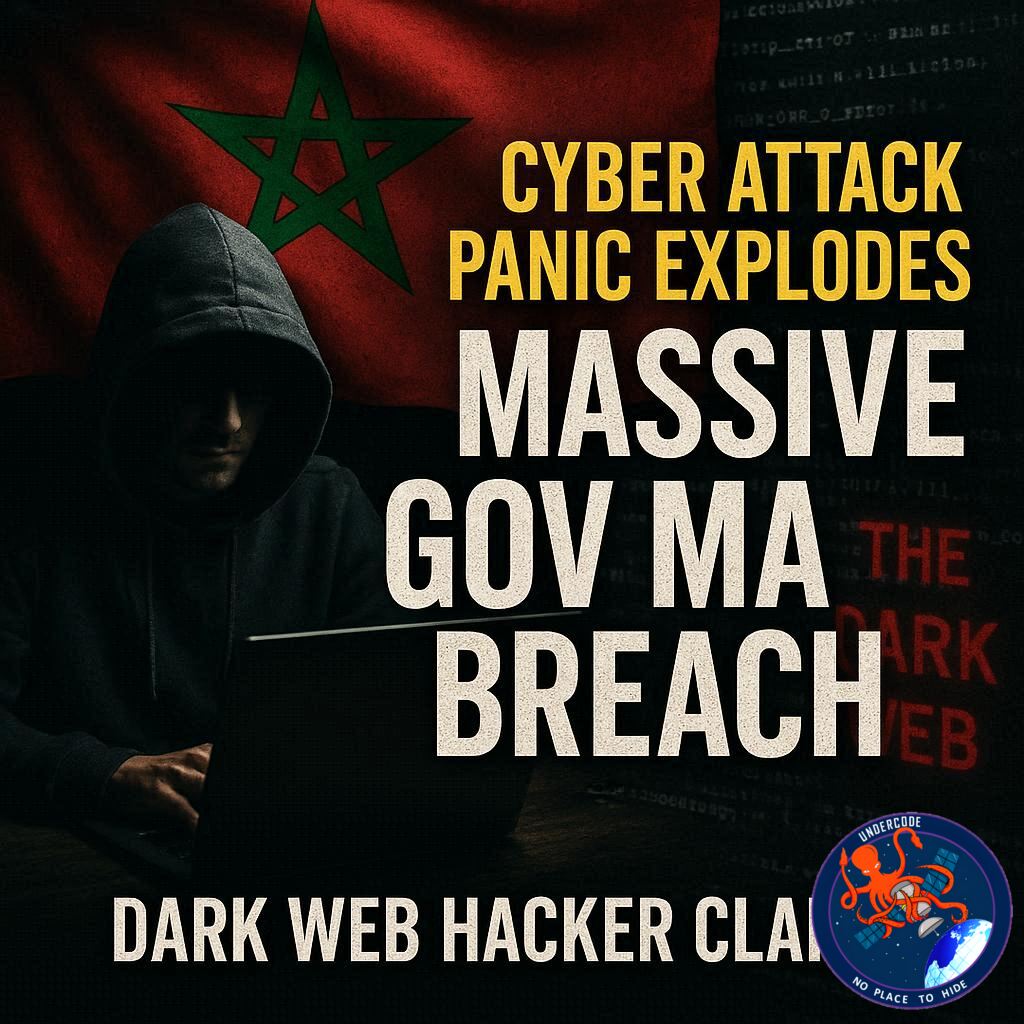
Growing Cybersecurity Fears Surround Moroccan Government Platforms
A new wave of cyberattack fears is spreading across Morocco after dark web monitoring accounts reported that a threat actor known as “Fexus” allegedly breached several Moroccan government-related platforms. The claims appeared on underground cybercrime forums and immediately triggered concerns about the safety of citizen information, educational records, and tax-related systems connected to Morocco’s digital infrastructure.
According to the allegations, the hacker claims to possess access to databases tied to multiple .gov.ma domains, including platforms linked to Morocco’s education and tax administration systems. Among the targeted websites reportedly mentioned were massar.men.gov.ma, moutamadris.men.gov.ma, waliye.men.gov.ma, and several systems associated with tax.gov.ma.
At the moment, there is still no official confirmation from Moroccan authorities regarding whether the systems were actually compromised. Cybersecurity researchers monitoring underground communities also stated that the authenticity of the leaked data, the size of the alleged breach, and the freshness of the information remain unverified. However, even unconfirmed breach claims involving government infrastructure often create immediate alarm because they can signal either real unauthorized access or ongoing psychological pressure campaigns by hackers seeking notoriety.
The alleged attacker reportedly hinted that additional leaks could soon follow. In dark web culture, this tactic is frequently used to build reputation inside underground communities. Threat actors often release small samples first before dumping larger datasets later, especially if they are trying to gain attention, increase credibility, or pressure victims into negotiations.
If the breach claims eventually prove authentic, the implications could be severe. Cybersecurity experts warn that exposed credentials could lead to unauthorized access to personal accounts, while leaked citizen information might fuel phishing campaigns, financial fraud, and identity theft operations. Government-connected systems are especially sensitive because many services are interconnected, meaning attackers could potentially move between systems if security segmentation is weak.
Education-related platforms are particularly vulnerable targets because they often contain detailed personal information about students, parents, and administrators. Such databases may include names, addresses, phone numbers, academic records, login credentials, and national identification details. Criminal groups frequently exploit this type of information for social engineering attacks or targeted scams.
Tax-related infrastructure represents an even higher-risk environment. Access to financial declarations, corporate records, or citizen tax data could create opportunities for blackmail, fraud, and advanced phishing attacks designed to impersonate official agencies. Attackers sometimes use stolen tax information to craft highly convincing scam emails that trick victims into revealing banking details or authentication codes.
The timing of the allegations also reflects a broader global trend. Government institutions worldwide are increasingly becoming high-value targets for cybercriminals, hacktivists, and state-sponsored groups. As public services continue shifting toward digital systems, the attack surface grows larger and more difficult to secure. Many public-sector organizations still operate on outdated infrastructure, making them attractive entry points for attackers.
Cybersecurity analysts also note that underground forums have evolved dramatically in recent years. These spaces no longer function merely as anonymous discussion boards. They now act like organized marketplaces where hackers buy, sell, trade, and leak stolen information. Reputation inside these forums matters significantly, which is why actors sometimes exaggerate claims or release partial evidence to gain influence.
Despite the growing online discussion surrounding the alleged Morocco breach, experts continue urging caution. False claims are extremely common in cybercrime communities. Some attackers recycle old leaks, repackage previously exposed databases, or fabricate access entirely to attract attention. Without technical verification or independent confirmation, it remains impossible to determine whether the systems were genuinely compromised.
Moroccan authorities have not yet released public technical findings related to the allegations. Until official investigations conclude, the incident remains in the category of an alleged breach rather than a confirmed cyberattack.
What Undercode Says:
The Real Danger May Be Larger Than The Leak Itself
The most important aspect of this story is not necessarily whether the leaked data is authentic. The real danger lies in how quickly cybercriminal narratives can destabilize trust in government systems. Even the suggestion that education and tax platforms may have been breached is enough to create fear among citizens who rely on those systems daily.
Dark Web Reputation Games Are Becoming More Aggressive
Actors like “Fexus” understand how underground communities operate. In many cases, hackers build influence by staging dramatic announcements before releasing proof. The psychology behind these operations matters. Cybercrime today is not just about stealing data — it is also about branding, intimidation, and visibility inside hidden digital ecosystems.
Government Systems Remain Prime Targets Worldwide
Public-sector infrastructure has become one of the most attacked sectors globally because governments often manage enormous databases while operating with slower modernization cycles. Unlike private tech firms that constantly rebuild systems, many government agencies continue using legacy architectures vulnerable to exploitation.
Morocco’s Expanding Digital Infrastructure Increases Exposure
Morocco has invested heavily in digital transformation across education, taxation, and citizen services. While this modernization improves efficiency, it simultaneously creates broader exposure to cyber threats. The more centralized and connected a digital ecosystem becomes, the greater the consequences if attackers gain access.
Education Platforms Are Often Undervalued Cyber Targets
Many people underestimate the value of educational databases. In reality, student systems are extremely attractive to cybercriminals because they contain long-term identity information. Young users are also statistically more vulnerable to phishing attacks and password reuse habits.
Tax Systems Could Become Weapons For Social Engineering
If tax-related information were exposed, attackers could weaponize it for precision-targeted phishing campaigns. Modern phishing no longer relies on generic spam emails. Criminals increasingly use real personal information to make scams appear authentic and trustworthy.
Underground Forums Function Like Criminal Stock Markets
Dark web forums now resemble financial trading floors for cybercrime. Data leaks, stolen credentials, malware services, and access packages are bought and sold continuously. Reputation systems inside these communities reward visibility, meaning attackers are incentivized to make loud public claims.
Fake Leaks Are Still A Serious Cybersecurity Problem
Even if the breach turns out to be fabricated, fake leak campaigns can still damage institutions. Public confidence drops, panic spreads online, and organizations are forced into costly investigations. Sometimes the psychological operation itself is the attacker’s main objective.
Governments Need Faster Public Communication Strategies
One major issue during cyber incidents is silence. When governments delay communication, speculation rapidly fills the vacuum. Fast, transparent updates are now critical in cybersecurity crises because misinformation spreads almost instantly across social media platforms.
Citizen Cyber Hygiene Matters More Than Ever
Incidents like this highlight how vulnerable ordinary users remain. Password reuse, weak authentication methods, and poor phishing awareness continue creating opportunities for attackers. Even highly secure government systems can be undermined if users themselves become the weakest link.
The Cybersecurity Industry Is Entering A New Phase
Cybercrime is evolving from isolated attacks into persistent ecosystem warfare. Threat actors collaborate, share tools, trade vulnerabilities, and coordinate leaks at industrial scale. This transformation means governments must approach cybersecurity as a continuous national security challenge rather than isolated technical incidents.
Information Warfare Is Becoming Part Of Modern Cyberattacks
Many modern hackers seek attention as much as financial profit. Public breach announcements create headlines, pressure institutions, and amplify fear. In some cases, attackers intentionally maximize media impact to increase leverage and online notoriety.
The Lack Of Verification Creates Dangerous Uncertainty
Right now, uncertainty itself is driving the story. Without verified evidence, citizens are left between skepticism and fear. That ambiguity creates an ideal environment for rumors, misinformation, and panic-driven speculation.
Security Audits Will Likely Intensify After The Claims
Even unverified breach reports often force organizations to conduct emergency audits. Moroccan agencies connected to the named domains will likely review authentication logs, server activity, and access histories to determine whether unauthorized activity actually occurred.
Cybersecurity Preparedness Is No Longer Optional
This incident reinforces a harsh reality facing every modern nation: digital infrastructure is now inseparable from national stability. Governments that fail to prioritize cybersecurity risk financial disruption, public distrust, and long-term reputational damage.
🔍 Fact Checker Results
✅ Breach Claims Were Publicly Reported
Dark web monitoring accounts did publicly report alleged breaches involving Moroccan government-related domains and attributed the claims to a threat actor known as “Fexus.”
❌ No Official Confirmation Exists Yet
As of now, there is no verified public confirmation proving that Moroccan government databases were successfully breached or leaked.
✅ The Risks Mentioned Are Technically Plausible
Credential theft, phishing campaigns, identity fraud, and abuse of interconnected systems are all recognized risks associated with genuine government data breaches.
📊 Prediction
Rising Pressure On Moroccan Cybersecurity Authorities
Moroccan authorities will likely face growing pressure to publicly address the allegations and reassure citizens about the safety of digital government platforms.
More Alleged Leak Samples Could Surface
The threat actor may release screenshots, partial databases, or credential samples in an attempt to strengthen credibility within underground communities.
Increased Monitoring Of Government Infrastructure
This incident will probably accelerate cybersecurity audits, infrastructure reviews, and monitoring efforts across Moroccan public-sector systems, especially those connected to citizen services and taxation.
🕵️📝Let’s dive deep and fact‑check.
References:
Reported By: x.com
Extra Source Hub (Possible Sources for article):
https://www.instagram.com
Wikipedia
OpenAi & Undercode AI
Image Source:
Unsplash
Undercode AI DI v2
Bing
🔐JOIN OUR CYBER WORLD [ CVE News • HackMonitor • UndercodeNews ]
📢 Follow UndercodeNews & Stay Tuned:
𝕏 formerly Twitter 🐦 | @ Threads | 🔗 Linkedin | 🦋BlueSky | 🐘Mastodon


