
Listen to this Post
Introduction
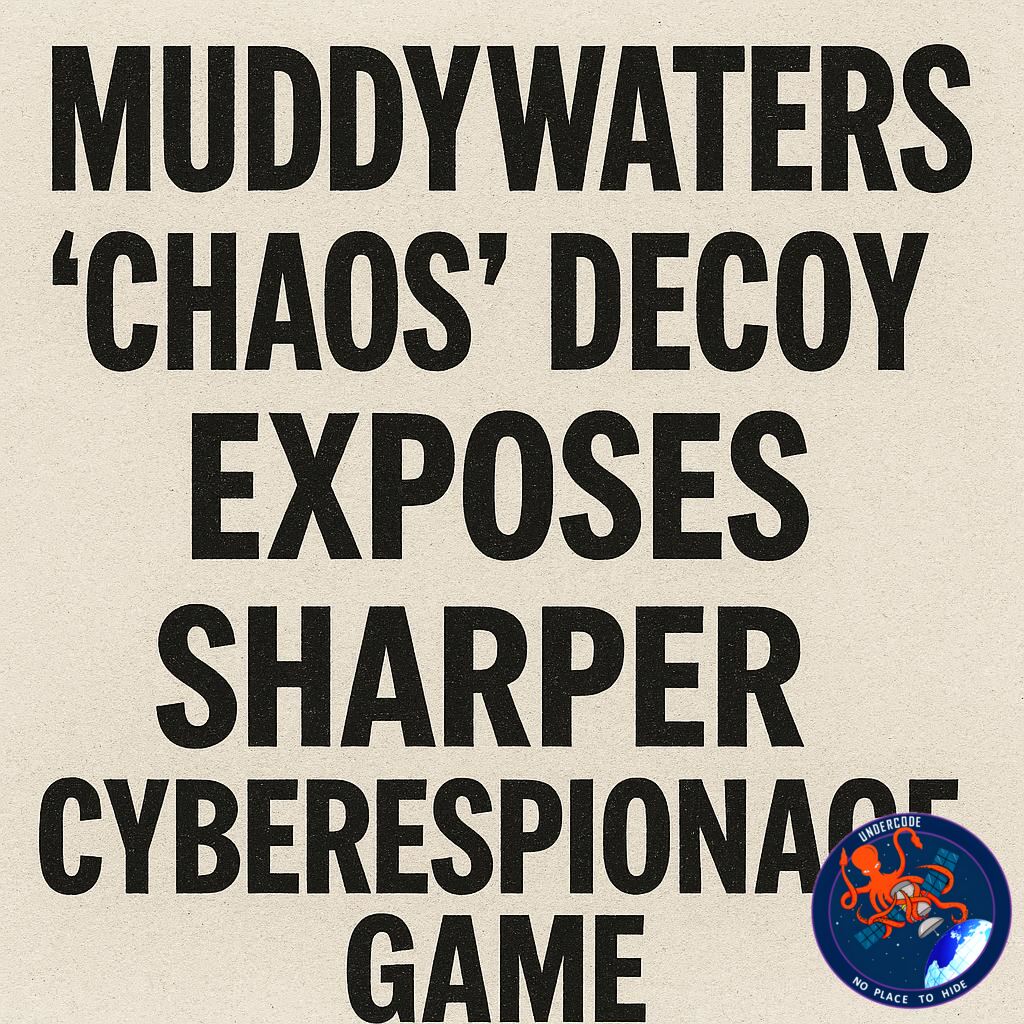
Cybersecurity threats rarely arrive wearing the mask you expect. In this case, MuddyWater, a long-running threat group, appears to have used Chaos ransomware not as the main weapon, but as a distraction—a decoy designed to hide a deeper espionage operation. The attack reportedly leaned on Microsoft Teams social engineering, credential theft, MFA bypass tactics, and persistence methods that helped the intruders stay inside targeted environments longer than a simple smash-and-grab attack would allow. What makes this especially concerning is the way the campaign blends noise and stealth: the ransomware grabs attention, while the real objective seems to be quiet access, surveillance, and control.
Original Summary
MuddyWater has been linked to a cyber operation that used Chaos ransomware as a smokescreen while carrying out espionage-focused activity behind the scenes.
The campaign reportedly relied on social engineering through Microsoft Teams, a channel many organizations trust for internal communication.
Instead of forcing entry through brute strength alone, the attackers appear to have manipulated people into giving away access.
Once inside, they allegedly worked to steal credentials and move deeper into the victim environment.
The reported goal was not only disruption, but also long-term access and intelligence gathering.
Bypassing multifactor authentication was one of the most alarming parts of the operation.
MFA is often treated as a major security barrier, so any method that gets around it immediately raises the stakes.
The use of ransomware as a decoy suggests the attackers may have wanted defenders focused on one visible problem while the real compromise continued elsewhere.
This kind of tactic can waste valuable response time.
Security teams may rush to contain the ransomware angle while missing quieter signs of espionage.
Attribution in the case was supported by unique code-signing activity and overlaps in infrastructure.
Those details can help analysts connect the campaign to MuddyWater even when the attacker tries to stay hidden.
The attack highlights how modern threat groups often combine criminal tools with intelligence-gathering objectives.
It also shows that ransomware is no longer always about ransom.
Sometimes it is used as a mask, a diversion, or a psychological weapon.
That makes incident response much harder, because defenders must ask not only what is broken, but what was hidden behind the break-in.
The article also points to a wider cybersecurity climate where privacy exposure, regulatory pressure, and active exploitation continue to collide.
Data issues at platforms such as Vimeo and Canvas show that exposure is not limited to state-linked espionage.
At the same time, critical vulnerabilities like actively exploited flaws keep giving attackers new entry points.
The result is a threat landscape that feels crowded, layered, and constantly shifting.
Organizations are not just defending against malware anymore.
They are defending against deception, impersonation, stolen trust, and attackers who know how to blend into normal business workflows.
That is what makes this report so important: it is less about one piece of ransomware and more about a strategy built around confusion.
What Undercode Say:
MuddyWater’s use of Chaos ransomware looks less like a classic extortion play and more like a deliberate cover story.
That distinction matters because it changes how defenders should interpret the incident.
If the visible damage is only the surface, then the real threat may already be embedded deeper in the network.
Microsoft Teams is a smart choice for social engineering because it sits inside the daily rhythm of corporate communication.
People are often more likely to trust a message that arrives in a familiar workspace than one that lands in a random inbox.
That makes the human layer the weakest point in the chain, especially when attackers sound urgent, official, or technically convincing.
Credential theft remains one of the fastest ways for attackers to turn a single trick into broad access.
Once credentials are stolen, the compromise can look legitimate from the outside.
That is why MFA bypass techniques are so dangerous: they strip away one of the strongest defenses many companies believe they have.
Persistence is the part that turns a break-in into a long game.
If the attacker can remain present after the first intrusion, they can watch, map systems, and choose the best moment to expand.
This is where espionage differs from ordinary vandalism.
A vandal wants attention now.
An espionage group wants access tomorrow, next week, and sometimes for months.
The code-signing and infrastructure overlaps mentioned in the report are important because attribution in cyber cases is rarely based on one clue alone.
Analysts usually build a picture from technical fingerprints, reuse patterns, operational habits, and infrastructure relationships.
When several of those signs align, the confidence in attribution grows stronger.
That does not mean every detail is always perfect, but it does mean the campaign likely fits a recognizable operator profile.
What stands out most is the layering of objectives.
The attackers do not seem satisfied with disruption.
They appear to want both confusion and intelligence value, which is a far more mature and dangerous approach.
For defenders, the lesson is uncomfortable but clear.
Visible damage is not always the main event.
Sometimes it is only the curtain drop before the real performance begins.
This is why incident response has to move beyond the obvious alert and into identity review, communication audit, lateral movement checks, and persistence hunting.
The article also reflects a broader truth about current cyber operations: attackers are becoming more comfortable combining criminal tradecraft with espionage tradecraft.
That mix makes attribution, containment, and recovery harder all at once.
It also means security teams cannot treat ransomware, phishing, and credential abuse as separate problems anymore.
They are often different faces of the same operation.
In practical terms, organizations need to assume that collaboration tools are now attack surfaces, not just productivity tools.
Teams, Slack, and similar platforms can no longer be treated as safe by default.
A message that looks routine can be the first step in a much larger compromise.
The presence of active exploitation elsewhere in the cybersecurity landscape adds more pressure.
When attackers see exposed systems and distracted defenders, they move quickly.
That is why the best defense is not just stronger tools, but faster verification, tighter identity controls, and sharper user awareness.
MuddyWater’s reported method is a reminder that modern intrusion campaigns are built on patience, deception, and timing.
The loud part is often designed to hide the quiet part.
And the quiet part is usually where the real damage begins.
Fact Checker Results
✅ The article’s core claim that MuddyWater used Chaos ransomware as a decoy is plausible and aligns with how advanced groups often disguise espionage activity.
✅ Microsoft Teams can be abused for social engineering, credential theft, and impersonation, so that part of the report fits known attacker behavior.
❌ Attribution based on infrastructure and code-signing overlaps can be strong, but it is still probabilistic and should not be treated as absolute proof on its own.
Prediction
The next wave of attacks will likely lean even harder on trusted collaboration tools, because that is where users are least defensive.
Security teams should expect more operations that mix visible disruption with hidden persistence, especially when attackers want both attention and access.
If this pattern continues, the most successful defenders will be the ones who treat every ransomware event as a possible cover for something quieter, deeper, and more valuable.
🕵️📝Let’s dive deep and fact‑check.
References:
Reported By: x.com
Extra Source Hub (Possible Sources for article):
https://www.quora.com
Wikipedia
OpenAi & Undercode AI
Image Source:
Unsplash
Undercode AI DI v2
Bing
🔐JOIN OUR CYBER WORLD [ CVE News • HackMonitor • UndercodeNews ]
📢 Follow UndercodeNews & Stay Tuned:
𝕏 formerly Twitter 🐦 | @ Threads | 🔗 Linkedin | 🦋BlueSky | 🐘Mastodon


