
Listen to this Post
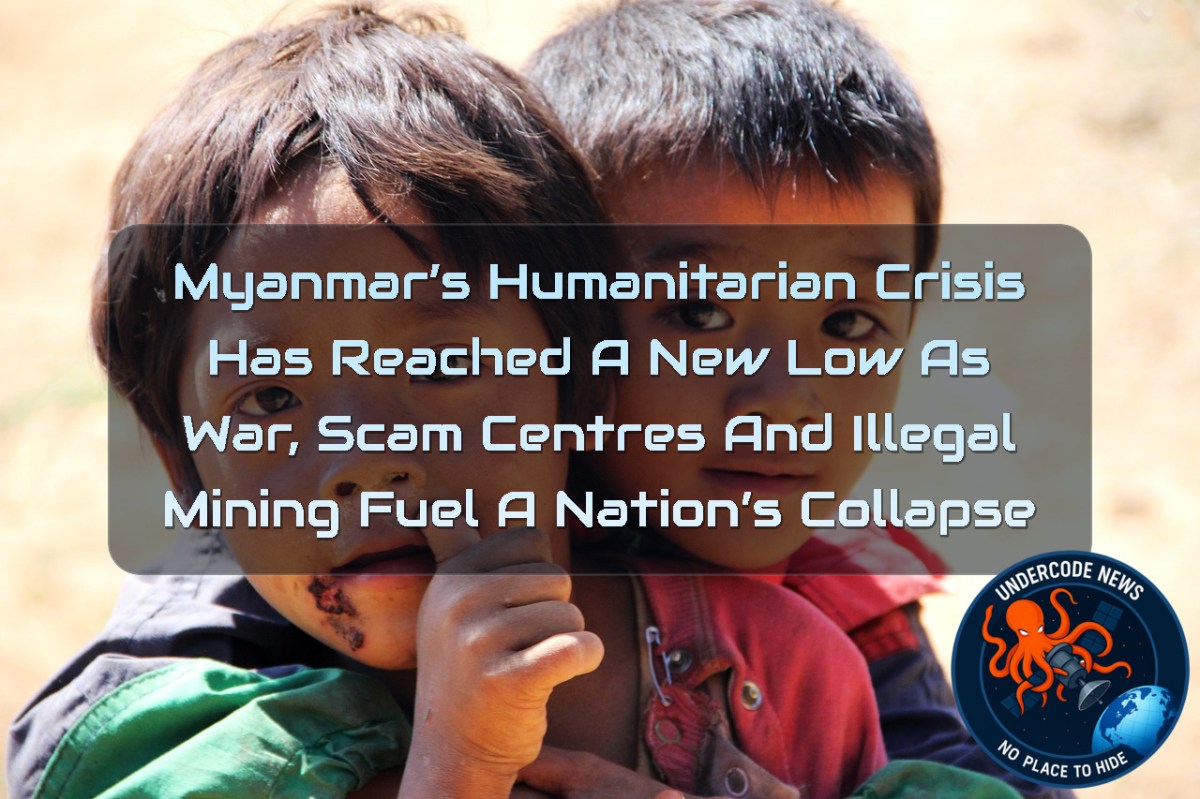
A Country Trapped in a Deepening Crisis
Five years after Myanmar’s military seized power from an elected government, the country is facing a crisis that has grown far beyond a conventional political struggle. Armed conflict, forced displacement, economic collapse, illicit industries and systematic human rights abuses have combined to create an environment in which civilians are increasingly trapped between violence and exploitation.
The United Nations has warned that Myanmar’s already devastating human rights situation has deteriorated to a new low. Its assessment describes a country where military violence continues alongside expanding criminal economies, environmental destruction and worsening abuses against the Rohingya minority. The UN has also warned that modern technologies are being used to strengthen surveillance and control over civilians.
The Coup That Changed Myanmar Forever
On February 1, 2021, Myanmar’s military overthrew the elected civilian government, detaining political leaders including Aung San Suu Kyi and effectively ending a decade-long experiment with democratic governance.
What followed was not simply a change of government. The coup triggered mass protests, a violent military crackdown and the rapid expansion of armed resistance across the country. Ethnic armed organizations and newer pro-democracy forces increasingly challenged military control, transforming Myanmar into one of the world’s most complicated and destructive internal conflicts.
The United Nations has repeatedly documented killings, arbitrary detention, torture, forced displacement, attacks on civilian infrastructure and other serious abuses since the coup. Earlier UN assessments have also emphasized that official casualty figures are difficult to establish because access to many areas remains severely restricted.
Five Years of Bloodshed
The scale of the violence has become difficult to comprehend. Thousands of civilians have been documented as killed since the coup, while many more deaths remain unverified because of the difficulty of collecting information from conflict zones.
The
The conflict has also produced enormous displacement. Families have abandoned homes, agricultural land and businesses to escape airstrikes, ground fighting, forced recruitment and other forms of coercion.
The Military’s Search for Control
Myanmar’s military leadership has increasingly attempted to present itself as the country’s only viable political authority. Yet the UN argues that the military’s continuing pursuit of control and legitimacy has failed to resolve the country’s crisis.
Instead, military operations have generated additional humanitarian needs and intensified civilian insecurity.
Airstrikes, arson, displacement and restrictions on basic freedoms have become part of daily life in many communities. The result is a society where fear is no longer limited to the battlefield but has spread into workplaces, schools, villages and homes.
Technology Becomes Another Weapon
Modern technology has added another dimension to the crisis.
The UN has warned that surveillance technologies are being used to expand the military’s ability to monitor and control civilians. In an environment where communications can already be restricted and journalists face severe pressure, digital surveillance creates another layer of vulnerability.
The importance of this development should not be underestimated. A government does not need to physically occupy every street if technology allows it to identify activists, monitor communications and intimidate communities remotely.
The Rohingya Face Another Chapter of Suffering
Among the most vulnerable groups remain the Rohingya, who have endured decades of discrimination, displacement and violence.
The current crisis has created additional dangers for Rohingya communities, particularly in Rakhine State. The UN has documented concerns involving arbitrary detention, forced recruitment and labour, disappearances, displacement and restrictions on fundamental freedoms.
The tragedy is that the Rohingya are facing pressure from multiple directions. The military remains a major source of documented abuses, while the broader conflict involving ethnic armed organizations has created an increasingly unstable environment for civilians.
A Conflict Fueled by More Than Weapons
Myanmar’s war is not sustained only through conventional military resources. The country’s expanding illicit economies are becoming an increasingly important part of the crisis.
Illegal mining, narcotics production, human trafficking and cyber-enabled scam operations have created parallel economic systems that operate outside normal legal and regulatory structures.
These industries generate money, employment and infrastructure in communities where legitimate economic opportunities have collapsed. That makes them particularly difficult to dismantle.
Scam Centres Become Entrenched
One of the most disturbing developments is the expansion of scam centres.
Across Southeast Asia, scam compounds have become associated with trafficking, forced labour and forced criminality. UN mechanisms have documented cases involving people from numerous countries who were allegedly trafficked into compounds and forced to conduct online scams under prison-like conditions.
Myanmar has become one of the most important locations in this regional criminal ecosystem.
The danger is not limited to financial fraud. Behind many scam operations are allegations of trafficking, coercion, violence and exploitation.
Why Communities Can Become Dependent on Criminal Economies
The
James Rodehaver, who heads the UN human rights team’s Myanmar work, said communities have become increasingly dependent on scam centres. Some operations reportedly build roads, schools and freshwater wells to gain local acceptance and strengthen their legitimacy.
This creates a vicious cycle.
A criminal enterprise that provides infrastructure can gradually become embedded within the local economy. Residents who depend on the income or services may have fewer incentives to challenge it, particularly when the state is absent or incapable of providing alternatives.
Illegal Mining and the Price of Survival
Illegal mining presents another major dimension of the crisis.
Myanmar possesses valuable mineral resources, including rare earth elements that are strategically important to modern technology and manufacturing. As global demand for critical minerals grows, regions affected by weak governance and armed conflict can become particularly attractive to illicit extraction networks.
The consequences are not limited to economics.
Mining operations can release hazardous chemicals into waterways, contaminate ecosystems and damage agricultural communities. The environmental consequences may continue long after the immediate conflict has moved elsewhere.
China and the Critical Minerals Connection
The UN report cited in the original article points to the importance of neighboring China as a destination for Myanmar’s mineral exports. It described major trade flows involving rare-earth extraction, with reported trade reaching approximately $1.4 billion in 2023.
That figure is significant because it demonstrates how Myanmar’s internal crisis can become connected to international supply chains.
Rare-earth minerals are essential to many modern technologies, including electronics, renewable-energy equipment and advanced industrial applications. This creates a difficult question for governments and companies: how can critical-mineral supply chains be secured without strengthening abusive or environmentally destructive systems?
Environmental Destruction Becomes a Human Rights Issue
Polluted rivers and damaged ecosystems are not simply environmental problems in a country experiencing war.
When communities depend on rivers for drinking water, agriculture and fishing, contamination becomes a direct threat to health, food security and economic survival.
The UN has warned that mining operations are producing large volumes of hazardous chemicals that can enter local waterways, with serious consequences for communities and reproductive health.
In this sense, environmental destruction becomes another form of humanitarian pressure.
The Economics of a War Economy
Myanmar demonstrates how conflict can create an economy that increasingly sustains the conflict itself.
Violence destroys legitimate businesses. Economic collapse pushes people toward informal employment. Criminal groups fill the vacuum. Those groups generate money. Some of that money supports armed actors or networks connected to the conflict. The continued conflict then destroys even more legitimate economic activity.
The cycle becomes increasingly difficult to break.
The International Dimension
Myanmar’s crisis cannot be viewed entirely as an internal matter.
Its borders connect it to China, India, Thailand, Bangladesh and Laos, while its illicit economies have international customers, victims and financial networks.
Scam operations can target people thousands of kilometres away. Mineral extraction can feed global supply chains. Refugees cross international borders. Weapons and money can move through regional networks.
This means that the humanitarian crisis has consequences far beyond Myanmar’s borders.
The Junta’s Diplomatic Campaign
Myanmar’s military leadership has also pursued greater international recognition.
Min Aung Hlaing has undertaken diplomatic outreach to countries including India, China, Laos and Thailand as the junta attempts to reduce its international isolation.
Diplomatic engagement, however, does not automatically translate into legitimacy.
The central question for foreign governments is whether engagement can encourage stability and humanitarian access without inadvertently rewarding or legitimizing abuses.
Recognition Versus Accountability
The
Some governments may argue that engagement is necessary because isolation has not ended the conflict. Others fear that normalizing relations with the junta could weaken pressure for accountability.
For civilians, the distinction can be frustratingly abstract.
What matters on the ground is whether diplomacy produces fewer airstrikes, greater humanitarian access, safer communities and meaningful political participation.
Why the Crisis Keeps Getting Worse
The fundamental problem is that Myanmar is facing several crises simultaneously.
There is a political crisis caused by the military takeover.
There is a security crisis caused by armed conflict.
There is a humanitarian crisis caused by displacement and the destruction of civilian infrastructure.
There is an economic crisis caused by instability and the collapse of legitimate commerce.
There is an environmental crisis driven partly by uncontrolled extraction.
And there is a criminal crisis involving trafficking and scam networks.
Each problem reinforces the others.
The Humanitarian Consequences Are Expanding
As violence continues, humanitarian organizations face increasing difficulty reaching people in need.
Communities displaced by fighting require food, shelter, healthcare and clean water. Children lose access to education. Families lose income. Farmers lose access to fields. Patients struggle to reach hospitals.
Meanwhile, restrictions and insecurity can make humanitarian delivery itself dangerous.
The result is a crisis that becomes more expensive and more difficult to resolve with every passing year.
Why the International Community Matters
The UN’s message to states, companies and investors is particularly important because Myanmar’s crisis is partly connected to international economic relationships.
Companies operating in or sourcing materials from conflict-affected areas can unintentionally contribute to abusive systems if supply chains are not carefully examined.
Investors face similar questions.
A profitable supply chain is not automatically an ethical one.
Companies Face a Difficult Choice
Businesses operating around
Due diligence becomes essential when supply chains pass through territories controlled by armed groups, military-linked businesses or criminal networks.
Companies that ignore these risks may expose themselves to legal, reputational and ethical consequences.
The Digital Economy Creates New Risks
The growth of scam centres also demonstrates how the internet can transform organized crime.
Criminal networks no longer need to operate entirely through physical marketplaces. They can recruit victims online, move money digitally and target people in distant countries.
This makes international cooperation increasingly important.
Financial institutions, technology companies, law enforcement agencies and governments all have roles to play in disrupting these networks.
Myanmar’s Crisis Is Also a Warning About State Failure
One of the deepest lessons from Myanmar is that when legitimate institutions collapse, other actors rapidly fill the vacuum.
Criminal organizations can provide employment.
Armed groups can provide security.
Illicit businesses can build infrastructure.
Foreign powers can provide economic relationships.
But none of these substitutes necessarily creates accountable governance.
The longer the vacuum continues, the harder it becomes to rebuild legitimate institutions.
The Cost to Ordinary People
Behind every statistic is a family.
A displaced child.
A farmer who cannot return home.
A worker forced into an illegal operation.
A Rohingya family living with the memory of previous displacement.
A student whose education has been interrupted.
A community watching its river become contaminated.
The statistics describe the scale of the crisis, but they cannot fully describe its emotional cost.
A Crisis That Risks Becoming Normalized
Perhaps the greatest danger is normalization.
The longer Myanmar remains trapped in conflict, the easier it becomes for the international community to treat the crisis as background noise.
But prolonged crises do not become less destructive simply because they become less visible.
They often become more deeply entrenched.
Deep Analysis: Commands for Understanding Myanmar’s Crisis
Command 1: Follow the Money
The first command is to trace where money from mining, trafficking, narcotics and scam operations ultimately goes. Understanding the financial architecture of the conflict is essential to understanding why illicit industries survive.
Command 2: Separate Politics From Humanitarian Needs
Political disagreements should never obscure the immediate needs of civilians. Food, healthcare, shelter, water and protection should remain priorities regardless of which side controls a particular territory.
Command 3: Monitor Supply Chains
International companies should identify whether minerals or other resources originate from conflict-affected areas and determine who controls extraction, transportation and export.
Command 4: Track Digital Crime
Scam centres demonstrate that
Command 5: Protect Victims of Trafficking
People forced into scam compounds should be treated as potential victims of trafficking rather than automatically as criminals. UN mechanisms have documented allegations of forced criminality and severe exploitation in Southeast Asian scam compounds.
Command 6: Watch the Rohingya Crisis
The Rohingya situation requires independent monitoring because displacement, detention, forced recruitment and other abuses can worsen rapidly when international attention declines.
Command 7: Examine Environmental Damage
Illegal mining should be assessed not only through the value of minerals extracted but also through pollution, health consequences and the destruction of local livelihoods.
Command 8: Measure Diplomatic Results
Diplomatic visits should ultimately be judged by outcomes. If engagement produces humanitarian access, civilian protection and political progress, it has value. If it merely improves the junta’s international image, its humanitarian benefit is questionable.
Command 9: Avoid Treating Myanmar as One Battlefield
Different regions experience the conflict differently. Ethnic armed organizations, the military, resistance groups and local communities operate within highly complicated political and territorial realities.
Command 10: Prepare for a Long Recovery
Even if fighting eventually declines, Myanmar will face years of reconstruction. Rebuilding hospitals, schools, infrastructure, institutions and trust will be a generational task.
Command 11: Preserve Evidence
Documenting violations is essential for future accountability. The UN has repeatedly emphasized the importance of documenting abuses and pursuing accountability mechanisms.
Command 12: Focus on Civilians
The most important measurement of progress should be whether ordinary people become safer. Political announcements mean little if civilians continue to face violence, displacement and exploitation.
Command 13: Recognize the Criminal Economy
Scam centres and illegal mining should not be viewed as separate criminal problems. They can become part of the broader economic environment created by conflict and weak governance.
Command 14: Strengthen Regional Cooperation
Myanmar’s neighbors have a direct interest in reducing trafficking, cybercrime, illegal trade and refugee flows. Regional cooperation will therefore be essential.
Command 15: Understand the Feedback Loop
War creates poverty. Poverty creates vulnerability. Vulnerability creates opportunities for criminal networks. Criminal profits can strengthen armed systems. Those systems prolong war. Breaking this feedback loop is one of the central challenges.
Command 16: Protect Independent Journalism
Reliable information is particularly important in conflict zones. Restrictions on journalists and communications make it harder to document abuses and easier for misinformation to spread.
Command 17: Watch Critical Minerals
The global race for rare-earth resources could increase pressure on Myanmar’s environmentally sensitive mining regions. International demand should not become an excuse for ignoring human rights.
Command 18: Demand Corporate Accountability
Companies cannot treat human rights as a secondary concern when their operations or supply chains intersect with conflict economies.
Command 19: Measure Humanitarian Access
A meaningful improvement would include safer and more reliable access for humanitarian organizations and greater assistance for displaced populations.
Command 20: Keep International Pressure Consistent
The crisis is unlikely to improve through temporary attention alone. Sustained diplomatic, humanitarian and accountability efforts are necessary.
Command 21: Avoid False Equivalence
Different armed actors can commit abuses, but analysis should distinguish between documented patterns, allegations and verified evidence rather than treating every claim as equally established.
Command 22: Understand the Role of Technology
Surveillance, online fraud, digital payments and social-media manipulation have transformed the nature of modern conflict. Myanmar is increasingly part of this wider technological battlefield.
Command 23: Protect Local Communities
Communities caught between military forces, armed organizations and criminal enterprises need protection from retaliation and coercion.
Command 24: Look Beyond Headlines
Myanmar’s crisis cannot be understood through individual battles or diplomatic meetings. The deeper story is institutional collapse combined with an expanding war economy.
Command 25: Treat Environmental Recovery as Reconstruction
Restoring contaminated waterways and damaged mining regions should eventually become part of post-conflict reconstruction rather than being ignored as a secondary issue.
Command 26: Strengthen Financial Transparency
Following suspicious financial transactions can help expose networks that connect criminal enterprises, businesses and armed actors.
Command 27: Protect Children
Children face disproportionate consequences from airstrikes, displacement, interrupted education and poverty. The UN’s recent reporting shows how severe the impact has become.
Command 28: Support Legitimate Local Economies
The strongest long-term alternative to criminal economies is the creation of legitimate jobs and functioning local institutions.
Command 29: Preserve the Possibility of Political Reconciliation
A future political settlement will require more than elections. It will require rebuilding trust between communities, political groups, ethnic organizations and civilian institutions.
Command 30: Do Not Confuse Stability With Justice
A temporary reduction in fighting is valuable, but sustainable peace requires accountability and meaningful political participation.
Command 31: Understand Why Illicit Industries Survive
Criminal industries thrive when demand exists, enforcement is weak and vulnerable populations need income. Removing one factor without addressing the others rarely solves the problem.
Command 32: Watch Cross-Border Networks
Myanmar’s criminal economy operates across borders. International enforcement therefore needs to target networks rather than focusing only on individual compounds.
Command 33: Protect Whistleblowers and Witnesses
Evidence about abuses and criminal networks often comes from people taking significant personal risks. Their protection is essential.
Command 34: Maintain Humanitarian Independence
Aid should reach civilians based on need rather than political loyalty. Maintaining independence can help preserve access and trust.
Command 35: Evaluate Foreign Investment Carefully
Foreign capital can support legitimate development, but investment in conflict-linked industries can also reinforce abusive structures.
Command 36: Watch for Further Fragmentation
If state authority continues to weaken, Myanmar could become even more fragmented, with different territories operating under different political, military and economic systems.
Command 37: Understand the Generational Impact
A child who grows up during years of war does not simply lose a few school semesters. The conflict can permanently affect education, employment, health and psychological development.
Command 38: Keep the Crisis Internationally Visible
International attention is not a substitute for action, but disappearing from the global agenda makes accountability and humanitarian assistance even harder.
Command 39: Demand Evidence-Based Reporting
Myanmar is awash with competing narratives. Reliable analysis requires distinguishing confirmed facts, credible allegations and political claims.
Command 40: Put Human Security First
Ultimately, the measure of Myanmar’s future should be simple: whether people can live without fear, work without exploitation, travel safely, educate their children and participate freely in their country’s political life.
What Undercode Say:
Myanmar Is Becoming a Systemic Crisis
Myanmar is no longer experiencing a crisis that can be explained simply as a military government fighting an opposition movement.
The country has developed overlapping political, military, humanitarian, criminal and environmental crises.
The War Economy Is the Hidden Story
The most important development may be the growing relationship between conflict and illicit economic activity.
When illegal mining, trafficking and scam operations become sources of money and employment, they can become surprisingly resilient.
Criminality Can Fill the Vacuum
Where legitimate institutions disappear, criminal organizations can begin performing functions normally associated with government.
That does not make them legitimate. It makes them harder to remove.
Scam Centres Represent a Global Threat
The scam-centre problem should not be viewed exclusively as a Myanmar issue.
Victims can live anywhere in the world, while traffickers, recruiters, financial intermediaries and criminal operators can operate across several countries.
Rare Earths Create Another Complication
Myanmar’s mineral resources are strategically valuable at a time when major economies are competing for critical minerals.
That creates an uncomfortable tension between geopolitical supply-chain priorities and human-rights responsibilities.
Environmental Damage Could Outlive the War
A battlefield can eventually become quiet.
A contaminated river cannot necessarily recover so quickly.
Mining pollution can damage ecosystems and communities for years, creating a legacy that survives political change.
The Rohingya Remain Especially Vulnerable
The Rohingya crisis demonstrates how
Any future peace process that fails to address minority rights risks reproducing the same instability.
Diplomacy Needs Measurable Outcomes
Diplomatic recognition or engagement should not become an end in itself.
The real question is whether diplomacy improves conditions for civilians.
International Businesses Have Responsibilities
Companies connected to
Supply-chain transparency, human-rights due diligence and environmental safeguards are increasingly essential.
The Digital Dimension Will Grow
As surveillance and online criminality expand,
That means cybersecurity, financial crime and human rights are becoming interconnected issues.
The Humanitarian Crisis Could Become Entrenched
The longer conflict continues, the more displacement and poverty become structural rather than temporary.
That makes eventual recovery significantly harder.
Myanmar Needs More Than a Political Settlement
Even a successful political transition would not immediately repair the damage.
The country would need reconstruction, reconciliation, accountability, environmental restoration and economic recovery.
The International Community Faces a Difficult Balance
Too little engagement can leave civilians isolated.
Too much unconditional engagement can risk legitimizing abusive authorities.
The challenge is to maintain pressure while keeping humanitarian channels open.
Accountability Still Matters
Documenting abuses today may determine whether justice is possible tomorrow.
The international community has continued to pursue accountability mechanisms related to Myanmar, including efforts involving international justice institutions.
The Crisis Is Not Frozen
It can be tempting to describe Myanmar as a conflict that has simply continued unchanged since 2021.
That would be misleading.
The actors, territories, economic networks and technologies involved continue to evolve.
The Next Phase Could Be Even More Complicated
If the military continues to lose effective control over parts of the country while retaining major military capabilities, Myanmar could face prolonged fragmentation rather than a clear military victory.
Civilian Protection Must Come First
Every strategic discussion eventually returns to the same point: civilians are paying the highest price.
The priority should therefore be reducing violence, expanding humanitarian access and protecting vulnerable communities.
Verification
✅ The 2021 military coup is factual. Myanmar’s military seized power on February 1, 2021, removing the elected civilian government and triggering the continuing crisis.
Human Rights Crisis
✅ The UN has documented continuing and worsening human-rights violations. Its 2026 reporting describes profound suffering, including severe civilian protection concerns and a particularly devastating impact on children.
Scam Centres
✅ Scam compounds and trafficking-related abuses are documented across Southeast Asia, including Myanmar-linked networks. UN materials describe forced labour, forced criminality and prison-like conditions affecting trafficking victims.
Casualty Figures
❌ The claim that more than 100,000 people have been killed across all sides should be treated cautiously. Reliable casualty accounting remains extremely difficult in Myanmar, and UN documentation frequently emphasizes that verified figures understate the true scale of deaths.
Prediction
(-1) The Humanitarian Crisis Is Likely to Deepen
The most probable near-term scenario is continued instability, with civilians remaining exposed to military operations, displacement, economic hardship and criminal exploitation.
(-1) Criminal Economies Could Become More Entrenched
If legitimate employment and governance remain weak, scam centres, illegal mining and other illicit industries are likely to retain influence in vulnerable communities.
(-1) Environmental Damage May Accelerate
Continued extraction of valuable minerals without effective regulation could increase pollution and create long-term health and ecological consequences.
(+1) International Pressure Can Still Produce Results
Greater scrutiny of financial networks, trafficking operations, supply chains and conflict-linked businesses could make it harder for illicit economies to operate openly.
(+1) Humanitarian Cooperation Remains a Possible Opening
Even without a comprehensive political settlement, regional and international actors can potentially improve humanitarian access and protection for civilians.
(-1) A Rapid Political Resolution Appears Unlikely
Myanmar’s fragmented conflict environment, competing armed groups and entrenched political divisions make a quick return to stable democratic governance difficult.
(+1) Accountability Efforts Will Become Increasingly Important
As more evidence is collected, international accountability mechanisms could play a greater role in addressing serious abuses and preserving evidence for future proceedings.
(-1) The Long-Term Recovery Will Be Extremely Difficult
Even if the violence decreases, years of displacement, destroyed infrastructure, disrupted education, environmental degradation and economic collapse will leave Myanmar facing a prolonged recovery.
Final Outlook
Myanmar’s tragedy is no longer defined by a single coup or a single battlefield. It has evolved into a complex system in which political repression, armed conflict, criminal economies, environmental destruction and humanitarian suffering reinforce one another.
Breaking that cycle will require more than diplomatic recognition, military pressure or economic sanctions alone. It will require protecting civilians, disrupting criminal networks, rebuilding legitimate institutions, protecting minority communities and creating an economic alternative to the illicit systems that have flourished during years of instability.
The UN’s warning that Myanmar’s human-rights situation has reached a new low should therefore be understood not simply as another description of suffering, but as a warning about what happens when conflict, criminality and institutional collapse become mutually reinforcing.
For millions of people, the central question is no longer simply who will control Myanmar.
It is whether Myanmar can eventually rebuild a society in which ordinary people are no longer forced to choose between violence, displacement, poverty and exploitation.
▶️ Related Video (70% Match):
🕵️📝Let’s dive deep and fact‑check.
🎓 Live Courses & Certifications:
Join Undercode Academy for Verified Certifications
🚀 Request a Custom Project:
Secure, high-velocity infrastructure and disruptive technological engineering. Contact our engineering team for high-tier development and proprietary systems:
[email protected]
💎 Smart Architecture | 🛡️ Secure by Design | ⭐ Trusted by Thousands
References:
Reported By: www.euronews.com
Extra Source Hub (Possible Sources for article):
https://www.linkedin.com
Wikipedia
OpenAi & Undercode AI
Image Source:
Unsplash
Undercode AI DI v2
🔐JOIN OUR CYBER WORLD [ CVE News • HackMonitor • UndercodeNews ]
📢 Follow UndercodeNews & Stay Tuned:
𝕏 formerly Twitter 🐦 | @ Threads | 🔗 Linkedin | 🦋BlueSky | 🐘Mastodon | 📺Youtube


