
Listen to this Post
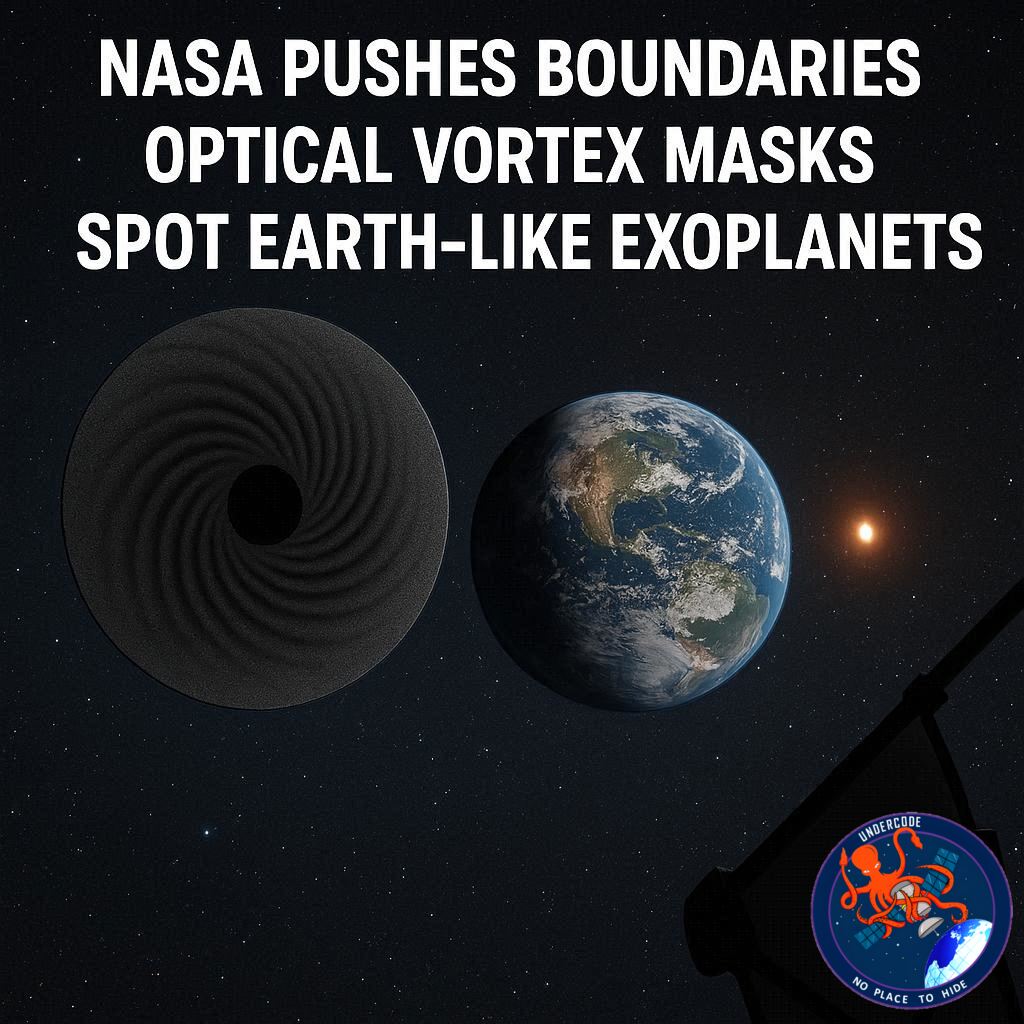
The search for life beyond our solar system is entering a bold new era. NASA researchers are developing advanced optical masks designed to filter out the overwhelming glare of stars, allowing telescopes to detect the faint light of potentially habitable exoplanets. These innovations could enable the next-generation Habitable Worlds Observatory (HWO) to observe planets similar to Earth orbiting distant stars—planets that are otherwise lost in the blinding light of their suns. By suppressing stellar light by orders of magnitude, NASA hopes to perform detailed spectroscopic analyses of exoplanet atmospheres, unlocking clues about habitability and the potential for life elsewhere in the galaxy.
Advancing the Hunt for Habitable Worlds
NASA’s Astrophysics Division is on a mission to survey nearby solar systems and identify planets that could support life. Detecting these planets is exceptionally difficult because most are incredibly faint compared to their host stars. An Earth-like planet around a Sun-like star is roughly one ten-billionth as bright as the star itself—imagine spotting a firefly next to a lighthouse. Current detection methods often rely on planets passing directly in front of their stars, which allows us to study their atmospheres. However, such favorable alignments are rare, making direct imaging essential.
The Challenge of Starlight Suppression
Telescope optics introduce complications such as scattering and diffraction. Scattering results from surface irregularities in mirrors, which can be corrected using adaptive optics. Diffraction, however, spreads starlight into an Airy pattern of bright rings around the star, masking the tiny signal from orbiting planets. Coronagraphs, instruments originally designed to observe the Sun’s faint corona, can suppress these rings. At the heart of modern coronagraphs are optical masks engineered to selectively interfere with starlight while leaving planetary light untouched.
The Optical Vortex Phase Mask
One of the most promising solutions is the optical vortex phase mask. This mask applies a spiral-shaped phase delay to the starlight, effectively canceling it out through destructive interference. Light from an off-center exoplanet passes through unaffected, allowing the telescope to image it clearly. Producing these masks is technically challenging—they must operate across multiple wavelengths without losing efficiency.
Breakthroughs at NASA’s Jet Propulsion Laboratory
Technologists at the NASA Jet Propulsion Laboratory (JPL) are exploring various methods for fabricating vortex masks. The leading approach uses a liquid crystal polymer (LCP) layer, with long molecular chains oriented to produce precise phase delays depending on light polarization. By arranging the polymer’s orientation in a circular pattern, the mask achieves nearly wavelength-independent suppression. Laboratory tests have successfully blocked starlight to one part in a billion, approaching the 10-billion-to-one suppression required for HWO.
Exploring Alternative Approaches
While LCP masks are the frontrunner, the JPL team is investigating other options. Helical glass masks mimic the spiral shape of a screw, but achieving broadband performance requires complex layering and precise surface shaping. Metamaterials—engineered structures made of nanoscale posts—could be tailored to achieve the necessary optical properties, offering a highly flexible approach for future designs.
Towards the Next Generation of Exoplanet Imaging
Optical vortex coronagraphs are already effective in ground-based telescopes for bright exoplanets, but HWO aims to detect Earth-like worlds. Continued refinement of LCP masks and exploration of alternative materials will ensure that NASA has the tools needed to isolate faint planetary signals. Over the next few years, candidate technologies will be rigorously tested to meet the ambitious goals of HWO, potentially allowing humanity to glimpse distant worlds in unprecedented detail.
What Undercode Say:
The development of optical vortex masks represents a significant leap in exoplanet detection technology. By addressing both scattering and diffraction, these masks could finally make direct imaging of Earth-like exoplanets feasible. The LCP approach shows clear promise because it provides wavelength-independent phase delays and effective starlight suppression. However, no single technology is without challenges. Helical glass masks require multiple layers and exacting surface shaping, and metamaterials remain experimental with unknown long-term performance.
NASA’s multi-pronged strategy—simultaneously refining proven LCP masks and exploring alternative methods—is wise. This approach reduces risk and ensures that HWO will have the best chance of meeting its 10-billion-to-one suppression target. The research also highlights the increasing sophistication of space-based instrumentation, signaling a future where astronomers could routinely study planetary atmospheres for biosignatures. Collaboration between material scientists, optical engineers, and astrophysicists will be essential in overcoming the remaining hurdles.
The long-term impact of this technology could extend beyond exoplanet research. Techniques developed for starlight suppression could benefit high-contrast imaging in other fields, including Earth observation, solar studies, and optical communications. Additionally, the ability to fabricate complex metamaterials could open new frontiers in photonics and adaptive optics.
While laboratory results are promising, translating them into a space-ready system presents additional challenges. Environmental factors, long-term stability of liquid crystal polymers, and alignment precision in a zero-gravity environment will need to be carefully addressed. The next decade will likely see iterative improvements in mask fabrication, testing, and integration with coronagraphs before HWO can embark on its ambitious mission.
Ultimately, if successful, these optical innovations could transform our understanding of nearby solar systems and make the dream of detecting alien life a scientific reality. NASA’s pursuit of extreme starlight suppression is not just about seeing planets—it’s about seeing the possibility of life itself.
Fact Checker Results:
✅ NASA’s HWO is designed specifically to search for signs of life on exoplanets.
✅ Optical vortex masks at JPL have achieved starlight rejection to one part in a billion in lab tests.
❌ Helical glass masks and metamaterials are still experimental; practical performance remains uncertain.
Prediction:
🌟 Within the next decade, NASA’s HWO, equipped with advanced vortex masks, could directly image Earth-like exoplanets and perform detailed atmospheric analysis, bringing us closer than ever to discovering habitable worlds beyond our solar system.
🌟 Metamaterials and LCP improvements may enable multi-wavelength starlight suppression, expanding the types of exoplanets that can be studied.
🌟 Success in this area could catalyze broader applications in optics, photonics, and high-contrast imaging technology.
🕵️📝✔️Let’s dive deep and fact‑check.
References:
Reported By: science.nasa.gov
Extra Source Hub (Possible Sources for article):
https://www.digitaltrends.com
Wikipedia
OpenAi & Undercode AI
Image Source:
Unsplash
Undercode AI DI v2
Bing
🔐JOIN OUR CYBER WORLD [ CVE News • HackMonitor • UndercodeNews ]
📢 Follow UndercodeNews & Stay Tuned:
𝕏 formerly Twitter 🐦 | @ Threads | 🔗 Linkedin | 🦋BlueSky | 🐘Mastodon


