
Listen to this Post
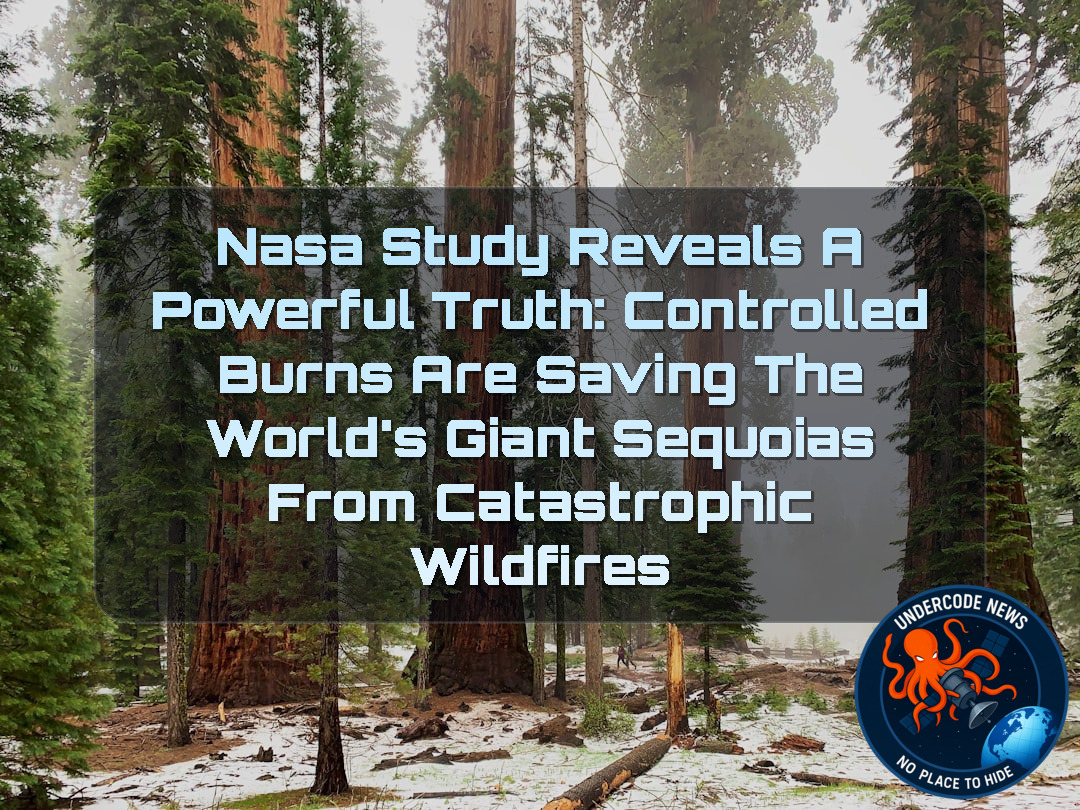 Introduction: Protecting Earth’s Ancient Giants Before It’s Too Late
For thousands of years, giant sequoias have stood as silent witnesses to history. They survived changing climates, droughts, and countless natural fires, growing into some of the largest living organisms on Earth. However, the combination of climate change, decades of fire suppression, and increasingly destructive megafires has pushed these ancient forests closer to collapse than ever before.
A newly published NASA-funded scientific study offers encouraging evidence that modern forest management can dramatically improve the survival of these legendary trees. Using advanced remote sensing technologies, lidar scanning, satellite imagery, and sophisticated environmental modeling, researchers demonstrated that prescribed—or controlled—burns significantly increase the survival rate of giant sequoias during extreme wildfire events. The findings not only strengthen decades of ecological theory but also provide measurable scientific proof that proactive forest management can preserve one of Earth’s most valuable ecosystems.
Summary of the NASA-Funded Research
NASA-supported researchers analyzed more than 26,400 giant sequoias across 19 forest groves located within California’s Sequoia and Kings Canyon National Parks. Their investigation focused on the devastating wildfire seasons of 2020 and 2021, during which California experienced one of the worst fire disasters in its history, with approximately 6.8 million acres burned.
The results were remarkable.
Forests that had previously undergone prescribed burns were nearly four times more likely to protect mature giant sequoias from being killed by high-intensity wildfires compared to untreated forests.
Researchers estimate that controlled burns directly contributed to saving approximately 1,800 giant sequoia trees during those catastrophic fire seasons.
The findings were published on July 11 in the prestigious scientific journal Nature Communications, providing one of the strongest datasets ever assembled on giant sequoia survival.
Why Giant Sequoias Matter More Than Most People Realize
Giant sequoias exist naturally only on the western slopes of California’s Sierra Nevada Mountains, making them one of the rarest tree species on the planet.
Some individual trees exceed:
More than 300 feet (91 meters) in height
More than 30 feet (9 meters) in trunk diameter
Ages exceeding 3,000 years
Their ecological importance extends far beyond their incredible size.
These ancient forests function as:
Massive long-term carbon storage systems
Natural water filtration ecosystems
Critical wildlife habitats
Biodiversity hotspots
Climate stabilizers
Because they live for millennia, every mature sequoia represents centuries of accumulated ecological value that cannot be replaced within a human lifetime.
The Growing Threat of Modern Wildfires
Historically, giant sequoias evolved alongside naturally occurring low-intensity fires.
These smaller fires removed dead vegetation while leaving the massive, fire-resistant trees largely unharmed. In fact, periodic fires helped sequoias reproduce by opening their cones and preparing fertile soil for seedlings.
The situation has dramatically changed over the past century.
Decades of aggressive fire suppression allowed enormous quantities of dead branches, shrubs, and undergrowth to accumulate.
When drought conditions and rising temperatures combine with these heavy fuel loads, fires become exceptionally intense—hot enough to kill even giant sequoias that once seemed nearly indestructible.
During just the 2020–2021 wildfire seasons, approximately 19% of the entire mature giant sequoia population was lost.
That level of mortality is unprecedented in recorded history.
How Prescribed Burns Make Forests More Resilient
Prescribed burning is a carefully planned and professionally managed process in which forest managers intentionally ignite controlled fires under favorable weather conditions.
Unlike uncontrolled wildfires, these burns are closely monitored and designed to achieve ecological objectives.
Controlled burns help forests by:
Removing dense underbrush
Eliminating dead wood
Reducing accumulated dry vegetation
Lowering available wildfire fuel
Improving forest health
Creating natural firebreaks
As a result, when a major wildfire eventually occurs, flames remain less intense and far less destructive.
Rather than becoming explosive crown fires capable of destroying centuries-old trees, many fires remain on the forest floor where giant sequoias can survive.
NASA’s Technology Played a Critical Role
One of the most impressive aspects of the study is the sophisticated technology used to measure tree survival.
Researchers combined multiple advanced datasets, including:
Airborne lidar scans
High-resolution aerial imagery
Detailed stem mapping
Satellite observations
Ecological modeling
Forest management records
Lidar technology creates highly detailed three-dimensional maps of forests by firing laser pulses toward the Earth’s surface.
This allows scientists to accurately measure tree height, canopy density, vegetation structure, and post-fire damage with remarkable precision.
The integration of remote sensing technologies enabled researchers to estimate survival rates across thousands of trees without relying solely on field surveys.
Scientific Evidence Replaces Anecdotal Assumptions
Forest managers have long believed prescribed burns were beneficial for giant sequoias.
Until now, however, much of the supporting evidence came from observations rather than large-scale quantitative analysis.
This NASA-funded research changes that.
Instead of relying on isolated case studies, scientists evaluated tens of thousands of trees using standardized measurements across numerous forest groves.
The conclusion was clear:
Prescribed burning provides measurable, statistically significant protection against catastrophic wildfire mortality.
The study transforms decades of ecological experience into robust scientific evidence.
Global Implications for Forest Conservation
Although this research focuses on
Old-growth forests worldwide increasingly face similar threats:
Longer droughts
Rising global temperatures
Increased wildfire frequency
Fuel accumulation
Ecosystem degradation
The methods demonstrated in this study could be adapted for monitoring:
Tropical rainforests
Boreal forests
Mediterranean ecosystems
Mountain forests
Protected conservation areas
NASA’s remote sensing capabilities continue expanding humanity’s ability to monitor ecosystem health at unprecedented scales.
Deep Analysis
The study demonstrates an increasingly important trend in environmental science: combining traditional ecological management with advanced space-based observation technologies. Rather than relying solely on field inspections, researchers can now integrate lidar, satellite imagery, geographic information systems (GIS), and predictive wildfire models to make evidence-based conservation decisions.
Example geospatial processing workflow:
Download satellite imagery
gdal_translate input.tif output.tif
Generate vegetation index
python calculate_ndvi.py
Create canopy height model
lidar2dem input.las output_dem.tif
Analyze fire severity
python wildfire_analysis.py --before prefire.tif --after postfire.tif
Produce GIS visualization
qgis project.qgz
Example remote sensing workflow:
Satellite Data
↓
Lidar Processing
↓
Canopy Mapping
↓
Fuel Load Estimation
↓
Wildfire Risk Modeling
↓
Forest Management Decision
Modern conservation increasingly depends on artificial intelligence, cloud computing, Earth observation satellites, and machine learning models capable of predicting wildfire behavior months before ignition. NASA’s involvement illustrates how space technology is becoming an essential tool for protecting biodiversity on Earth, not just exploring space. As climate-driven wildfire seasons become longer and more intense, integrating high-resolution environmental data into forestry operations may become the global standard for ecosystem management.
What Undercode Say:
NASA’s latest research is more than a study about trees—it is a demonstration of how science, technology, and proactive environmental policy can work together to protect irreplaceable ecosystems.
One of the most important aspects of this research is that it replaces assumptions with measurable scientific evidence. Forest managers have advocated prescribed burning for decades, but policymakers often demand quantifiable results before expanding such programs. This study provides exactly that.
The finding that treated forests were nearly four times more likely to preserve giant sequoias is particularly significant because it validates investments in preventive conservation rather than relying solely on emergency wildfire response.
Another notable strength is
The research also highlights an important lesson about unintended consequences. For much of the 20th century, suppressing nearly every wildfire was considered best practice. While successful in preventing immediate fire damage, this strategy allowed massive fuel accumulation that now contributes to today’s megafires. Controlled burns seek to restore the natural fire cycles that these ecosystems evolved with.
Beyond California, the study provides a framework that could benefit forests worldwide. Countries vulnerable to severe wildfires can adapt similar monitoring systems to prioritize high-risk regions, evaluate restoration efforts, and measure the effectiveness of fire management policies.
Climate change further amplifies the urgency. Hotter temperatures, prolonged droughts, and shifting precipitation patterns increase wildfire intensity, making preventive management even more critical. Technologies that continuously monitor vegetation health and fuel loads could enable earlier interventions and reduce future losses.
The estimated survival of roughly 1,800 giant sequoias is especially meaningful because each mature tree represents centuries—or even millennia—of ecological history. Unlike commercial forests, these ancient giants cannot simply be replanted and restored within decades. Their preservation requires protecting the living organisms that already exist.
NASA’s role also demonstrates the growing value of interdisciplinary collaboration. Space science, ecology, forestry, climate research, and data analytics are increasingly interconnected, producing solutions that no single discipline could achieve alone.
Looking ahead, future conservation efforts may rely even more heavily on AI-assisted wildfire forecasting, autonomous drone surveys, hyperspectral imaging, and continuous satellite monitoring. Together, these technologies could transform forest management from reactive disaster response into proactive ecosystem resilience.
Ultimately, the study reinforces a simple but powerful message: preventing catastrophic wildfires often begins long before flames appear. Thoughtful preparation, guided by science and supported by advanced technology, remains one of the most effective ways to safeguard Earth’s oldest forests.
✅ Fact: The study reports that giant sequoias in forests managed with prescribed burns were nearly four times more likely to survive extreme wildfires. This conclusion is based on analysis of more than 26,000 trees and represents one of the largest studies of its kind.
✅ Fact: Approximately 19% of the mature giant sequoia population was lost during the devastating 2020–2021 wildfire seasons, highlighting the unprecedented scale of recent fire damage.
✅ Fact: NASA-funded researchers combined lidar, high-resolution imagery, stem mapping, and ecological modeling to estimate tree mortality, demonstrating how advanced Earth observation technologies can directly support conservation science.
Prediction
(+1) Prescribed burning programs will likely expand across California and other wildfire-prone regions as policymakers increasingly rely on scientific evidence demonstrating their effectiveness in protecting ancient forests and reducing wildfire severity.
(-1) If climate change continues to intensify droughts and extreme fire weather while prescribed burn programs fail to scale quickly enough, future megafires could still overwhelm even well-managed forests, placing remaining giant sequoia populations under continued long-term threat.
▶️ Related Video (74% Match):
🕵️📝Let’s dive deep and fact‑check.
🎓 Live Courses & Certifications:
Join Undercode Academy for Verified Certifications
🚀 Request a Custom Project:
Secure, high-velocity infrastructure and disruptive technological engineering. Contact our engineering team for high-tier development and proprietary systems:
[email protected]
💎 Smart Architecture | 🛡️ Secure by Design | ⭐ Trusted by Thousands
References:
Reported By: science.nasa.gov
Extra Source Hub (Possible Sources for article):
https://www.reddit.com/r/AskReddit
Wikipedia
OpenAi & Undercode AI
Image Source:
Unsplash
Undercode AI DI v2
🔐JOIN OUR CYBER WORLD [ CVE News • HackMonitor • UndercodeNews ]
📢 Follow UndercodeNews & Stay Tuned:
𝕏 formerly Twitter 🐦 | @ Threads | 🔗 Linkedin | 🦋BlueSky | 🐘Mastodon | 📺Youtube


