
Listen to this Post
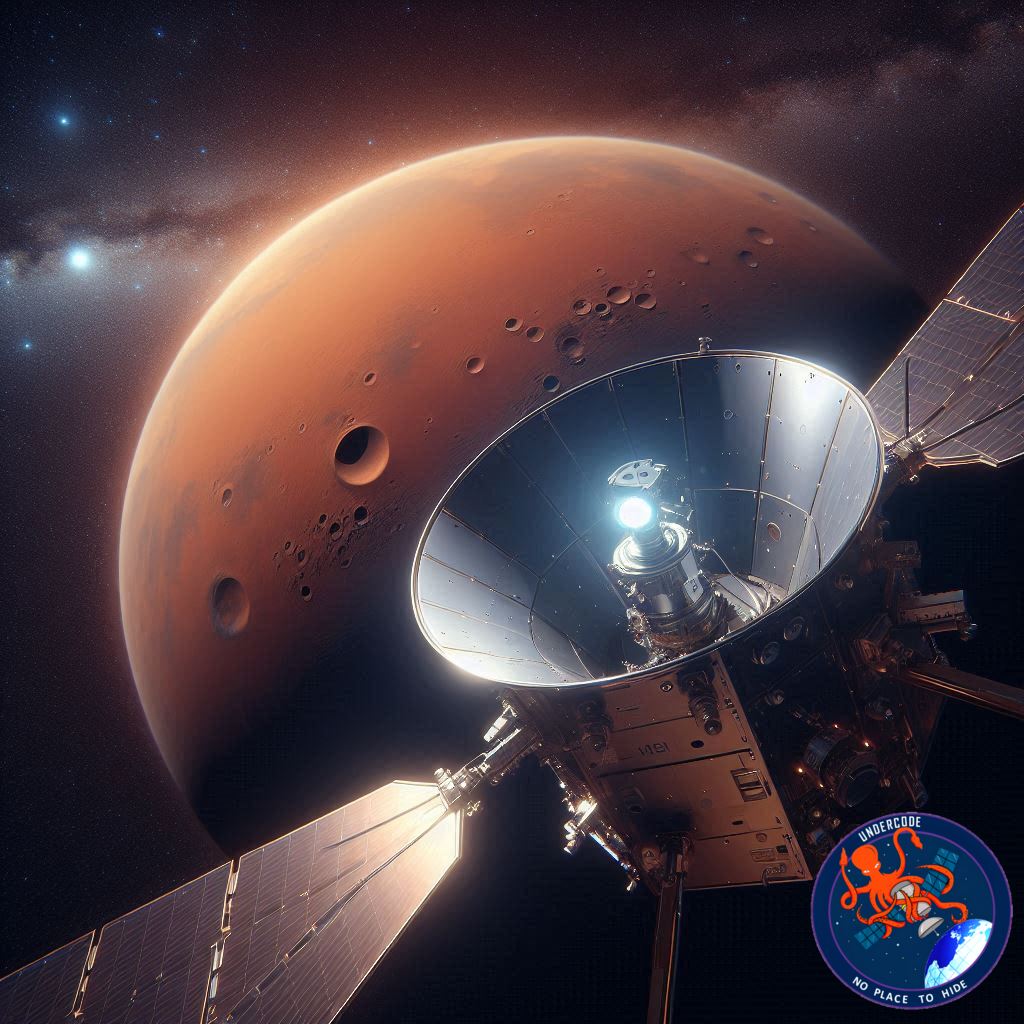
NASA’s ambitious ESCAPADE (Escape and Plasma Acceleration and Dynamics Explorers) mission has taken its first glimpses of space—literally. Just a week after launching, the twin spacecraft have already sent back a pair of “selfies,” revealing parts of themselves as they journey away from Earth. These early images mark an important milestone, confirming that the spacecraft cameras are fully operational and ready for their complex scientific mission around Mars.
ESCAPADE’s First Images and Early Tests
On November 21, one of the two ESCAPADE spacecraft used its Visible and Infrared Observation System (VISIONS) cameras, developed by Northern Arizona University in Flagstaff, to capture a striking image of part of its solar panel. This visible-light photo not only confirms the functionality of the onboard camera but also demonstrates the spacecraft’s ability to capture fine details that could include Martian aurora once in orbit. The infrared camera, meanwhile, will later be key to analyzing how surface materials on Mars heat and cool across day-night cycles and seasonal shifts.
The second spacecraft also took photos, though these were directed toward deep space and appeared as simple black frames. This was expected and shows the coordination and operational capability of both twin explorers.
Launched on November 13 aboard a Blue Origin New Glenn rocket from Cape Canaveral Space Force Station in Florida, the ESCAPADE twins are built by Rocket Lab. Their primary mission will investigate the solar wind—a stream of charged particles traveling at a million miles per hour—and how it interacts with Mars’ atmosphere, ultimately driving atmospheric loss over time.
Before making their journey to Mars, the spacecraft are currently in a “loiter” orbit near Lagrange point 2, about a million miles from Earth. This positioning allows them to stabilize and prepare for a gravity-assisted slingshot maneuver around Earth in November 2026, which will propel them toward the Red Planet, with arrival expected in September 2027.
What Undercode Say: ESCAPADE’s Significance in Planetary Science
The ESCAPADE mission represents a new era of twin-spacecraft exploration, where coordination between two nearly identical probes provides redundancy and broadens the scope of scientific observations. The early “selfies” are more than just cosmetic; they confirm operational status and the precision of the imaging systems, a crucial factor when studying subtle phenomena like Martian auroras or thermal changes in surface materials.
ESCAPADE’s primary scientific focus—understanding solar wind interactions—addresses long-standing questions about Mars’ atmospheric evolution. Mars lost much of its atmosphere billions of years ago, turning from a warm, wet world into the arid planet we know today. The twins’ measurements of plasma flows and atmospheric stripping will shed light on the mechanisms that gradually stripped the Martian atmosphere, improving models that could inform both future human missions and exoplanet studies.
The mission also demonstrates an innovative approach to trajectory planning. By leveraging Lagrange points and gravity assists, NASA maximizes efficiency and reduces fuel consumption, a critical consideration for deep-space missions. ESCAPADE’s path provides a template for future multi-spacecraft operations, allowing flexible timing and coordination for planetary observation campaigns.
Another important aspect is the technology demonstration. The VISIONS cameras, capable of capturing both visible and infrared data, are tested early and provide confidence for future imaging campaigns. Infrared imaging of Martian surface materials will reveal critical thermal dynamics, while visible-light imaging ensures the spacecraft can detect faint atmospheric phenomena. This dual capability will allow scientists to cross-correlate data for a more comprehensive understanding of Martian space weather effects.
Furthermore, ESCAPADE underscores the increasing role of commercial launch providers in planetary science. Partnering with Blue Origin and Rocket Lab allows NASA to deploy advanced science missions at reduced costs, while still achieving high technical precision. This public-private collaboration model is likely to become a standard for upcoming planetary and interplanetary missions.
The mission also opens doors to new educational and outreach opportunities. With Northern Arizona University’s involvement in the VISIONS cameras, students and early-career scientists gain hands-on experience in cutting-edge space instrumentation, fostering a new generation of researchers for planetary science.
ESCAPADE’s twin spacecraft design creates opportunities for comparative measurements across two points in space, offering unique insights into spatial variability in Mars’ plasma environment. This approach allows the mission to capture temporal dynamics and instantaneous events that a single spacecraft could miss, significantly enhancing the scientific return.
In short, ESCAPADE is not only a mission to study Mars but also a blueprint for future multi-probe explorations, combining innovative trajectory design, cutting-edge instrumentation, and strategic collaborations to push the boundaries of our understanding of planetary atmospheres.
🔍 Fact Checker Results
✅ ESCAPADE was launched on November 13 aboard Blue Origin’s New Glenn rocket.
✅ One spacecraft captured images of its solar panel; the other took deep-space photos.
❌ The mission does not yet involve landing on Mars; it will remain in orbit to study atmospheric loss.
📊 Prediction
ESCAPADE is likely to redefine how we study solar wind effects on planetary atmospheres. By 2027, when it arrives at Mars, we can expect highly detailed observations of auroras, plasma interactions, and thermal dynamics. This data could reshape models of Martian atmospheric evolution, inform future human missions, and even influence our understanding of how solar wind affects exoplanets. The twin spacecraft approach may also inspire similar multi-probe missions across the solar system.
🕵️📝✔️Let’s dive deep and fact‑check.
References:
Reported By: science.nasa.gov
Extra Source Hub (Possible Sources for article):
https://www.linkedin.com
Wikipedia
OpenAi & Undercode AI
Image Source:
Unsplash
Undercode AI DI v2
Bing
🔐JOIN OUR CYBER WORLD [ CVE News • HackMonitor • UndercodeNews ]
📢 Follow UndercodeNews & Stay Tuned:
𝕏 formerly Twitter 🐦 | @ Threads | 🔗 Linkedin | 🦋BlueSky | 🐘Mastodon


