
Listen to this Post
Introduction
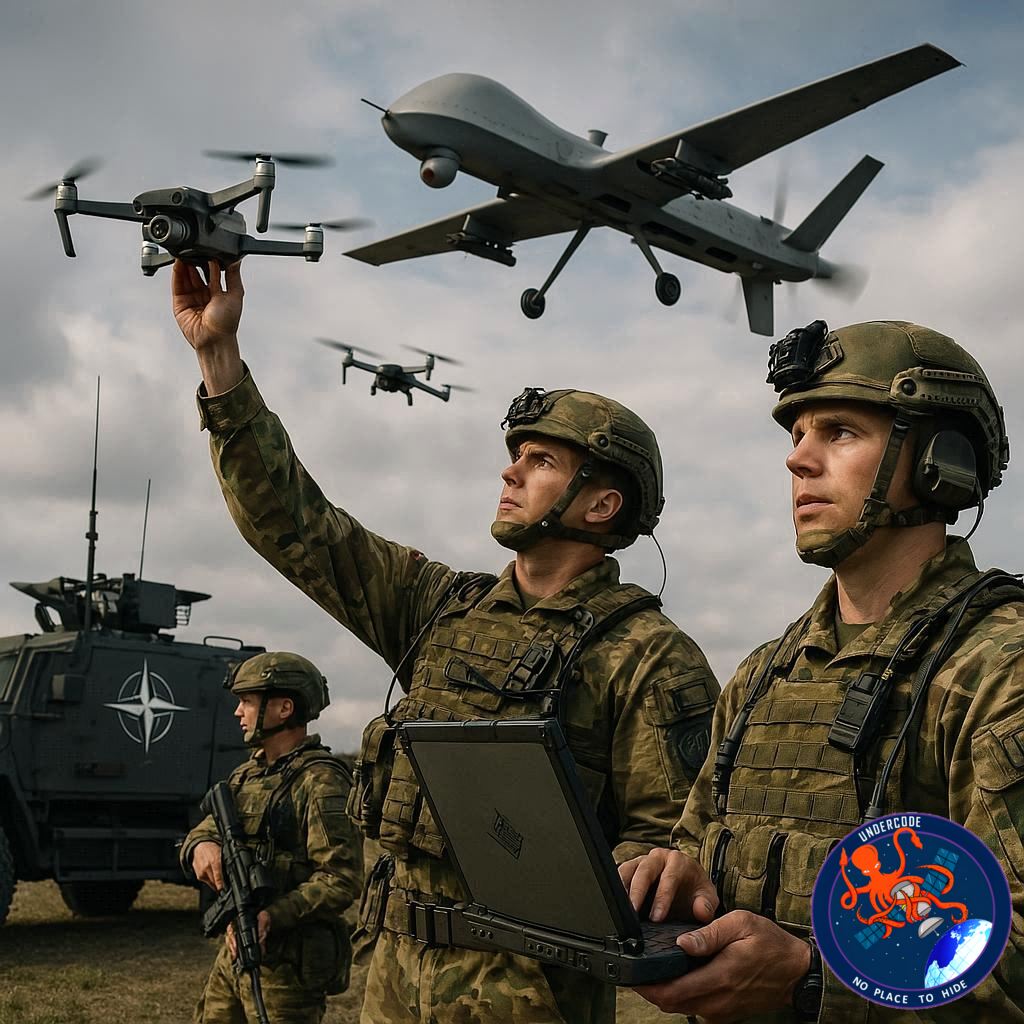
NATO is no longer just preparing for the wars of tomorrow—it is fighting simulations that look strikingly like today’s conflicts. At the REPMUS 2025 military exercise in Portugal, allied forces, defense companies, and tech innovators joined forces to test unmanned systems, AI-driven drones, VR simulations, and new defense strategies. With Ukraine participating for the first time, lessons from the battlefield against Russia are being transferred directly to NATO’s training grounds. This is not just a show of power but a window into the future of hybrid warfare, where technology will be as decisive as manpower.
NATO’s Tech-Powered War Games in Portugal
The REPMUS 2025 exercise gathered 24 nations, including Ukraine, for a massive three-week event. Soldiers trained with VR headsets, naval drones, AI-powered systems, and advanced mapping technologies. Off Portugal’s coast, a nuclear submarine participated alongside dozens of unmanned vehicles, creating a realistic battlefield environment.
Ukraine joined the “red team” with 61 drones and several unmanned vehicles, simulating adversary tactics. According to Captain Valter de Bulha Almeida, Ukraine’s frontline experience has brought valuable battlefield-tested strategies to NATO allies.
The exercise included daily jamming tests, where drones faced real-world challenges of disrupted GPS signals—a direct reflection of how both Russia and Ukraine conduct electronic warfare.
Captain Nuno Palmeiro Ribeiro highlighted Ukraine’s ability to “do more with less,” a lesson NATO countries with expensive, complex systems are keen to learn.
Beyond the military, defense companies showcased futuristic technologies. France’s Akheros unveiled AI drone systems resistant to jamming, Germany’s Rheinmetall demonstrated kamikaze drones capable of 60 km strikes, while Finland’s Kelluu introduced hydrogen-powered airships to monitor critical infrastructure in jammed environments.
NATO leaders stressed the importance of embracing risk and innovation, comparing military testing to Elon Musk’s rocket experiments. With Europe increasing defense budgets, investors are beginning to see defense tech as a growth sector rather than a restricted one.
At the heart of REPMUS is Tróia’s 2,600 km² free tech zone, where militaries, companies, and researchers can test innovations without regulatory restrictions. NATO officials believe such open testing grounds are critical to preparing for modern asymmetric threats.
Ultimately, the exercise underscored NATO’s shift toward a tech-first defense strategy, combining traditional naval power with unmanned systems, AI, and cyber resilience.
What Undercode Say: 🔍
NATO’s REPMUS 2025 exercise is more than a training ground—it is a strategic laboratory for future warfare. The event reflects several deep geopolitical and military realities:
1. Ukraine as NATO’s Living Test Case
Ukraine’s battlefield tactics against Russia are shaping NATO doctrine. Their reliance on cheaper, efficient systems is forcing NATO to rethink its dependency on costly, complex equipment.
2. The Rise of Drones as the New Battleships
Naval drones, kamikaze UAVs, and hydrogen-powered airships highlight the evolution of combat. Instead of massive warships, agile and autonomous drones are now becoming the decisive tools in hybrid conflicts.
3. Electronic Warfare as the New Frontline
Daily jamming trials show that GPS disruption is now as critical as missiles. Whoever controls electronic signals controls the battlefield.
4. Private Tech Companies as Defense Giants
Defense innovation is no longer limited to military labs. Startups and tech firms are now shaping NATO’s strategy, from AI analysis to resilient drone systems.
5. The Shift in EU Defense Spending
Once seen as taboo for investors, EU defense is now attracting capital, transforming the continent into a growing hub for military technology.
6. Asymmetric Warfare Doctrine
The war in Ukraine has proven that small, cheap, and smart weapons can outperform expensive traditional systems. NATO is adapting fast to this model.
7. Testing Without Limits
The 2,600 km² free tech zone in Tróia is a game-changer, allowing real combat simulations that bypass regulatory bottlenecks.
8. Strategic Message to Russia
The exercise sends a signal: NATO is not only united but technologically evolving at a pace that adversaries may struggle to keep up with.
9. AI Integration in Warfare
The French Akheros system demonstrates how AI can independently analyze threats—paving the way for more autonomous combat decisions in the near future.
10. The Convergence of Academia, Tech, and Military
Universities, startups, and NATO officers working side by side symbolize a new era of defense cooperation.
If one thing is clear, it’s that NATO is accelerating into a tech-driven security paradigm, where innovation determines survival.
Fact Checker Results ✅❌
✅ Ukraine did participate in NATO’s REPMUS 2025 as part of the red team.
✅ Multiple defense companies, including Akheros, Rheinmetall, and Kelluu, showcased AI-driven and drone-based technologies.
❌ There was no official winner declared between NATO’s red and blue teams—it was strictly an exercise.
Prediction 🔮
Expect NATO to double down on AI, drone warfare, and electronic resilience within the next five years. Ukraine’s lessons will continue to shape NATO’s doctrines, while European defense tech investment will surge. Future exercises may see autonomous swarms of drones, AI-controlled naval fleets, and advanced cyber shields becoming the norm. NATO is moving from traditional deterrence to high-tech dominance—and REPMUS 2025 may be remembered as the turning point.
🕵️📝✔️Let’s dive deep and fact‑check.
References:
Reported By: www.euronews.com
Extra Source Hub:
https://www.pinterest.com
Wikipedia
OpenAi & Undercode AI
Image Source:
Unsplash
Undercode AI DI v2
🔐JOIN OUR CYBER WORLD [ CVE News • HackMonitor • UndercodeNews ]
📢 Follow UndercodeNews & Stay Tuned:
𝕏 formerly Twitter 🐦 | @ Threads | 🔗 Linkedin | 🦋BlueSky | 🐘Mastodon


