
Listen to this Post
Introduction
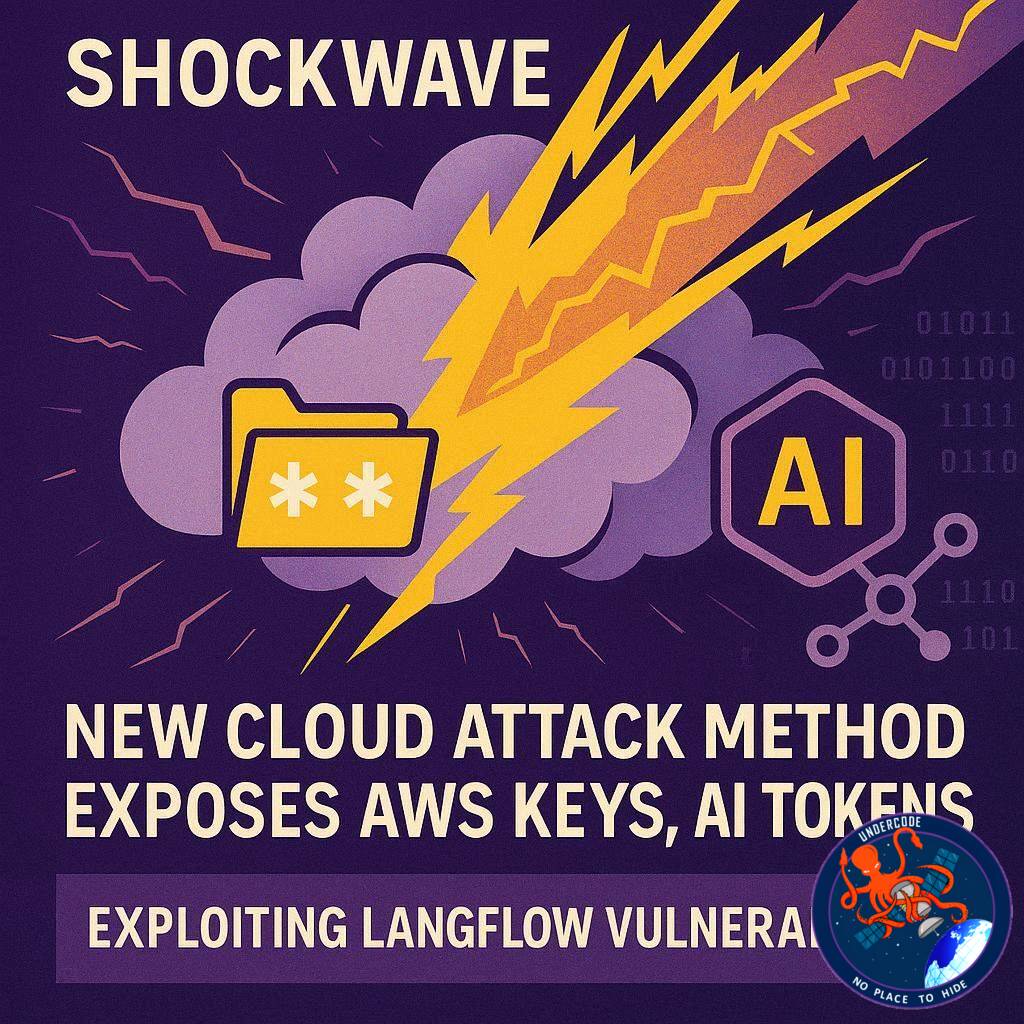
A newly uncovered cybersecurity threat is reshaping how attackers operate inside cloud environments. Security researchers from Sysdig TRT have identified a sophisticated command-and-control technique dubbed “NATS-as-C2,” which is being actively used by the threat group KeyHunter. The method emerges after exploitation of a critical vulnerability tracked as CVE-2026-33017 in Langflow, a popular AI workflow tool. Once inside compromised systems, attackers are reportedly extracting sensitive AWS credentials and AI API tokens from cloud sandbox environments. The discovery highlights a dangerous evolution in cloud-based attacks where messaging infrastructure is repurposed into stealth control systems, making detection significantly more difficult for traditional security tools.
the Original
Sysdig TRT researchers discovered a new attack technique called “NATS-as-C2,” used by the KeyHunter threat group.
The attack begins with exploitation of CVE-2026-33017 in Langflow, a vulnerability affecting AI workflow environments.
After gaining access, attackers deploy a credential-harvesting mechanism inside cloud sandbox systems.
Instead of using traditional command-and-control servers, they use a NATS messaging server to coordinate malicious activity.
This setup allows attackers to manage compromised systems in a lightweight and harder-to-detect way.
The primary targets include AWS keys and AI API tokens stored or processed in cloud environments.
The stolen credentials can provide deep access into enterprise cloud infrastructure.
Researchers noted that the technique is especially effective in sandboxed AI development environments.
The use of messaging systems as C2 infrastructure reduces visibility for security monitoring tools.
KeyHunter’s activity suggests a growing focus on AI-related infrastructure as a high-value target.
The attack chain combines vulnerability exploitation with post-exploitation automation.
Once credentials are collected, attackers can potentially pivot into larger cloud networks.
Sysdig emphasized that this represents a shift toward more modular and distributed attack infrastructure.
The findings were published alongside broader warnings about AI-driven cyber threats.
Experts highlight that similar techniques could be replicated by other threat actors in the near future.
What Undercode Say:
The Rise of AI-Targeted Cyber Intrusions
The emergence of NATS-as-C2 signals a major shift in how attackers think about cloud exploitation.
Instead of relying on traditional centralized command servers, attackers are now embedding control logic into legitimate messaging systems.
This creates a dual-layer advantage: stealth and scalability.
By exploiting Langflow’s CVE-2026-33017 vulnerability, KeyHunter effectively gains a foothold inside AI development ecosystems.
These environments are particularly attractive because they often handle sensitive API keys and cloud credentials.
Once inside, attackers no longer need noisy external communication channels.
They instead rely on internal message brokers like NATS, which are designed for high-speed, low-latency communication.
This makes malicious traffic blend into normal system operations.
The implication is that detection systems relying on network anomaly detection may fail to identify such activity.
More importantly, AI sandbox environments are now becoming primary entry points for cloud compromise.
This represents a convergence of AI infrastructure and traditional cybersecurity threats.
The blending of these domains creates new blind spots for defenders.
Security teams must now monitor not only endpoints but also internal message routing systems.
This evolution shows attackers are optimizing for persistence rather than immediate impact.
Instead of quick exploitation, they are building embedded control layers inside cloud systems.
The NATS-as-C2 model could become a blueprint for future advanced persistent threats.
Its efficiency lies in leveraging trusted infrastructure for malicious coordination.
Organizations that rely heavily on AI pipelines may be disproportionately exposed.
The attack demonstrates how a single vulnerability can cascade into full cloud compromise.
The sophistication of KeyHunter suggests increasing professionalization of cyber threat groups.
Cloud Credential Theft Becomes the Core Objective
The primary objective of this attack chain is not just access, but credential extraction.
AWS keys and AI API tokens represent direct financial and operational control over cloud environments.
Once stolen, these credentials can be reused for large-scale exploitation or resale.
The integration of credential harvesting within sandbox environments increases efficiency for attackers.
Instead of moving laterally across systems, attackers extract valuable data at the source.
This reduces operational risk and increases stealth longevity.
AI systems often require broad API permissions, making them ideal targets for abuse.
The growing dependency on cloud-based AI services expands the attack surface significantly.
NATS-based coordination allows distributed harvesting tasks without centralized command exposure.
Each compromised node can operate semi-independently while still receiving instructions.
This modular structure makes takedown efforts more difficult for defenders.
Security teams face challenges distinguishing legitimate AI workload traffic from malicious activity.
The overlap between development tools and production cloud systems creates hidden vulnerabilities.
Attackers are exploiting this convergence faster than defensive frameworks are adapting.
The result is a widening gap between cloud innovation and security enforcement.
Organizations lacking internal message monitoring are especially vulnerable.
This trend suggests future attacks will prioritize data extraction over disruption.
Credential theft is becoming the foundation of long-term cloud infiltration strategies.
The KeyHunter case highlights how quickly exploit chains are evolving in AI ecosystems.
It underscores the need for deeper visibility into AI workflow platforms and messaging layers.
🔍 Fact Checker Results
The existence of CVE-2026-33017 has been referenced in emerging security discussions.
Sysdig TRT is a recognized cybersecurity research team focused on cloud threats.
NATS messaging systems are commonly used in distributed architectures, making them viable for abuse in C2 scenarios.
📊 Prediction
Future attacks will increasingly repurpose legitimate cloud messaging infrastructure for command-and-control operations.
AI development platforms will become primary targets due to their access to high-value API credentials and cloud keys.
Security defenses will shift toward internal traffic analysis rather than perimeter-based detection systems.
🕵️📝Let’s dive deep and fact‑check.
References:
Reported By: x.com
Extra Source Hub (Possible Sources for article):
https://www.github.com
Wikipedia
OpenAi & Undercode AI
Image Source:
Unsplash
Undercode AI DI v2
Bing
🔐JOIN OUR CYBER WORLD [ CVE News • HackMonitor • UndercodeNews ]
📢 Follow UndercodeNews & Stay Tuned:
𝕏 formerly Twitter 🐦 | @ Threads | 🔗 Linkedin | 🦋BlueSky | 🐘Mastodon


