
Listen to this Post
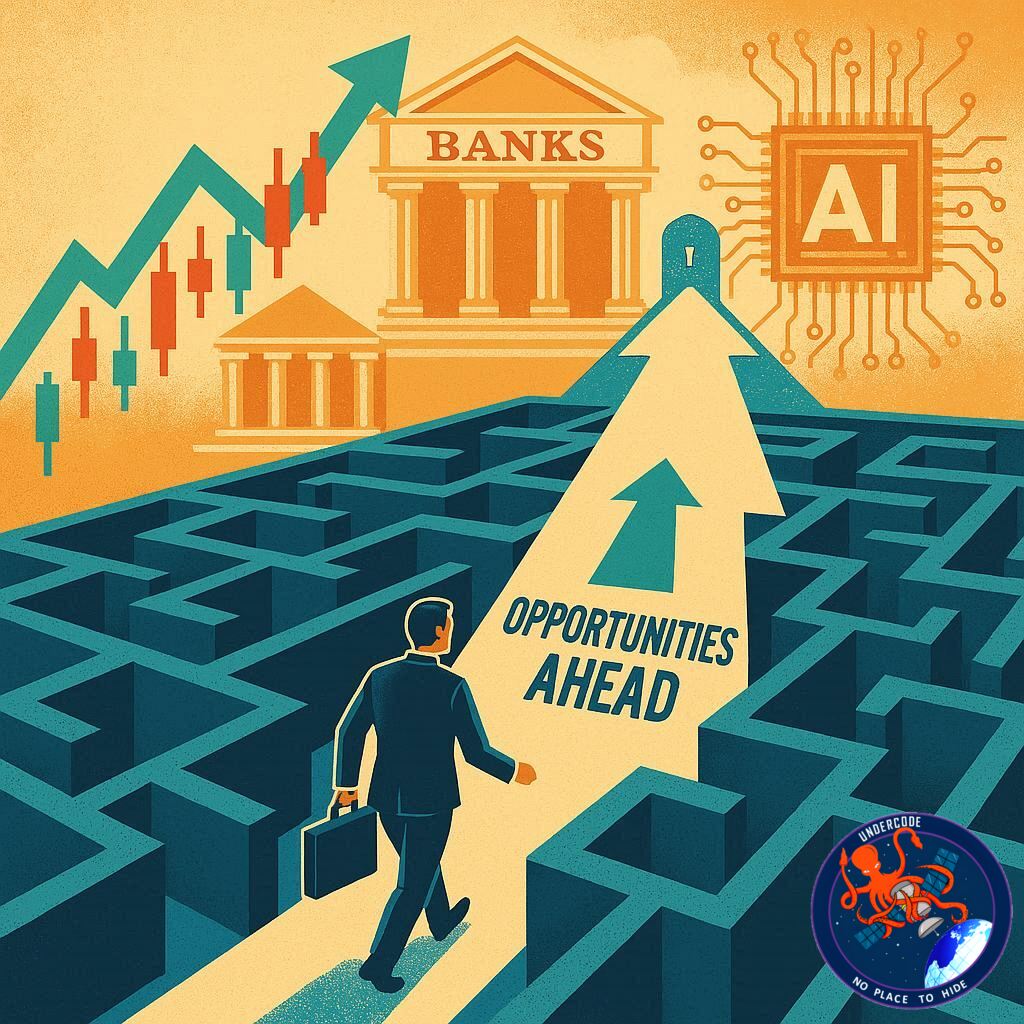
The stock market is sending investors mixed signals, caught between economic uncertainty, global tensions, and the feverish hype of emerging technologies. Every day seems to bring a new narrative—one that could either threaten your portfolio or present a strategic opportunity. Understanding which story the market is leaning toward is crucial for navigating the next moves. From banking tremors to AI-driven rallies, and from trade wars to potential stagflation, the market today feels like a high-stakes choose-your-own-adventure.
The Banking Jitters
The week started with unease in the banking sector. Several high-profile bankruptcies in consumer-focused industries—such as auto parts manufacturers and subprime lenders—have revealed cracks that could ripple through larger financial institutions like JPMorgan and Jefferies. Some banks allege fraud in these deals, but the deeper concern is whether these incidents are isolated or the tip of an iceberg. If consumer debt repayment falters, it could trigger broader financial instability. JPMorgan CEO Jamie Dimon compared these issues to “cockroaches,” hinting that small problems may signal deeper, hidden risks in the system.
Trade Tensions Loom
Markets had reached record highs recently, but worries resurfaced after China tightened export controls on rare-earth minerals, essential for electronics and military tech. Initial aggressive rhetoric from former President Trump threatened a new trade war escalation, though some statements were later softened. Analysts warn that a sudden spike in tariffs could trigger an 11% market correction, leaving investors wary of geopolitical unpredictability and supply chain disruptions.
The AI-Driven Stock Surge
Big Tech and AI have fueled historic gains in the stock market, particularly since April. High valuations in AI companies have drawn comparisons to the late 1990s dot-com bubble, with the top eight stocks exceeding $1 trillion in value and heavily invested in AI development. While some investors fear a market correction, Wall Street largely believes that AI will sustain long-term growth. Yet, the market’s current frothiness raises questions about whether reality will catch up with hype.
Stagflation and the Fed’s Dilemma
Slow economic growth, rising inflation, and the lingering effects of tariffs create the specter of stagflation. While the Federal Reserve’s recent rate cuts have temporarily boosted stocks, persistent inflation could force the Fed back into a tightening cycle. A slowdown in hiring and increased consumer debt among lower-income tiers adds another layer of uncertainty, potentially restraining economic momentum and challenging the central bank’s ability to stabilize markets.
Buy the Dip
Despite these concerns, some signals are encouraging. Geopolitical tensions in Ukraine, the Middle East, and trade negotiations with China and Russia may ease. Oil prices have fallen to five-month lows, potentially easing inflationary pressures. Regional banking issues, while reminiscent of past crises, may prove contained. Stocks are only slightly off record highs, presenting potential buying opportunities. Strategists like Keith Lerner and Mohit Kumar advise investors to “lean in” on market dips, betting on the resilience of the bull market.
What Undercode Say:
The current market environment is defined by paradoxes: optimism fueled by AI and strategic buy-the-dip moves sits alongside genuine economic and geopolitical risks. Banks are signaling caution. Regional financial disturbances often serve as early warnings of systemic weaknesses, though at this stage, exposure seems manageable. Investors should differentiate between isolated banking events and broad-based fragility, recognizing that financial contagion is a rare but serious risk.
Trade disputes remain a wildcard. Even the threat of tariffs, when combined with critical materials like rare-earth metals, can destabilize supply chains and shock markets. Analysts’ predictions of an 11% correction are plausible under worst-case escalation, but history shows such extremes are rarely immediate; markets often digest geopolitical shocks with pauses and rebounds.
AI is the double-edged sword of 2025. On one hand, it drives valuations and innovation. On the other, the concentration of market power in a few trillion-dollar stocks heightens vulnerability. A minor stumble in one of these giants could ripple through the broader tech-heavy indices, amplifying volatility. Yet, the transformative potential of AI suggests that long-term growth is likely, even if short-term corrections occur.
Stagflation risks underscore a subtle tension between policy and reality. The Fed can cut rates to stimulate growth, but persistent inflation reduces this tool’s effectiveness. Investors should anticipate oscillating cycles where temporary gains may be offset by inflationary setbacks. Watching inflation trends and consumer debt levels is key to predicting the Fed’s next moves.
For cautious investors, the current environment demands diversification and selective exposure. High-risk assets like AI-driven tech stocks should be balanced with more stable sectors and assets. Buy-the-dip strategies are reasonable, but only if investors are prepared for intermittent shocks.
Overall, market psychology is as influential as economic fundamentals. Headlines drive sentiment, creating temporary swings that can be leveraged strategically. Understanding narratives—banking risk, trade tensions, AI hype, and macroeconomic slowdowns—allows investors to act decisively rather than react impulsively.
In essence, today’s market is less about predicting a single outcome and more about navigating multiple, overlapping realities. Those who balance optimism with caution, and innovation with prudence, are positioned to turn volatility into opportunity.
Fact Checker Results:
✅ Banking stress is real but contained; regional issues may not trigger systemic collapse.
✅ AI valuations are historically high, yet long-term growth prospects remain plausible.
❌ Trade war escalation is possible, but immediate 11% corrections are unlikely without concrete tariff actions.
Prediction:
📈 If AI innovation continues and geopolitical tensions ease, stocks could resume their bull trend, with selective tech and industrial sectors outperforming.
⚠️ Banking and inflation risks may create temporary pullbacks, ideal for strategic buying opportunities.
🌐 Trade developments will remain a wildcard, but containment and diplomacy could prevent significant market disruption.
🕵️📝✔️Let’s dive deep and fact‑check.
References:
Reported By: edition.cnn.com
Extra Source Hub (Possible Sources for article):
https://www.reddit.com
Wikipedia
OpenAi & Undercode AI
Image Source:
Unsplash
Undercode AI DI v2
Bing
🔐JOIN OUR CYBER WORLD [ CVE News • HackMonitor • UndercodeNews ]
📢 Follow UndercodeNews & Stay Tuned:
𝕏 formerly Twitter 🐦 | @ Threads | 🔗 Linkedin | 🦋BlueSky | 🐘Mastodon


