
Listen to this Post
Introduction
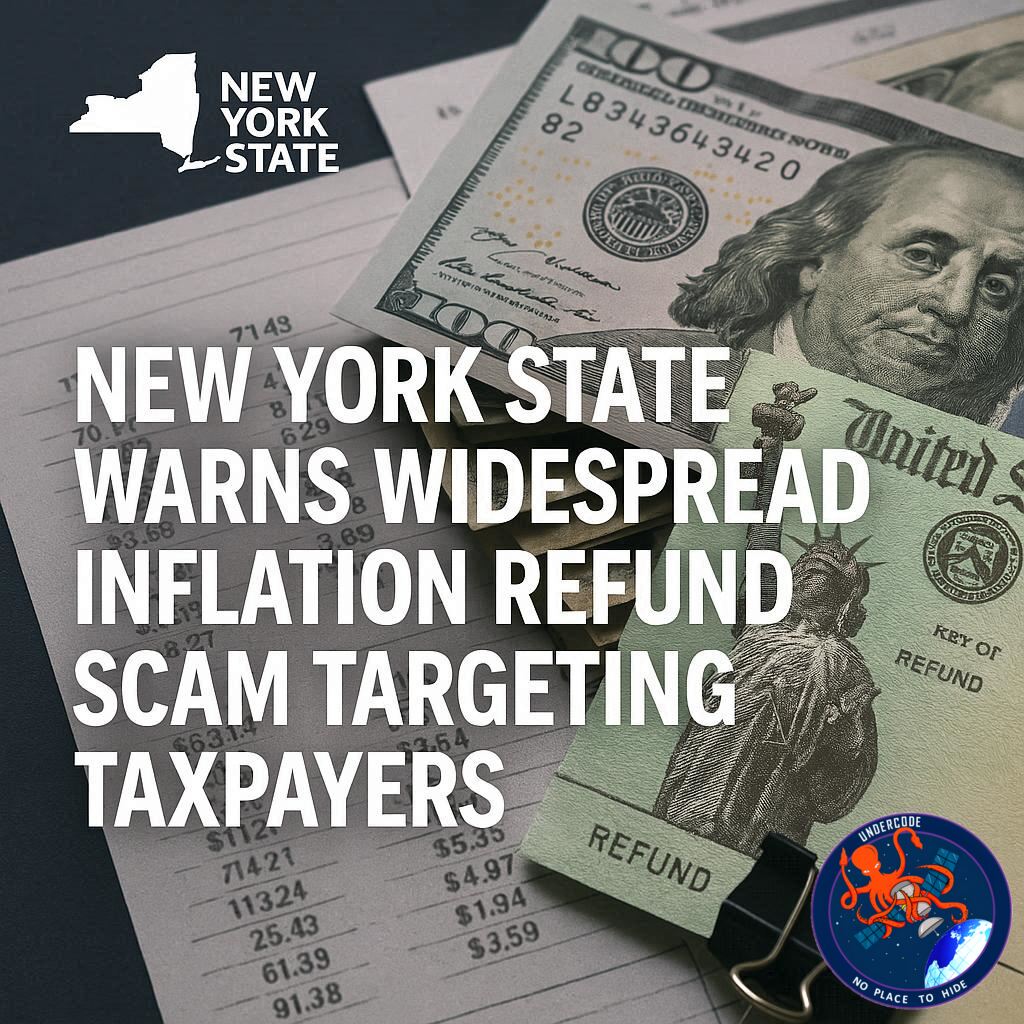
A new wave of scams is sweeping across New York, preying on residents eagerly awaiting their state-issued inflation refund checks. As economic relief initiatives continue to roll out, cybercriminals have found fertile ground for deception, crafting fake refund notifications that appear almost indistinguishable from official state communications. The New York State Department of Taxation and Finance has now issued a formal warning, urging residents to be cautious of fraudulent messages, phone calls, and letters that claim to offer tax refunds — but are instead elaborate traps designed to steal sensitive personal information.
The Story: How Scammers Turn Relief into Risk
The New York State website recently issued a public alert to residents, warning of escalating scam activity centered on fake “income tax refund” and “inflation refund check” offers. These scams are targeting taxpayers through phone calls, mailed letters, and — most commonly — SMS text messages.
According to the official statement, multiple phishing campaigns are currently exploiting the legitimate refund initiative launched by the state to help residents offset rising living costs. The legitimate program automatically sends checks to qualified individuals, meaning no one is required to apply, sign up, or share personal information to receive the benefit.
However, scammers are using this real program as a backdrop for deception. They contact potential victims, claiming that their refund has been approved and that immediate payment information is required to release funds. A fraudulent message exposed by BleepingComputer demonstrates the strategy:
“Your refund request has been processed and approved. Please provide accurate payment information by September 29, 2025. Funds will be deposited within 1–2 business days.”
The message also threatens that failure to comply will result in “permanent forfeiture” of the refund — a psychological manipulation technique meant to create urgency and fear. The scam messages are being sent from foreign phone numbers (notably from the Philippines), and the web links provided lead to counterfeit tax department websites.
Once victims click these malicious URLs, they are directed to realistic-looking websites mimicking the New York State Tax Department. These pages ask for personal data such as names, addresses, Social Security Numbers, and even bank details — effectively handing scammers the keys to commit identity theft.
This type of deception is known as “smishing” (SMS phishing), and it’s become increasingly sophisticated in recent years. The criminals behind these campaigns exploit moments when people expect government payments — such as stimulus checks, tax refunds, or inflation rebates — capitalizing on confusion and urgency.
Authorities emphasize that legitimate refund checks are sent automatically, and no official department will ever contact taxpayers asking for sensitive details. Anyone receiving unsolicited communication about tax refunds should immediately report it to the NYS Tax Department or the IRS.
To stay safe, cybersecurity experts recommend the following precautions:
Never click links or reply to suspicious tax-related messages.
Do not share personal details such as Social Security or banking information with unknown sources.
Verify authenticity by contacting official departments through known phone numbers or websites (like tax.ny.gov
).
Report scams to authorities and use reputable anti-malware tools with real-time protection.
In one example, a scam text analyzed by Malwarebytes’ Scam Guard was instantly identified as fraudulent — reinforcing the importance of using modern digital safety tools.
The message from cybersecurity experts is clear: the best defense is awareness. Protect your digital identity the same way you protect your wallet — with vigilance, skepticism, and strong cyber hygiene.
What Undercode Say:
This scam exemplifies how cybercriminals thrive on timing, trust, and psychology. The “inflation refund” deception is particularly clever because it mirrors reality — a genuine government initiative. When real-world programs align with financial hardship, the perfect storm for exploitation forms.
Let’s break down the anatomy of the scam:
1. Contextual Exploitation
Scammers always ride the coattails of legitimate news. Whether it’s a new government refund or an emergency grant, fraudsters seize on moments when people are uncertain but hopeful. The inflation refund became their newest disguise — familiar enough to disarm, yet vague enough to manipulate.
2. Urgency and Fear as Tools
Every fraudulent message employs a ticking clock: “Act now, or lose your refund forever.” That false sense of urgency bypasses logic and fuels emotional reaction. Once the victim feels pressured, rational thinking collapses, and compliance follows.
3. Technical Deception
The fake sites are professionally cloned, complete with state logos, government-style formatting, and realistic URLs. To an untrained eye, these scams look official. Even the phrasing mimics bureaucratic language. Yet the details betray the deceit: non-governmental domain names, odd grammar, and overseas phone origins.
4. Identity Theft — The Real Goal
These scams are not about stealing a one-time payment. They’re about stealing you. Once criminals acquire Social Security numbers, bank details, and home addresses, they can open credit lines, apply for loans, or sell your data on the dark web. The damage extends far beyond the initial scam message.
5. The Psychological Gap
Modern cybercrime isn’t just about coding or hacking — it’s about manipulating human behavior. People trust authority and fear missing out. This emotional equation is what keeps phishing alive, even in 2025, despite years of awareness campaigns.
6. The Broader Pattern
This New York case fits a larger trend: localized scams imitating government programs. Similar tactics were seen during federal stimulus payments and unemployment benefits during the pandemic. Now, inflation relief has become the latest bait.
7. The Human Firewall
Technology helps, but awareness remains the best security layer. Every person must act as a “human firewall.” Recognizing the telltale signs — suspicious urgency, unofficial URLs, grammatical errors — is the digital equivalent of locking your door.
8. A Call for Digital Literacy
The lesson here isn’t just about one phishing campaign; it’s about the urgent need for public education in digital safety. As government processes move online, citizens must learn to verify, authenticate, and question before trusting.
In essence, the “inflation refund” scam is a reflection of our digital age: a place where financial aid and fraud coexist in the same inbox. Awareness, skepticism, and the habit of verification are our most reliable shields.
Fact Checker Results:
✅ Legitimate New York inflation refunds are automatic — no application or sign-up needed.
✅ The official website domain is tax.ny.gov — any variation is a red flag.
❌ Texts or emails asking for payment info are not from the NYS Tax Department.
Prediction 💡
As inflation relief programs continue nationwide, similar phishing attempts are likely to appear in other U.S. states. Scammers will replicate the same tactics with local twists, impersonating regional tax authorities or financial departments. Expect more AI-generated fake messages, more realistic cloned websites, and more urgency-driven manipulations. The only sustainable countermeasure will be widespread digital literacy and a cultural shift toward cybersecurity mindfulness.
🕵️📝✔️Let’s dive deep and fact‑check.
References:
Reported By: www.malwarebytes.com
Extra Source Hub (Possible Sources for article):
https://www.medium.com
Wikipedia
OpenAi & Undercode AI
Image Source:
Unsplash
Undercode AI DI v2
Bing
🔐JOIN OUR CYBER WORLD [ CVE News • HackMonitor • UndercodeNews ]
📢 Follow UndercodeNews & Stay Tuned:
𝕏 formerly Twitter 🐦 | @ Threads | 🔗 Linkedin | 🦋BlueSky | 🐘Mastodon


