
Listen to this Post
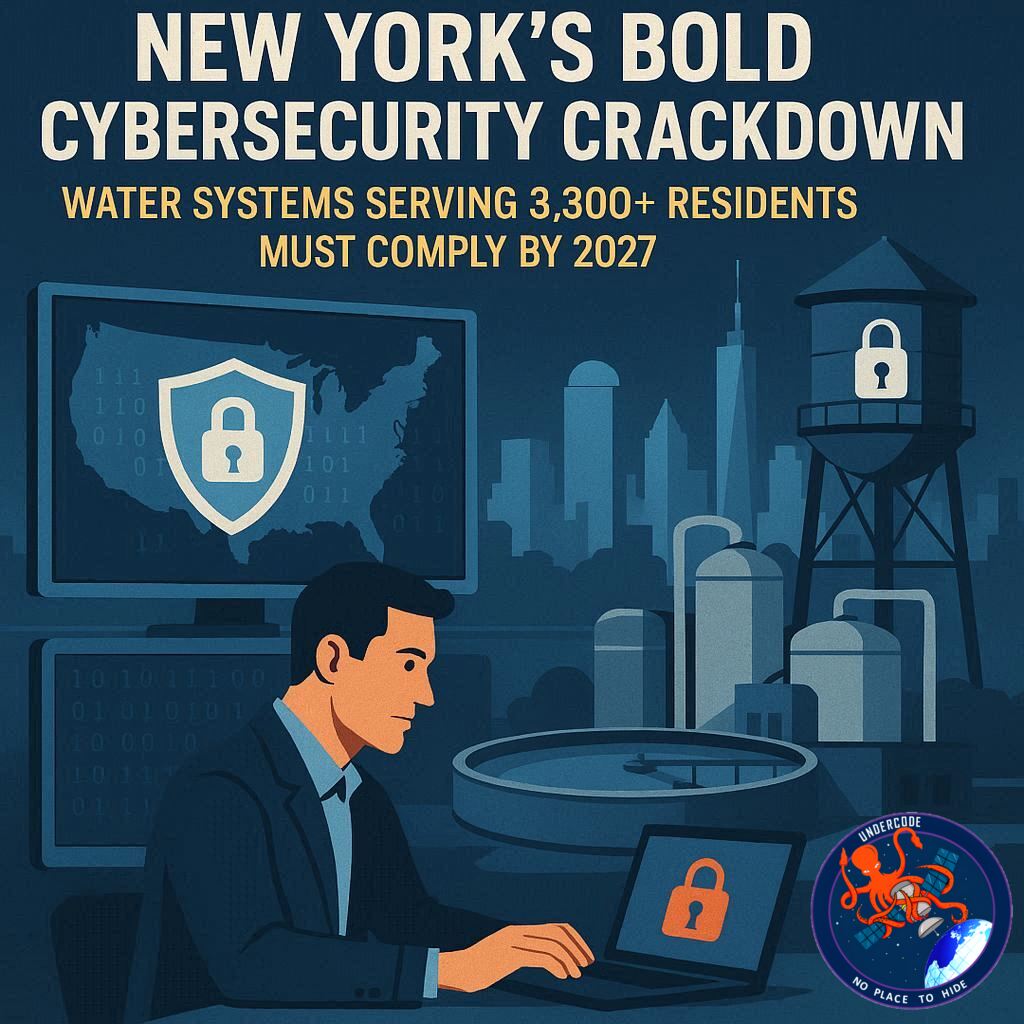
Introduction: Why Water Infrastructure Is Now a Cybersecurity Battlefield
Cybersecurity has rapidly become one of the most critical challenges facing modern infrastructure. From energy grids to transportation systems, the digitalization of essential services has opened new doors for cybercriminals and state-sponsored attackers. Water utilities, in particular, have emerged as a growing target due to their crucial role in public health and safety.
Recognizing these risks, New York State has introduced a sweeping set of cybersecurity regulations aimed at protecting community water systems that serve more than 3,300 residents. These new rules, set to take full effect by 2027, require utilities to implement structured cybersecurity programs that include employee training, incident response planning, dedicated cybersecurity leadership, and mandatory breach reporting.
Alongside these requirements, the state has also announced financial support for compliance. Community water systems will be able to apply for grants of up to $100,000 to strengthen their cybersecurity defenses. The initiative reflects growing concerns about cyber threats targeting critical infrastructure—especially after reports linking advanced threat groups such as Volt Typhoon to attacks on utility networks across the United States.
New Cybersecurity Rules Target Community Water Systems
The new mandate from New York focuses specifically on community water systems that provide services to more than 3,300 people. These utilities must adopt structured cybersecurity measures designed to prevent attacks, detect intrusions quickly, and respond effectively if a breach occurs.
Under the new regulations, water system operators will need to implement cybersecurity awareness training programs for staff. Human error remains one of the most common entry points for cyberattacks, so educating employees on phishing, credential security, and suspicious activity is considered a key defensive layer.
Incident Response Plans Become Mandatory
One of the central requirements of the policy is the creation of a formal cybersecurity incident response plan. Utilities must develop detailed procedures outlining how they will respond if a cyberattack occurs.
These plans must include steps for isolating affected systems, maintaining operational continuity, notifying authorities, and protecting public safety. In the context of water infrastructure, even a brief disruption could impact thousands of residents, making preparedness essential.
Mandatory Cybersecurity Reporting Requirements
The new rules also introduce mandatory reporting obligations. If a cybersecurity incident occurs, utilities will be required to report it to relevant state authorities.
This reporting framework aims to improve coordination between government agencies and infrastructure operators. By quickly sharing information about threats and vulnerabilities, authorities can identify patterns and prevent attacks from spreading across multiple systems.
Designated Cybersecurity Leaders for Utilities
Another requirement introduced in the mandate is the appointment of a dedicated cybersecurity lead within each qualifying water utility. This individual will be responsible for overseeing the organization’s cybersecurity strategy and ensuring compliance with state regulations.
The goal is to ensure that cybersecurity responsibilities are clearly defined and not treated as an afterthought. Many smaller utilities historically lacked specialized IT security personnel, which made them more vulnerable to sophisticated cyber threats.
Financial Support Through $100,000 Cybersecurity Grants
Recognizing that many community water systems operate with limited budgets, New York has paired the mandate with financial assistance.
Eligible utilities will be able to apply for grants of up to $100,000 (USD) to help fund cybersecurity improvements. These funds may be used for technology upgrades, security monitoring tools, staff training programs, or consulting services designed to strengthen cyber defenses.
Growing Concerns Over Infrastructure Attacks
The timing of the new rules is closely tied to increasing concerns about foreign cyber operations targeting U.S. infrastructure. Security agencies have warned that advanced persistent threat groups—often linked to nation-state actors—have been probing vulnerabilities in water treatment plants, energy grids, and telecommunications networks.
The group known as Volt Typhoon has been repeatedly cited in intelligence reports as a potential threat to critical infrastructure. Although many of these operations are believed to focus on reconnaissance rather than immediate disruption, experts warn they could be used to prepare for future attacks.
Protecting Public Health Through Cybersecurity
Water utilities are responsible for maintaining safe drinking water and sanitation systems. Any cyberattack that interferes with water treatment processes could have serious consequences for public health.
For example, attackers might attempt to manipulate chemical treatment levels, disable monitoring systems, or disrupt automated pumping operations. These risks have pushed governments to treat cybersecurity as a critical part of infrastructure safety rather than simply an IT issue.
What Undercode Says:
The Hidden War Over Critical Infrastructure
The cybersecurity battle surrounding water systems reveals a broader and more alarming trend: critical infrastructure is becoming a primary battleground in modern geopolitical conflict. Unlike traditional warfare, cyberattacks allow adversaries to quietly infiltrate essential services without triggering immediate military retaliation. Water systems, electrical grids, transportation networks, and communication platforms are all potential targets in this digital cold war.
Why Small Utilities Are the Weakest Link
Large metropolitan utilities often have dedicated cybersecurity teams, advanced monitoring tools, and strong partnerships with federal agencies. Smaller water systems, however, frequently operate with limited technical expertise and outdated infrastructure.
Many rely on legacy industrial control systems that were never designed with cybersecurity in mind. Some facilities still use outdated software or remote access systems that lack modern authentication protections. These vulnerabilities make smaller utilities particularly attractive targets for attackers seeking easy entry points.
Cybersecurity Regulations Are Becoming a National Trend
New York’s move is unlikely to remain isolated. Across the United States, regulators are increasingly recognizing that voluntary cybersecurity guidelines are no longer sufficient for critical infrastructure sectors.
Mandatory frameworks are emerging that require utilities to adopt minimum cybersecurity standards. Similar regulations are already appearing in energy, healthcare, and financial sectors. Water utilities are simply the latest industry to face these stricter rules.
The Volt Typhoon Factor
The mention of Volt Typhoon highlights how cyber threats have evolved from criminal ransomware groups into sophisticated state-linked operations. Intelligence agencies have warned that these actors focus heavily on reconnaissance—quietly mapping infrastructure networks rather than immediately attacking them.
This strategy suggests long-term preparation. By understanding how critical systems operate today, attackers could potentially disrupt them during a future geopolitical crisis.
Financial Grants Are a Strategic Investment
Offering grants of up to $100,000 (USD) is more than just financial assistance—it is a strategic investment in national resilience. Cybersecurity improvements at the local level strengthen the entire infrastructure ecosystem.
Even small upgrades—such as network monitoring tools, employee training programs, or secure remote access systems—can dramatically reduce the risk of successful attacks.
Human Error Remains the Largest Threat
Despite technological advances, many cyber incidents still begin with simple human mistakes. A single employee clicking a malicious email link or using a weak password can open the door to attackers.
This is why training requirements are included in the new regulations. Teaching employees how to recognize phishing attempts and suspicious behavior can prevent a large percentage of attacks before they even begin.
Incident Response Plans Can Save Critical Infrastructure
The difference between a minor security incident and a full-scale crisis often depends on response speed. Organizations that have detailed response plans can isolate compromised systems quickly and prevent attackers from spreading across networks.
Without preparation, even a small intrusion can escalate into widespread operational disruption.
The Bigger Picture: Infrastructure Security in the Digital Age
As infrastructure becomes more automated and interconnected, cybersecurity will become just as important as physical security. Governments worldwide are beginning to treat digital protection as a national security priority.
The New York water system regulations represent one step in a much larger transformation. Over the next decade, cybersecurity standards will likely become mandatory across nearly every critical infrastructure sector.
🔍 Fact Checker Results
Verified Policy Announcement
✅ New York has proposed stronger cybersecurity requirements for community water systems serving over 3,300 residents.
Infrastructure Threat Concerns
✅ U.S. authorities have warned about cyber threats targeting water utilities and other critical infrastructure sectors.
Grant Funding Availability
✅ Grants of up to $100,000 (USD) have been announced to help eligible water systems strengthen cybersecurity defenses.
📊 Prediction
Cybersecurity Rules Will Expand Across the United States
Over the next five years, similar cybersecurity mandates are likely to spread beyond New York to other states and federal agencies. As infrastructure digitization accelerates and geopolitical cyber threats intensify, governments will increasingly enforce strict security standards for utilities, energy providers, and transportation networks.
Water utilities may soon face nationwide cybersecurity certification requirements, mandatory monitoring systems, and real-time reporting obligations. The New York regulation may ultimately become the blueprint for a broader national framework designed to protect essential infrastructure from the growing threat of cyber warfare.
🕵️📝✔️Let’s dive deep and fact‑check.
References:
Reported By: x.com
Extra Source Hub (Possible Sources for article):
https://www.discord.com
Wikipedia
OpenAi & Undercode AI
Image Source:
Unsplash
Undercode AI DI v2
Bing
🔐JOIN OUR CYBER WORLD [ CVE News • HackMonitor • UndercodeNews ]
📢 Follow UndercodeNews & Stay Tuned:
𝕏 formerly Twitter 🐦 | @ Threads | 🔗 Linkedin | 🦋BlueSky | 🐘Mastodon


