
Listen to this Post
🎯 Introduction
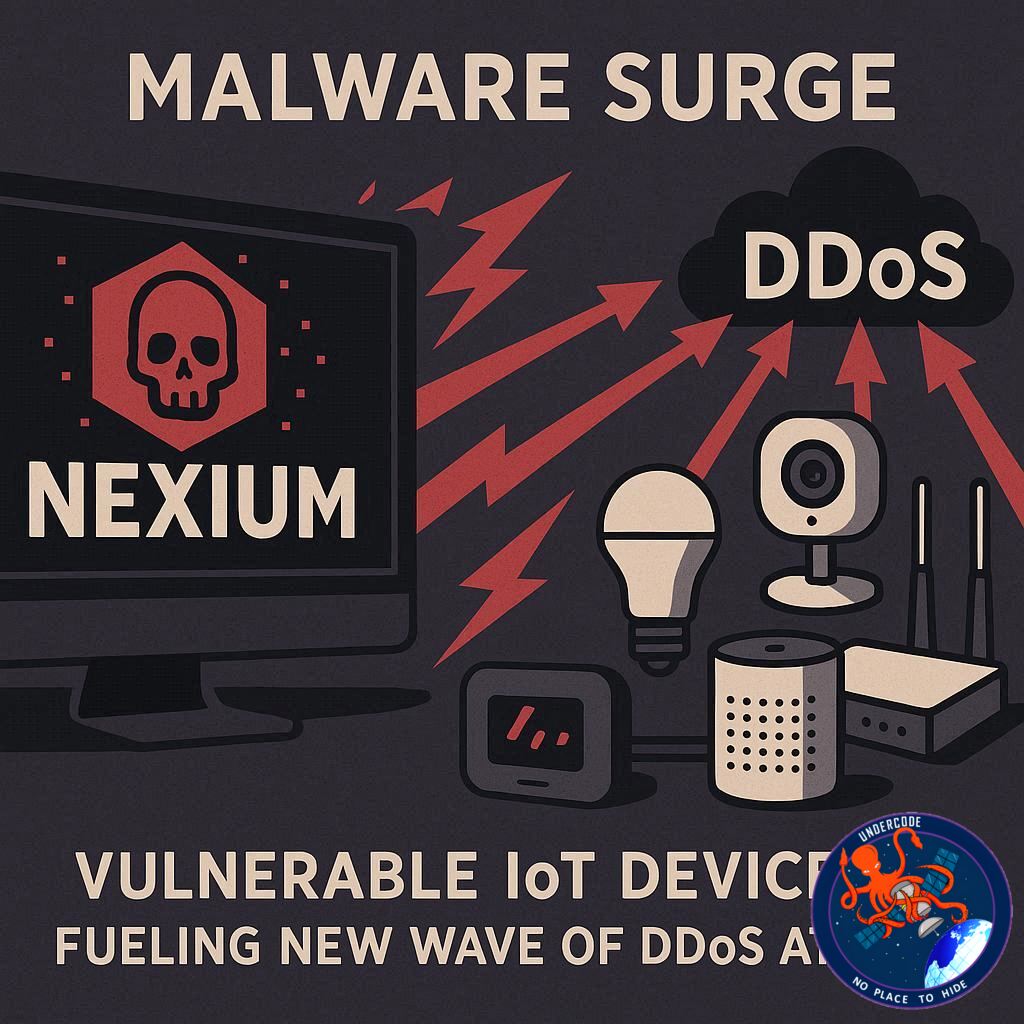
A silent storm is building across the internet, and it’s not coming from sophisticated supercomputers or elite hacking labs. Instead, it’s emerging from everyday devices, digital video recorders, home routers, and other overlooked IoT hardware. These devices, often forgotten after installation, are now being weaponized at scale. A recent investigation by Fortinet researchers reveals how attackers are exploiting outdated systems to deploy a powerful new Mirai-based malware variant called Nexcorium, turning neglected hardware into engines of disruption.
📌 Main Summary
Fortinet researchers have uncovered an active cyber campaign targeting vulnerable IoT devices, particularly TBK DVR systems and end-of-life TP-Link routers. At the center of this operation is Nexcorium, a sophisticated variant of the well-known Mirai malware. This campaign leverages a critical vulnerability identified as CVE-2024-3721, a command injection flaw that allows attackers to gain unauthorized access to affected devices. Once exploited, the attackers deploy a downloader script that retrieves malware payloads tailored for multiple Linux architectures, including ARM, MIPS, and x86-64, ensuring compatibility across a wide range of devices.
The infection process begins with carefully crafted network requests that manipulate specific parameters to execute malicious commands. Notably, these requests include a custom header labeled “X-Hacked-By,” referencing a group known as “Nexus Team,” although little is known about this entity. The downloader script, named “dvr,” fetches binaries labeled “nexuscorp,” which are then granted full execution permissions and deployed on the compromised system.
Once installed, Nexcorium reveals itself as a highly adaptable and persistent threat. It uses XOR encoding techniques to hide its internal configuration, which includes command-and-control server details, attack instructions, and persistence mechanisms. The malware operates with a modular structure similar to traditional Mirai variants, incorporating scanning capabilities, watchdog functions, and distributed denial-of-service attack modules.
Beyond simple infection, Nexcorium is engineered for resilience. It performs integrity checks to detect tampering and can replicate itself if interference is detected. The malware also embeds older exploits, such as CVE-2017-17215 targeting Huawei devices, expanding its reach beyond initial entry points. Additionally, it carries an extensive list of default credentials, enabling brute-force attacks against Telnet services to compromise even more devices.
Persistence is a key strength of Nexcorium. It modifies system files like /etc/inittab and /etc/rc.local, creates systemd services, and schedules cron jobs to ensure it remains active even after reboots. To evade detection, it deletes its original binary after installation, leaving behind only its persistent mechanisms. Once operational, the malware connects to a command-and-control server to receive instructions, execute DDoS attacks, or halt operations when commanded.
The types of attacks supported by Nexcorium include UDP and TCP flooding, both of which can overwhelm targeted systems with massive traffic volumes. This allows attackers to disrupt websites, services, and even critical infrastructure. The campaign’s effectiveness is amplified by the sheer number of vulnerable devices available, many of which remain unpatched or unsupported.
This is not an isolated incident. The same vulnerability has been exploited in previous campaigns to distribute other botnets such as ShadowV2 and RondoDox. In 2025, security researchers also identified large-scale malware distribution operations using similar techniques, targeting weak passwords and outdated firmware across IoT ecosystems. The consistent reuse of known vulnerabilities highlights a persistent issue in cybersecurity: the failure to update and secure widely deployed devices.
🧩 The Expanding Attack Surface of IoT Devices
The rapid adoption of IoT technology has outpaced security awareness, creating a massive attack surface that cybercriminals are eager to exploit. Devices like DVRs and routers are often deployed with minimal security configurations and rarely receive updates after installation. This makes them ideal targets for automated exploitation campaigns that scan the internet for known vulnerabilities.
🧩 Multi-Architecture Malware as a Strategic Advantage
One of Nexcorium’s most dangerous features is its ability to operate across multiple processor architectures. By supporting ARM, MIPS, and x86-64 systems, the malware ensures maximum infection coverage. This flexibility allows attackers to scale their botnets rapidly, leveraging a diverse ecosystem of devices without needing separate campaigns.
🧩 Persistence Mechanisms That Evade Detection
Nexcorium’s layered persistence strategy demonstrates a high level of sophistication. By embedding itself into system startup processes and removing traces of its original payload, the malware becomes extremely difficult to detect and remove. This persistence ensures long-term control over infected devices, increasing the overall impact of the botnet.
🧩 Recycled Vulnerabilities and Predictable Exploits
The continued use of older exploits like CVE-2017-17215 reveals a troubling pattern. Attackers do not need new vulnerabilities when existing ones remain unpatched. This recycling of exploits allows threat actors to maintain effective campaigns with minimal effort, relying on widespread negligence in device maintenance.
🧩 DDoS Capabilities and Real-World Impact
With built-in support for UDP and TCP flood attacks, Nexcorium transforms infected devices into powerful tools for disruption. These attacks can cripple online services, disrupt business operations, and even affect critical infrastructure. The decentralized nature of botnets makes mitigation challenging, as traffic originates from thousands of legitimate devices.
🧩 The Role of Weak Credentials in Malware Propagation
Brute-force attacks remain a cornerstone of IoT exploitation. Nexcorium’s use of extensive default credential lists highlights how weak authentication practices continue to enable large-scale infections. Many devices still operate with factory settings, providing an easy entry point for attackers.
🔍 What Undercode Say:
The Nexcorium campaign is not just another malware story; it’s a reflection of a deeper systemic failure in how IoT ecosystems are managed. The technology itself is not inherently insecure, but the lifecycle of these devices is fundamentally broken. Manufacturers prioritize rapid deployment and cost efficiency, often at the expense of long-term security support. Once devices reach end-of-life status, they effectively become permanent vulnerabilities embedded within global networks.
What stands out in this campaign is not innovation, but efficiency. Attackers are not relying on zero-day exploits or groundbreaking techniques. Instead, they are leveraging well-documented vulnerabilities and combining them with automation, scalability, and persistence. This approach lowers the barrier to entry for cybercriminals while maximizing impact.
The multi-architecture design of Nexcorium is particularly strategic. It reflects a shift from targeted attacks to ecosystem-wide exploitation. Attackers are no longer focusing on specific brands or models; they are targeting entire categories of devices. This broad-spectrum approach increases infection rates and accelerates botnet growth.
Another critical insight is the role of persistence. Nexcorium doesn’t just infect devices, it entrenches itself. By embedding into multiple startup mechanisms and removing traces of its installation, it ensures longevity. This persistence transforms short-term breaches into long-term assets for attackers, enabling sustained campaigns.
The inclusion of legacy exploits also signals a lack of urgency in patch management across industries. Organizations and individuals alike often underestimate the importance of firmware updates, especially for devices that appear to function normally. This complacency creates a fertile environment for malware propagation.
From a defensive perspective, the challenge is not just detection but visibility. Many IoT devices operate outside traditional security monitoring frameworks. They lack logging capabilities, centralized management, or integration with security tools. This makes it difficult to identify compromised devices until they are actively participating in attacks.
The economic dimension cannot be ignored either. Botnets like Nexcorium are often monetized through DDoS-for-hire services or used in extortion schemes. This creates a financial incentive structure that sustains and evolves these operations. As long as there is demand for disruption, there will be supply in the form of compromised devices.
Ultimately, Nexcorium represents a convergence of old vulnerabilities and modern attack strategies. It’s a reminder that cybersecurity is not just about innovation, but about discipline. Patching systems, securing credentials, and maintaining visibility are not new concepts, yet their absence continues to fuel large-scale threats.
🔍 Fact Checker Results
✅ Nexcorium is a Mirai-based malware using CVE-2024-3721 for exploitation
✅ The malware supports multi-architecture infections and DDoS attacks
❌ Attribution to “Nexus Team” remains unconfirmed and largely speculative
📊 Prediction
🔮 IoT-targeted botnets will grow exponentially as more devices reach end-of-life status
⚠️ Attackers will increasingly rely on recycled vulnerabilities instead of new exploits
🚨 Large-scale DDoS attacks driven by consumer devices will become more frequent and harder to mitigate
▶️ Related Video (78% Match):
🕵️📝✔️Let’s dive deep and fact‑check.
References:
Reported By: securityaffairs.com
Extra Source Hub (Possible Sources for article):
https://www.instagram.com
Wikipedia
OpenAi & Undercode AI
Image Source:
Unsplash
Undercode AI DI v2
Bing
🔐JOIN OUR CYBER WORLD [ CVE News • HackMonitor • UndercodeNews ]
📢 Follow UndercodeNews & Stay Tuned:
𝕏 formerly Twitter 🐦 | @ Threads | 🔗 Linkedin | 🦋BlueSky | 🐘Mastodon


