
Listen to this Post
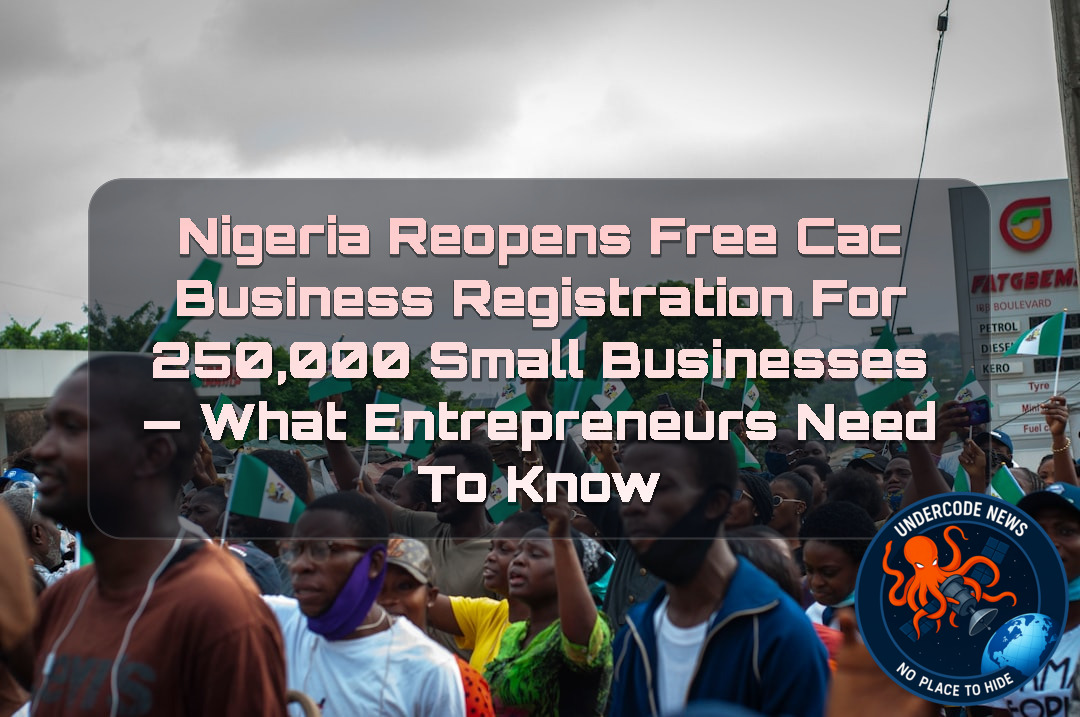
A Second Chance for Small Business Owners
For thousands of Nigerian entrepreneurs operating from homes, markets, workshops, farms, shops and online storefronts, the cost and complexity of formal business registration can feel like another barrier standing between a good idea and sustainable growth. Now, a government-backed initiative is offering many of those entrepreneurs an opportunity to take that important step without paying the usual registration fee.
The Federal Government has reopened a programme designed to provide free Corporate Affairs Commission (CAC) business-name registration for up to 250,000 eligible nano, micro and small enterprises (NMSEs) across Nigeria. The initiative is being implemented through a partnership between the Small and Medium Enterprises Development Agency of Nigeria (SMEDAN) and the CAC.
SMEDAN itself previously announced the partnership as a programme intended to provide free business registration to 250,000 MSMEs.
For a small trader or young entrepreneur, the significance goes far beyond obtaining a certificate. Formal registration can strengthen credibility, improve access to financial services and government programmes, and create a clearer foundation for future expansion.
What the Free Registration Programme Means
The central idea is simple: eligible businesses that have not yet obtained CAC registration can potentially have their business names registered without bearing the normal registration cost.
The programme is aimed particularly at smaller enterprises that remain outside Nigeria’s formal business economy because registration costs and administrative requirements can discourage them from taking the first step.
SMEDAN’s broader mandate is focused on developing Nigeria’s nano, micro, small and medium-sized enterprises through capacity building, access to finance, entrepreneurship support and policy advocacy.
That makes the CAC registration initiative part of a much bigger economic picture.
Why Formal Registration Matters
Operating informally may appear cheaper in the short term, but it can create problems as a business grows.
A registered business can present a more professional identity when dealing with customers, suppliers, banks, investors and larger corporate clients. Registration can also become an important piece of documentation when entrepreneurs seek financing, grants, partnerships or government-supported programmes.
SMEDAN’s own platform highlights access to financial services, government benefits, training and other private-sector opportunities as potential advantages associated with formal engagement.
For a business owner trying to move from survival mode to structured growth, that difference can be significant.
Who Is the Programme Designed For?
The initiative focuses on nano, micro and small enterprises rather than large corporations.
SMEDAN’s published business classifications describe nano businesses as enterprises with annual turnover below ₦3 million and generally one or two people, while micro businesses are described as having annual turnover between ₦3 million and ₦25 million and three to nine workers. Small businesses are described as having annual turnover from ₦25 million to ₦99 million and between 10 and 49 employees.
These categories cover a huge part of
The First Requirement: No Existing CAC Registration
One of the most important conditions highlighted in the original announcement is that the applicant’s business should not already have a CAC registration number.
This requirement matters because the initiative is intended to help businesses that have not yet entered the formal registration system.
Entrepreneurs who already have a CAC registration should therefore avoid submitting duplicate information simply because registration is being offered for free.
Requirement Two: Valid Identification
Applicants should prepare an acceptable means of identification before beginning the process.
The listed documents include a National Identification Number (NIN), national identity card, driver’s licence or international passport.
Keeping a clear digital copy available can make the application process easier, particularly if the portal requires documents to be uploaded electronically.
Requirement Three: Recent Passport Photograph
Applicants should also have a recent passport-sized photograph available.
This may seem like a minor administrative requirement, but incomplete applications can create unnecessary delays. Entrepreneurs should therefore prepare their documentation before opening the registration form.
Requirement Four: Proposed Business Name
Applicants should think carefully about the name they want to register.
It is sensible to prepare more than one possible name because a preferred name may already exist or may be considered too similar to an existing registration.
CAC’s current registration systems include checks for existing or excessively similar business names, along with other naming restrictions.
A good business name should therefore be distinctive, relevant and capable of remaining useful as the enterprise grows.
Requirement Five: Business Address
Applicants should also have a valid business address.
This does not necessarily mean that every small business needs a large commercial office. Many Nigerian micro-enterprises operate from modest premises, workshops, market locations or home-based environments.
The important point is that the information supplied should be accurate and consistent with the applicant’s circumstances.
Requirement Six: Active Phone Number and Email
A functioning phone number and email address are also important.
Government registration systems may use these details for verification, notifications or follow-up communication. Entrepreneurs should avoid using contact information they cannot reliably access.
An email address that is regularly monitored can be particularly useful when dealing with digital registration processes.
Requirement Seven: Information About Partners
If a business has more than one owner or partner, applicants should prepare the relevant details before submitting the application.
Providing incomplete or inaccurate ownership information can create complications later.
Entrepreneurs should treat the registration process as an official legal record rather than simply another online form.
Requirement Eight: Additional Supporting Documents
Depending on the nature of the business, additional information or documentation may be required.
This is especially important for businesses operating in regulated sectors where CAC registration may be only one part of the compliance process.
SMEDAN’s One-Stop Shop, for example, brings together information about regulatory requirements involving CAC and other agencies, illustrating that business registration does not automatically replace sector-specific approvals.
How to Begin the Application
The application process described in the original report begins through the official SMEDAN platform.
Applicants should create an account using their personal details, email address and password, then provide accurate information about themselves and their business.
The most important rule is simple: do not guess information.
Names, addresses, identification details and business information should match the applicant’s official records wherever applicable.
Step One: Prepare Everything Before Applying
Before opening the application portal, gather your identification document, passport photograph, proposed business name, business address, phone number and email address.
Preparing everything beforehand reduces the chance of abandoning an application halfway through because an important document is missing.
It also gives applicants an opportunity to check their information before submitting it.
Step Two: Create Your SMEDAN Account
The reported process requires applicants to create an account on the SMEDAN platform.
Use an email address that you control and a strong, unique password.
Never give your password or verification codes to someone claiming to be an agent unless you have independently verified who they are.
Step Three: Complete Your Business Profile
Once inside the portal, applicants should provide their personal and business information.
Accuracy is more important than speed.
A small mistake in a name, identification number, telephone number or address can potentially create unnecessary verification problems.
Step Four: Confirm Your Business Status
Applicants should confirm that their business does not already have a CAC registration number.
This is one of the central eligibility conditions described in the programme.
Entrepreneurs should not attempt to create duplicate registrations simply to take advantage of the free initiative.
Step Five: Upload the Required Documents
The relevant documents should be uploaded according to the portal’s instructions.
Images and scans should be clear enough to read, while photographs should meet the stated requirements.
Avoid uploading documents to unofficial websites or sending identity documents to unknown individuals through social media.
Step Six: Review Before Submission
Before pressing submit, carefully review every section.
Check your proposed business name, spelling, identification details, address, contact information and ownership information.
A few extra minutes of checking can save considerably more time later.
Step Seven: Wait for Confirmation
After submission, applicants may need to wait for confirmation or further instructions from SMEDAN.
Selection and processing should not be confused with an automatic guarantee that every application will immediately receive registration.
Because programmes can have eligibility rules, allocation limits and administrative procedures, applicants should rely on official communication rather than social-media claims.
The Bigger Economic Picture
The most interesting part of this programme is not the registration certificate itself.
It is what formal registration can unlock afterwards.
Nigeria has a vast informal business economy. Many entrepreneurs are capable of generating revenue but lack formal documentation, financial records, regulatory status or institutional relationships that can help them scale.
Reducing the initial registration barrier could therefore have an effect far beyond the first 250,000 beneficiaries.
Registration Can Become a Gateway to Finance
One of the biggest advantages of formalisation is improved positioning when seeking financial services.
Banks and other financial institutions commonly require documentation when evaluating businesses.
Registration does not guarantee a loan, grant or investment, but it can remove one of the obstacles that informal businesses face when attempting to become finance-ready.
SMEDAN has also partnered with financial institutions on programmes designed to provide financing to small businesses, demonstrating how registration and broader business-support initiatives can intersect.
Registration Can Strengthen Business Credibility
Customers increasingly want to know whether the businesses they deal with are legitimate.
For a small company selling products online, providing services to another company or negotiating a major supply contract, having formal registration can create an additional layer of credibility.
It does not replace good customer service, product quality or financial discipline, but it can strengthen the business’s professional identity.
Registration Is Not the End of Compliance
Entrepreneurs should also understand what free CAC registration does not mean.
Obtaining a CAC business name does not automatically mean that every regulatory requirement has been satisfied.
Depending on the sector, a company may still need tax registration, product approvals, local permits, professional licences or other sector-specific certifications.
SMEDAN’s One-Stop Shop explicitly lists multiple agencies and regulatory areas that businesses may need to navigate beyond CAC registration.
Beware of Fake Agents and Scams
Whenever the government announces something for free, scammers often appear.
Entrepreneurs should be particularly careful with messages claiming that they must pay a “processing fee,” “activation fee,” “verification charge” or “agent fee” to access a supposedly free registration programme.
Do not assume that a WhatsApp message, Facebook post or private website is legitimate simply because it uses government logos.
The safest approach is to start from official government websites and verify the programme independently.
Official Sources Should Come First
SMEDAN maintains an official website and online registration resources for entrepreneurs.
SMEDAN official website
CAC also maintains its official corporate registration infrastructure and online services.
CAC official website
Entrepreneurs should use these official channels rather than relying on links forwarded through unknown accounts.
What the Government Is Trying to Achieve
The programme fits into a broader effort to bring more Nigerian businesses into the formal economy.
The logic is straightforward: when more enterprises become identifiable and structured, they can potentially participate more effectively in formal financial systems, government support schemes, supply chains and business development programmes.
SMEDAN’s existing programmes already emphasize capacity building, finance, training and enterprise development.
The Opportunity for Young Entrepreneurs
For young Nigerians running small online stores, repair businesses, fashion brands, food businesses, logistics services, farms or digital ventures, formal registration can represent a psychological transition as well as a legal one.
There is a difference between saying, “I sell products,” and saying, “I operate a registered business.”
That distinction can influence how entrepreneurs approach accounting, contracts, branding, banking and long-term planning.
The Opportunity for Women-Owned Businesses
Women operating small businesses are also an important part of the potential beneficiary pool.
For many home-based and community-based enterprises, even relatively modest administrative costs can become a barrier to formalisation.
A free registration opportunity can reduce that initial hurdle and potentially make it easier for entrepreneurs to pursue larger customers and institutional opportunities.
The Opportunity for Rural Businesses
The
Small businesses in rural communities can also contribute to employment, food production, logistics, manufacturing and local commerce.
The challenge is ensuring that awareness and access to the programme reach those entrepreneurs rather than concentrating benefits among people who are already highly connected.
Deep Analysis
Why Registration Alone Cannot Transform MSMEs
A free certificate is valuable, but it cannot solve every problem facing Nigerian small businesses.
Entrepreneurs still have to deal with electricity costs, inflation, transportation expenses, access to credit, taxation, skills shortages, digital security and competition.
The real test of the programme will therefore be what happens after registration.
The Formalisation Chain
A successful formalisation strategy can be viewed as a chain:
Business idea
↓
Business operation
↓
SMEDAN engagement
↓
CAC registration
↓
Tax and regulatory compliance
↓
Banking and financial records
↓
Access to finance
↓
Larger customers
↓
Business expansion
↓
Employment creation
The registration stage is only the beginning.
A Simple Verification Workflow
Entrepreneurs can use a basic checklist from the command line when preparing digital documents:
mkdir -p business-registration
cp ~/Documents/ID.pdf business-registration/
cp ~/Documents/passport-photo.jpg business-registration/
ls -lh business-registration/
This does not submit anything to the government. It simply helps organize files before uploading them to an official portal.
Check Your Files Before Uploading
On Linux systems, applicants can inspect the file types with:
file business-registration/
They can also calculate file hashes for their own records:
sha256sum business-registration/
These commands are useful when maintaining a clean record of documents, particularly when applications involve multiple uploads.
Protect Your Identity Documents
Identity documents contain sensitive personal information.
Do not upload them to random “CAC agents” or unofficial registration pages.
A safer digital practice is to maintain a dedicated folder and avoid sharing the documents through unnecessary channels.
chmod 700 business-registration
chmod 600 business-registration/
These commands restrict access to the folder and its files on a typical Linux system.
The Cybersecurity Angle
Government registration programmes are attractive targets for phishing campaigns because scammers know that applicants are actively searching for application links.
A fraudulent website can imitate a government portal while collecting names, phone numbers, passwords, identification documents and payment information.
That means cybersecurity awareness should be treated as part of the registration process.
Never Trust the Link Alone
A message saying “CAC registration is now free” does not prove that the attached link is legitimate.
Instead, navigate manually to the official SMEDAN or CAC website and locate the relevant programme from there.
This simple habit can prevent a large number of phishing attacks.
Check HTTPS — But Do Not Stop There
A padlock or HTTPS connection is not proof that a website is legitimate.
Scammers can also obtain valid HTTPS certificates.
The important question is whether the domain itself belongs to the legitimate organization.
Watch for Urgency
Scam messages often use language such as:
REGISTER NOW!!!
ONLY 50 SPOTS LEFT!!!
PAY ₦5,000 TO ACTIVATE!!!
Extreme urgency should be treated as a warning sign.
Government programmes may have deadlines, but legitimate applications should still provide verifiable information about eligibility and process.
Do Not Share OTP Codes
Applicants should never give one-time passwords or verification codes to people claiming to be registration agents.
An OTP can be enough to compromise an account or authorize an action the victim did not intend to perform.
Keep Copies of Your Submission
After completing a legitimate application, keep copies of confirmation messages, reference numbers and submitted information.
A simple record can be maintained with:
mkdir -p ~/business-records
touch ~/business-records/cac-application-notes.txt
The goal is not technical sophistication. It is organized record keeping.
Why the 250,000 Figure Matters
A programme covering 250,000 businesses is large enough to have a meaningful economic footprint.
But it is also small compared with
That means the programme should be viewed as an important intervention rather than a complete solution to informal-sector challenges.
The Real Question Is What Happens Next
If registration is followed by access to training, finance, digital tools, market opportunities and regulatory guidance, the impact could be much larger.
If entrepreneurs receive certificates but remain unable to access affordable credit, reliable infrastructure or markets, the economic effect will naturally be more limited.
Formalisation Needs Continuity
Business support works best when programmes are not isolated events.
An entrepreneur who receives free registration today may need bookkeeping training tomorrow, financing later, export support after that and digital security assistance as the business grows.
SMEDAN’s wider programme ecosystem already reflects this broader approach.
Free Registration Can Change Entrepreneurial Behaviour
Removing the initial financial barrier may also change how people perceive formal business ownership.
Someone who previously considered registration unnecessary may become more willing to open a business bank account, maintain records, issue invoices and pursue corporate customers.
That behavioral shift could ultimately be more valuable than the registration fee itself.
The Risk of Exclusion
There is another side to the story.
Online application systems can unintentionally exclude entrepreneurs with limited internet access, low digital literacy or difficulty obtaining clear digital copies of identification documents.
A successful nationwide programme therefore needs strong offline awareness and support mechanisms as well as a functioning online portal.
The Importance of Transparency
Programmes involving hundreds of thousands of applicants need clear eligibility rules and transparent communication.
Entrepreneurs should be able to understand who qualifies, how applications are selected, how registration is confirmed and where complaints can be made.
Transparency is essential for preventing misinformation and protecting beneficiaries from intermediaries who exploit confusion.
The Difference Between Registration and Growth
It is tempting to assume that formal registration automatically creates a stronger business.
It does not.
A registered company can still fail because of weak cash flow, poor management, inadequate market research or unsustainable costs.
Registration provides a foundation. Entrepreneurs still have to build the house.
A Practical Strategy for Beneficiaries
A smart entrepreneur should treat free registration as the beginning of a structured business journey.
After registration, the next priorities should include keeping financial records, separating personal and business finances, understanding tax obligations, protecting customer information, building a recognizable brand and developing reliable suppliers.
The Long-Term Potential
If government agencies can connect formal registration with finance, skills, procurement opportunities, export channels and digital services, formalisation could become a powerful engine for small-business growth.
The greatest opportunity is therefore not simply registering 250,000 names.
It is helping 250,000 businesses become stronger, more visible and more capable of surviving economic shocks.
What Undercode Say:
01 — A Small Administrative Change Can Have a Large Economic Effect
Free registration may look like a bureaucratic benefit, but for a very small entrepreneur, removing one upfront cost can make a meaningful difference.
02 — The Programme Addresses a Real Barrier
Cost is only one reason businesses remain informal, but it is a barrier that government can directly reduce.
03 — Formalisation Creates Visibility
A registered business becomes easier to identify within the formal economy.
04 — Visibility Can Improve Opportunities
Formal identity can make conversations with banks, suppliers and corporate customers easier.
05 — But Registration Is Not Financing
Entrepreneurs should not assume that CAC registration automatically qualifies them for a loan.
06 — The Follow-Up Matters More
The economic value of the programme depends heavily on what beneficiaries can access after registration.
07 —
SMEDAN already operates programmes focused on training, finance and enterprise development.
08 — Integration Could Multiply the Impact
Connecting registration with those programmes could create a more powerful support pipeline.
09 — Digital Access Is Critical
A nationwide online programme must consider entrepreneurs who have limited internet access.
10 — Cybersecurity Cannot Be Ignored
Free government services are attractive bait for phishing campaigns.
11 — Identity Documents Are Valuable Targets
Scammers can use fake registration portals to collect personal information.
12 — Applicants Need Digital Discipline
Using official domains and avoiding suspicious links should be basic procedure.
13 — Business Names Deserve More Attention
Entrepreneurs should not select names casually.
14 — A Name Becomes Part of the Brand
The registration decision can influence marketing, websites, social media and future expansion.
15 — Duplicate Names Create Problems
CAC’s systems check for existing or overly similar names.
16 — Accuracy Is More Important Than Speed
Submitting incorrect information simply to finish quickly can create unnecessary problems.
17 — Documentation Is a Business Asset
An entrepreneur should keep copies of registration records and supporting documents.
18 — Registration Can Encourage Better Record Keeping
Once a business becomes formal, owners may become more disciplined about accounts and transactions.
19 — That Discipline Can Improve Financial Readiness
Better records can make future financial applications more credible.
20 — Formalisation Can Strengthen Negotiations
Suppliers and corporate buyers may view a documented business differently from an entirely informal operation.
21 — The Programme Can Help New Entrepreneurs
People who have delayed registration may finally have an opportunity to take the step.
22 — Women-Owned Businesses Could Benefit
Many small businesses operated from homes or communities can gain formal recognition.
23 — Rural Entrepreneurs Matter Too
The programme’s nationwide design is important because Nigeria’s entrepreneurial economy extends far beyond major cities.
24 — Awareness Will Determine Reach
A programme cannot help people who never hear about it.
25 — Misinformation Is a Serious Threat
Fake application procedures can spread rapidly through social media.
26 — Government Communication Must Be Clear
Clear instructions reduce confusion and create fewer opportunities for scammers.
27 — Free Does Not Mean Risk-Free
Applicants still have responsibilities around data protection and accurate information.
28 — Registration Does Not Replace Licensing
Sector-specific businesses may need additional approvals.
29 — Entrepreneurs Need to Understand the Difference
CAC registration establishes business identity, but other regulators may govern specific activities.
30 — The Private Sector Has a Role
Banks, technology companies and larger corporations can help newly formalized businesses enter supply chains.
31 — Digital Tools Can Accelerate Growth
Accounting software, e-commerce platforms and digital payment systems can help formal businesses become more efficient.
32 — Cybersecurity Should Grow With the Business
As a business becomes more valuable, its email accounts, customer data and payment systems become more attractive targets.
33 — Formalisation Can Improve Resilience
Businesses with documentation and records are generally better positioned to demonstrate their history during difficult periods.
34 — Government Programmes Need Measurement
Success should be measured by outcomes rather than registrations alone.
35 — Jobs Are the Bigger Metric
If registered businesses expand and employ more people, the economic impact becomes much stronger.
36 — Revenue Growth Is Another Key Metric
The government should ultimately examine whether beneficiaries become more productive.
37 — Survival Rates Matter
A programme that registers businesses that disappear shortly afterward would have limited long-term impact.
38 — Access to Capital Is the Next Challenge
Once registration barriers fall, financing becomes one of the biggest remaining obstacles for many small businesses.
39 — The Opportunity Is Bigger Than the Certificate
The real value lies in connecting entrepreneurs to the formal economy.
40 —
Free registration can open the door, but sustained support will determine whether entrepreneurs can actually walk through it and grow.
✅ The 250,000-Business Initiative Is Supported
SMEDAN’s own website has published information confirming a partnership with CAC to provide free business registration for 250,000 MSMEs, supporting the central claim in the article.
✅ The CAC-SMEDAN Connection Is Credible
Official SMEDAN material identifies CAC as part of the agency’s business-support ecosystem and lists business-registration information and required documents.
✅ The Required Documentation Is Broadly Consistent
SMEDAN’s published CAC guidance includes business address, proposed business names, nature of business, passport photograph, identification and contact information, broadly supporting the documentation described in the original report.
⚠️ Eligibility and Availability Should Be Verified Before Applying
The existence of the 250,000-business initiative is supported, but applicants should verify that the current application window is open and that they personally qualify before submitting information.
⚠️ Free Registration Does Not Mean Universal Free Compliance
CAC registration should not be interpreted as a blanket exemption from every tax, licensing, regulatory or sector-specific requirement. SMEDAN’s own One-Stop Shop demonstrates that businesses may need to deal with several other regulatory bodies.
Prediction
(+1) Formalisation Will Continue to Become a Bigger Priority
Nigeria is likely to continue encouraging small businesses to move from the informal economy toward formal registration as government agencies seek better economic visibility and broader access to financial and support programmes.
(+1) Digital Registration Will Expand
The growing use of online registration systems should make business formalisation faster and more accessible, particularly for entrepreneurs who already operate digitally.
(+1) Registration Will Become More Valuable When Linked to Finance
The next major opportunity will be connecting formal business identity with affordable loans, grants, payment infrastructure, accounting tools and procurement opportunities.
(+1) Cybersecurity Will Become Part of the Process
As government business services move online, phishing, identity theft and fake registration portals will increasingly become risks that entrepreneurs must understand.
(-1) Registration Alone Will Not Solve MSME Challenges
Even if hundreds of thousands of businesses become formally registered, high operating costs, limited access to capital, infrastructure problems and market pressures can continue to threaten their survival.
(+1) The Biggest Winners Could Be Businesses That Use Registration as a Starting Point
Entrepreneurs who treat the free CAC registration as the beginning of a larger formalisation strategy — rather than simply as a free certificate — are likely to extract the greatest long-term value from the opportunity.
🕵️📝Let’s dive deep and fact‑check.
🎓 Live Courses & Certifications:
Join Undercode Academy for Verified Certifications
🚀 Request a Custom Project:
Secure, high-velocity infrastructure and disruptive technological engineering. Contact our engineering team for high-tier development and proprietary systems:
[email protected]
💎 Smart Architecture | 🛡️ Secure by Design | ⭐ Trusted by Thousands
References:
Reported By: www.legit.ng
Extra Source Hub (Possible Sources for article):
https://www.quora.com/topic/Technology
Wikipedia
OpenAi & Undercode AI
Image Source:
Unsplash
Undercode AI DI v2
🔐JOIN OUR CYBER WORLD [ CVE News • HackMonitor • UndercodeNews ]
📢 Follow UndercodeNews & Stay Tuned:
𝕏 formerly Twitter 🐦 | @ Threads | 🔗 Linkedin | 🦋BlueSky | 🐘Mastodon | 📺Youtube


