
Listen to this Post
A New Chapter for Nigeria’s Financial Ecosystem
Nigeria’s digital payments sector is expanding at a breathtaking pace, transforming how millions of people transact, save, and conduct business. From small roadside vendors to large corporations, the shift toward electronic payments has become a defining feature of the country’s modern economy. Yet, with this rapid growth comes a new set of challenges—system inefficiencies, security risks, and coordination gaps among key players.
To address these issues, the Central Bank of Nigeria has stepped forward with a collaborative solution. By bringing together banks, fintech firms, and regulators under one structured platform, the country is setting the stage for a more stable, inclusive, and secure financial future.
The Rise of a Unified Payments Platform
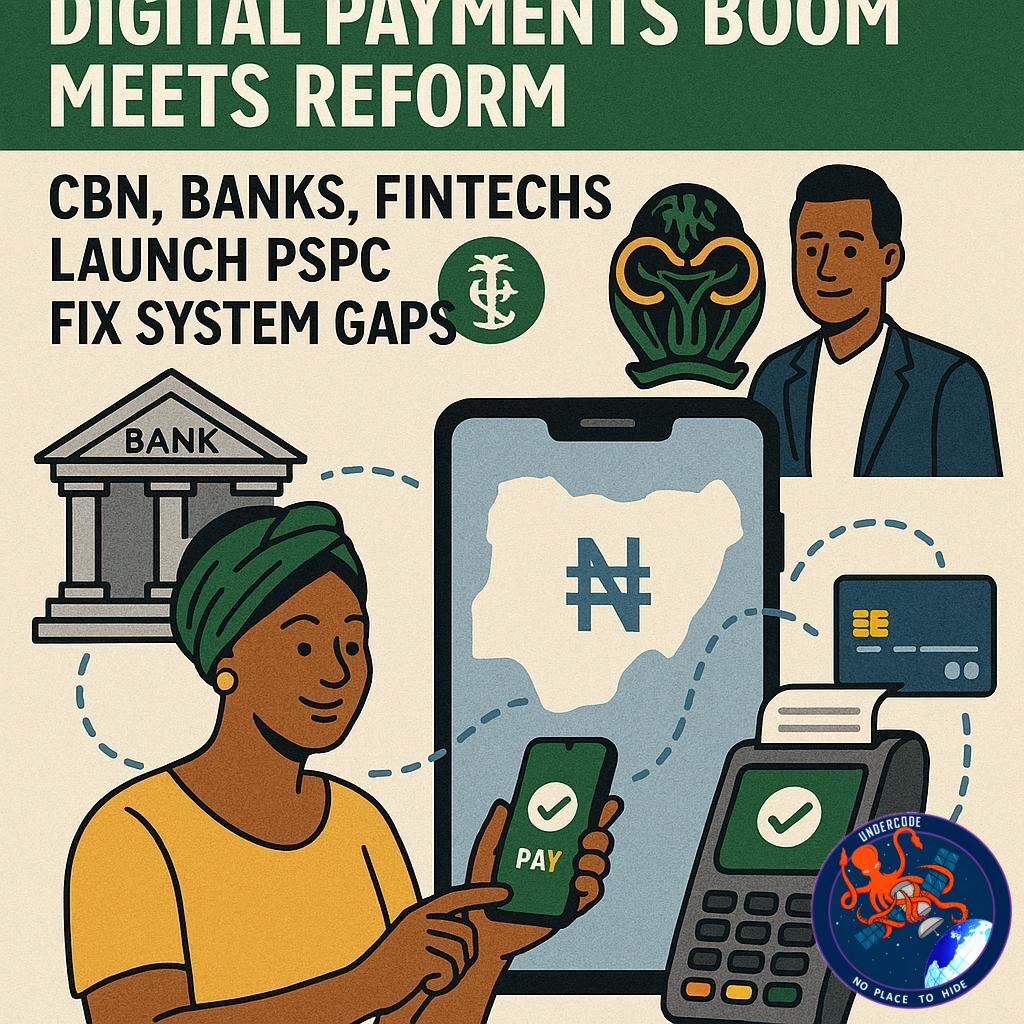
In a major move, the Central Bank of Nigeria, in collaboration with commercial banks and fintech companies, has launched the Payments Service Providers Committee (PSPC). This initiative represents a coordinated industry effort to tackle long-standing structural weaknesses within Nigeria’s payment system.
Unveiled in Lagos, the PSPC brings together a wide range of stakeholders, including deposit money banks, mobile money operators, and financial technology innovators. The goal is simple but ambitious: improve communication, encourage innovation, and ensure that Nigeria’s payment ecosystem remains resilient amid rapid growth.
The initiative reflects a shift from isolated operations to a more integrated model where all participants work together to solve problems. Instead of fragmented responses to system challenges, the PSPC creates a central hub for decision-making and collaboration.
Record-Breaking Growth in Digital Transactions
Nigeria’s payment landscape has reached a historic milestone. In 2024 alone, the country recorded over 11.2 billion electronic transactions, with a total value exceeding ₦1.07 quadrillion. This marks the first time digital payments have crossed the quadrillion-naira threshold, signaling a massive shift in consumer and business behavior.
This growth has not slowed down. The upward trend has continued into 2025 and early 2026, reinforcing the importance of digital payments as a driver of economic activity. As more Nigerians adopt mobile banking, online transfers, and fintech solutions, the system is under increasing pressure to perform efficiently and securely.
The PSPC is designed to ensure that this growth does not outpace the system’s ability to manage it.
Leadership Driving Strategic Change
At the launch, Deputy Governor Muhammad Sani Abdullahi emphasized that the rapid expansion of digital transactions necessitated a coordinated response. He highlighted the importance of collaboration between regulators and private sector players to maintain stability and drive innovation.
According to him, the PSPC will act as a central coordination body, enabling stakeholders to share expertise, align policies, and collectively address operational challenges. This approach ensures that Nigeria remains a leader in digital payments within Africa.
Another key figure, Philip Ikeazor, noted that improved communication between industry players would lead to faster problem resolution. His remarks underscored the importance of real-time collaboration in a rapidly evolving financial environment.
Building a Roadmap for the Future
Beyond the PSPC, the Central Bank is preparing to launch a new three-year payments vision. This strategy aims to define the direction of Nigeria’s financial ecosystem and ensure sustainable growth.
The vision has been co-created with fintech firms, mobile money operators, and payment service providers, reflecting a broad consensus across the industry. It is expected to focus on expanding access to digital financial services, particularly for underserved populations.
By improving financial inclusion, the initiative could help reduce poverty, empower small businesses, and stimulate economic development. Access to efficient payment systems is increasingly seen as a cornerstone of modern economic participation.
Strengthening Security and Fighting Financial Crime
As digital transactions increase, so do risks such as fraud, money laundering, and cyber threats. The Central Bank has made it clear that security will be a top priority in its new strategy.
Enhanced safeguards, including automated fraud detection and anti-money laundering systems, are being deployed to protect users and institutions alike. These technologies are designed to identify suspicious activities in real time, reducing the likelihood of financial losses.
Encouragingly, fraud incidents reportedly dropped by 50% between 2024 and 2025. With further technological upgrades, authorities expect this trend to continue, reinforcing trust in the digital payments ecosystem.
What Undercode Say: The Real Impact Behind the Headlines
The creation of the PSPC is more than just another regulatory initiative; it represents a structural shift in how Nigeria manages its financial ecosystem. Historically, the gap between regulators and private players has often slowed innovation or created inefficiencies. By establishing a unified platform, Nigeria is effectively removing one of the biggest bottlenecks in its financial system.
What stands out is the timing. The digital payments boom has already reached a scale where inefficiencies can no longer be ignored. Crossing the ₦1 quadrillion mark is not just symbolic; it indicates that digital payments are now deeply embedded in the economy. At this scale, even minor system failures can have significant ripple effects.
Another key insight is the emphasis on co-creation. Instead of imposing policies from the top down, the Central Bank is working alongside fintech companies and banks. This collaborative model increases the likelihood of practical, implementable solutions rather than theoretical frameworks that struggle in real-world conditions.
The PSPC could also reshape competition within the fintech space. Smaller players may benefit from improved access to shared infrastructure and clearer regulations, while larger firms may gain stability and scalability. This balance is crucial for maintaining innovation without compromising system integrity.
Security remains the silent backbone of this transformation. A 50% reduction in fraud is impressive, but it also highlights how vulnerable the system once was. Continued investment in AI-driven monitoring and automated compliance tools will be critical as transaction volumes grow.
From a broader perspective, Nigeria is positioning itself as a regional leader in digital finance. Other African nations are likely to observe and potentially replicate this model if it proves successful. The PSPC could become a blueprint for emerging economies dealing with similar growth challenges.
However, challenges remain. Coordination across diverse stakeholders is never easy, and maintaining consistent communication will require ongoing effort. Additionally, as the system grows, new vulnerabilities will inevitably emerge, requiring constant adaptation.
Ultimately, the success of this initiative will depend on execution. The vision is clear, the structure is in place, and the need is undeniable. What remains is the ability to translate these plans into measurable outcomes that benefit everyday users.
Fact Checker Results
✅ Nigeria recorded over 11.2 billion electronic transactions in 2024, exceeding ₦1.07 quadrillion.
✅ The PSPC platform was launched to improve coordination among banks, fintechs, and regulators.
✅ Fraud incidents reportedly dropped by 50% between 2024 and 2025 due to improved systems.
Prediction
Nigeria’s digital payments ecosystem is likely to become one of the most advanced in Africa within the next three years 🚀
Stronger collaboration through PSPC could significantly reduce system failures and transaction delays ⚡
Increased security measures may push fraud rates even lower, boosting trust and adoption among users 🔐
🕵️📝✔️Let’s dive deep and fact‑check.
References:
Reported By: www.legit.ng
Extra Source Hub (Possible Sources for article):
https://www.facebook.com
Wikipedia
OpenAi & Undercode AI
Image Source:
Unsplash
Undercode AI DI v2
Bing
🔐JOIN OUR CYBER WORLD [ CVE News • HackMonitor • UndercodeNews ]
📢 Follow UndercodeNews & Stay Tuned:
𝕏 formerly Twitter 🐦 | @ Threads | 🔗 Linkedin | 🦋BlueSky | 🐘Mastodon


