
Listen to this Post
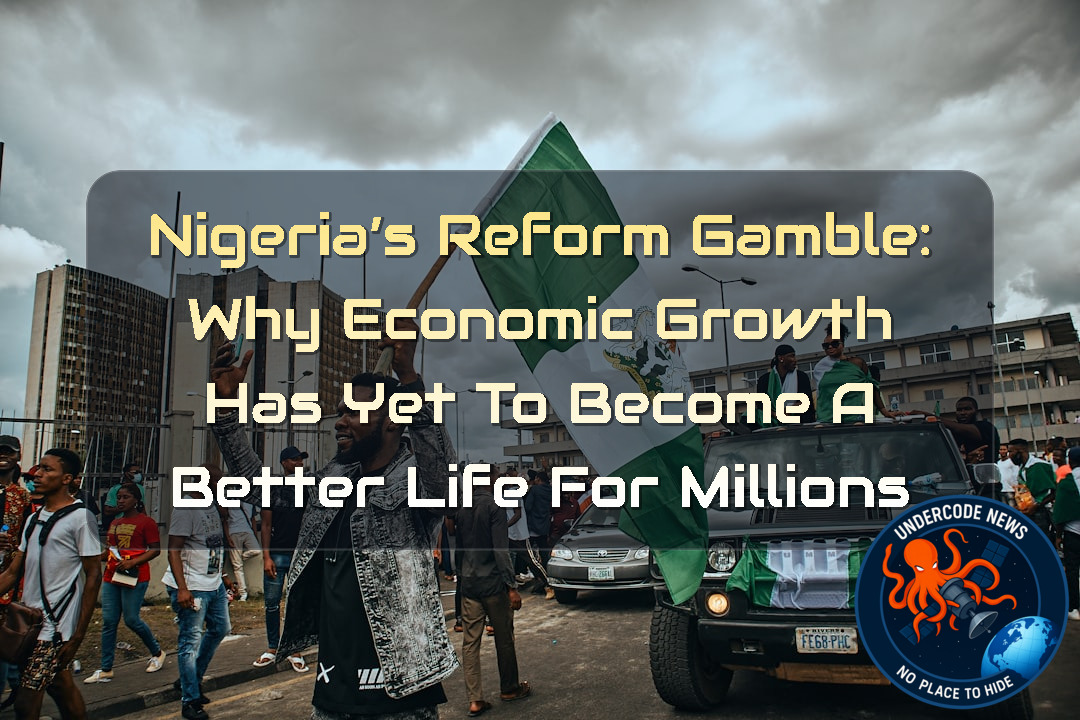 Introduction: When Better Numbers Do Not Feel Like a Better Life
Nigeria’s economy is showing signs of stabilization, but for millions of households and businesses, the recovery still feels distant. The headline figures are becoming more encouraging: real GDP expanded by 3.89% year-on-year in the first quarter of 2026, up from 3.13% in the same quarter of 2025, while the International Monetary Fund continues to project growth of 4.1% for 2026 and 4.3% for 2027.
The Central Contradiction
That creates one of the most important economic questions facing President Bola Tinubu’s administration: What happens when macroeconomic stability improves but ordinary people still struggle to afford everyday life?
The Centre for the Promotion of Private Enterprise (CPPE), led by Chief Executive Officer Dr. Muda Yusuf, argues that Nigeria has made meaningful progress in areas such as foreign-exchange stability, government revenues, external reserves, trade and investor confidence. Yet those gains have not fully translated into stronger household purchasing power, cheaper business operations, more jobs or visibly better living standards.
Growth Is Real, But Growth Alone Is Not Enough
Nigeria’s 3.89% real GDP growth in Q1 2026 is undeniably better than the 3.13% recorded in Q1 2025. The National Bureau of Statistics also reported that agriculture grew by 3.15%, manufacturing by 3.29%, and the broader industry sector by 3.50%.
But there is an important detail hiding beneath the headline number: the economy grew more slowly than the 4.07% recorded in the final quarter of 2025. In other words, Nigeria is expanding, but the recovery is neither explosive nor evenly distributed.
The Reform Question Is Moving Into a New Phase
The first stage of Tinubu’s economic programme was largely about stabilization. Fuel subsidies were removed, the foreign-exchange regime was significantly altered, fiscal reforms were introduced and the government sought to strengthen public revenues.
Those measures were always likely to create short-term pain. The argument behind them was that Nigeria could not continue operating indefinitely with distortions that weakened public finances, discouraged investment and placed pressure on the currency.
The Harder Test Begins Now
Stabilization, however, is only the beginning.
A stable currency market is valuable. Higher government revenue is valuable. Stronger reserves are valuable. Investor confidence is valuable.
But a Nigerian family that still struggles with food, transport, rent and electricity bills may reasonably ask a different question: Where is the benefit?
“Macroeconomic Stability Is a Means, Not an End”
That is the heart of the CPPE’s argument.
The organization’s position is that macroeconomic improvements should eventually produce measurable changes in productivity, employment, investment, household income and living standards.
The distinction is critical. An economy can become more stable without immediately becoming more prosperous for the average citizen.
Purchasing Power Remains the Missing Link
For households, one of the most important economic indicators is not GDP. It is purchasing power.
If salaries rise by 10% while essential expenses rise much faster, workers may technically be earning more money while becoming poorer in practical terms.
This is why inflation and income growth must be viewed together. Nigeria can report economic expansion while consumers continue reducing the quantity and quality of what they buy.
Inflation Changes the Meaning of Growth
The IMF’s June 2026 IV assessment captured this tension clearly. It said Nigeria’s reforms had produced improved macroeconomic outcomes and greater resilience, while also noting that conditions remained difficult for many Nigerians. The IMF estimated that poverty had reached 63% at the national poverty line and said 27 million Nigerians were estimated to have experienced food insecurity in autumn 2025.
That combination explains why economic statistics can tell two seemingly contradictory stories at the same time.
The Investor Sees One Nigeria, the Consumer Sees Another
An international investor may look at improving foreign-exchange conditions and see a country becoming easier to evaluate.
A government economist may look at stronger revenues and see improving fiscal capacity.
A manufacturer may look at GDP growth and see rising demand.
But a household facing higher food and transportation costs experiences the economy at street level.
All four perspectives can be correct simultaneously.
Electricity Is a Warning Signal
Perhaps nowhere is this contradiction more visible than in the electricity sector.
The electricity sector contracted by 15.3% in Q1 2026, even as manufacturing grew by 3.29% and agriculture expanded by 3.15%.
That is more than a disappointing sectoral statistic. It is a structural warning.
Why Power Matters So Much
Electricity is an input into almost everything.
Factories need it to operate machinery. Small businesses need it to preserve food, charge devices, run computers and power equipment. Hospitals need reliable electricity. Farmers and processors increasingly depend on electricity for irrigation, storage and processing.
When electricity supply is unreliable or expensive, businesses compensate by purchasing diesel or petrol for generators.
The Hidden Tax on Nigerian Businesses
Generator dependence effectively creates a second electricity bill.
A company may pay for grid electricity while simultaneously paying for fuel, generator maintenance, repairs and staff responsible for keeping backup systems running.
Those expenses eventually appear in the prices consumers pay.
This is why electricity is not simply an infrastructure issue. It is an inflation issue, a productivity issue and a competitiveness issue.
Manufacturing Shows What Is Possible
Despite these constraints, manufacturing recorded real growth of 3.29% in Q1 2026, according to the NBS.
That modest expansion is encouraging because manufacturing creates a deeper economic impact than simply increasing consumption.
A stronger manufacturing base can create jobs, increase domestic value addition, reduce import dependence and improve export capacity.
But 3.29% Is Not a Transformation
The danger is confusing recovery with transformation.
A sector growing from a weak base can record respectable percentage gains without fundamentally changing the structure of the economy.
Nigeria needs sustained industrial expansion, not occasional rebounds.
Agriculture Is Also Recovering
Agriculture grew by 3.15% in Q1 2026, a significant improvement from the 0.07% recorded in Q1 2025.
That improvement matters because agriculture remains deeply connected to food prices, rural employment and household welfare.
But agricultural productivity cannot improve permanently without better roads, storage facilities, irrigation, security, electricity, financing and market access.
The Infrastructure Chain Matters
A farmer who produces more food but loses part of the harvest because of poor storage has not experienced the full benefit of higher productivity.
A manufacturer that produces more goods but cannot move them efficiently to customers faces another constraint.
A retailer who pays more to transport products eventually transfers part of that cost to consumers.
Economic reform therefore cannot operate in isolated compartments.
Logistics Is an Economic Problem
Nigeria’s logistics burden is another reason why macroeconomic improvements have not immediately translated into cheaper goods.
Poor roads, congestion, security concerns, fuel expenses and inefficient supply chains increase the cost of moving products from farms and factories to markets.
When every stage of a supply chain becomes more expensive, consumers ultimately pay the difference.
Financing Costs Remain Critical
Businesses also need access to affordable capital.
A company may have demand for its products but still decide against expanding because borrowing costs make the investment unattractive.
High financing costs can discourage factories from purchasing new equipment, prevent small companies from hiring workers and make long-term investment difficult.
Monetary Policy Has a Difficult Balancing Act
The Central Bank of Nigeria faces a difficult problem.
Cutting interest rates too aggressively could weaken the fight against inflation or destabilize financial markets.
Keeping rates restrictive for too long, however, can make credit painfully expensive for businesses.
The challenge is therefore not simply to reduce rates. It is to create the conditions under which inflation falls sufficiently for financing costs to decline without sacrificing currency and financial stability.
Fiscal and Monetary Coordination Matters
This is why closer coordination between fiscal and monetary authorities is important.
Fiscal policy determines how government raises and spends money.
Monetary policy influences liquidity, interest rates, inflation expectations and financial conditions.
If these policies work against each other, businesses and consumers pay the price.
Higher Government Revenue Must Become Visible
The CPPE’s argument that higher revenues should produce a visible welfare dividend deserves particular attention.
If government collects more revenue, citizens should eventually be able to identify improvements in public services.
That means better roads, stronger healthcare, improved schools, public transportation, security, agricultural infrastructure and electricity.
Revenue Without Better Services Creates Frustration
There is a political and economic limit to how much hardship citizens will tolerate if they cannot see corresponding improvements in public services.
People can accept difficult reforms more readily when they believe the sacrifice is temporary and connected to a better future.
Without visible results, however, reform fatigue can become a serious threat.
The Risk of Reform Reversal
Dr. Yusuf also warned against reversing the reform programme.
That concern is economically significant.
Investors make decisions based not only on current conditions but also on expectations about future policy.
If Nigeria suddenly reverses major reforms, investors may interpret the move as evidence of policy uncertainty.
Confidence Can Disappear Quickly
Foreign-exchange markets are particularly sensitive to confidence.
If businesses and investors believe policy is becoming unpredictable, they may delay investment, reduce exposure or increase demand for foreign currency.
That can create new pressure on the exchange rate.
In this sense, policy consistency can itself become an economic asset.
But Continuity Does Not Mean Stubbornness
Maintaining reforms should not mean refusing to adjust them.
A successful reform programme must respond to evidence.
If a policy produces unintended consequences, policymakers should modify its implementation without abandoning the larger objective.
That distinction is essential: policy consistency is not the same thing as policy rigidity.
The IMF Outlook Offers Encouragement
The IMF’s July 2026 World Economic Outlook Update projects Nigeria’s economy to grow by 4.1% in 2026 and 4.3% in 2027. The Fund linked Nigeria’s outlook to improved macroeconomic stability and favorable terms-of-trade effects.
That is a positive signal.
It suggests international observers still see the possibility of sustained expansion if reforms remain credible.
But the IMF Also Provides a Warning
The same IMF assessment warned that higher prices for essentials could worsen poverty and food insecurity.
That is perhaps the most important part of the forecast.
Economic growth can continue while households remain under pressure if the gains are not sufficiently broad-based.
The Real Goal Should Be Per-Capita Prosperity
Nigeria is a large and rapidly growing country.
That means total GDP growth alone does not tell the complete story.
What matters to citizens is whether economic output grows faster than population, whether real incomes increase, whether productivity improves and whether access to essential services becomes more affordable.
Jobs Are the Ultimate Test
A successful economic reform programme should eventually show up in employment.
Not simply temporary government programmes or informal survival activities, but productive jobs that provide stable incomes.
Manufacturing, agriculture, technology, construction, logistics and services all have the potential to contribute to this process.
Productivity Must Become the New Keyword
The next phase of Nigeria’s reform agenda should therefore be built around productivity.
How much can a worker produce?
How cheaply can a manufacturer produce?
How quickly can goods move?
How reliably can electricity be supplied?
How easily can a small business access financing?
How much value can Nigeria add before exporting its products?
Those questions are more important now than simply asking whether GDP is growing.
Domestic Production Can Reduce Vulnerability
A stronger domestic productive base can also protect Nigeria from external shocks.
If more food, manufactured goods and industrial inputs are produced locally, the economy becomes less vulnerable to disruptions in international markets and currency fluctuations.
But protectionism must be carefully designed.
Trade Policy Needs Balance
Protecting local industries does not mean making every imported product prohibitively expensive.
Some Nigerian manufacturers depend on imported machinery, components, chemicals or other inputs that are not readily available domestically.
A smart trade policy should protect emerging domestic capacity while keeping essential productive inputs accessible.
Small Businesses Cannot Be Ignored
Nigeria’s small businesses are especially important because they operate closest to the household economy.
They create employment, distribute goods and provide services across cities and rural communities.
But they are also among the most vulnerable to electricity costs, high interest rates, transportation expenses, taxes and regulatory complexity.
Regulation Should Help Businesses Grow
Government regulation is necessary, but excessive administrative burdens can become a hidden tax on entrepreneurship.
When a small company spends too much time navigating permits, levies, paperwork and overlapping requirements, fewer resources remain available for hiring workers or expanding production.
The Reform Dividend Must Reach the Street
Ultimately, Nigeria’s reform story will not be judged by economic reports alone.
It will be judged in markets.
It will be judged by the price of food.
It will be judged by electricity bills.
It will be judged by whether young Nigerians can find meaningful work.
It will be judged by whether manufacturers can expand without depending excessively on generators.
It will be judged by whether families can afford transportation, housing, healthcare and education.
Nigeria Is Not at the Finish Line
The current numbers suggest that Nigeria is not facing an economic collapse.
Quite the opposite.
There are credible signs of stabilization, stronger growth and improving macroeconomic conditions.
But stabilization is not prosperity.
The distance between the two is where the next stage of reform must concentrate.
Deep Analysis: From Macroeconomic Stabilization to Household Reality
Reading the GDP Number Correctly
The 3.89% Q1 2026 GDP growth rate should be interpreted as evidence of continued expansion rather than proof that the economic crisis has ended. The NBS confirms that growth improved from 3.13% a year earlier but remained below Q4 2025’s 4.07%.
Looking Beyond the Headline
The composition of growth matters as much as the headline number.
Services remained the largest contributor to real GDP, while agriculture, manufacturing and other sectors recorded varying degrees of improvement.
This suggests that Nigeria’s economy is becoming more resilient, but the productive transformation remains incomplete.
Electricity Is the Structural Red Flag
The 15.3% contraction in electricity is especially significant because reliable power is an enabling factor for other sectors.
If industrial output rises despite weaker electricity performance, part of that growth may be occurring through expensive private power generation rather than through a healthier national power system.
A Simple Economic Stress Test
Analysts can think about the reform dividend using a simple relationship:
Real household welfare ≈ real income growth − essential-cost inflation
If income increases but essential costs increase faster, households can remain under severe pressure despite GDP growth.
Calculating the Growth Improvement
The improvement from 3.13% to 3.89% can be calculated with a simple Python command:
python3 -c "print(3.89-3.13)"
The result is 0.76 percentage points, matching the increase reported from Q1 2025 to Q1 2026.
Measuring Relative Growth Improvement
The percentage increase in the growth rate itself can also be calculated:
python3 -c "print(((3.89-3.13)/3.13)100)"
That produces roughly 24.3%, although economists should normally describe the change as a 0.76 percentage-point increase, not a 24.3% increase in economic output.
Why That Distinction Matters
Confusing percentage points with percentages can dramatically distort economic reporting.
Nigeria did not suddenly produce 24.3% more goods and services.
Rather, the annual real GDP growth rate moved from 3.13% to 3.89%.
Testing the Manufacturing Signal
Manufacturing growth of 3.29% is encouraging, particularly because industrialization is central to Nigeria’s long-term development strategy. The NBS confirms the sector expanded faster than in the corresponding period of 2025.
But manufacturing needs sustained investment over multiple years before its effect on employment, exports and household income becomes transformational.
Testing the Agriculture Signal
Agriculture’s 3.15% growth is another positive indicator.
The sector’s rebound from extremely weak growth in Q1 2025 shows that agricultural activity can recover when conditions improve.
However, production growth must eventually be supported by storage, processing, irrigation, transportation and access to markets.
Testing the Electricity Problem
A sector contraction of 15.3% is large enough to deserve policy attention even within an economy growing overall.
The key analytical question is whether electricity performance represents a temporary fluctuation or a deeper structural problem.
If the latter, it could become a ceiling on industrial growth.
The Investment Feedback Loop
A stronger economy can attract investment.
Investment can increase production.
Higher production can create jobs.
More jobs can increase household income.
Higher household income can increase demand.
Higher demand can encourage additional investment.
This positive feedback loop is what Nigeria ultimately needs to establish.
The Negative Feedback Loop
The opposite loop is equally dangerous.
High energy costs raise production costs.
Higher production costs increase prices.
Higher prices weaken purchasing power.
Weak demand discourages investment.
Lower investment slows job creation.
Slower job creation weakens household incomes.
Breaking that cycle should be one of the government’s priorities.
Foreign Exchange Is Only One Piece of the Puzzle
Improved foreign-exchange stability can make business planning easier.
But exchange-rate stability alone cannot solve electricity shortages, poor roads, expensive credit or weak domestic productivity.
The reform agenda therefore needs to move beyond currency management.
Fiscal Reform Must Produce Investment
Higher public revenue should ideally create greater fiscal capacity for infrastructure and essential services.
If additional revenue is absorbed primarily by recurrent expenses without improving productive infrastructure, the long-term economic dividend will be limited.
Monetary Reform Must Protect Purchasing Power
The central bank’s objective should not be viewed only through the lens of financial markets.
Lower and more predictable inflation eventually helps households plan their spending and businesses plan investment.
That is why disinflation is directly connected to living standards.
Reform Credibility Is an Economic Asset
Businesses need to know what tax, currency, trade and monetary rules will look like six months or two years from now.
Greater predictability lowers the risk premium attached to investment.
That can make projects that previously looked too risky financially viable.
The Policy Sequence Matters
Nigeria has already moved through the stabilization phase.
The next logical sequence is:
stability → productivity → investment → employment → higher real incomes → improved living standards.
If the chain breaks at productivity or investment, the benefits of stabilization may never reach households at the required scale.
The Reform Scorecard Should Change
GDP growth should remain important.
But policymakers should also track employment, real wages, electricity reliability, logistics costs, manufacturing investment, household consumption and business survival.
These indicators can reveal whether growth is becoming genuinely inclusive.
What Investors Should Watch
Investors should pay particular attention to currency stability, inflation, energy costs, interest rates, government borrowing, oil production, manufacturing activity and consumer demand.
The IMF’s 4.1% growth projection for 2026 provides a constructive baseline, but the Fund also highlights risks from higher essential prices and poverty.
What Businesses Should Watch
Companies should watch whether financing conditions gradually improve as inflation falls.
They should also monitor electricity costs, infrastructure investment and trade-policy changes.
These factors will determine whether the current recovery becomes a sustained business expansion.
What Households Should Watch
For ordinary Nigerians, the most meaningful indicators are simpler.
Food prices.
Transportation costs.
Rent.
Electricity expenses.
Employment opportunities.
Real wages.
Access to healthcare and education.
Those are the metrics that transform an abstract economic recovery into something people can actually feel.
The Bigger Economic Picture
Nigeria appears to be moving away from the instability that characterized parts of the previous period, but the transition remains incomplete.
The country has an opportunity to turn stabilization into structural economic transformation.
That opportunity will depend on whether policymakers can reduce the cost of doing business while simultaneously protecting vulnerable households.
The Most Important Question
The question is no longer simply whether Tinubu’s reforms are producing economic statistics that look better.
The harder question is whether those reforms can eventually create an economy in which Nigerians can produce more, earn more and afford more.
That is the real reform dividend.
What Undercode Say:
1. Growth Must Become Personal
A 3.89% GDP growth rate is encouraging, but people do not eat GDP percentages.
They experience economic performance through income, prices, jobs and services.
The success of reform should therefore be measured partly by how much better ordinary households are able to live.
2. Stabilization Was Necessary
The reforms undertaken so far were not without economic justification.
Nigeria needed to address structural distortions, fiscal weaknesses and foreign-exchange problems.
The challenge is that necessary reforms can still impose significant costs on households during the transition.
3. The Pain Cannot Become Permanent
Temporary economic pain can sometimes be justified by a credible long-term recovery strategy.
Permanent hardship cannot.
If households continue to experience declining purchasing power while macroeconomic indicators improve, political and social support for reform could weaken.
4. Electricity May Be the Biggest Bottleneck
The 15.3% contraction in electricity should concern policymakers.
Manufacturing cannot become globally competitive while energy remains one of its largest operating expenses.
Electricity reform should therefore be treated as an economic growth policy rather than merely an infrastructure programme.
5. Manufacturing Deserves Priority
Manufacturing growth of 3.29% provides a foundation.
But Nigeria needs years of sustained industrial investment.
The country cannot rely excessively on imports and commodity exports if it wants durable employment growth.
6. Agriculture Needs a Full Ecosystem
Agricultural growth must extend beyond farm production.
Storage, irrigation, roads, security, processing, financing and market access are equally important.
Otherwise, higher production may fail to produce proportional gains in farmer incomes.
7. SMEs Need Relief
Small businesses are among the first casualties when electricity, financing, transportation and regulatory costs rise.
Helping them is not simply a social policy.
It is an economic growth strategy.
8. Revenue Must Be Visible
If government revenues improve, citizens should eventually see stronger public services.
The connection between taxes and development needs to become more visible.
That can also improve public confidence in fiscal reform.
9. Policy Consistency Matters
Frequent reversals can scare away investment.
Businesses need predictable rules to commit capital.
Reforms should therefore be stable enough to inspire confidence while flexible enough to respond to evidence.
10. Flexibility Is Not Failure
Changing a policy after observing unintended consequences is not necessarily an admission that reform failed.
It can be evidence that policymakers are learning.
The objective should be economic outcomes, not ideological loyalty to a particular policy mechanism.
11. The IMF Outlook Is Encouraging
The IMF’s 4.1% growth forecast for 2026 and 4.3% projection for 2027 suggest that Nigeria’s stabilization story has gained credibility internationally.
That should be treated as an opportunity, not a victory lap.
12. Poverty Remains the Ultimate Warning
The IMF’s assessment that poverty remained extremely high shows why macroeconomic reform must be judged against welfare outcomes as well as financial indicators.
Economic growth that fails to reach vulnerable households eventually loses much of its social value.
- The Currency Is Not the Whole Economy
Foreign-exchange stability can improve confidence.
But a stable currency cannot compensate for unreliable electricity, expensive credit or poor infrastructure.
Nigeria needs a much broader productivity strategy.
14. Oil Still Matters
Nigeria remains an oil exporter, and stronger oil production or favorable prices can improve fiscal and external conditions.
But oil revenue cannot substitute for diversification.
The long-term goal should be to use oil-related resources to strengthen non-oil productive capacity.
15. Services Are Powerful but Not Sufficient
Services remain the largest part of Nigeria’s economy.
Technology, telecommunications, finance and commerce can generate significant value.
But a balanced economy also needs strong agriculture, manufacturing, construction and energy infrastructure.
16. Productivity Is the Missing Bridge
The country has to produce more value per worker, per unit of capital and per unit of energy.
That requires investment in skills, technology, infrastructure and reliable utilities.
17. Investment Needs Confidence
Investors respond to opportunity, but they also respond to risk.
Stable policy, predictable taxation, reliable infrastructure and functioning financial markets can reduce the risk attached to Nigerian investment.
18. The Consumer Cannot Be Forgotten
Economic policy can become overly focused on investors, government revenue and financial markets.
Consumers must remain central.
Without healthy consumer purchasing power, businesses eventually struggle to expand.
19. Inflation Is More Than a Number
A lower inflation rate does not necessarily mean prices have returned to previous levels.
If prices rose sharply before inflation slowed, households may still be dealing with a much higher cost base.
This distinction is crucial when evaluating living standards.
20. Real Wages Matter
Nominal salaries can rise while real wages fall.
What matters is how much workers can actually purchase with their income.
This is why wage growth must always be considered alongside inflation.
21. Transport Is Part of Inflation
When logistics become expensive, nearly every product becomes more expensive.
Improving roads and transportation can therefore have an anti-inflationary effect beyond simply making travel easier.
22. Infrastructure Can Multiply Growth
Good infrastructure reduces the cost of private economic activity.
That means government infrastructure spending can create benefits far beyond the original construction project.
23. Security Is Also Economic Infrastructure
Farmers cannot maximize production when insecurity prevents them from accessing land.
Businesses cannot invest confidently when transportation routes are unsafe.
Security therefore belongs inside economic policy discussions.
24. Trade Policy Needs Intelligence
Nigeria should protect strategic industries where appropriate.
But blanket restrictions can also increase costs for manufacturers that depend on imported machinery or inputs.
Smart protection is better than indiscriminate protection.
25. Capital Access Is Critical
A promising entrepreneur cannot expand a business if financing is inaccessible or prohibitively expensive.
Improving credit availability could unlock substantial productive capacity.
26. Energy Costs Need Structural Solutions
Short-term fuel subsidies or temporary interventions may provide relief.
But long-term competitiveness requires a more reliable and efficient energy system.
27. Reform Fatigue Is a Real Risk
Citizens who experience repeated sacrifices without visible benefits may eventually become skeptical of reform itself.
That makes delivery increasingly important.
28. Communication Matters
Government needs to explain not only what it is changing but also what citizens should expect to gain and when.
Transparent communication cannot solve economic problems, but poor communication can make legitimate reforms harder to sustain.
- The Next Phase Should Be More Targeted
The stabilization phase was broad.
The productivity phase should be more targeted.
Electricity, transport, agriculture, manufacturing, financing and small businesses deserve focused interventions.
30. The Private Sector Must Lead Growth
Government cannot create every job.
Its role should increasingly be to create conditions in which private businesses can invest, expand and hire.
- Public Investment Should Crowd In Private Investment
The ideal relationship is not government versus business.
It is government investment creating conditions for private investment to follow.
32. Growth Needs Depth
A larger GDP is useful.
A deeper productive economy is better.
Nigeria needs more companies producing competitive goods and services for domestic and international markets.
33. Exports Matter
Export competitiveness can strengthen foreign-exchange earnings and reduce dependence on volatile commodity revenues.
Manufacturing and processed agricultural products should therefore receive greater strategic attention.
34. Domestic Value Addition Matters
Exporting raw commodities limits the economic value retained inside the country.
Processing, refining and manufacturing can create additional jobs and income before products reach international markets.
35. Young Nigerians Need Opportunity
A growing working-age population can become an enormous economic advantage if enough productive jobs are created.
Without employment opportunities, demographic growth can instead increase social and economic pressure.
36. The Reform Window Is Open
The current stabilization creates an opportunity to push deeper structural reforms.
The government should use the window while investor confidence is improving.
37. The Next Two Years Are Crucial
If growth accelerates while inflation continues falling and investment increases, Nigeria could enter a much stronger economic phase.
If growth remains weak while household costs stay elevated, frustration could deepen.
38. The Numbers Should Be Watched Together
GDP, inflation, exchange rates, electricity, employment and household purchasing power should not be analyzed separately.
Together, they tell the real story.
39. Nigeria Needs an Economic Dividend
The ultimate objective of reform should be an economy where stabilization produces tangible benefits.
More jobs.
Higher real incomes.
Lower business costs.
Better infrastructure.
More reliable electricity.
Greater productivity.
40. The Verdict Is Still Being Written
Nigeria’s reform story is neither an obvious failure nor a completed success.
The evidence points to genuine macroeconomic improvement alongside persistent hardship.
The next phase will determine which side of that contradiction becomes dominant.
✅ Nigeria’s GDP Grew 3.89% in Q1 2026
The National Bureau of Statistics confirms that real GDP grew by 3.89% year-on-year in Q1 2026, compared with 3.13% in Q1 2025.
The figure is therefore accurately reported in the original article.
It is also important to note that Q1 growth was below the 4.07% recorded in Q4 2025.
✅ Manufacturing Grew 3.29%
The NBS reports that real manufacturing GDP increased by 3.29% year-on-year in Q1 2026.
This supports the article’s claim that manufacturing recorded modest growth.
The result is encouraging but should not be interpreted as evidence of a full industrial transformation.
✅ Agriculture Grew 3.15%
NBS data confirms agriculture grew by 3.15% in Q1 2026, a significant improvement from 0.07% in Q1 2025.
The agricultural rebound is therefore correctly described.
However, production growth does not automatically mean that farmers or consumers experience immediate welfare improvements.
✅ Electricity Contracted by 15.3%
The reported 15.3% contraction in the electricity sector is supported by reporting based on the Q1 2026 NBS GDP figures.
This makes electricity one of the most important weaknesses highlighted by the article.
The decline also strengthens the argument that infrastructure remains a major constraint on Nigeria’s productive economy.
✅ IMF Forecasts 4.1% Growth for 2026
The IMF’s July 2026 World Economic Outlook Update projects Nigeria’s real GDP growth at 4.1% in 2026 and 4.3% in 2027.
The article’s forecast figures are therefore accurate.
The IMF nevertheless warns that higher essential prices could aggravate poverty and food insecurity, reinforcing the article’s central argument.
⚠️ “Reform Gains Have Yet to Improve Living Standards” Needs Context
The statement is best understood as an assessment from the CPPE rather than a measurable claim that living standards have not improved in any respect.
Nigeria has recorded measurable macroeconomic improvements, while household conditions remain difficult.
The two realities can coexist, which is precisely why the distinction between stabilization and welfare is important.
Prediction
(+1) Nigeria Could Enter a Stronger Growth Phase If Stabilization Becomes Productivity
If the government can maintain macroeconomic stability while tackling electricity costs, infrastructure bottlenecks, financing conditions and industrial productivity, Nigeria could move into a stronger phase of recovery over the next several years.
The IMF already expects growth to rise from 4.1% in 2026 to 4.3% in 2027.
The bigger opportunity is turning that growth into employment, stronger real incomes and greater domestic production.
(+1) Manufacturing Could Become a More Important Growth Engine
If energy reliability improves and financing becomes more accessible, manufacturing could accelerate beyond its current modest growth rate.
That would create a stronger connection between GDP expansion and employment.
(+1) Better Agricultural Infrastructure Could Reduce Food Pressure
Investment in irrigation, storage, transportation, security and processing could help Nigeria capture more value from agricultural production.
That could eventually support both farmer incomes and food-market stability.
(-1) Reform Fatigue Could Intensify If Household Costs Remain High
The greatest risk is that macroeconomic stabilization remains visible mainly in financial statistics while households continue struggling with food, transportation, electricity and housing costs.
If that happens, public confidence in the reform programme could weaken.
(-1) Electricity Could Become a Ceiling on Industrial Growth
If the electricity sector continues to underperform, manufacturers and small businesses may remain dependent on expensive private power.
That would limit competitiveness and keep operating costs elevated.
(-1) Policy Reversal Could Damage Investor Confidence
A sudden reversal of major reforms could create uncertainty in foreign-exchange markets and discourage investment.
Maintaining a credible policy direction while correcting ineffective implementation is therefore likely to be safer than abandoning reforms altogether.
Final Outlook: Nigeria Has Stabilized, But the Hardest Part Is Still Ahead
The Difference Between Recovery and Prosperity
Nigeria’s economic story in 2026 is becoming more complicated—and more interesting.
The country is no longer simply fighting for macroeconomic stabilization. It is now facing the harder task of converting stabilization into prosperity.
The Numbers Offer Hope
GDP is growing.
Manufacturing is expanding.
Agriculture has improved.
The IMF continues to forecast solid growth.
Foreign-exchange conditions have become more stable.
These are meaningful achievements.
But the Household Test Remains
At the same time, high living costs, weak purchasing power, expensive financing, infrastructure deficits and electricity problems continue to weigh heavily on households and businesses.
That means Nigeria has not yet reached the point where macroeconomic recovery automatically feels like personal economic recovery.
The Next Phase Must Be Different
The next phase of reform should be judged less by whether government balance sheets look healthier and more by whether businesses can produce more cheaply and whether households can live better.
The transition should be from stabilization to productivity, from revenue growth to public value, and from GDP expansion to higher real living standards.
The Reform Story Is Still Unfinished
Nigeria has reached an important crossroads.
Abandoning reform could recreate some of the instability that policymakers have spent years trying to address.
But simply continuing reforms without adapting them to the realities faced by households and businesses could leave the most important economic promise unfulfilled.
The answer lies somewhere between those extremes: keep the reforms that improve stability, fix the ones that impose unnecessary damage, and aggressively invest in the infrastructure and productive capacity needed to make growth meaningful.
The Real Victory Will Be Felt, Not Announced
When Nigerians can point to cheaper and more reliable electricity, stronger wages, more jobs, better roads, improved public services, affordable financing and lower business costs, the reform dividend will no longer need to be explained.
People will feel it.
And that—not a GDP percentage alone—will ultimately determine whether Nigeria’s economic transformation is remembered as a painful adjustment that produced numbers, or as a difficult reform era that genuinely changed lives.
🕵️📝Let’s dive deep and fact‑check.
🎓 Live Courses & Certifications:
Join Undercode Academy for Verified Certifications
🚀 Request a Custom Project:
Secure, high-velocity infrastructure and disruptive technological engineering. Contact our engineering team for high-tier development and proprietary systems:
[email protected]
💎 Smart Architecture | 🛡️ Secure by Design | ⭐ Trusted by Thousands
References:
Reported By: www.legit.ng
Extra Source Hub (Possible Sources for article):
https://www.medium.com
Wikipedia
OpenAi & Undercode AI
Image Source:
Unsplash
Undercode AI DI v2
🔐JOIN OUR CYBER WORLD [ CVE News • HackMonitor • UndercodeNews ]
📢 Follow UndercodeNews & Stay Tuned:
𝕏 formerly Twitter 🐦 | @ Threads | 🔗 Linkedin | 🦋BlueSky | 🐘Mastodon | 📺Youtube


