
Listen to this Post
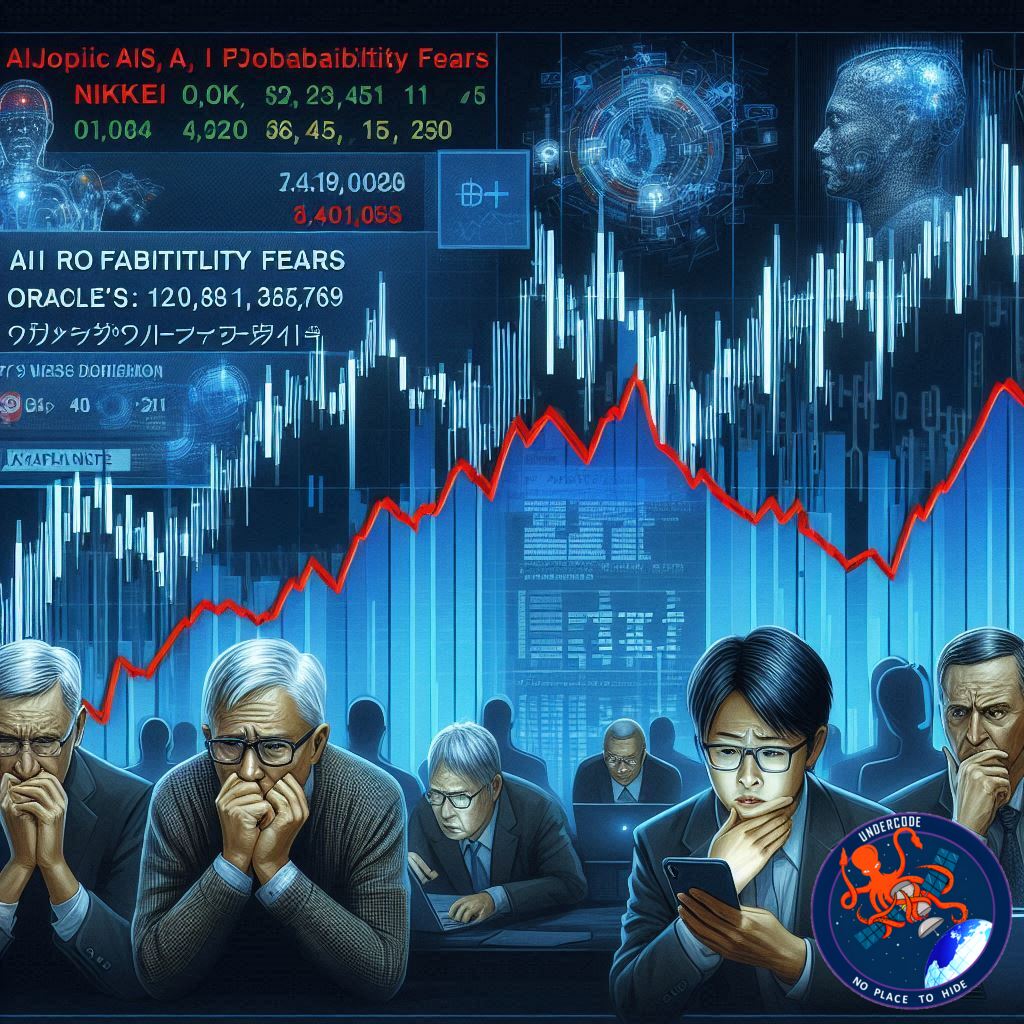
In a dramatic turn for Asian equity markets, Japan’s benchmark Nikkei 225 index experienced a sharp sell‑off, closing sharply lower as investor confidence wavered amid renewed concerns over the profitability of artificial intelligence (AI) investments. The slide in technology‑linked stocks was triggered in part by unsettling reports surrounding Oracle’s AI data‑center financing and its wider implications for the valuation and financial sustainability of AI‑focused companies. This market movement underscores how quickly sentiment can shift when high expectations around AI earnings meet hard economic realities.
On December 18, the Tokyo Stock Exchange saw the Nikkei average finish down more than 500 points, with the index breaking key psychological levels and marking a broad pullback in risk assets. The sell‑off reflected global pressures: losses in U.S. and Asian tech stocks, concerns about future interest rate moves, and a cautionary stance from investors ahead of major economic data. Much of the weakness was concentrated in AI and semiconductor names, highlighting how dependent market valuations have become on AI growth narratives.
Business Recorder
+1
Market Movements
On Thursday trading in Tokyo, the Nikkei 225 fell sharply, dipping over 500 points (around 1%) by the mid‑day session compared with the previous closing level. Early losses sparked widespread selling; at one point, declines exceeded 800 points as risk appetite diminished.
Business Recorder
A key catalyst for this downturn was renewed speculation that investor confidence in Oracle’s AI‑related ventures was weakening. Reports suggested that a major U.S. investment firm pulled back from funding an AI data‑center project with Oracle, reviving fresh doubts about the overall profitability of deep AI investments and the timelines for returns on these capital‑intensive builds. Although companies have pushed back against some of these claims, the initial headlines were enough to shake markets.
Barron’s
The decline rippled through the broader technology sector, dragging down stocks tied to AI, semiconductors, and data infrastructure in both Japan and overseas. Investors also responded to broader market signals, including caution ahead of key U.S. economic announcements and shifting expectations around monetary policy from central banks, including the Bank of Japan.
Business Recorder
What Undercode Say: Market Sentiment and the AI Paradox
The recent drop in the Nikkei highlights a pivotal moment in the markets’ relationship with AI narratives. For the better part of the past two years, AI stocks — from large cap tech giants to semiconductor suppliers — have been perceived as guaranteed growth engines, blessed with high valuations and near‑universal investor confidence. But that confidence rests heavily on the assumption that AI investment will eventually translate into durable profits and robust cash flows. When that assumption is questioned — even transiently — the market response is swift and severe.
The anxiety around Oracle’s financing for its AI data centers is not purely about one project; it has evolved into a symbolic stress test of the entire AI investment thesis. Oracle, despite its scale and legacy, has taken on enormous expenditures to build AI infrastructure and secure contracts with big AI clients. When financing partners or analysts suggest that these investments may be harder to fund or slower to pay off, it doesn’t just affect Oracle’s stock — it resonates across every company whose valuation is tied to future AI earnings.
Investors.com
This sell‑off also reveals a growing disconnect between hype and fundamentals. Expectations for explosive AI growth have been baked into stock prices for so long that any hint of financing instability or slower adoption creates outsized volatility. In essence, the market is grappling with a paradox: AI remains a transformative technology with vast long‑term potential, yet near‑term financial returns and funding models are proving far more complex and uncertain. That uncertainty forces investors to reassess risk, leading to swift rotation out of high‑beta tech names and into safer assets or sectors with clearer cash flow prospects.
Moreover, the broader macro environment plays a role. Central banks’ shifts in monetary policy, inflation dynamics, and global economic growth forecasts influence risk tolerance. When combined with profit concerns around AI spending, these factors converge to create a fragile market psychology that reacts sharply to negative news.
In this context, the Nikkei’s slide is not just about one headline; it’s a barometer of deeper investor unease about the sustainability of current valuations in an evolving technological landscape.
Fact Checker Results
• AI investment concerns are real, but Oracle denies project delays; reports vary on the specifics of financing changes.
Barron’s
+1
• Nikkei did see significant declines tied to tech and AI stock drops.
Business Recorder
• Broader market caution has been influenced by global macro signals, including data and rate expectations.
VT Markets
Prediction
Looking ahead, volatility around AI‑linked stocks is likely to persist as markets reassess growth expectations and profitability prospects. If quarterly earnings from major AI players continue to disappoint relative to lofty forecasts, we could see further corrections or sector rotation away from high‑valuation tech stocks. However, if companies provide clearer paths to sustainable earnings and stronger funding commitments materialize, the sell‑off may prove temporary. Central bank policies, especially from the Bank of Japan and the U.S. Federal Reserve, will also be critical in shaping risk sentiment — a dovish shift could temper volatility, while hawkish signals might amplify downward pressure on speculative sectors.
▶️ Related Video (84% Match):
🕵️📝✔️Let’s dive deep and fact‑check.
References:
Reported By: xtechnikkeicom_e8660d2870f39f4add0b4d4a
Extra Source Hub (Possible Sources for article):
https://stackoverflow.com
Wikipedia
OpenAi & Undercode AI
Image Source:
Unsplash
Undercode AI DI v2
Bing
🔐JOIN OUR CYBER WORLD [ CVE News • HackMonitor • UndercodeNews ]
📢 Follow UndercodeNews & Stay Tuned:
𝕏 formerly Twitter 🐦 | @ Threads | 🔗 Linkedin | 🦋BlueSky | 🐘Mastodon


