
Listen to this Post
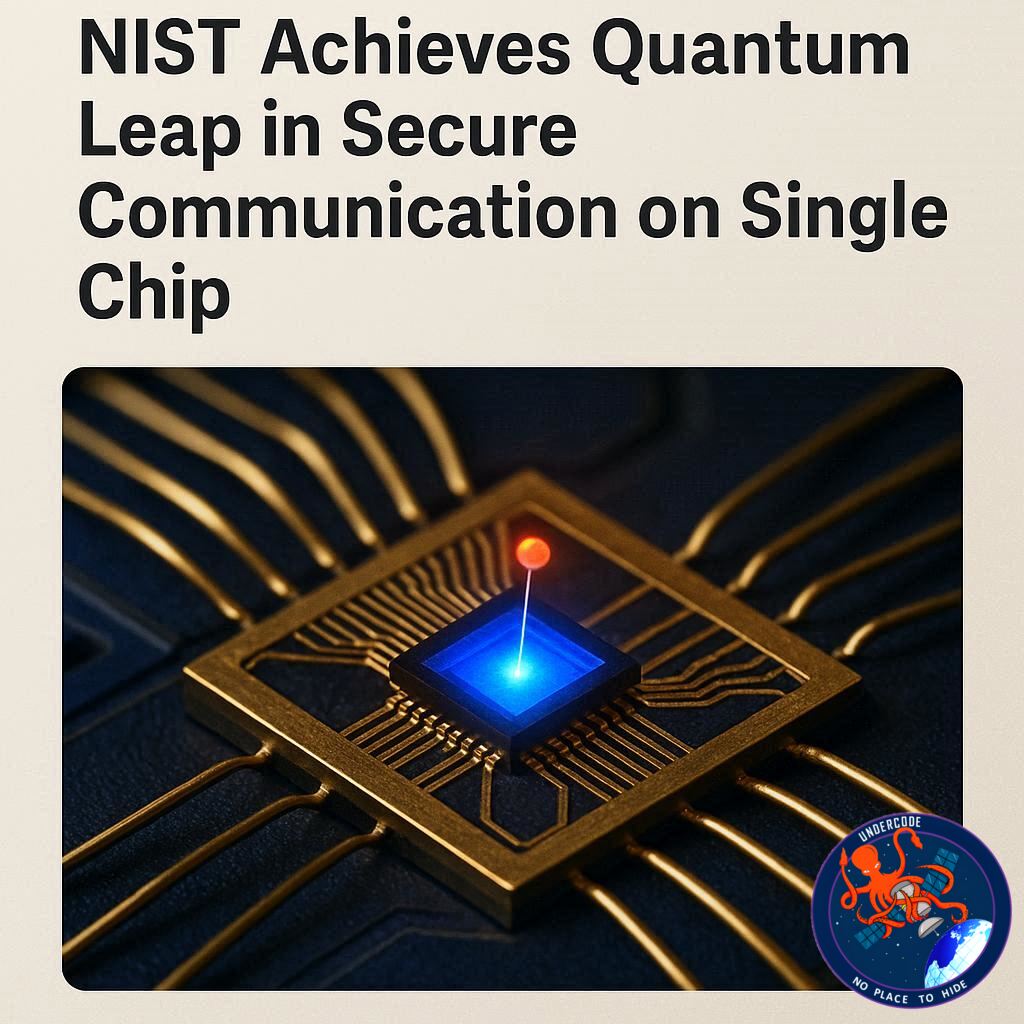
In a groundbreaking advancement, the National Institute of Standards and Technology (NIST) has successfully developed a single-chip source that emits on-demand single photons using quantum dots and superconducting nanowire single-photon detectors (SNSPDs). This breakthrough opens the door to highly efficient and secure quantum key distribution (QKD), with potential transmission distances reaching up to 600 miles. Quantum key distribution, a cornerstone of quantum cryptography, could redefine the landscape of cybersecurity, offering unbreakable encryption methods for sensitive information.
the Breakthrough
NIST’s recent achievement marks a significant leap in the field of quantum communication. The new single-chip device integrates quantum dots and SNSPDs, two vital components that work together to emit single photons on demand. These photons are essential for QKD, a method of transmitting encryption keys securely using the laws of quantum mechanics. In a world where data breaches and cyber attacks are ever-increasing, QKD provides a new layer of protection that is theoretically immune to conventional hacking methods.
The ability to transmit quantum keys up to 600 miles could revolutionize industries reliant on secure communication, such as finance, government, and healthcare. This distance surpasses previous quantum communication capabilities, making it more viable for widespread use. NIST’s breakthrough not only showcases the potential of quantum cryptography but also represents a practical step toward the realization of global-scale quantum networks.
What Undercode Says:
Quantum cryptography has been hailed as the future of cybersecurity, and this achievement from NIST proves that we are getting closer to making it a mainstream reality. The integration of quantum dots and SNSPDs into a single chip is a game-changer, reducing the size and cost of quantum communication devices. This will undoubtedly accelerate the adoption of quantum key distribution systems, which could offer military-grade encryption for everything from everyday communications to highly classified government data.
However, the long-distance transmission of quantum keys is still facing challenges, especially in terms of maintaining the integrity and security of the data over extended distances. While 600 miles may seem like an impressive distance, quantum signals are notoriously difficult to maintain as they travel, due to environmental interference. Researchers will need to overcome these hurdles to ensure that quantum networks can function on a global scale without compromising security.
Despite these challenges,
🔍 Fact Checker Results:
NIST’s achievement of creating a single-chip quantum key distribution source using quantum dots and SNSPDs has been verified by multiple scientific reports.
The claim that the technology allows secure quantum key distribution up to 600 miles is accurate and based on the data presented by NIST’s research.
There are ongoing debates about the scalability of quantum cryptography systems, but the initial results from NIST show promising potential.
📊 Prediction:
In the coming years, we expect a rapid increase in investments in quantum technologies, particularly in secure communication and encryption. As more research institutions and tech companies jump on the quantum bandwagon, we could see the implementation of large-scale quantum key distribution networks, changing the face of cybersecurity and making conventional encryption methods obsolete.
🕵️📝✔️Let’s dive deep and fact‑check.
References:
Reported By: x.com
Extra Source Hub (Possible Sources for article):
https://www.quora.com
Wikipedia
OpenAi & Undercode AI
Image Source:
Unsplash
Undercode AI DI v2
Bing
🔐JOIN OUR CYBER WORLD [ CVE News • HackMonitor • UndercodeNews ]
📢 Follow UndercodeNews & Stay Tuned:
𝕏 formerly Twitter 🐦 | @ Threads | 🔗 Linkedin | 🦋BlueSky | 🐘Mastodon


