
Listen to this Post
Introduction: Why AI Security Has Become a National Priority
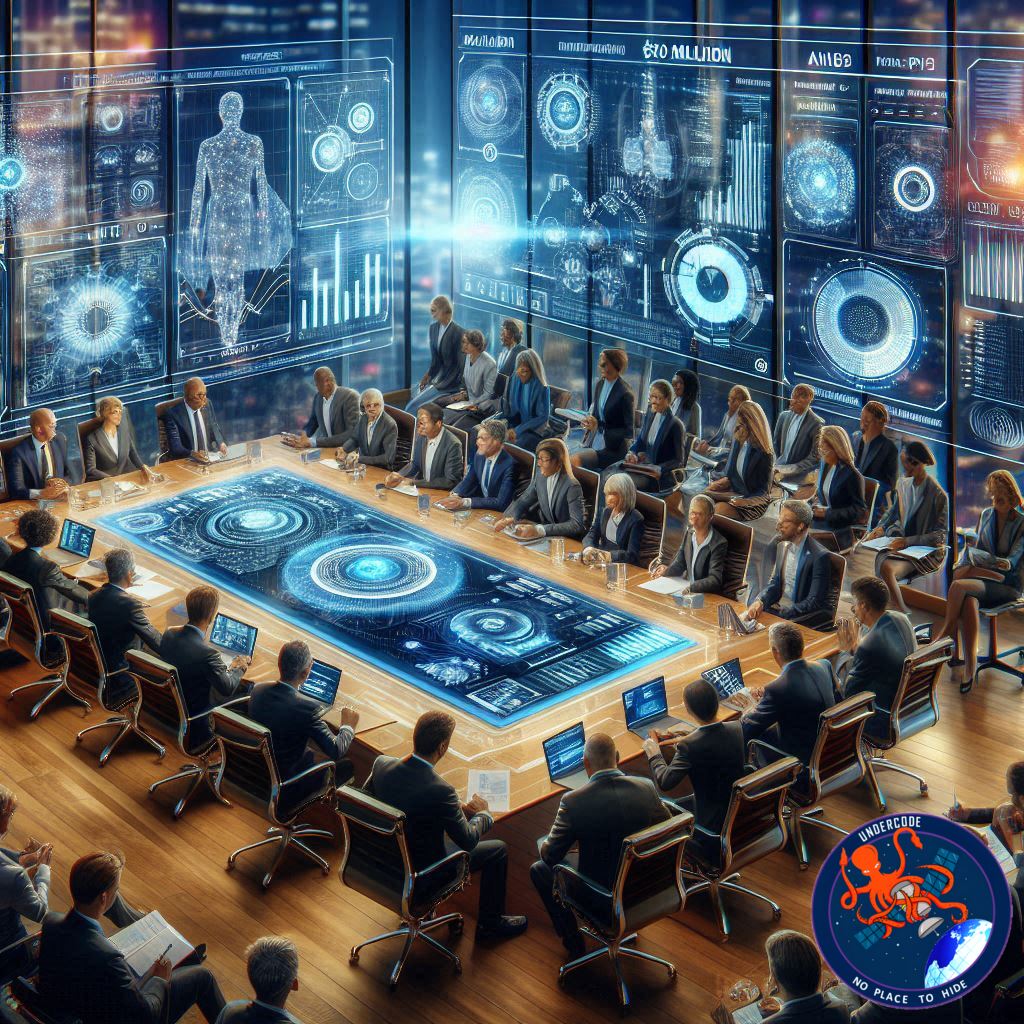
Artificial intelligence is no longer an experimental technology sitting on the edges of research labs. It is now deeply embedded in manufacturing, logistics, communications, and the systems that keep modern society running. As AI adoption accelerates, so do concerns about how malicious actors could exploit these systems at scale. Against this backdrop, the National Institute of Standards and Technology (NIST) and The MITRE Corporation have announced a $20 million joint research initiative aimed squarely at securing U.S. critical infrastructure from AI-enabled cyber threats. This move signals a strategic shift: AI is no longer treated only as an innovation driver, but as a national security asset that must be protected, governed, and hardened against misuse.
Overview of the $20 Million Research Effort
NIST revealed that the funding will establish two new research centers focused on artificial intelligence and its real-world implications. One center will concentrate on advanced manufacturing, while the second will focus specifically on AI-driven cyber risks facing critical infrastructure. Together, the centers are designed to accelerate the development, evaluation, and deployment of AI tools that can strengthen resilience across essential services such as water, power, telecommunications, and internet infrastructure.
The AI Economic Security Center Explained
At the heart of the initiative is the AI Economic Security Center to Secure U.S. Critical Infrastructure from Cyberthreats. This center will study how AI can be both a weapon and a shield. On one hand, adversaries can use large language models and automation to launch faster, more convincing cyberattacks. On the other, defenders can deploy agentic AI systems to detect anomalies, automate responses, and reduce human workload. NIST says the center will focus on practical defenses that help operators maintain continuity of service even under AI-enhanced attack scenarios.
Advanced Manufacturing as a Parallel Focus
The second research center will address advanced manufacturing, an area increasingly dependent on AI-driven automation, predictive maintenance, and supply chain optimization. Manufacturing systems are attractive targets because disruption can ripple across entire economies. By studying AI security in manufacturing environments, NIST and MITRE aim to reduce systemic risk while enabling U.S. companies to remain competitive globally.
Agentic AI and Defensive Automation
According to NIST, both centers will help “drive the development and adoption” of AI-driven tools, including agentic AI solutions. Agentic AI refers to systems capable of making limited autonomous decisions based on predefined goals. In cybersecurity, this could mean automated threat hunting, real-time incident containment, and adaptive defense mechanisms that respond faster than human analysts ever could.
Protecting U.S. Leadership in AI Innovation
NIST spokesperson Jennifer Huergo emphasized that the research will focus on technology evaluations and advancements necessary to maintain U.S. dominance in AI innovation. The centers are also tasked with addressing threats from adversaries’ use of AI and reducing risks tied to insecure or poorly designed AI systems. This framing positions AI security as both an economic and geopolitical concern.
A Broader Federal AI Investment Strategy
These two centers are not standalone projects. They form part of a broader federal investment strategy to establish federally funded AI research centers at NIST. Some of these initiatives predate the current administration, highlighting a bipartisan recognition that AI infrastructure and standards require long-term federal involvement.
The Rebranding of AI Safety at the Federal Level
Earlier this year, the White House rebranded the AI Safety Institute as the Center for AI Standards and Innovation. The shift reflected a broader policy emphasis on competitiveness and innovation rather than narrowly defined safety concerns. This repositioning aligns with the creation of new research centers that emphasize practical deployment and economic security.
The $70 Million AI for Resilient Manufacturing Institute
Looking ahead, NIST plans to award funding next year for the AI for Resilient Manufacturing Institute. This five-year, $70 million investment aims to integrate AI, manufacturing expertise, and supply chain resilience. Together with the newly announced centers, it suggests a layered approach to AI security that spans multiple sectors.
Government and Industry Betting on AI Breakthroughs
AI advocates across government, industry, and Congress argue that increased federal investment will unlock breakthroughs in applied science and advanced technology. NIST expects these centers to catalyze innovation while translating research into deployable tools for industry and infrastructure operators.
NIST Leadership on Economic and Industrial Impact
Acting NIST Director Craig Burkhardt stated that the centers will enhance the ability of U.S. companies to produce high-value goods more efficiently and meet market demands at home and abroad. Beyond security, the initiative is framed as a way to accelerate commercialization and technological discovery.
Industry Reaction and Support for Collaboration
CyberScoop reported that nearly every source contacted expressed support for stronger collaboration between government and industry on AI security. This consensus reflects a shared understanding that AI-driven threats cannot be addressed by isolated actors.
The Reality of Ongoing Cyber Threats
Over the past decade, industrial sectors have endured relentless ransomware attacks, foreign intrusions, and digital sabotage. AI-powered tools could significantly amplify the speed, scale, and sophistication of these attacks, placing additional strain on already underfunded IT and security teams.
High-Stakes Security for Critical Systems
Randy Dougherty, CIO of Trellix, noted that NIST’s focus on critical infrastructure addresses the “high-stakes” end of the AI spectrum. In environments like power grids and water systems, accuracy and reliability are non-negotiable, and failures can have immediate societal consequences.
The Need for Stakeholder Inclusion
Several experts stressed that the success of these centers depends on meaningful input from the industries they aim to protect. Without direct participation from infrastructure operators, research risks becoming theoretical rather than actionable.
Water and Power as Priority Sectors
Gary Barlet, public sector CTO at Illumio, highlighted water and power as especially critical sectors. These systems underpin nearly every other essential service, making them prime targets for disruption. Securing their IT, operational technology (OT), and supply chains should be an early priority.
Translating Research into Real-World Solutions
Barlet emphasized that research insights must be translated into workable solutions. Infrastructure operators need tools they can deploy within regulatory, budgetary, and operational constraints, not abstract frameworks that remain on paper.
Accountability and Operational Reality
A key concern raised by industry voices is accountability. If something goes wrong, it is infrastructure operators—not AI developers—who must answer to regulators and lawmakers. This reality underscores the importance of practical, operator-informed security measures.
Avoiding a Technologist-Only Approach
Barlet warned that too many research centers are built by technologists for technologists, excluding those who run power grids and water systems. This initiative, he argued, must break that pattern to be effective.
Summary of the Original
The article details NIST’s announcement of a $20 million partnership with The MITRE Corporation to establish two AI-focused research centers. One center will address advanced manufacturing, while the other—the AI Economic Security Center—will focus on protecting U.S. critical infrastructure from AI-enabled cyber threats. The initiative aims to develop and evaluate AI-driven security tools, including agentic AI, to maintain essential services such as water, electricity, and internet access. NIST positions the effort as part of a broader federal strategy to strengthen AI innovation, competitiveness, and resilience. The article also notes the recent rebranding of the AI Safety Institute to the Center for AI Standards and Innovation, reflecting a policy shift toward economic security and global competition. Industry leaders broadly support the initiative, emphasizing the growing risk of AI-enhanced cyberattacks and the need for collaboration between government and critical infrastructure operators. Experts stress that water and power systems should be early priorities and warn that research must include real-world operators to ensure practical, deployable solutions.
What Undercode Say: Strategic Analysis of the Initiative
The NIST–MITRE initiative represents a subtle but important evolution in how governments approach AI security. Rather than treating AI as a purely technical risk, this effort frames it as an economic and infrastructural dependency. That distinction matters because it justifies sustained federal funding and long-term institutional involvement.
By focusing on critical infrastructure, NIST is acknowledging that AI-driven attacks could have cascading effects far beyond data breaches. Power outages, water contamination, or manufacturing shutdowns triggered by AI-assisted intrusions would carry national-level consequences.
The emphasis on agentic AI suggests that defenders are preparing for a future where manual security operations are no longer sufficient. Human analysts cannot match the speed of automated attacks, making AI-on-AI defense inevitable.
However, automation introduces its own risks. Poorly governed agentic systems could amplify errors or respond unpredictably under pressure. This makes NIST’s role in evaluation and standards particularly important.
The partnership with MITRE is also significant. MITRE’s experience operating federally funded research and development centers gives it credibility as a neutral convener between government and industry.
One of the strongest aspects of the initiative is its alignment with manufacturing resilience. Cybersecurity is often discussed in isolation, but manufacturing disruptions quickly translate into economic instability and supply chain shocks.
The broader federal context suggests that AI security is becoming embedded into industrial policy. This mirrors historical approaches to aerospace, semiconductors, and nuclear technology.
Industry feedback highlights a persistent gap between research and operations. If NIST can successfully integrate infrastructure operators into the research process, the centers could become models for applied cybersecurity research.
The warnings from experts like Gary Barlet should be taken seriously. Excluding operators risks producing elegant but unusable solutions. Inclusion is not a courtesy—it is a necessity.
Ultimately, this initiative reflects an understanding that AI security is no longer optional. It is foundational to national resilience, economic stability, and public trust in digital systems.
Fact Checker Results
✅ NIST and MITRE have announced a $20 million AI-focused research partnership.
✅ One center targets advanced manufacturing while another focuses on critical infrastructure cybersecurity.
❌ No detailed technical roadmap or timeline for deployable tools has yet been publicly released.
Prediction
🔮 Federal investment in AI cybersecurity research will expand beyond $20 million within the next two years.
🔮 Agentic AI defenses will become standard in critical infrastructure security operations.
🔮 Infrastructure operators will demand stronger involvement in federal AI research programs to ensure practical outcomes.
🕵️📝✔️Let’s dive deep and fact‑check.
References:
Reported By: cyberscoop.com
Extra Source Hub (Possible Sources for article):
https://www.instagram.com
Wikipedia
OpenAi & Undercode AI
Image Source:
Unsplash
Undercode AI DI v2
Bing
🔐JOIN OUR CYBER WORLD [ CVE News • HackMonitor • UndercodeNews ]
📢 Follow UndercodeNews & Stay Tuned:
𝕏 formerly Twitter 🐦 | @ Threads | 🔗 Linkedin | 🦋BlueSky | 🐘Mastodon


